Science World
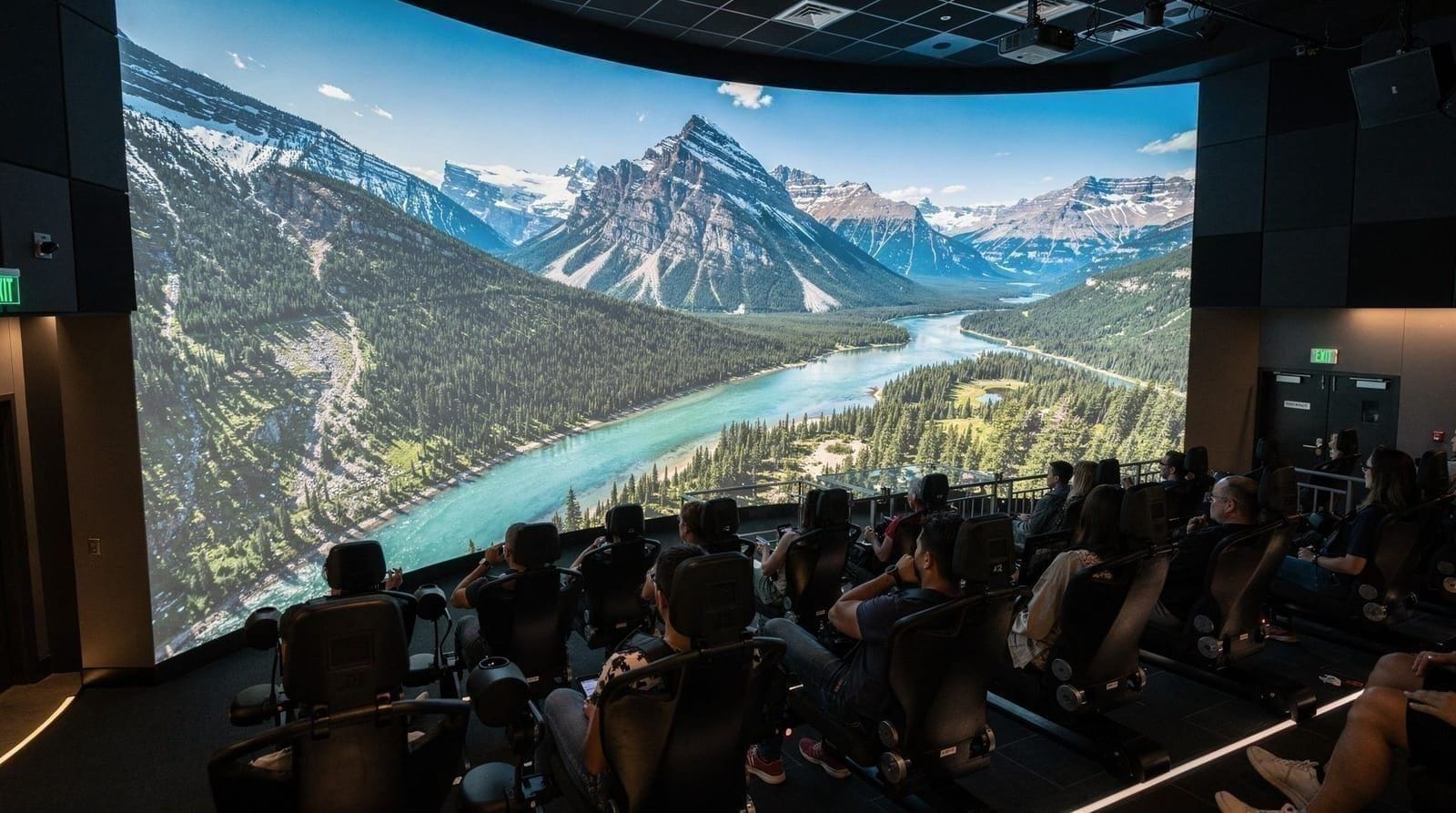
Vancouver: FlyOver Canada Experience
Duration: 30 minutes
- Free cancellation
What is Science World and how much does it cost?
Science World, officially TELUS World of Science, is an interactive science museum inside a geodesic dome at the eastern end of False Creek. General admission runs roughly CAD 30-32 for adults, and most visitors spend 2-3 hours covering the galleries, live demonstrations and outdoor Ken Spencer Science Park.
Science World’s geodesic dome is one of the most recognizable pieces of Vancouver’s skyline, sitting at the eastern tip of False Creek where it’s been a fixture since Expo 86 — originally built as the Expo Centre before becoming the science museum it is today. It’s a straightforward, honest recommendation for families and a solid rainy-day fallback for anyone else, with no complicated logistics or booking strategy required.
| Where | Eastern end of False Creek, downtown Vancouver |
| Cost | Around CAD 30-32 adult; family rate available |
| Time needed | 2-3 hours |
| Getting there | Main Street-Science World SkyTrain (Expo & Millennium lines) |
| Best for | Families, rainy-day plans |
| Booking | Advance online booking recommended for holidays/summer weekends |
From Expo Centre to science museum
The dome was built as the Expo Centre for the 1986 World Exposition, serving as one of the fair’s central pavilions and an early symbol of the event alongside Canada Place’s sail roofs across the harbor. After Expo 86 closed, the building was repurposed and reopened as Science World, part of a broader wave of former Expo sites converted into permanent civic institutions rather than demolished once the fair ended.
The geodesic dome design — a lattice of triangular panels forming a near-spherical structure — was chosen partly for its structural efficiency and partly for its visual distinctiveness, and it remains one of very few buildings of its type and scale in Canada, giving Science World a genuinely unique silhouette on the False Creek skyline compared to the glass towers surrounding it.
What’s inside
The museum spreads across several floors of interactive exhibits covering physics, biology, technology and the human body, most of them hands-on rather than behind-glass displays — the kind of place where staff actively encourage touching, building and testing things rather than just reading placards. Live demonstrations run on a rotating schedule throughout the day, covering topics from basic chemistry reactions to live animal encounters, and they’re consistently one of the better-reviewed parts of a visit since the presenters tend to be genuinely engaging rather than reading from a script.
The OMNIMAX theatre, when operating, adds giant-screen documentary films on a separate schedule and ticket, worth checking current listings for since programming rotates and isn’t always running during every visit window.
How Science World fits a False Creek day
Given its location at the eastern tip of False Creek, Science World naturally anchors a broader waterfront day alongside Granville Island at the creek’s opposite end, connected by the Aquabus mini-ferry for a scenic, traffic-free crossing. Families splitting a day between the two get a genuinely varied mix — hands-on science in the morning, market browsing and lunch in the afternoon — without needing to navigate downtown traffic or transit transfers between them.
Prices
General admission runs roughly CAD 30-32 for adults, with lower rates for youth and seniors, and a family rate that typically beats buying tickets individually for two adults and two-plus kids. It’s priced similarly to other major Vancouver indoor attractions like FlyOver Canada, though Science World delivers considerably more time on-site for the price given the size of the galleries and the multi-hour visit most families end up making.
There’s no dedicated third-party tour product bundling Science World tickets specifically — admission is bought directly through the venue rather than through a tour operator — so treat any general Vancouver sightseeing package as a complement to a Science World visit rather than a substitute for buying tickets directly.
A note on the GYG tour catalog
There’s no dedicated third-party ticket product bundling Science World admission through the GetYourGuide catalog used elsewhere on this site — buying directly through the venue is the standard and most reliable route. The two tours referenced elsewhere in this guide (FlyOver Canada, and the Aquarium and Stanley Park small-group tour) are complementary Vancouver family activities rather than Science World-specific products, worth considering as additions on separate days of a family-focused trip rather than as a way to book Science World itself.
Gift shop and souvenirs
A gift shop near the exit sells science-themed toys, books and educational kits, a reasonable option for a souvenir with more lasting value than a typical tourist trinket, particularly for families with kids who’ve enjoyed the hands-on exhibits and want to continue the experience at home.
Getting there
Main Street-Science World SkyTrain station, served by both the Expo and Millennium lines, sits directly outside the building’s entrance, making it one of the simplest attractions in the city to reach without a car — a direct ride from Waterfront station downtown takes only a few minutes. It’s also reachable by the Aquabus mini-ferry from Granville Island across False Creek, a scenic alternative for visitors already spending the morning at the market.
Live demonstrations and the OMNIMAX in more detail
The rotating live demonstration schedule typically covers several sessions daily across different topics — chemistry, physics, and occasionally live animal encounters featuring reptiles or other creatures suited to an educational demonstration format. Sessions run 15-20 minutes and are included with standard admission, with specific times posted at the entrance or on a digital schedule board inside. The OMNIMAX theatre, when active, adds an additional giant-screen documentary experience on its own ticketed schedule; when the theatre isn’t running current programming, that portion of the building may be closed or used for other purposes, so it’s worth checking ahead if the OMNIMAX specifically is a reason for the visit.
The outdoor Ken Spencer Science Park
Beyond the dome itself, an outdoor science park on the building’s east side adds garden exhibits, water play features (seasonal, typically summer) and additional hands-on stations — a good way to extend a visit in good weather, and included with standard admission rather than requiring a separate ticket.
What ages the exhibits suit best
Science World’s galleries are broadly designed to work across a wide age range, but different floors and sections lean toward different developmental stages. Ground-floor and lower-gallery exhibits tend to favor younger children with more physical, hands-on stations built for exploration through touch and play.
Upper-gallery content, including the body-focused and physics-focused exhibits, generally holds the attention of older kids and pre-teens more successfully, with more conceptual content requiring a bit more reading and reasoning. Live demonstrations are pitched broadly enough to engage a full family group regardless of individual children’s ages, which is part of why they’re consistently highlighted as a visit highlight across most family reviews.
Food options at Science World
An on-site café offers casual meals — sandwiches, snacks and kid-friendly options — priced similarly to what you’d expect at a family attraction of this scale, roughly CAD 12-18 per person for a simple lunch. Outside food is generally permitted in the outdoor Ken Spencer Science Park area, making a packed lunch a reasonable cost-saving option for families visiting on a tighter budget, particularly useful given how much time a thorough visit already takes without needing to also plan a separate off-site meal.
Comparing Science World to other family attractions
Within Vancouver, Science World is most directly comparable to FlyOver Canada and the Vancouver Aquarium as major indoor family draws, though it offers considerably more time-on-site per dollar than FlyOver Canada’s brief simulator experience. Compared to the Vancouver Aquarium, Science World leans more toward physical science and technology while the aquarium focuses on marine biology and live animals — many families with more than one full day treat the two as complementary rather than competing choices, doing both on separate days of a longer Vancouver stay.
Rainy-day value
Vancouver’s wet season runs roughly October through April, and Science World is consistently one of the better indoor options for a full-family rainy afternoon, alongside FlyOver Canada and the Vancouver Lookout. A FlyOver Canada ticket makes a reasonable second indoor stop on the same rainy day if Science World alone doesn’t fill the afternoon, particularly for families who’ve already covered Science World’s galleries on a previous visit or a shorter stay.
Combining with a broader family day
For visitors building a full family-oriented day around downtown and Stanley Park, a Vancouver Aquarium, Stanley Park and city highlights small-group tour covers several of the city’s other major family attractions in one guided outing, worth considering as a complement to a separately booked Science World visit on a different day of the trip, since neither is designed to be rushed.
What locals think of Science World
Vancouver families with young kids treat Science World as a genuine repeat destination rather than a once-per-visit stop, and many hold annual memberships specifically because their children want to return regularly rather than because a single visit doesn’t cover the content well. Locals often recommend it as a first-choice indoor activity during Vancouver’s long wet season, ahead of most other paid indoor options in the city, given the combination of genuine educational value and enough scale to fill a real afternoon. It’s also a common school field-trip destination, which is part of why weekday mornings during the academic year see heavier organized-group traffic than weekends.
Special exhibitions and rotating content
Beyond the permanent galleries, Science World regularly hosts temporary special exhibitions on rotating themes — past examples have covered topics from dinosaurs to space exploration to the human body in more depth than the permanent collection allows. These sometimes carry a modest additional fee beyond standard admission, so checking current programming before a visit is worth doing if a specific temporary exhibit is a draw, since content changes on a schedule independent of the museum’s core galleries.
A realistic budget for a family visit
For a family of four (two adults, two children) visiting Science World for an afternoon, admission alone runs roughly CAD 100-120 using the family rate, before food. A casual lunch at the on-site café or bringing a packed lunch to eat in the outdoor science park keeps costs down; a sit-down meal purchased entirely on-site can push the total for the day closer to CAD 150-180. Compared to a similar family afternoon at Grouse Mountain or Capilano, Science World is generally the more budget-friendly indoor option while still delivering several hours of engaged activity.
Photography and what’s worth capturing
The dome’s exterior, especially viewed from across False Creek near Granville Island or from the Cambie Street Bridge, makes for one of the more distinctive architectural photos in the city, particularly at dusk when the dome is illuminated. Interior photography is generally permitted throughout the galleries, though flash photography may be restricted in specific darkened exhibit areas — check posted signage at individual gallery entrances.
When to visit
Weekday mornings, particularly outside school holiday periods, are consistently the quietest time to visit, since Science World draws heavy school-group traffic on weekday mornings during the academic year — worth checking ahead if a genuinely quiet visit matters, since school groups can occasionally dominate specific gallery floors. Weekends and school holidays (spring break, summer, winter break) draw the heaviest family crowds.
Common mistakes visitors make
The most frequent misstep is visiting during a school-group-heavy weekday morning without checking ahead, then finding specific galleries dominated by organized groups — an early-afternoon visit on a weekday often threads the needle between avoiding both school groups and weekend family crowds. A second mistake is skipping the outdoor Ken Spencer Science Park in cooler months, assuming it’s closed, when much of it remains accessible year-round even if the water play features are seasonal. Third, some visitors treat Science World as a quick one-hour stop, underestimating how much a thorough visit actually takes given the size of the galleries — 2-3 hours is a more realistic minimum for families who want to properly explore rather than skim.
Membership versus single admission
For visitors likely to return to Vancouver within a year, or families with relatives locally who might visit repeatedly, a Science World membership can work out cheaper than single admission after just two or three visits. For a one-time trip, standard single-day admission remains the simpler and more cost-effective choice, since the membership’s value depends entirely on repeat use within its validity period.
Accessibility notes
Science World’s galleries and the main dome level are wheelchair accessible, including elevator access between floors, making it one of the more accessible major attractions in downtown Vancouver. The outdoor Ken Spencer Science Park includes paved paths suitable for wheelchairs and strollers, though some individual exhibit stations may have specific physical requirements — staff can advise on the most accessible route through the galleries for visitors with particular mobility needs.
Where it fits in a wider Vancouver trip
Science World works well as a half-day family stop, often paired with Granville Island via the Aquabus for a False Creek-focused day, or combined with downtown sightseeing given its direct SkyTrain connection. It appears in most family-focused Vancouver itineraries as the reliable rainy-day anchor, and works as a flexible add-on to a one-day Vancouver sightseeing plan for families traveling with younger kids who need an indoor break from a full day of walking.
Group visits and school bookings
Beyond individual family visits, Science World runs a well-established group and school booking program, with dedicated group rates for parties of 15 or more and pre-arranged time slots that help spread out organized-group traffic across the day. Travelers organizing a larger family reunion or a group of friends visiting together should check the group rate before defaulting to individual tickets, since the discount typically applies at a lower headcount than many visitors expect. This same infrastructure explains why weekday mornings during the school year see heavier organized traffic — it’s the group program working as designed, not overbooking.
Seasonal programming beyond the permanent galleries
Beyond the rotating special exhibitions covered above, Science World layers in seasonal programming tied to the calendar — extended hours and themed activities around spring break and summer, plus holiday-season programming in December that can include additional light displays or themed demonstrations. None of this is guaranteed year to year, so checking the venue’s current calendar before a visit timed around a specific season is worth doing if a seasonal event is part of the draw, rather than assuming last year’s programming will repeat exactly.
Frequently asked questions about visiting Science World
Is Science World worth visiting without kids?
Yes, reasonably — the exhibits on physics, biology and technology are built to be broadly engaging, and the live demonstrations in particular hold up well for adult visitors, though the overall design and pacing clearly targets families and school groups first.
How long is the OMNIMAX theatre film?
Runtimes vary by current programming, typically 30-45 minutes for a standard documentary screening; check the venue’s current schedule since films rotate and aren’t always showing.
Is there parking at Science World?
Limited paid parking is available near the venue, but the direct SkyTrain connection at Main Street-Science World station makes transit the more practical option for most visitors.
Can I buy Science World tickets in advance?
Yes, advance online booking is available directly through the venue and is worth doing during school holidays and summer weekends when on-site lines build.
Can I combine Science World with Granville Island in the same day?
Yes, the two connect via the Aquabus mini-ferry across False Creek, a scenic 10-15 minute crossing that makes it easy to spend a morning at one and an afternoon at the other without backtracking through downtown.
Does Science World get busy on weekends?
Yes, weekends and school holidays draw the heaviest family crowds of the week, though the museum’s scale generally absorbs the traffic better than smaller attractions — long waits for specific popular stations are more likely than an overall crowded feeling throughout.
Is Science World a good rainy-day activity?
Yes — it’s one of the most reliable fully indoor options in Vancouver for a multi-hour rainy-day visit, alongside FlyOver Canada and the Vancouver Lookout.
Are there group discounts for larger parties?
Yes, groups of 15 or more qualify for a dedicated group rate, worth checking before buying individual tickets for a larger family reunion or friend group.
Does Science World have locker or storage facilities?
Basic storage for bags and coats is typically available near the entrance, useful for families not wanting to carry extra layers through the galleries on a rainy-day visit.
Top experiences
Bookable activities with verified prices and instant confirmation on GetYourGuide.