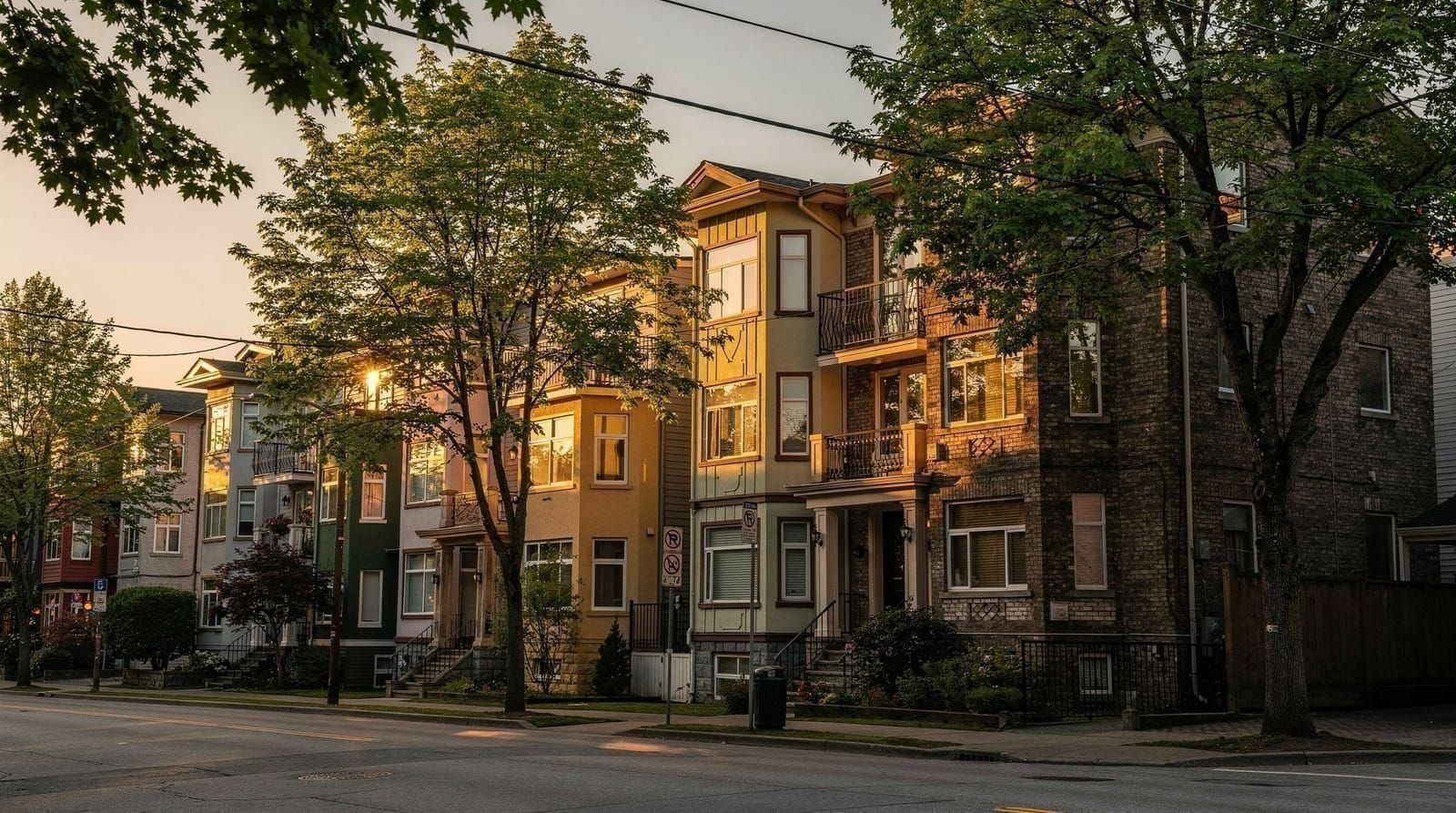
Downtown Vancouver
A practical read on downtown Vancouver: the financial core, Robson Street, Canada Place, how walkable it really is, and where the overpriced spots are.
Vancouver: City Highlights Tour with Hotel Transfers
Quick facts
- Best for
- First-time visitors who want to walk everywhere
- Time needed
- 2-3 days as a base, or a half-day for the highlights
- Getting there
- Canada Line SkyTrain from YVR, about 23-25 minutes
- Good to know
- Compact enough to skip a rental car entirely
| Where | The downtown peninsula, water on three sides |
| Cost | Free to walk; hotel rates vary, higher June–September |
| Time needed | 2-3 days as a base, or a half-day for the highlights |
| Getting there | Canada Line SkyTrain from YVR, about 23-25 minutes |
| Best time | Year-round; June to September for the driest weather |
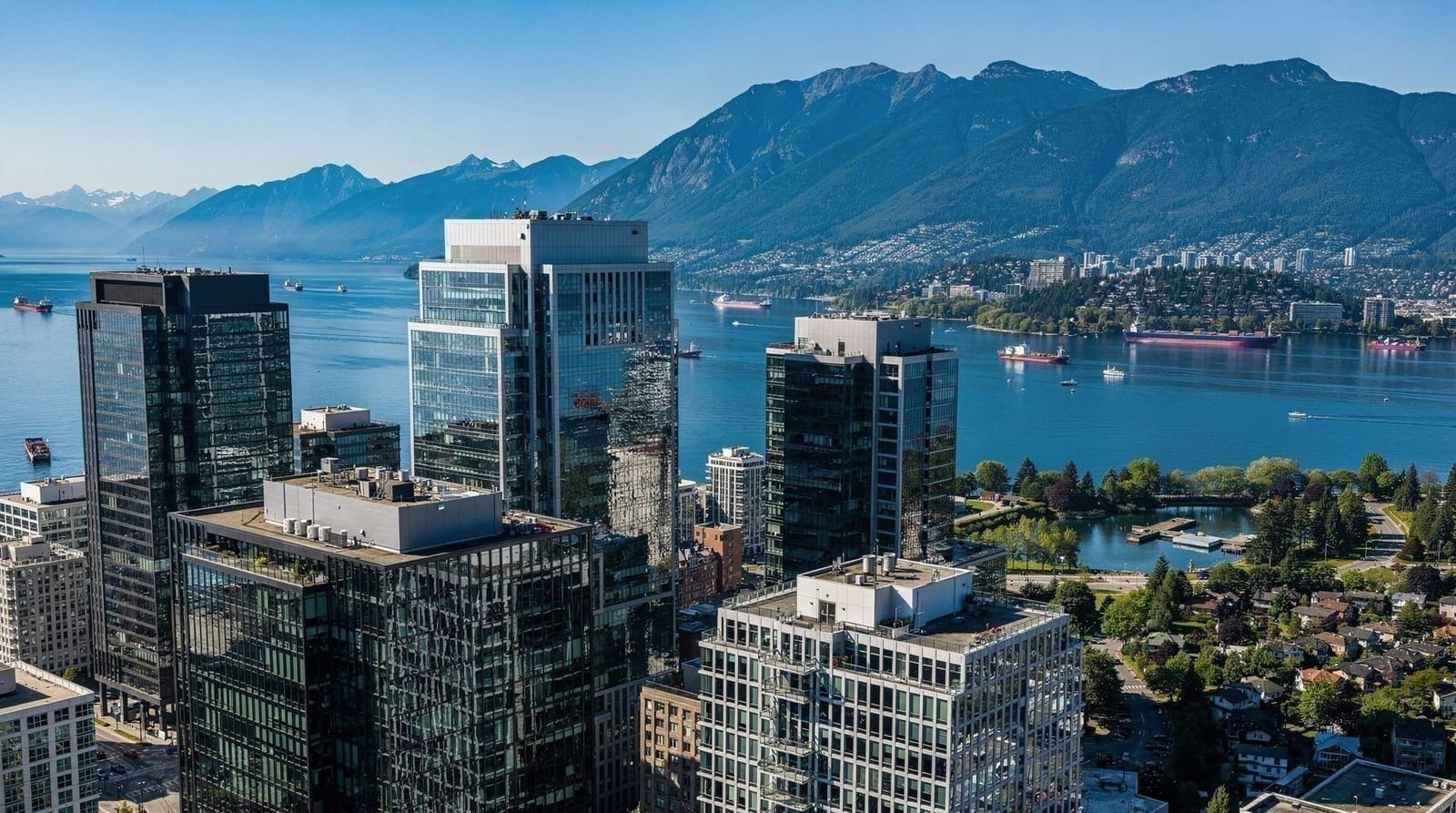
Downtown Vancouver sits on a peninsula, which is the main thing to understand before you book a hotel here. Everything — the financial towers, the cruise terminal, the shopping strip, the entrance to Stanley Park — is packed into a walkable grid with water on three sides. It’s not the most atmospheric part of the city (that’s Gastown or Commercial Drive), but it’s the most convenient place to sleep if you don’t want to think about transit every day.
A grid you can actually walk
Downtown Vancouver is laid out in a straightforward numbered-and-lettered grid, which makes it one of the easiest big-city cores in North America to navigate on foot. From a hotel near Robson and Burrard, you can walk to English Bay in 15 minutes, to the Stanley Park entrance in 20, and to Canada Place in 10. That density is the honest reason to base yourself here rather than in a quieter neighborhood — it cuts down on the SkyTrain and bus trips you’d otherwise be making daily from Kitsilano or Commercial Drive.
The trade-off is that downtown itself has few “sights” in the traditional sense. It’s mostly hotels, offices, and retail, with the actual attractions clustered at its edges: Stanley Park to the north, Yaletown and False Creek to the south, Gastown and Chinatown to the east. If you want a single afternoon to get oriented, a city highlights tour with hotel pickup covers most of those edges in about three to four hours without you having to work out bus routes on day one.
Robson Street and the shopping core
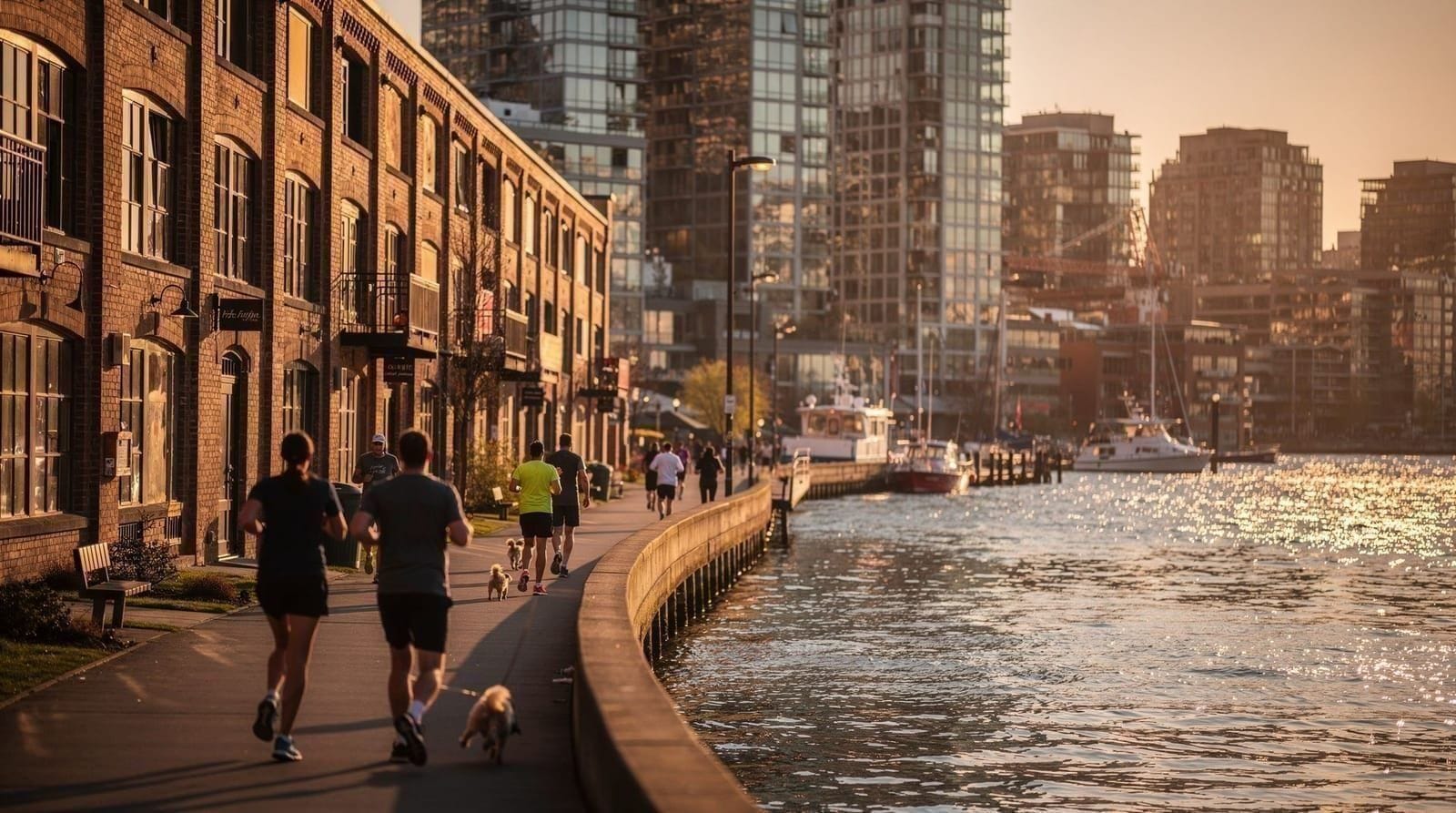
Robson Street is downtown’s main retail spine, running from the high-end stores near Burrard down to more mainstream chains near Robson Square. It’s busy, occasionally overwhelming on weekend evenings, and worth a walk-through more than a dedicated afternoon unless shopping is genuinely the point of your trip. Robson Square itself, at the Howe Street end, has a public ice rink in winter and hosts free events in summer — it’s one of the few genuinely free things to do in the core.
For a broader orientation loop that includes Robson, the harbourfront, and Gastown in one go, a hop-on hop-off double-decker bus is a reasonable option on a first day if you’re short on time or traveling with people who tire out on long walks — just don’t expect it to replace actually walking these neighborhoods later.
Canada Place and the cruise terminal
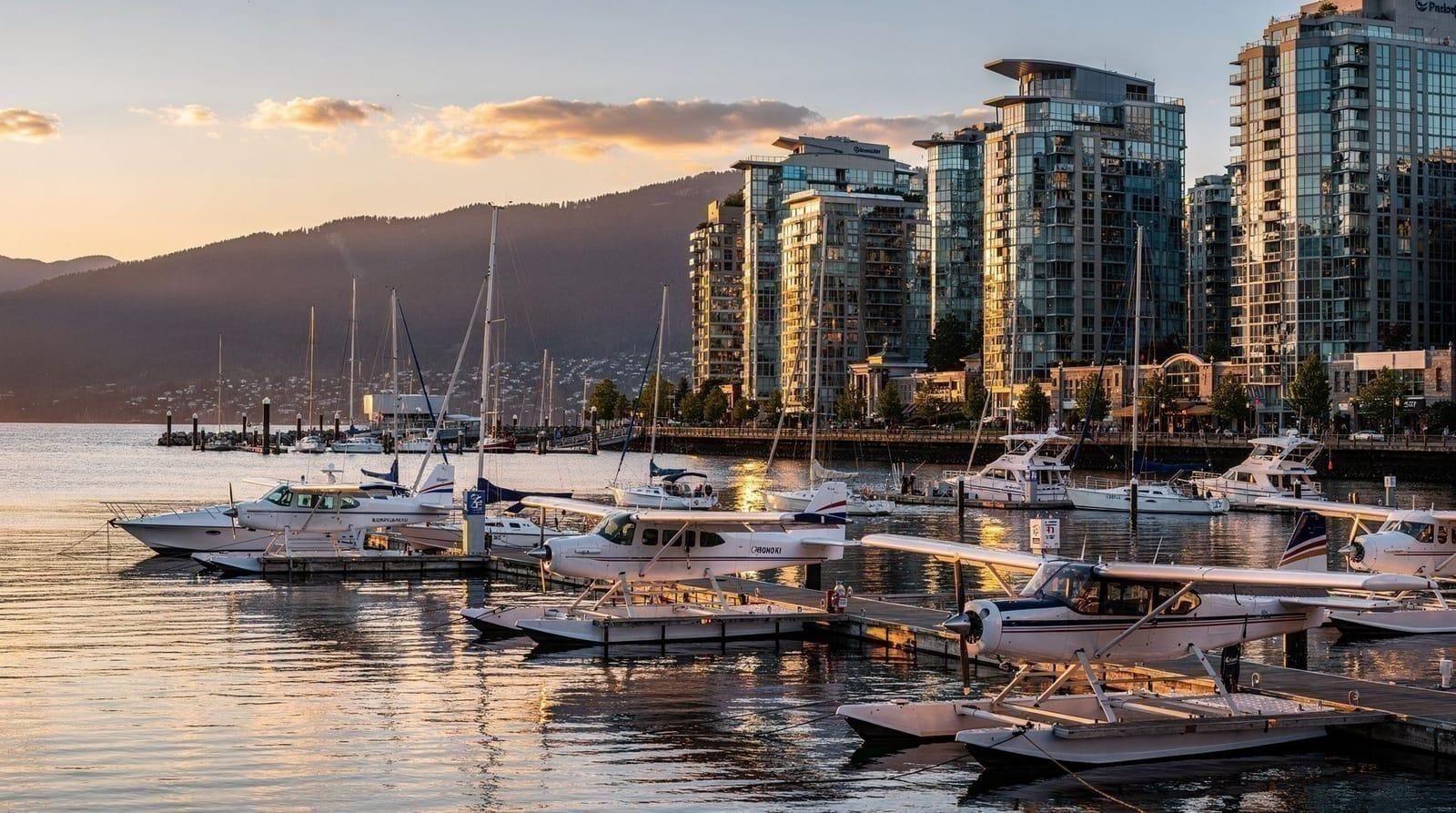
Canada Place, the sail-shaped building on the waterfront, is Vancouver’s cruise terminal and also home to FlyOver Canada. If you’re arriving or departing on a cruise, this is your gateway; otherwise it’s a pleasant 20-minute walk along the water with good sightlines toward Coal Harbour and the North Shore mountains. The Vancouver Lookout tower nearby gives a straightforward 360-degree view of the city for a fixed ticket price — a Vancouver Lookout entry ticket is worth booking ahead on clear days, since the view is genuinely better than photos suggest, but skip it entirely if the forecast is socked in with cloud.
Getting around without a car
This is downtown’s real strength. The Canada Line SkyTrain runs the length of the peninsula from Waterfront Station down through Yaletown-Roundhouse and on to Richmond and YVR, and buses cover Robson, Davie, and Denman at frequent intervals. A Compass Card, available from vending machines at any station or at London Drugs, covers all of it — one zone is CAD $2.85 as of mid-2026, with a 90-minute transfer window across SkyTrain, SeaBus and buses.
If your hotel is downtown, you’ll likely use it more to reach Granville Island or Richmond than to get around the core itself, since most of downtown is faster on foot. See our fuller SkyTrain and TransLink guide and getting around Vancouver breakdown for fare details and station maps.
A brief history of the core
Downtown Vancouver’s grid was laid out in the 1880s around the original Canadian Pacific Railway terminus, which is part of why Waterfront Station and the harbourfront still feel like the city’s anchor point more than a century later. The financial district around Burrard and Pender grew up through the 20th century on the back of resource-export wealth — timber, mining, shipping — and that history is still visible in a handful of older bank buildings and the general orientation of the street grid toward the port rather than toward any single town square. It’s a working city core first and a tourist district second, which is part of why it can feel a little corporate compared to Gastown’s more curated heritage streets.
Seasonal notes for a downtown base
Downtown’s appeal shifts noticeably with the seasons. In summer, the harbourfront and Robson Square patios are at their best, and hotel rates climb accordingly — book well ahead if you’re set on a specific property in July or August. In the wetter months from October through May, downtown’s advantage becomes practical rather than scenic: covered walkways, an underground concourse near some office towers, and the simple fact that you’re not waiting at a bus stop in the rain to reach dinner. See our guides on Vancouver in summer and the best time to visit Vancouver for a fuller seasonal comparison before you book.
Where downtown gets overpriced
Being honest about this matters more than the highlight reel. Restaurants directly on the main tourist strips near the cruise terminal and around the busiest stretch of Robson tend to charge a premium for mediocre food, banking on one-time visitors who won’t be back to complain. You’ll eat better, and pay less, one block off the main drag, or by walking 10 minutes into Yaletown or Gastown.
Parking downtown is also expensive and often unnecessary — most visitors staying here don’t need a car for the length of their trip, and garages routinely run CAD $25-40 a day. If you do want a sunset view without paying for a rooftop bar markup, a guided sunset walking tour along the harbourfront is a cheaper way to get the same photo.
For planning a full trip around this base, see our 3-day Vancouver itinerary or, if you’re only passing through, the one-day sights guide. If you’re deciding where to actually book a room, our where to stay in Vancouver guide compares downtown against the West End and Yaletown directly.
Downtown vs. the West End vs. Yaletown
Choosing where to base yourself is the single biggest planning question most first-time visitors have, and the honest answer depends on what you value more: convenience or atmosphere.
| Base | Character | Best for | Trade-off |
|---|---|---|---|
| Downtown core | Hotels, offices, retail | Walkability, cruise terminal, SkyTrain access | Fewer standalone “sights,” can feel corporate |
| West End | Residential, tree-lined streets | Closer to Stanley Park’s actual entrance, quieter | Fewer dining options directly on-site |
| Yaletown | Converted warehouses, restaurants, nightlife | Dining and a livelier evening scene | Pricier, further from Stanley Park |
For a first visit built around walkability and not thinking about transit, the downtown core remains the simplest choice. Travelers who’d rather wake up near a park than near office towers should look at the West End instead, and anyone prioritizing restaurants and evening atmosphere over proximity to Stanley Park should consider Yaletown.
Downtown by season, for trip planning
Downtown’s character shifts enough across the year that it’s worth planning around the season rather than assuming any month works the same.
| Season | Weather | Crowds/rates | Notes |
|---|---|---|---|
| June–August | Warmest, driest | Highest hotel rates, busiest patios | Book well ahead for July/August |
| September–October | Mild, some rain | Thinner crowds | Good value shoulder season |
| November–February | Wet, mild by Canadian standards | Lowest rates | Covered walkways and indoor options matter more |
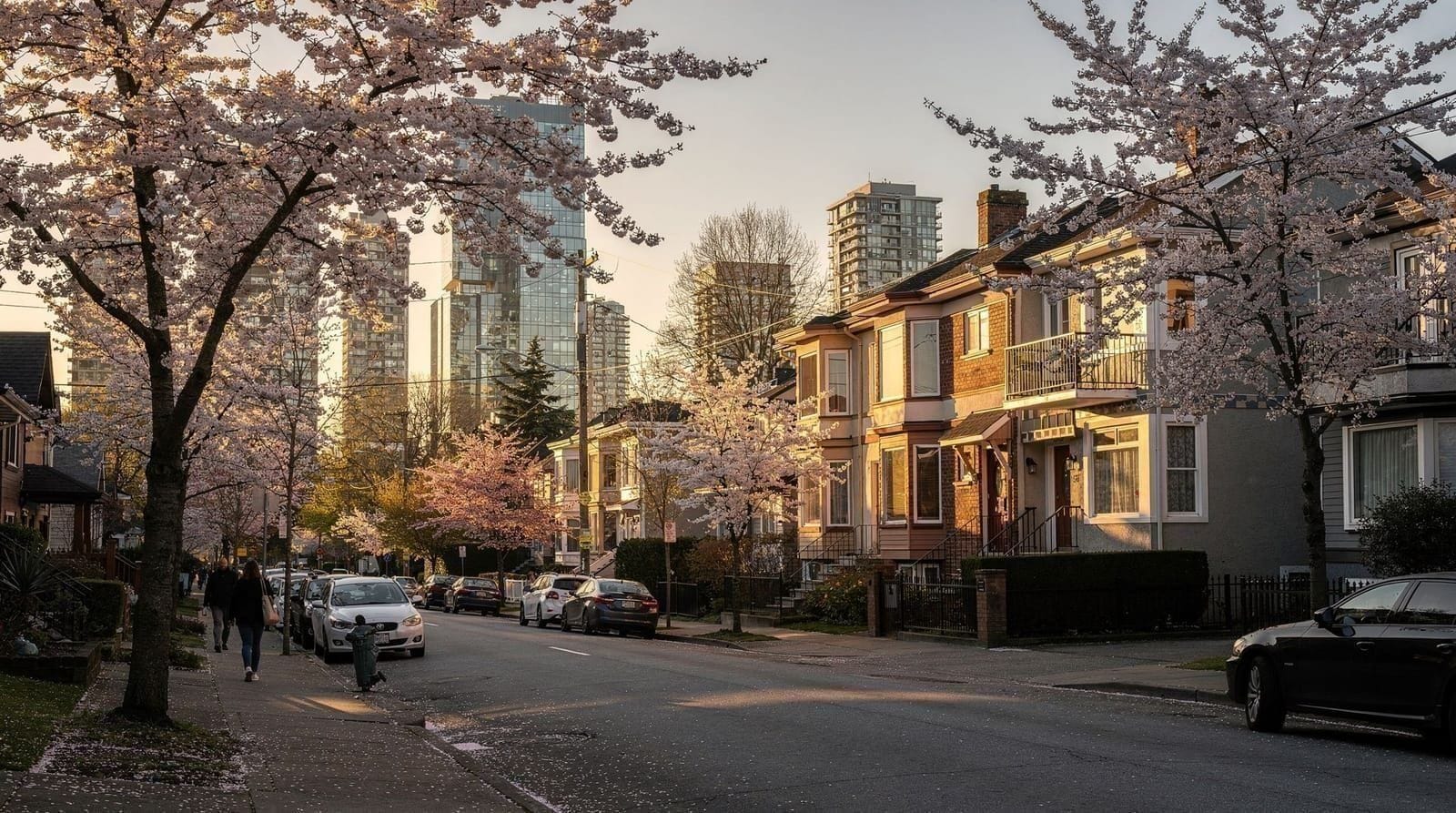
| March–May | Improving, still wet | Moderate | Cherry blossoms citywide in April |
Frequently asked questions about downtown Vancouver
Is downtown Vancouver walkable without a car?
Yes. The core sits on a compact peninsula, and most hotels are within a 20-minute walk of Stanley Park, Canada Place, and Yaletown. A car is more of a liability than a help here, given expensive parking and one-way streets.
How do I get from YVR to downtown?
The Canada Line SkyTrain runs directly from the airport to downtown in about 23-25 minutes, costing roughly CAD $10.85 total including the YVR AddFare. A taxi or rideshare takes 30-40 minutes depending on traffic and runs CAD $35-55.
Is downtown or the West End better for a first visit?
Downtown puts you closer to shopping, the cruise terminal, and the SkyTrain network. The West End is quieter, cheaper, and closer to the actual entrance of Stanley Park — a reasonable trade if you’d rather wake up near the park than near the offices.
What’s the best way to see downtown in one day?
Start at Canada Place, walk the harbourfront to Coal Harbour, then loop into Stanley Park before finishing on Robson Street. A guided city highlights tour covers the same ground faster if your time is limited.
Are the restaurants near the cruise terminal worth eating at?
Generally not the best value. Prices near Canada Place and the busiest block of Robson run high relative to quality, since much of that traffic is one-time visitors. Walking a few blocks toward Yaletown or Gastown usually gets you a better meal for less.
Do I need a rental car if I’m staying downtown?
No, and it’s mostly a downside. Downtown parking is expensive, traffic is dense at commute hours, and the SkyTrain and Seawall cover most of what visitors actually want to reach.
Is downtown or Yaletown better for restaurants?
Yaletown generally edges out downtown’s tourist strips on food quality for the price, thanks to a denser concentration of independent restaurants aimed at locals rather than one-time cruise-terminal foot traffic. Downtown still has good options a block or two off Robson; it’s the streets directly by the cruise terminal that skew overpriced.
Top experiences
Bookable activities with verified prices and instant confirmation on GetYourGuide.