Via ferrata near Squamish and Whistler
Whistler: Whistler Mountain Via Ferrata Climbing Experience
Is there a via ferrata in Squamish?
Not exactly — the only bookable guided via ferrata route in the corridor is on Whistler Mountain, roughly 50-60 minutes further up Highway 99 from Squamish itself. Squamish is better known for traditional rock climbing on the Stawamus Chief; travelers specifically wanting a secured cable-and-rung climbing route should plan on continuing to Whistler.
Anyone searching “via ferrata Squamish” is likely to hit a small but important mismatch: the guided via ferrata product bookable in this corridor is physically located on Whistler Mountain, not in Squamish town. It’s worth clearing this up before planning a day around it, since Squamish and Whistler are separate stops roughly an hour apart on Highway 99, and confusing the two can throw off a day’s itinerary.
| Where | Whistler Mountain (not Squamish itself) |
| Cost | Around CAD 200-280 per person, half-day guided |
| Time needed | 3-4 hours door to door |
| Getting there | Car via Hwy 99, or a Whistler day tour |
| Best time | Roughly May through October, weekday mornings |
Where via ferrata actually is in this corridor
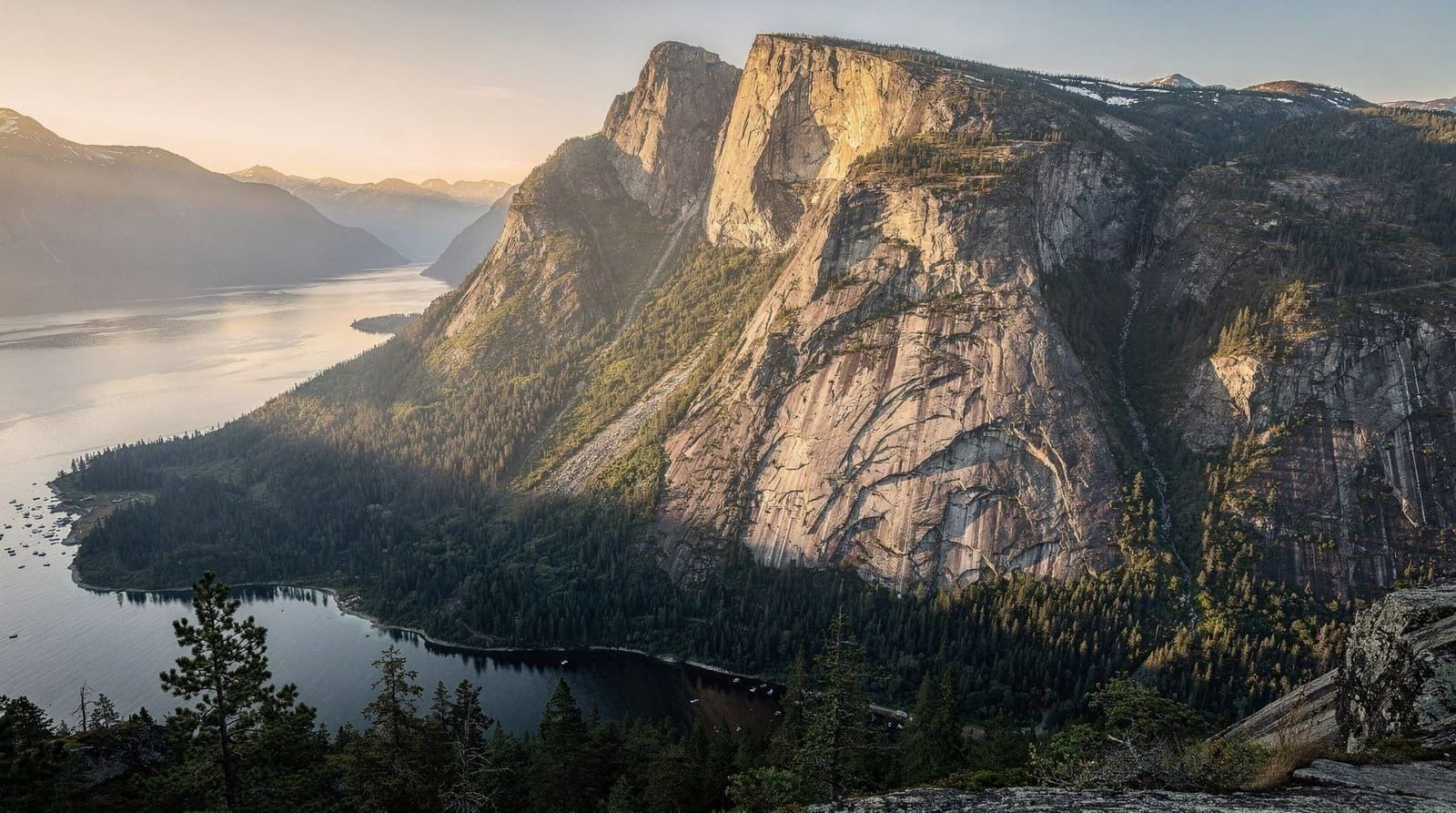
The Whistler Mountain via ferrata climbing experience runs on Whistler Mountain itself, part of the Whistler Blackcomb resort terrain, roughly 1 hour 45 minutes to 2 hours from Vancouver via the Sea-to-Sky Highway (Highway 99) — and about 50-60 minutes further north from Squamish, if you’re already in town for other activities. Squamish, by contrast, doesn’t currently have a dedicated commercial via ferrata operation; its climbing reputation rests entirely on traditional rock climbing at the Stawamus Chief and Murrin Provincial Park, covered in more depth in the rock climbing in Squamish guide.
This is a genuinely common source of confusion because via ferrata and traditional climbing get lumped together in casual conversation, but they’re different disciplines. Squamish’s climbing scene is almost entirely about traditional and sport rock climbing — ropes, harnesses, and technical skill, typically requiring lessons or a hired guide for anyone without climbing experience. Via ferrata, on the other hand, is built specifically so people without that technical background can move through exposed mountain terrain safely, using a fixed protection system rather than relying on their own rope-work.
What via ferrata actually is
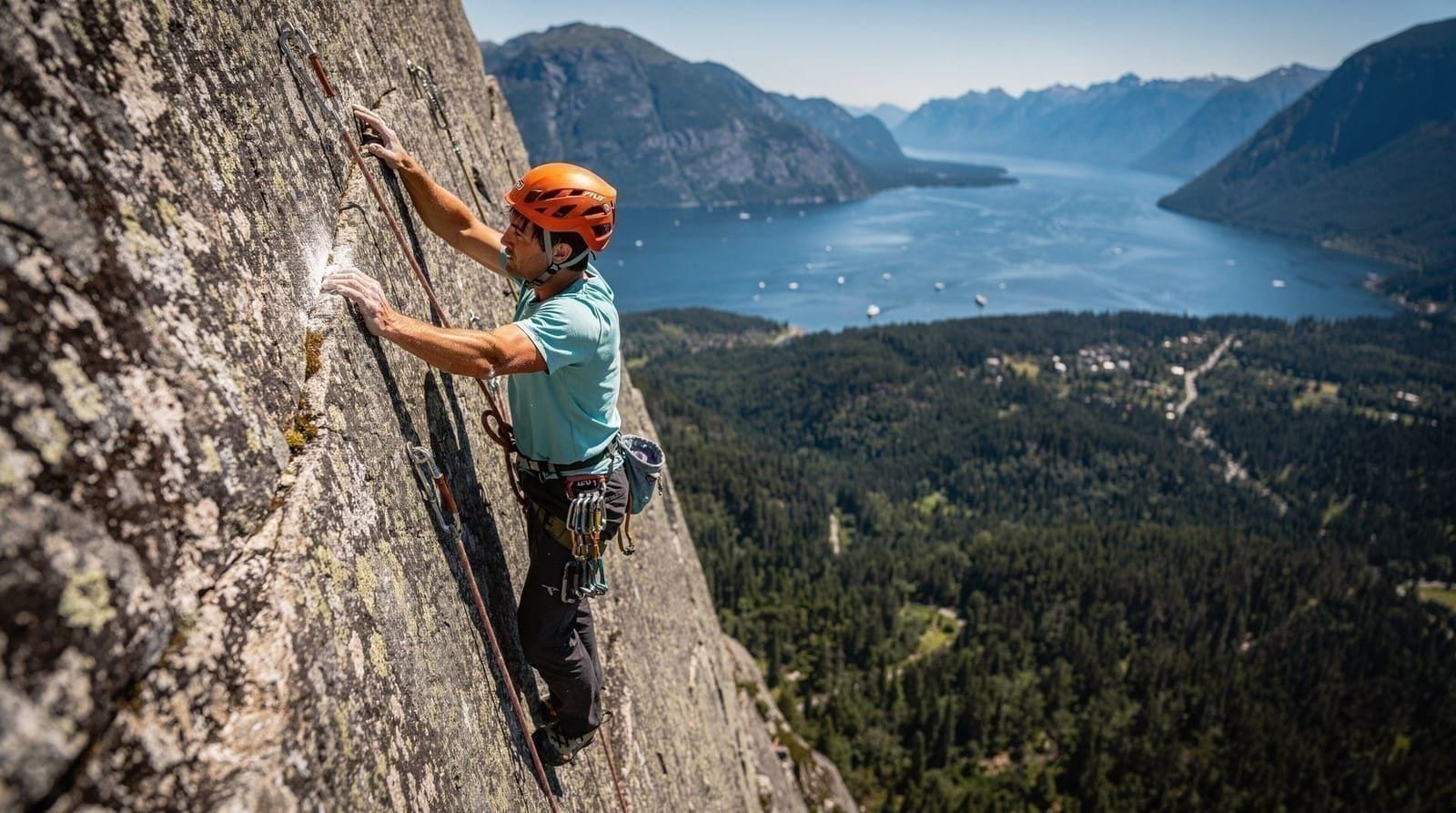
Via ferrata (Italian for “iron path”) originated in the Alps, where routes were originally built to move troops through mountain terrain during wartime and later repurposed for recreational climbing. A via ferrata route consists of a continuous steel cable bolted into the rock face, alongside iron rungs, steps, and sometimes short suspension bridges or ladders across gaps. Climbers wear a climbing harness connected to the cable through a via ferrata lanyard — a Y-shaped tether with two carabiners, so at least one clip stays attached to the cable at all times, even while moving past anchor points.
This system means a fall is generally arrested within a short distance rather than resulting in a long drop, which is what makes via ferrata approachable for people with no prior rock-climbing background. Guides on the Whistler route handle the technical oversight — checking gear, managing pace, and picking safe stopping points — so participants can focus on the climbing itself rather than route-finding or rope management. Expect genuine exposure, though: this isn’t a hike with a handrail, it’s climbing on a mountainside with real drops below, just protected by the cable system throughout.
What the Whistler via ferrata experience covers
The guided route on Whistler Mountain typically takes 3 to 4 hours door to door, including a safety briefing, gearing up in harness and helmet, the climbing route itself, and usually a pause partway through for a break and photos with the alpine views. Groups are kept small enough for guides to give individual attention, particularly useful for first-timers working through initial nerves on the first exposed sections. No prior climbing experience is required, but reasonable fitness helps — expect sustained arm and leg engagement, not a passive walk.
For travelers wanting to build a bigger day around it, a guided wilderness hike in Whistler pairs naturally with via ferrata, since both activities work in the same alpine terrain and season and can be scheduled back-to-back or on consecutive days without much additional logistics.
Season and weather
Whistler’s via ferrata route runs roughly May through October, tracking the same snow-free window as the mountain’s summer hiking trails — it depends on the alpine terrain being clear of snow and ice, which typically isn’t reliable before late spring at this elevation. Outside this window, the route isn’t operated commercially. Even within season, mountain weather can shift fast: mornings that start clear in the valley can turn windy or rainy at elevation by early afternoon, so check the day’s forecast and dress in layers regardless of what the base of the mountain looks like when you set out.
What to wear and bring
Sturdy closed-toe shoes with real grip — hiking boots or trail running shoes, not sneakers or anything with a smooth sole — are essential, since footing on iron rungs and rock ledges matters more here than on a flat trail. Dress in layers: alpine temperatures at Whistler Mountain elevation run noticeably cooler than Whistler Village below, and via ferrata involves periods of exertion (which warms you up) interspersed with stops for photos or waiting on the route (which cools you down fast). Gloves, if you have a pair, make gripping cold iron rungs more comfortable, though they’re not usually mandatory. Harnesses, helmets, and lanyards are provided as part of the guided experience.
How via ferrata compares to the corridor’s other adventure activities
It’s worth placing via ferrata against the other options in this corridor for anyone deciding between them. Compared to ziplining, via ferrata is slower-paced and more sustained — you’re climbing and moving under your own effort for the full route rather than riding a line, which makes it more physically demanding but also more immersive in terms of feeling like you actually climbed a mountain rather than rode through one.
Compared to traditional rock climbing in Squamish, via ferrata requires far less skill and no prior experience, trading some of the technical satisfaction experienced climbers get from trad routes for accessibility to a much wider range of visitors. Compared to hiking, via ferrata delivers meaningfully more exposure and a stronger sense of accomplishment, at a higher price point and with a fixed schedule rather than the flexibility of a self-paced trail.
For travelers trying to choose just one Sea-to-Sky adventure activity for a single day, via ferrata is a reasonable pick if the appeal is “climbing without climbing skill” specifically — if the appeal is more general adrenaline or speed, ziplining or the Longest Zipline in North America likely delivers a better match for that specific craving.
What guides actually do on route
Guides on the Whistler via ferrata route aren’t just supervising from a distance — they typically climb ahead of or alongside the group, coaching body positioning on technical sections, managing the group’s pace so faster and slower climbers don’t create a bottleneck, and calling out upcoming route features (a tricky rung placement, a longer reach between holds, an exposed traverse) before participants reach them.
This matters more on via ferrata than it might sound, since the difference between a smooth, confident movement through a technical section and a shaky, effortful one often comes down to knowing what’s coming next — exactly what a good guide provides. Groups are typically kept small, which keeps this level of individual coaching realistic rather than diluted across a large party.
Fitness and comfort level needed
Via ferrata doesn’t require climbing-specific training, but it does require genuine physical engagement — sustained grip strength in your hands and forearms, core engagement to manage body position on angled sections, and enough general fitness to keep moving through a multi-hour route without needing extended rest breaks.
Participants who exercise regularly (hiking, gym work, general activity) generally find the physical demands manageable; those who are sedentary day-to-day may find their forearms and grip fatiguing faster than expected, particularly on longer or more sustained sections of cable. Comfort with heights matters more than raw fitness for most participants — the technical movements themselves aren’t especially difficult, but sustained exposure to real drops below can be mentally taxing for anyone unused to it, which is exactly the gap guides are trained to help people work through.
Combining via ferrata with a Squamish stop
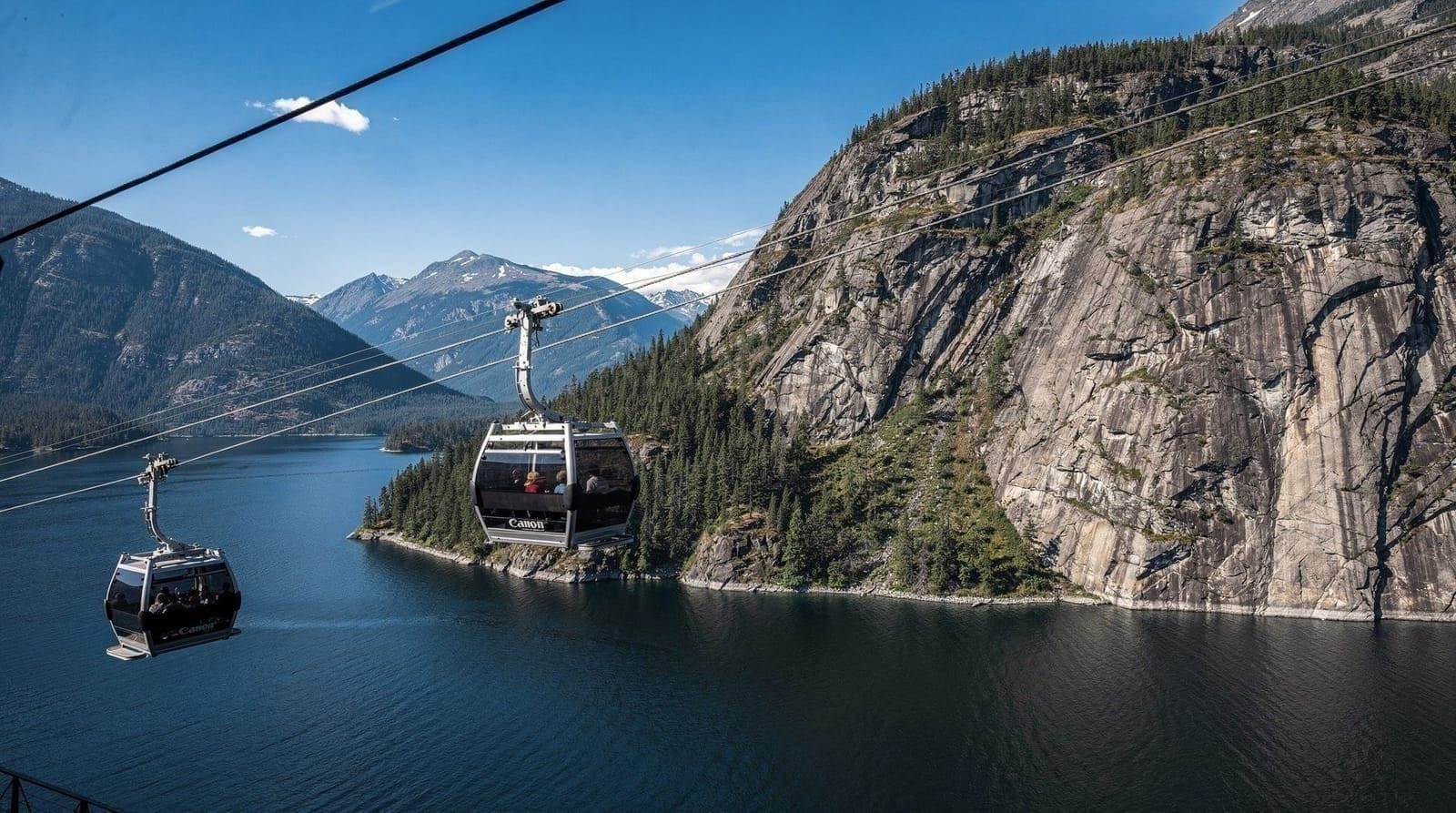
Because the via ferrata route sits well north of Squamish, most travelers treat it as a Whistler-day activity rather than something squeezed into a Squamish stop. That said, a common and efficient itinerary is to drive up Highway 99 in the morning, stop in Squamish for an hour or two — the Sea to Sky Gondola is a strong option here, giving alpine views without technical climbing — then continue on to Whistler for an afternoon via ferrata slot or overnight before the activity the next morning. This spreads the roughly 2-hour Vancouver-to-Whistler drive across a more natural full-day or overnight trip rather than trying to cram everything into a single long day.
Travelers who specifically want the Squamish climbing experience rather than via ferrata should read the rock climbing in Squamish guide, which covers the Stawamus Chief, Murrin Provincial Park, and how non-climbers can still see the terrain via the Sea to Sky Gondola. For a broader view of how via ferrata fits alongside ziplining, rafting, and climbing across the whole corridor, see the Sea-to-Sky adventure activities guide.
Group sizes and solo travelers
Guided groups typically run small — often 4 to 8 participants per guide — which keeps the coaching genuinely individual rather than a shouted instruction to a crowd. Solo travelers are welcome and commonly join a mixed group of strangers rather than needing to book a private slot, and the shared-group format tends to work socially well given the pace of natural conversation between climbing sections. Private guided slots are sometimes available at a premium for groups wanting a fully personalized pace, worth asking about directly if flexibility around timing or difficulty progression matters more than cost.
Getting there
Via ferrata on Whistler Mountain is reached the same way as any other Whistler activity — via Highway 99 north from Vancouver, roughly 1 hour 45 minutes to 2 hours of driving through Squamish and along Howe Sound before climbing into the mountains. If coming from Squamish itself rather than Vancouver, budget 50-60 minutes further north.
A car (rental or your own) is close to essential for this trip; there’s no direct transit option that makes sense for a single day combining Squamish and Whistler stops. Organized day trips from Vancouver that include Whistler are available for travelers without a car, though most bundle sightseeing rather than adventure activities like via ferrata specifically, so check what’s included before booking if via ferrata is the priority.
Booking tips and timing
Via ferrata tours run smaller group sizes than activities like ziplining, since the coaching-intensive nature of the activity limits how many people a single guide can safely manage on route at once. This means popular time slots, particularly weekend mornings in July and August, can sell out further in advance than you might expect for a mountain activity — booking at least a few days ahead during peak summer is a reasonable precaution, and a week or more ahead is safer if your travel dates are fixed and you don’t want to risk missing out.
Morning slots also tend to offer calmer weather at elevation before afternoon winds or cloud can build, worth factoring in in addition to the general advantage of avoiding heat during the physical exertion involved.
If your schedule allows flexibility, pairing a weekday via ferrata slot with a weekend Squamish stop (when Sea to Sky Gondola crowds are heavier and via ferrata slots are scarcer) spreads out both the crowds and the booking pressure across your trip.
The history and appeal of via ferrata as a sport
Via ferrata routes originated in the Dolomites of northern Italy during the First World War, built to move troops and supplies through otherwise impassable alpine terrain — the iron rungs and cables that soldiers once used for military necessity became, decades later, the basis for a recreational climbing discipline popular across the Alps and increasingly adopted at mountain resorts worldwide, including several in North America. Whistler’s via ferrata route is a relatively modern addition to this tradition, built specifically to give resort visitors a taste of the sport without requiring a trip to Europe or years of climbing development.
Part of the appeal, for those who try it, is the sense of covering genuinely committing mountain terrain — routes are usually positioned along ridgelines, rock faces, or features with real exposure — while retaining a continuous safety connection to the mountain throughout. It occupies a middle ground between a guided hike (accessible, safe, but limited in terrain) and technical rock climbing (unlimited terrain access, but requiring years of skill development), which is exactly why it’s grown in popularity at resorts wanting to offer visitors something more adventurous than a chairlift ride without the barrier to entry of real climbing instruction.
Alternatives if via ferrata isn’t available on your dates
Via ferrata’s smaller group sizes and weather sensitivity mean it’s not always possible to book a slot that matches your exact travel dates, particularly during a short trip window. If the Whistler via ferrata route is fully booked or the weather forecast looks unfavorable for your dates, a guided wilderness hike covers similar alpine terrain with a lower weather-sensitivity threshold and more flexible scheduling, giving a comparable sense of Whistler’s backcountry without the technical climbing element.
For travelers who specifically want secured, technical movement over exposed terrain and can’t get a via ferrata slot, the rock climbing in Squamish guide covers Murrin Provincial Park’s beginner-friendly top-rope walls as a same-corridor alternative, though it requires arranging a separate guide or instructor rather than a single bookable product.
Photography and phone use on route
Photo opportunities on the Whistler via ferrata are genuinely good — the route typically pauses at one or two viewpoints partway through specifically for photos, and guides are usually happy to take group shots with a client’s own phone or camera at these stops. Using a phone mid-climb, rather than at a designated stop, is discouraged and sometimes restricted outright, since fumbling with a device while clipped into a cable system on exposed terrain is a real distraction risk. A phone with a wrist strap or a secure pocket that zips closed is a reasonable compromise, letting you capture the views at the marked stops without needing to hold a bare device over open air.
What makes this different from a Whistler zipline day
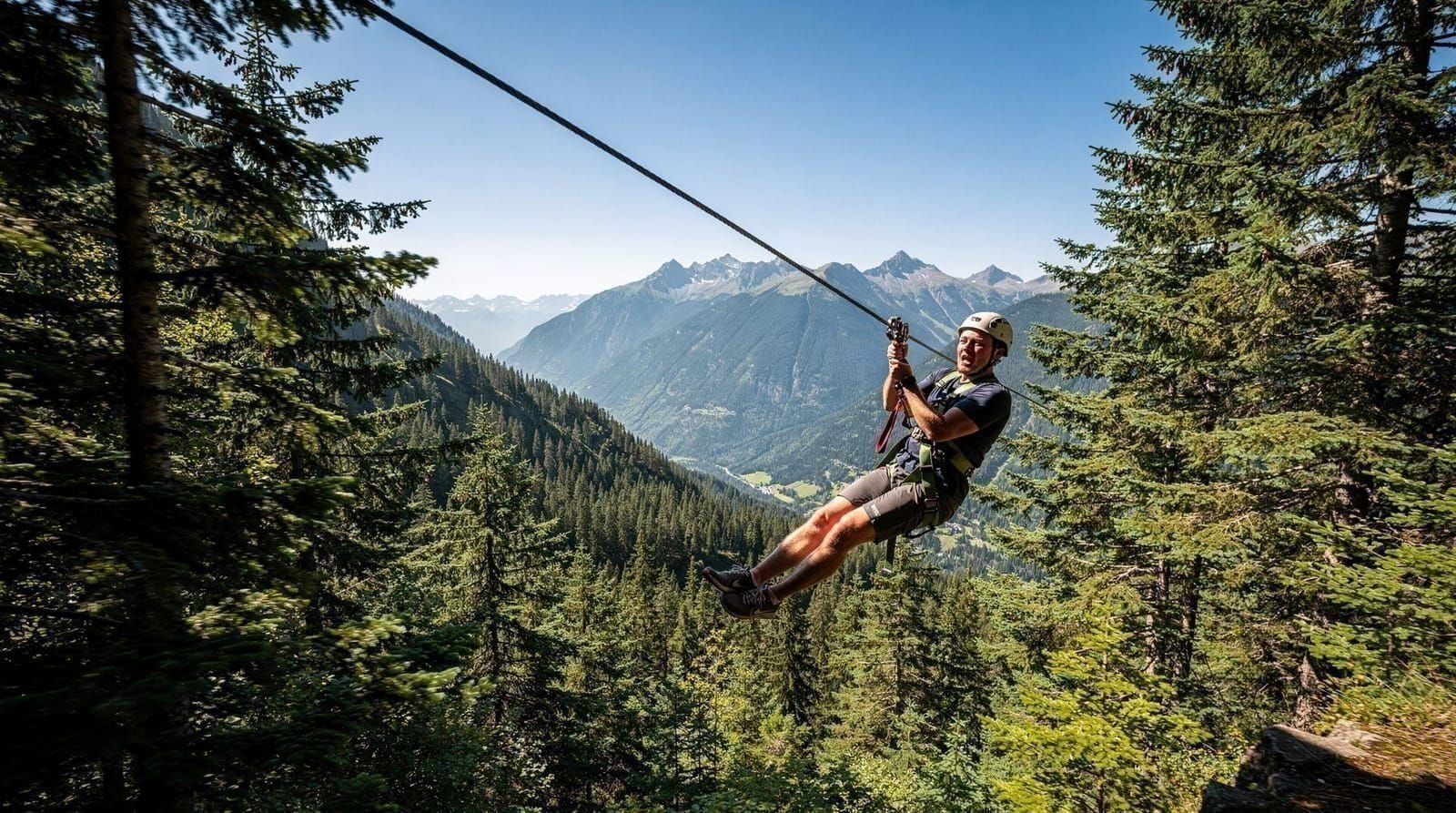
Travelers sometimes conflate via ferrata with ziplining because both fall under “Whistler adventure activities” in marketing, but the actual experience is quite different. Ziplining is largely passive once clipped in — gravity and the line do the work, and the physical demand is minimal beyond holding a body position. Via ferrata is active the entire route: you’re climbing, gripping, and moving your own body weight across iron rungs and rock ledges for the full 3-4 hours, with guides coaching technique rather than simply supervising a ride. Travelers who want a lower-effort adrenaline activity should lean toward ziplining; those who want to feel like they genuinely climbed something should choose via ferrata.
Packing checklist beyond the basics
Beyond the closed-toe shoes and layered clothing already covered, a few smaller items make a real difference on a via ferrata day. Sunscreen and a hat matter more than first-timers expect, since much of the route sits in open alpine terrain with little tree cover and UV exposure runs higher at elevation than it does in the valley below.
A small daypack that a guide confirms is compatible with the harness system (some routes restrict what you can carry on your back for safety reasons) can hold water, snacks, and a phone for the inevitable summit photos at rest points. Sunglasses with a secure strap are worth considering too, since losing a pair mid-route to a gust of wind is a genuinely common minor mishap. None of this is mandatory gear the way the harness and helmet are, but it makes the few hours on route noticeably more comfortable.
How this compares to Whistler’s other high-adrenaline options
Whistler’s summer adventure lineup goes beyond via ferrata and ziplining. The Longest Zipline in North America delivers speed and a single dramatic ride rather than a sustained climb, while a more general Sea-to-Sky adventure roundup covers rafting in Squamish, canyoning, and other options across the whole corridor for travelers still deciding which single activity fits their trip best. Via ferrata sits apart from most of these in one respect: it’s the only one that gives a genuine, sustained sense of technical mountain movement — using your hands and feet on real rock, not just riding a line or a raft — while still being fully guided and beginner-accessible.
Frequently asked questions about via ferrata near Squamish
Is via ferrata available in Squamish itself?
No — Squamish doesn’t currently have a commercial via ferrata operation. The nearest bookable via ferrata route is on Whistler Mountain, roughly 50-60 minutes further north up Highway 99.
What is via ferrata compared to rock climbing?
Via ferrata uses a fixed cable, iron rungs, and a harness-lanyard system bolted into the rock, letting people without climbing experience move through exposed terrain safely. Traditional rock climbing, which Squamish is famous for, relies on the climber’s own technical skill, ropes, and rock features rather than fixed hardware.
Do I need prior experience for via ferrata?
No. It’s specifically designed for people with no rock-climbing background — guides handle safety and route logistics, and the continuous cable attachment limits fall distance.
How much does the Whistler via ferrata cost?
Prices for guided via ferrata experiences in Whistler generally run in the CAD 200-280 range (roughly USD 140-195) for a half-day guided tour, though this varies by group size and season — check current pricing before booking.
What season does via ferrata run in this corridor?
Roughly May through October, matching the snow-free window at Whistler Mountain’s alpine elevation. It isn’t operated in winter.
Can beginners do via ferrata with kids?
Age minimums vary by tour, but via ferrata generally suits older kids and teens with reasonable fitness and comfort with heights better than very young children, given the exposure and physical demands involved. Check the specific tour’s age policy before booking.
Is via ferrata safe for someone afraid of heights?
It can be, but it’s genuinely demanding for anyone with a strong fear of heights — the continuous cable connection limits fall distance and makes a slip far safer than it feels, but it doesn’t remove the sensation of exposure. Mentioning height anxiety to the guide beforehand is worth doing; guides regularly work with nervous first-timers and can adjust pacing accordingly, but participants who are certain heights will overwhelm the experience are better served by a guided wilderness hike instead.
Top experiences
Bookable activities with verified prices and instant confirmation on GetYourGuide.