Rock climbing in Squamish
Squamish: Sea to Sky Gondola Admission Ticket
- Free cancellation
Is Squamish good for rock climbing?
Yes — Squamish is one of the best-known traditional and sport climbing destinations in Canada, centered on the Stawamus Chief granite monolith and Murrin Provincial Park, with routes ranging from beginner top-rope walls to serious multi-pitch trad climbs. No dedicated guided rock-climbing product is currently bookable through GetYourGuide for Squamish; the Sea to Sky Gondola offers non-climbers a way to see the terrain without technical climbing.
Squamish holds a reputation among climbers that punches well above its size as a town — it’s routinely mentioned alongside Yosemite and the Alps as a destination worth a dedicated trip, built almost entirely around a single granite monolith rising straight out of the forest beside Highway 99. For travelers who don’t climb but want to understand what draws people here, and for those who do climb and are planning a Squamish trip, the picture is a bit more layered than “there’s a big rock.”
| Where | Stawamus Chief & Murrin Provincial Park |
| Cost | Free access; guided instruction priced by local operators |
| Difficulty | 5.4-5.9 beginner at Murrin; 5.7-5.11+ at the Chief |
| Season | Roughly April–October |
| Booking | No GYG product; book directly with a Squamish guide operator |
The Stawamus Chief
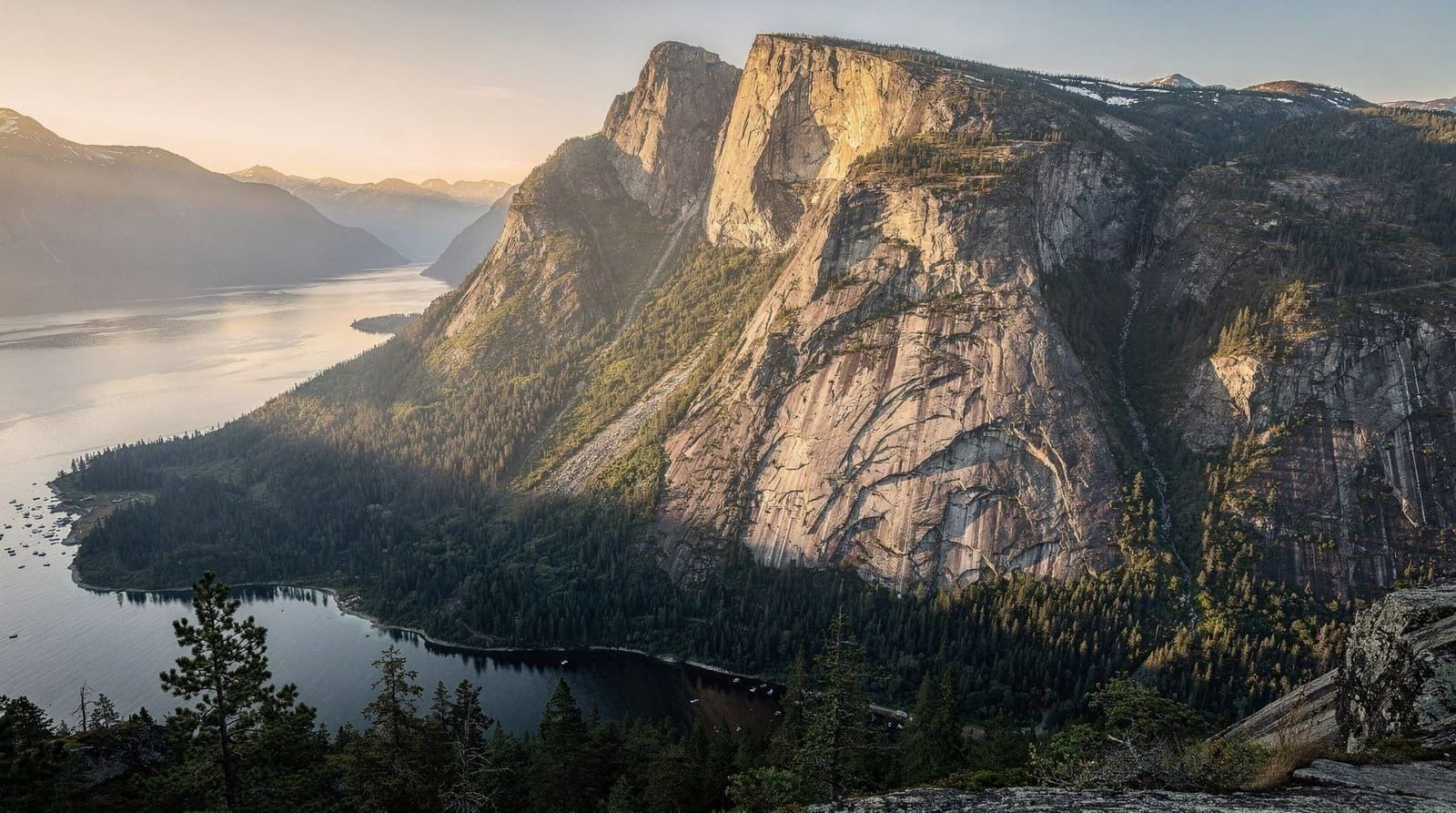
The Stawamus Chief — usually just called “the Chief” locally — is a granite dome rising more than 700 metres above the highway, split into three distinct peaks (the First, Second, and Third summits), each with its own network of routes. It’s one of the largest granite monoliths in the world, and its sheer face has drawn serious climbers to Squamish for decades, with hundreds of established routes ranging from moderate multi-pitch trad climbs to some of the most demanding big-wall routes in Canada.
This isn’t beginner terrain in its classic form — the Chief’s headline routes are for climbers with real trad (traditional) climbing experience, meaning they place their own protective gear into cracks as they ascend rather than clipping pre-placed bolts.
Non-climbers can still experience the Chief without touching rock: a hiking trail (separate from the climbing routes) leads to each of the three summits, a genuinely strenuous but non-technical hike rewarded with sweeping views over Howe Sound and the town below. This is a different activity from climbing the face itself, worth distinguishing clearly if you’re researching a Squamish trip — “hiking the Chief” and “climbing the Chief” describe two different experiences using the same mountain.
Murrin Provincial Park
About 10 minutes south of Squamish town, Murrin Provincial Park offers a more approachable climbing scene — over 250 routes across a range of difficulty, including beginner-friendly top-rope walls that make it a common choice for first-time climbers, climbing schools, and mixed groups where not everyone in the party has climbed before. The park also has a small lake for swimming and picnic areas, making it workable as a half-day stop even for members of a group who aren’t climbing at all. Access is free, and the shorter approach walks compared to the Chief make it a more casual outing overall.
Route grades and what they mean for visitors
Climbing routes in Squamish are graded using the Yosemite Decimal System, the standard North American scale, running roughly from 5.0 (easy scrambling) through 5.14 and beyond (elite-level technical climbing). Murrin Provincial Park’s top-rope walls cluster mostly in the 5.4 to 5.9 range, approachable for beginners climbing with a guide or experienced partner managing the rope system.
The Stawamus Chief’s classic multi-pitch routes span a wider range, but many of its best-known lines sit in the 5.7 to 5.11 range — moderate by expert standards, but still requiring real trad-climbing competency including gear placement, route-finding across multiple rope lengths, and the judgment to manage exposure over several hours on the wall. Visitors without a climbing background shouldn’t expect to simply show up and climb the Chief’s classic routes; these require either years of personal climbing development or a hired guide experienced specifically in multi-pitch trad terrain.
Gear and what a day of climbing requires
Climbers bringing their own gear need the standard rack — a harness, climbing shoes, a helmet (increasingly standard practice on the Chief given rockfall risk), a rope, and trad protection (cams and nuts) for anything beyond Murrin’s bolted or top-rope walls. First-timers climbing with a guide typically have all technical gear provided as part of the booking, needing only appropriate clothing and footwear for the approach hike. Approaches to Chief routes can involve a genuine hike with elevation gain before reaching the base of the climb, so factor hiking fitness into the day’s demands even before the climbing itself begins.
Booking a guided climb
There is currently no dedicated guided rock-climbing product for Squamish listed through GetYourGuide. This is a genuine gap worth flagging honestly rather than glossing over — Squamish has a real, established scene of local mountain guide operations offering instruction and guided climbing for visitors without their own gear or partner, and travelers wanting that experience should search out and book with a Squamish-based guiding operation directly rather than expect to find it bundled through this site’s usual tour links. Costs and structure for guided climbing days vary significantly by group size and route, so get a quote directly from whichever operator you contact rather than relying on a single ballpark figure here.
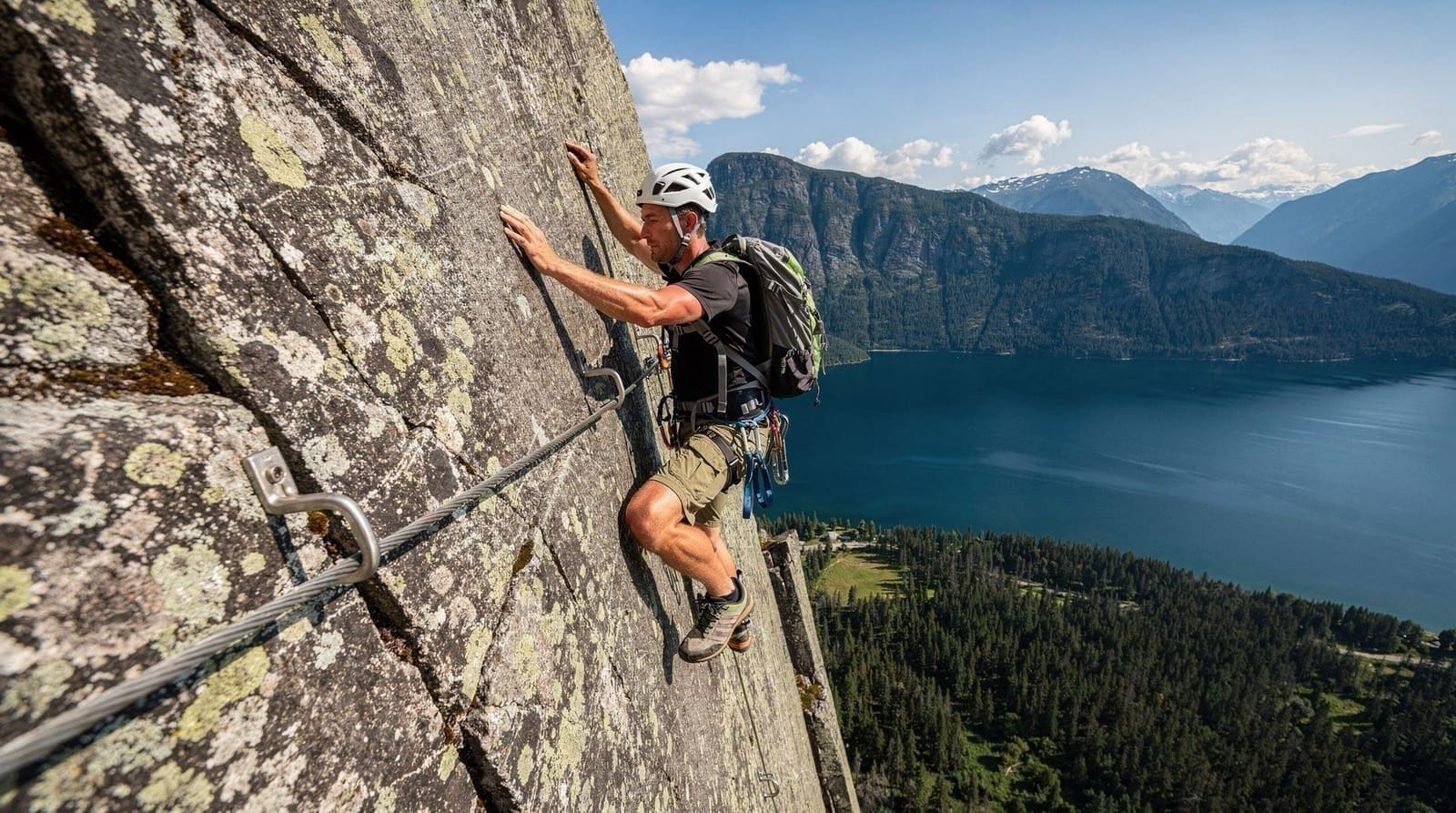
For travelers who want the exposure and height of climbing without the technical skill requirement, the via ferrata guide is worth reading — it’s not located in Squamish itself (the nearest bookable via ferrata sits on Whistler Mountain, roughly 50-60 minutes further up Highway 99), but it’s the closest bookable equivalent to “climbing terrain, no experience needed” in this corridor, using a secured cable-and-rung system rather than technical rock skills.
Seeing the terrain without climbing
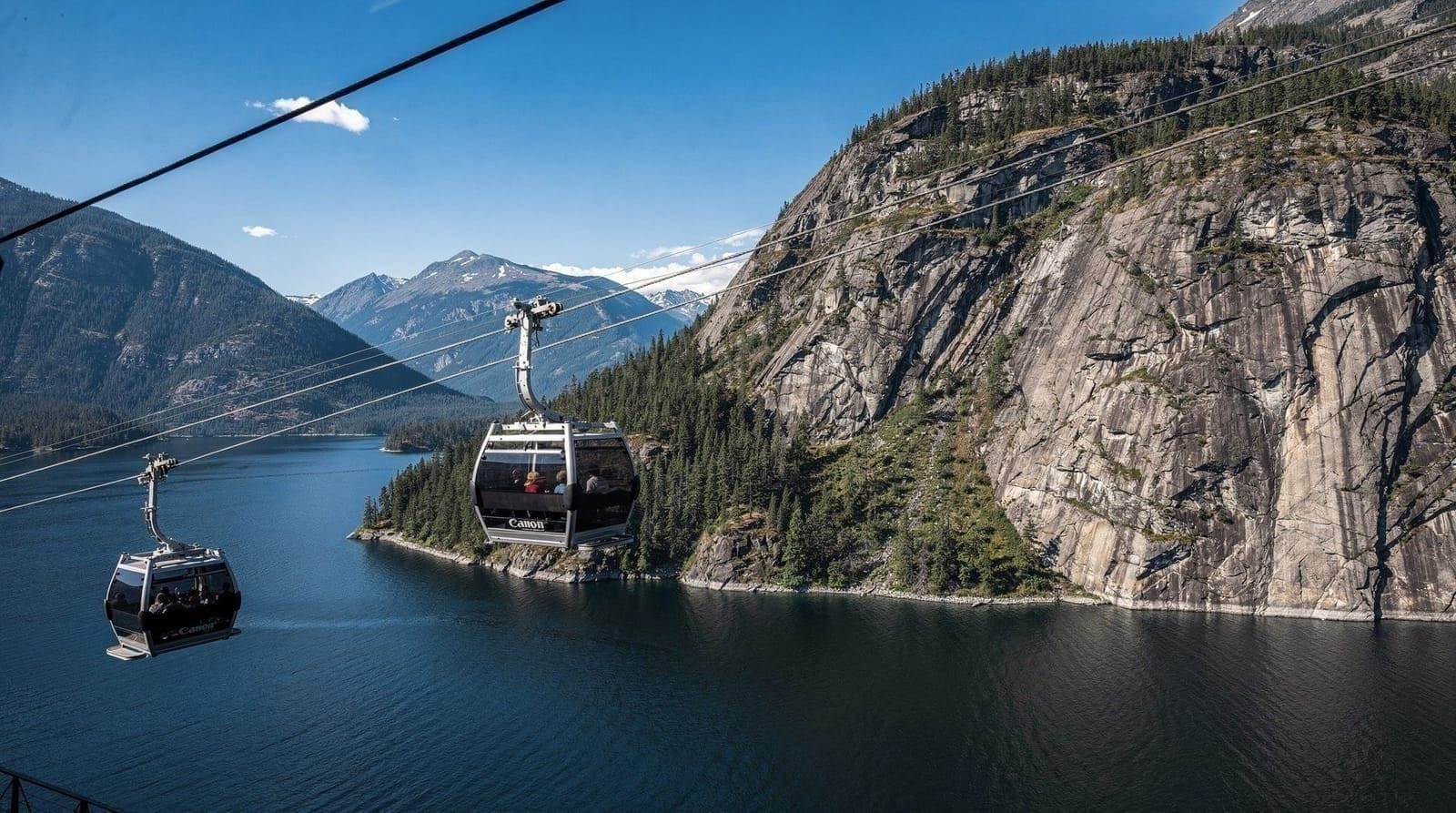
The Sea to Sky Gondola is the single best way for non-climbers to appreciate Squamish’s climbing terrain without any technical activity. The gondola rises from near sea level to an alpine viewpoint at Mount Habrich, with sweeping views over Howe Sound, the Stawamus Chief’s granite face from a genuinely dramatic angle, and Shannon Falls below. It’s a comfortable, family-friendly way to see exactly what draws climbers to the area, including watching tiny figures on the Chief’s face from a safe and scenic distance — a good complement to a climbing-focused trip for non-climbing members of the group, or a standalone activity for travelers who simply want the views.
Squamish’s climbing culture and festival scene
Squamish leans into its climbing identity as a town — gear shops, climbing-focused cafes, and a general outdoor-town atmosphere are visible throughout the compact downtown core, distinct from the more general tourism feel of nearby Whistler. Squamish Days, a long-running summer festival, draws climbers and outdoor enthusiasts from across the region, and the broader climbing community treats the area as a genuine pilgrimage destination rather than a passing stop on the way to Whistler. Even travelers with no climbing intentions will notice this identity quickly — it shapes the town’s restaurants, shops, and general pace in a way that’s distinct from most Sea-to-Sky corridor stops.
Season and conditions
Climbing season in Squamish runs roughly April through October for most routes, tracking BC’s wet-winter, dry-summer weather pattern — granite gets slick and cold in the rain, and winter here brings the heaviest rainfall of the year. Peak season for serious climbing trips runs through summer, June to August, when conditions are most reliably dry, though this also means the most crowded routes and campgrounds. Shoulder months (April-May, September-October) offer thinner crowds with a real chance of good weather, alongside real risk of a wet week that shuts down climbing entirely — worth building flexibility into any climbing-focused trip plan rather than a single fixed date.
Combining a Squamish climbing trip with other activities
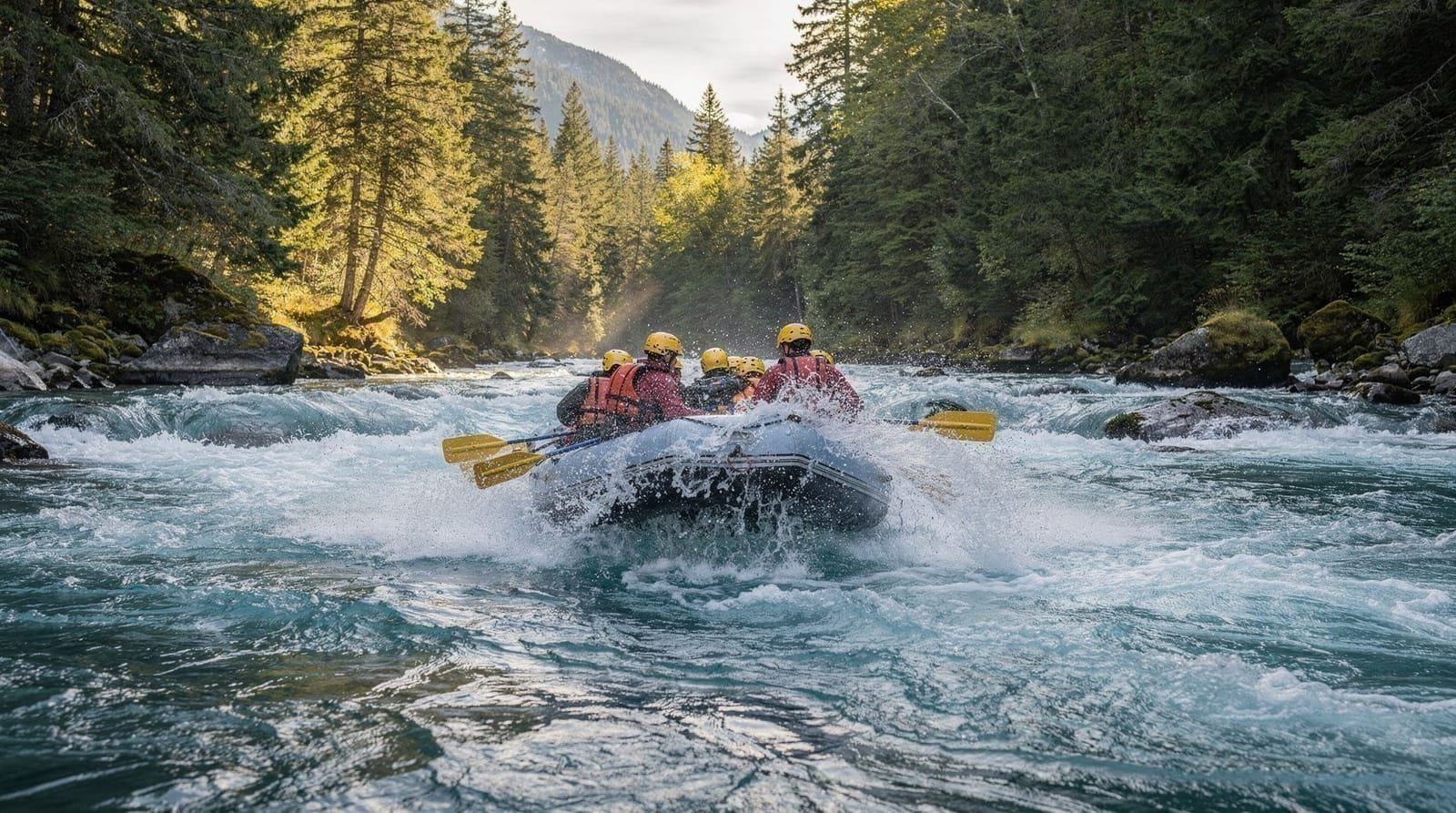
Squamish’s compact size means a climbing-focused day (or few days) leaves easy room to add adjacent activities. The Elaho Exhilarator rafting trip runs on rivers just outside town and pairs naturally with a climbing day for groups wanting a mix of dry and wet adventure activities, covered in full in the white-water rafting near Squamish guide.
Travelers continuing north to Whistler afterward should read the Whistler Mountain via ferrata experience listing, and the fuller Sea-to-Sky adventure activities guide lays out how to sequence Squamish and Whistler adventure stops across a multi-day trip without overloading any single day.
Camping and staying near the climbing areas
Squamish’s climbing scene has a strong campground culture, with sites near the Chief and Murrin Park drawing climbers for multi-day trips rather than single day visits, particularly during peak summer. The Stawamus Chief campground, close to the base of the mountain, is a popular option for climbers wanting an early start on multi-pitch routes, though sites fill up quickly in summer and reservations well ahead of a trip are advisable. Travelers not camping will find Squamish’s in-town accommodation options generally more modest and better value than Whistler’s resort pricing, another reason many climbers base themselves in Squamish rather than commuting up from Vancouver daily.
Weather and rockfall considerations
Beyond the general wet-winter, dry-summer pattern, climbers should be aware that granite in Squamish can stay damp or slick for a day or more after rain, since the rock doesn’t dry as quickly as it might appear from the base. Checking recent weather and route conditions (local climbing shops and online route databases both track current conditions) before committing to a specific multi-pitch route saves a wasted approach hike to a route that turns out to be too wet to safely climb. Rockfall, while not a constant hazard, is a real consideration on some of the Chief’s routes, particularly after freeze-thaw cycles in shoulder season — another reason a helmet is increasingly standard practice even for confident climbers.
Getting there
Squamish sits roughly 45 minutes to 1 hour from Vancouver via the Sea-to-Sky Highway (Highway 99), a straightforward and scenic drive along Howe Sound. A car makes visiting Murrin Provincial Park and reaching various climbing approaches significantly easier than relying on transit, since climbing areas are spread along the highway corridor rather than concentrated downtown. The Squamish destination guide covers broader town logistics, parking, and where to eat before or after a day on the rock.
Why Squamish earned its reputation
Squamish’s standing among climbers isn’t a marketing invention — it stems from a genuinely rare combination of factors: an enormous, high-quality granite face (the Chief) within a short drive of a major international airport, a temperate climate that allows a long climbing season compared to many alpine destinations, and decades of route development by generations of climbers that have left the area with an unusually dense and well-documented network of established lines. Climbers from around the world plan dedicated trips to Squamish specifically, in the same way they might plan a trip to Yosemite or the Dolomites, and the town’s identity has grown up around that reputation.
For travelers without a climbing background, understanding this context helps explain why Squamish feels different from a typical BC mountain town — the outdoor-gear shops, the climbing-specific cafes, and the general atmosphere all reflect a place that’s genuinely built around this one sport in a way most tourist destinations aren’t built around any single activity.
What non-climbers can still take away from a Squamish visit
Even without touching a rock, a Squamish stop offers a reasonable amount for non-climbing travelers. The Sea to Sky Gondola delivers the area’s best views without technical activity, the town’s compact downtown has a genuine local feel worth an hour of wandering and a meal, and simply watching climbers work routes on the Chief from a base-area vantage point gives a visceral sense of the terrain’s scale that photos alone don’t capture. Travelers passing through Squamish purely as a stop en route to Whistler should still budget at least an hour or two here rather than treating it as a pure highway pit stop — it holds up as a destination in its own right, not just a waypoint.
The annual climbing calendar in Squamish
Beyond the general April-October window, Squamish’s climbing calendar has some texture worth knowing if timing a trip specifically around the climbing scene rather than general sightseeing. Squamish Days, the town’s long-running summer festival with strong climbing-community involvement, typically draws extra crowds and a lively atmosphere in late July, worth building into a trip if the festival energy appeals, or worth avoiding if you’d rather have quieter trails and campgrounds.
Fall (September into October) is often cited by experienced Squamish climbers as an underrated season — cooler temperatures than peak summer make for better friction on the granite, and crowds thin out noticeably compared to July and August, though the trade-off is a shorter daylight window and higher chance of a rained-out day as the wet season approaches.
First-timer expectations versus reality
Visitors who’ve heard about Squamish’s reputation but have never climbed sometimes arrive expecting a single obvious “starter route” or welcome center experience, similar to how Grouse Mountain or the Sea to Sky Gondola present a clear, packaged visitor experience. Squamish doesn’t quite work that way — it’s a genuine climbing area built around self-organized access (or guided access through a hired operator), not a curated tourist attraction with a ticket booth and marked trail.
This is part of its authenticity and appeal to serious climbers, but it does mean first-time visitors without a guide or a climbing-experienced friend will get considerably less out of a Squamish stop than someone who arranges instruction in advance or who already climbs. Setting this expectation early avoids disappointment for travelers who show up hoping to simply wander up to the rock and start climbing.
Frequently asked questions about rock climbing in Squamish
Can beginners climb in Squamish?
Yes, particularly at Murrin Provincial Park, which has beginner-friendly top-rope walls suited to first-timers with proper instruction or a guide. The Stawamus Chief’s headline routes require real trad-climbing experience.
How do I book a guided climb in Squamish?
No dedicated guided climbing product is currently listed through GetYourGuide for Squamish — search for and contact Squamish-based mountain guide operations directly to arrange instruction or a guided climb.
What’s the difference between hiking and climbing the Stawamus Chief?
Hiking the Chief follows a non-technical trail to one or more of its three summits, achievable by fit hikers without climbing gear or experience. Climbing the Chief means ascending its granite face directly, which requires technical trad-climbing skill and gear.
Is there a way to see the climbing terrain without climbing?
Yes — the Sea to Sky Gondola rises to an alpine viewpoint with sweeping views of the Chief’s face, Howe Sound, and Shannon Falls, giving a genuine sense of the terrain without any technical activity.
What season is best for climbing in Squamish?
Roughly April through October, with the most reliable conditions in summer (June-August). Winter climbing is uncommon given BC’s wet, rainy winter season.
Can I just watch climbers without climbing myself?
Yes — base-area viewpoints near the Chief and the Sea to Sky Gondola both offer good vantage points to watch climbers on established routes, a popular activity in its own right for non-climbing travelers curious about the sport.
Is a Squamish climbing trip worth it if I’m only passing through on the way to Whistler?
Even a short stop is worthwhile for the scenery and atmosphere, but experiencing the actual climbing scene meaningfully generally requires either a dedicated day (for a guided beginner session at Murrin Park) or advance arrangement with a local guide for anything on the Chief itself — a five-minute highway pull-off won’t capture much beyond the view.
Choosing between a guided day at Murrin Park and a self-organized trip
For visitors without their own climbing partner or gear, a guided beginner day at Murrin Provincial Park is the more realistic entry point than attempting to arrange independent climbing on short notice. A typical guided session covers gear, basic instruction on movement and safety, and several routes across a few hours, giving a genuine taste of the sport without requiring prior experience or a personal rack of equipment. Experienced climbers with their own gear and a partner, by contrast, can head straight to either Murrin or the Chief independently, using published route guides or local climbing shop advice to pick appropriate routes for the day’s conditions and group’s ability.
What to expect from a guided beginner session
A typical guided introduction to climbing at Murrin Park starts with a safety briefing covering harness fit, basic commands between climber and belayer, and how the top-rope system works, before moving to an easier route to build comfort with the movement and exposure. Guides generally scale difficulty up through the session based on how a group or individual is progressing, and most beginner sessions prioritize building confidence and technique over covering as many routes as possible in the available time. Comfortable athletic clothing, closed-toe shoes that fit securely (climbing shoes are typically provided), and a reasonable level of general fitness are the main things to bring or prepare for; no prior climbing knowledge is assumed.
Squamish versus other Canadian climbing destinations
Within Canada specifically, Squamish holds a level of name recognition among climbers that few other domestic destinations match, owing to the combination of the Chief’s scale, the sheer density of established routes, and straightforward access from a major airport. Other Canadian climbing areas exist — in the Rockies, in Ontario’s Niagara Escarpment, and elsewhere — but few combine Squamish’s specific mix of world-class granite, a long climbing season, and genuine convenience from an international gateway city.
For travelers specifically comparing Canadian climbing destinations before choosing where to spend limited vacation time, Squamish’s accessibility from Vancouver is a real practical advantage over more remote Canadian climbing areas that require additional flights or long drives to reach.
Top experiences
Bookable activities with verified prices and instant confirmation on GetYourGuide.