Sea to Sky Gondola review: Squamish's answer to Grouse Mountain
Squamish: Sea to Sky Gondola Admission Ticket
- Free cancellation
A newer, less crowded mountain summit halfway to Whistler
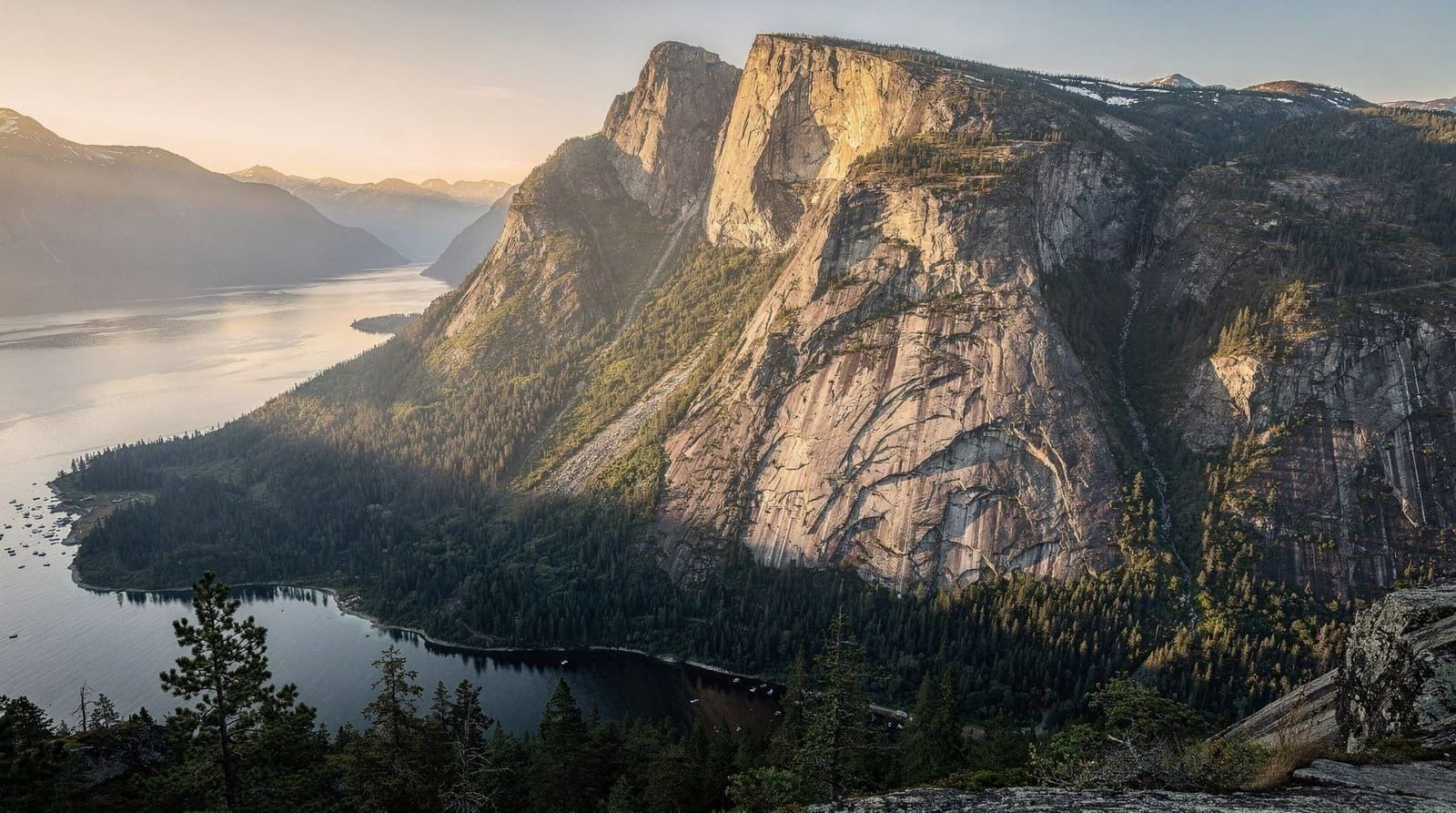
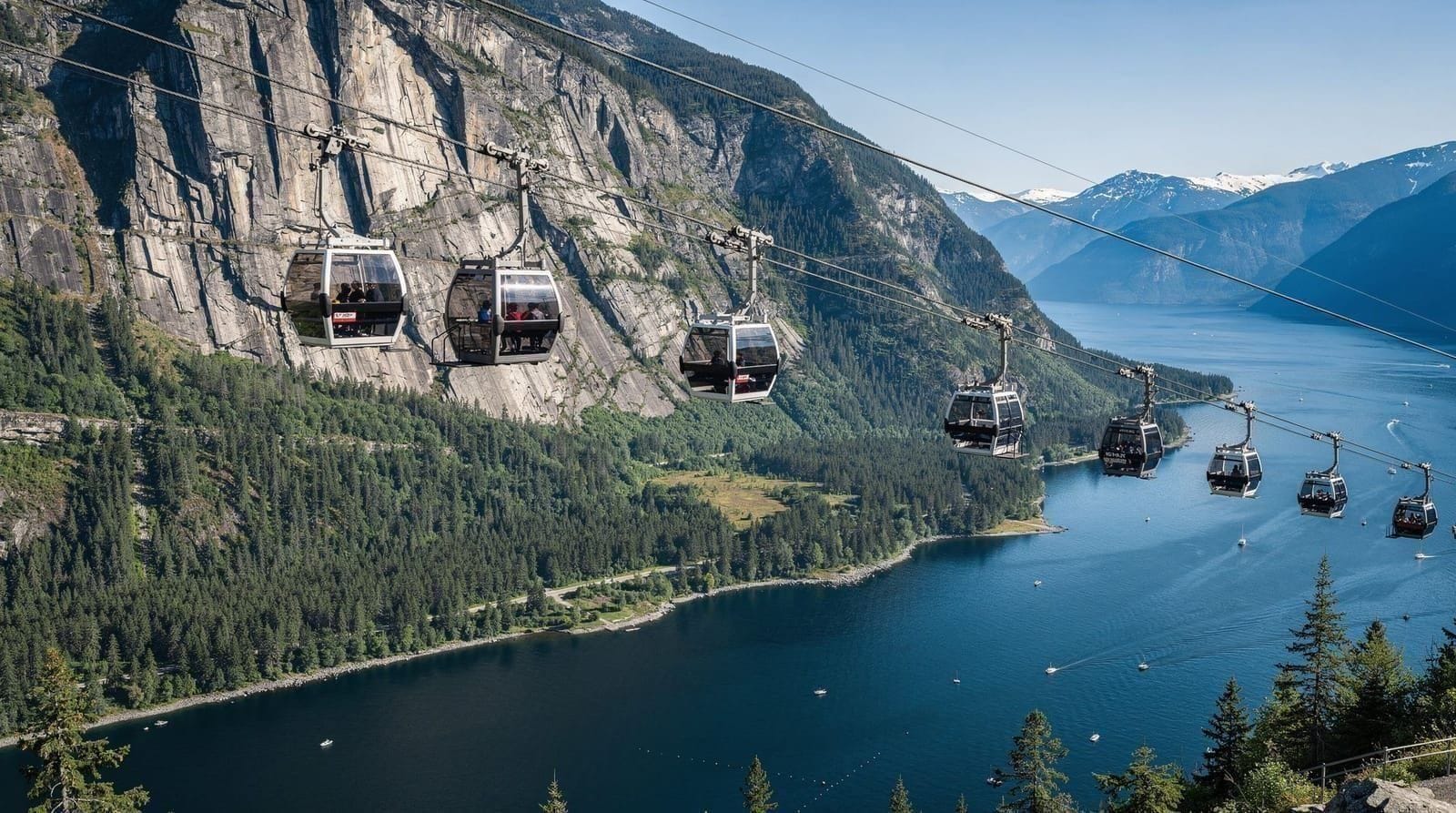
The Sea to Sky Gondola climbs from the floor of the Squamish valley up to an 885-metre summit overlooking Howe Sound, the Stawamus Chief’s granite face, and — on a clear day — a genuinely sweeping view stretching toward the Tantalus Range. It opened in 2014, considerably later than Grouse Mountain or Capilano, and it shows: the infrastructure is newer, the trail network is more developed, and — the detail most visitors comment on — the crowds are noticeably thinner than the North Shore attractions, even in peak summer.
The trade-off is location. Squamish sits about 45 minutes to an hour from downtown Vancouver, roughly double the drive to Grouse Mountain or Capilano. That extra time is exactly why this attraction stays less crowded, and it’s also why it pairs so naturally with a Whistler day trip — Squamish sits almost exactly at the halfway point along the Sea-to-Sky Highway.
| Where | Squamish, off Highway 99 — 45 min to 1hr from downtown Vancouver |
| Cost | Adult admission around CAD 58–65 |
| Time needed | 1 hour for a quick visit; 2–4 hours with hiking |
| Getting there | Self-drive or guided tour/shuttle (no direct transit) |
| Best time | Weekday, and check the live summit webcam before a view-focused visit |
What’s included at the summit
The gondola ride itself takes about 10 minutes, climbing roughly 885 metres. At the top:
- The Sky Pilot Suspension Bridge, a 100-metre pedestrian bridge crossing a mountain gap at the summit, with sweeping views over Howe Sound and the surrounding Coast Mountains — a different kind of suspension-bridge experience from Capilano’s canopy-level canyon crossing.
- The Summit Lodge and viewing decks, with panoramic seating and a restaurant.
- The Panorama Trail, an easy, mostly boardwalked loop suitable for most fitness levels, taking 30 to 45 minutes.
- Longer alpine hiking trails, including routes toward Al’s Habrich Ridge and other backcountry connections, for visitors wanting a proper half-day or full-day hike starting from the summit rather than the valley floor.
- A summer zipline and via ferrata option at some points in the season, run as a separate paid add-on rather than included in standard admission.
A Sea to Sky Gondola admission ticket covers the gondola ride and everything at the summit listed above.
Prices and how to book
Adult admission runs roughly CAD 58 to 65, broadly comparable to Grouse Mountain’s Skyride pricing, with discounts for youth, students, and seniors, plus family bundles. As with the other North Shore-style attractions, booking online ahead of a summer weekend visit is worth it mainly to skip the ticket-counter queue rather than to save significant money — walk-up and online pricing tend to be close.
If you’re planning to combine the gondola with a Whistler day trip, a Sea to Sky Gondola and Whistler day trip tour bundles a gondola stop into the broader Whistler itinerary, letting you see both without arranging separate transport.
Sea to Sky Gondola vs. Grouse Mountain: the honest comparison
Both offer a gondola-accessed mountain summit with panoramic views, hiking trails, and a suspension bridge or equivalent photo-op structure — but they differ in a few concrete ways:
- Scale and drama: the Sea to Sky Gondola’s summit views over Howe Sound and the Stawamus Chief are generally considered more dramatic than Grouse Mountain’s more city-facing outlook, though Grouse’s downtown Vancouver skyline view has its own appeal.
- Crowds: the Sea to Sky Gondola sees meaningfully fewer visitors than Grouse Mountain, largely a function of the extra drive time filtering out casual day-trippers.
- Wildlife: Grouse Mountain wins outright here — its grizzly bear refuge has no equivalent at the Sea to Sky Gondola.
- Convenience: Grouse Mountain is 20 minutes from downtown; the Sea to Sky Gondola is 45 minutes to an hour, doubling your transit commitment.
- Hiking depth: the Sea to Sky Gondola offers more serious backcountry-adjacent trail options for visitors wanting a real hike rather than a short summit loop.
If you can only fit one mountain attraction into your trip and want the most accessible option with a wildlife encounter, Grouse Mountain wins. If you have a car, some extra time, and want a quieter, more dramatic alpine experience — especially if you’re already driving toward Whistler that day — the Sea to Sky Gondola is the stronger pick. For a dedicated full day built around the gondola and Squamish rather than a Whistler pass-through, a full-day Squamish and Sea to Sky Gondola tour from Vancouver handles transport both ways.
Getting there from Vancouver
The Sea to Sky Gondola base sits right off Highway 99 in Squamish, making it one of the easier stops to combine with a Whistler-bound drive. Self-driving takes 45 minutes to an hour from downtown Vancouver depending on traffic. Public transit is more limited than the North Shore attractions — there’s no direct SkyTrain-and-bus combination — so most car-free visitors book a guided tour or shuttle service rather than relying on public transport.
Best time to visit
The gondola and summit trails operate year-round, with a distinctly different character by season. Summer (June–September) brings the fullest trail access, warm-weather hiking, and the clearest long-distance views. Winter turns the summit into a snowshoeing destination, with rental gear available on-site and a dedicated snowshoe trail network — a genuinely different, quieter experience from the summer visit, and one of the more accessible ways to get into snow near Vancouver without a full ski day. A guided snowshoeing tour at the top of the Sea to Sky Gondola includes gear and a guide for visitors without their own snowshoeing experience.
Shoulder seasons (May and October) balance milder crowds against slightly less reliable weather — worth checking forecasts before committing to a summit-view-focused visit, since cloud cover can roll in and obscure the payoff view with little warning.
| Season | Conditions | Crowds | Best activity |
|---|---|---|---|
| Summer (Jun–Sep) | Clearest long-distance views, warm | Thinner than Grouse but busiest of the year here | Full trail network, Panorama Trail, zipline/via ferrata |
| Shoulder (May, Oct) | Milder, less reliable | Quiet | Panorama Trail, photography |
| Winter | Cold, snow at summit | Quietest | Snowshoeing (gear and guided tours available) |
Choosing a hiking trail once you’re at the top
The Panorama Trail suits nearly anyone who can manage a flat, mostly boardwalked 30-to-45-minute loop, and it’s the default choice for a quick summit visit. Beyond that, the trail network splits into genuinely different commitments: shorter forested loops connecting back toward the Sky Pilot Suspension Bridge suit visitors wanting an hour or two of walking without technical difficulty, while routes toward Al’s Habrich Ridge and other backcountry connections are a real half-day-or-more undertaking on exposed alpine terrain, often without cell service.
Checking trail status at the visitor centre before setting out on anything beyond the Panorama Trail is worth the two minutes it takes, since conditions (especially snow lingering into early summer at higher elevations) can close sections with little public notice.
Sea to Sky Gondola with kids and families
The core summit experience — the Summit Lodge, viewing decks, and the easy, mostly-boardwalked Panorama Trail — is manageable for most families, including strollers on the flatter sections, and the Sky Pilot Suspension Bridge’s wide, solid deck tends to feel less intimidating to nervous kids than Capilano’s longer, narrower crossing.
The main thing to plan around is the drive itself: nearly two hours of round-trip car time is a lot to ask of younger children in a single day, so pairing the gondola with a Whistler day trip (rather than treating it as a standalone half-day from Vancouver) tends to make better use of the driving already built into the itinerary. Our Vancouver with kids guide covers broader family-trip logistics for the Sea-to-Sky corridor.
The Stawamus Chief and why Squamish draws climbers
Squamish’s reputation as a climbing destination is inseparable from the view most visitors get from the Sea to Sky Gondola’s summit and the Sky Pilot Suspension Bridge — the Stawamus Chief, a massive granite monolith rising directly from the valley floor, is one of the largest granite outcrops in the world and a genuine draw for rock climbers from around the globe.
You don’t need to climb it to appreciate it; the gondola’s summit platforms offer some of the best vantage points for photographing the Chief’s scale against Howe Sound without any technical climbing involved. For visitors interested in the climbing culture itself, Squamish’s town centre has a noticeably outdoorsy, gear-shop-and-brewery character that’s grown considerably over the past decade, worth a wander if you have time beyond the gondola visit itself.
Accessibility and who should think twice
The gondola itself, the summit lodge, and the short Panorama Trail are all wheelchair and stroller accessible, making the core summit experience workable for visitors who can’t or don’t want to hike. The Sky Pilot Suspension Bridge has a solid, wide walking surface rather than the narrower cable-and-plank style of some suspension bridges, which some visitors with mobility or balance concerns find more comfortable than Capilano’s longer crossing. The longer backcountry-adjacent trails are a different matter — proper hiking boots, layered clothing and a realistic sense of your own fitness level are genuinely necessary, since some routes head into exposed alpine terrain without cell service.
Combining it with Whistler or Squamish
Because it sits almost exactly halfway along the Sea-to-Sky Highway, the gondola is a natural stop on any Whistler-bound day trip rather than a separate standalone outing for most visitors. A private full-day mountain tour focused specifically on the gondola and Squamish area is also available for visitors who want to spend a full day around Squamish itself — hiking, the gondola, and the town — without continuing on to Whistler.
What the summit lodge and food options are like
The Summit Lodge at the top of the gondola houses a full-service restaurant and a more casual café-style counter, both leaning on the panoramic Howe Sound views as much as the food itself — a reasonable but not exceptional lunch stop, priced accordingly for a captive mountaintop location. Packing your own snacks is the budget-conscious move if you’re not planning a sit-down meal, and there are picnic areas near the summit trails where outside food is generally welcome. Water refill stations are available at the summit, worth using before setting out on any of the longer trail options.
How weather affects the experience more than at Grouse Mountain
Because the Sea to Sky Gondola’s summit sits in a more exposed alpine setting than Grouse Mountain’s, coastal cloud and fog can roll in and obscure the payoff Howe Sound view somewhat more readily — a real consideration since the view is a bigger part of the draw here than at Grouse, which has its wildlife encounter as a reliable backup even on a socked-in day. Checking a live webcam (most gondola operators publish one on their website) before setting out for a view-focused visit is a worthwhile five-minute check that can save a wasted trip on a poor-visibility day, particularly during shoulder season when conditions change quickly.
Practical tips
- Check trail conditions before attempting the longer alpine hikes — some backcountry-adjacent trails require proper hiking gear and aren’t suitable for casual visitors in flip-flops.
- Bring layers regardless of season — the summit runs noticeably cooler and windier than the Squamish valley floor.
- Combine it with a Squamish town stop if you have time — the town itself has a growing food and brewery scene worth an hour, separate from the gondola.
- Book online for a specific time slot on summer weekends to skip the ticket line, even though the price difference from walk-up is minimal.
- Don’t try to do both Grouse Mountain and the Sea to Sky Gondola in one day — combine the gondola with Whistler instead, and save Grouse Mountain for a separate North Shore day with Capilano.
For more on the wider Sea-to-Sky corridor, see our Squamish destination guide and the Sea-to-Sky Highway drive guide. If you’re deciding between this and Grouse Mountain, our Sea to Sky Gondola vs. Grouse Mountain comparison breaks the trade-offs down further, and the 3-day Sea-to-Sky road trip itinerary shows how to build a longer trip around Squamish and Whistler together.
Compare alternative tours
Frequently asked questions — Sea to Sky Gondola review
Is the Sea to Sky Gondola worth the extra drive compared to Grouse Mountain?
If you have the extra hour of driving to spare, most visitors find it's worth it — the Sea to Sky Gondola delivers a bigger, more dramatic mountain landscape with noticeably fewer crowds than Grouse Mountain, plus its own suspension bridge. If you're short on time and only want a quick mountain fix close to downtown, Grouse Mountain's proximity wins on convenience.How much does the Sea to Sky Gondola cost?
Adult admission typically runs around CAD 58 to 65, with reduced pricing for youth, students and seniors, and family bundles. Pricing is broadly comparable to Grouse Mountain, though it varies somewhat by season.How long does a visit to the Sea to Sky Gondola take?
Budget 2 to 4 hours depending on how much hiking you want to do. A quick visit covering the summit viewing platforms and the Sky Pilot Suspension Bridge takes about an hour; adding one of the shorter hiking loops (like the Panorama Trail) extends it to 2 to 3 hours, and longer alpine trails can take most of a day.Where is the Sea to Sky Gondola located?
It's in Squamish, roughly halfway between Vancouver and Whistler along the Sea-to-Sky Highway (Highway 99) — about a 45-minute to 1-hour drive from downtown Vancouver, making it a natural stop on the way to or from a Whistler day trip.Is the Sky Pilot Suspension Bridge similar to Capilano's?
It's a shorter, higher-elevation bridge crossing a mountain gap at the summit, rather than a canyon crossing over a river — a different kind of view (alpine ridgeline rather than rainforest canyon) but a similarly photogenic crossing, without the crowds Capilano sees in peak season.Can you combine the Sea to Sky Gondola with the Sea-to-Sky Gondola's ziplines or via ferrata?
Yes, when running seasonally — the summit offers an optional zipline course and a via ferrata climbing route as separate paid add-ons rather than being included in standard gondola admission. Both require booking ahead in peak season, since spots are limited and they run on their own schedule apart from the gondola's continuous operation.