Granville Island in a day, done properly
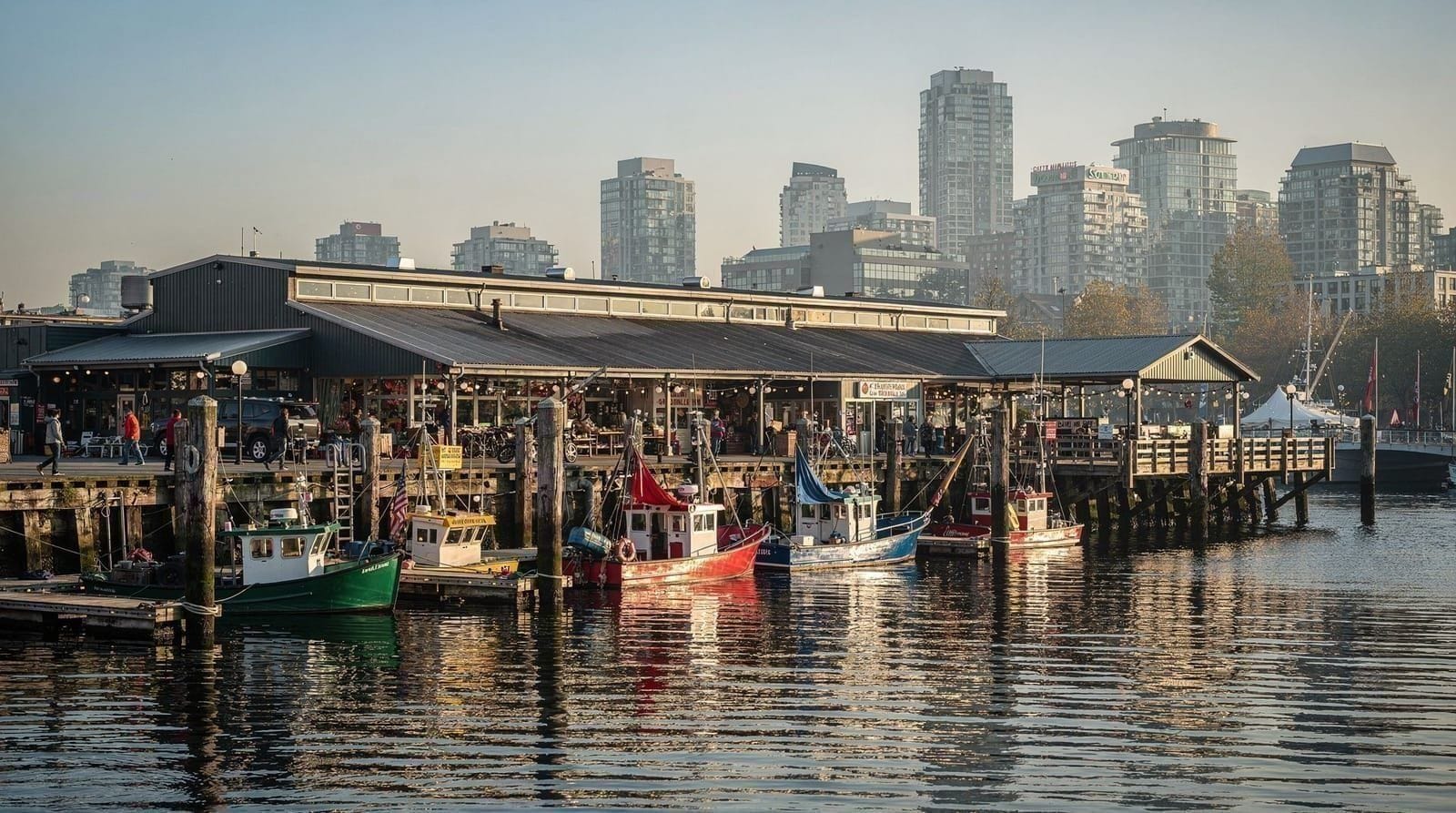
Granville Island is a former industrial site under the south end of the Granville Street Bridge, converted from sawmills and factories into a public market, artisan studios, two theatres, and a working boatyard, all packed onto a peninsula you can walk end to end in fifteen minutes. It’s one of the few Vancouver attractions that genuinely earns its reputation rather than just photographing well, but it’s also small enough that a poorly timed visit means fighting crowds for the entire duration.
| Where | South end of the Granville Street Bridge, False Creek |
| Cost | Free to enter; budget around CAD $30-45 per person for food, drinks, ferry |
| Time needed | Half day (2-3 hours) for the market plus one extra stop |
| Getting there | Aquabus/False Creek Ferries, 10-15 min walk from Broadway-City Hall SkyTrain, or drive |
| Best time | Weekday mornings before 10:30am; avoid 11am-3pm on summer weekends |
What the Public Market actually is
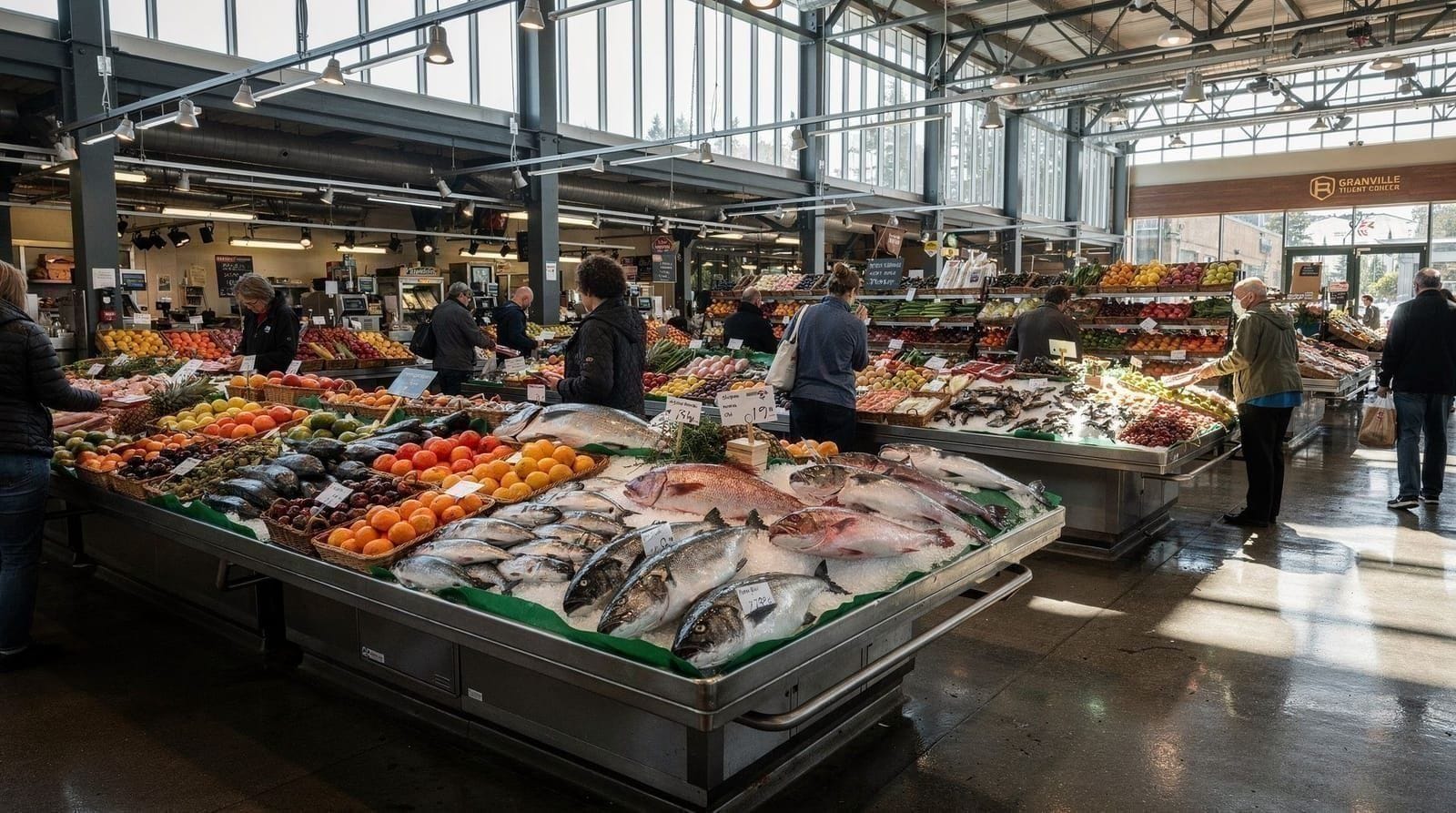
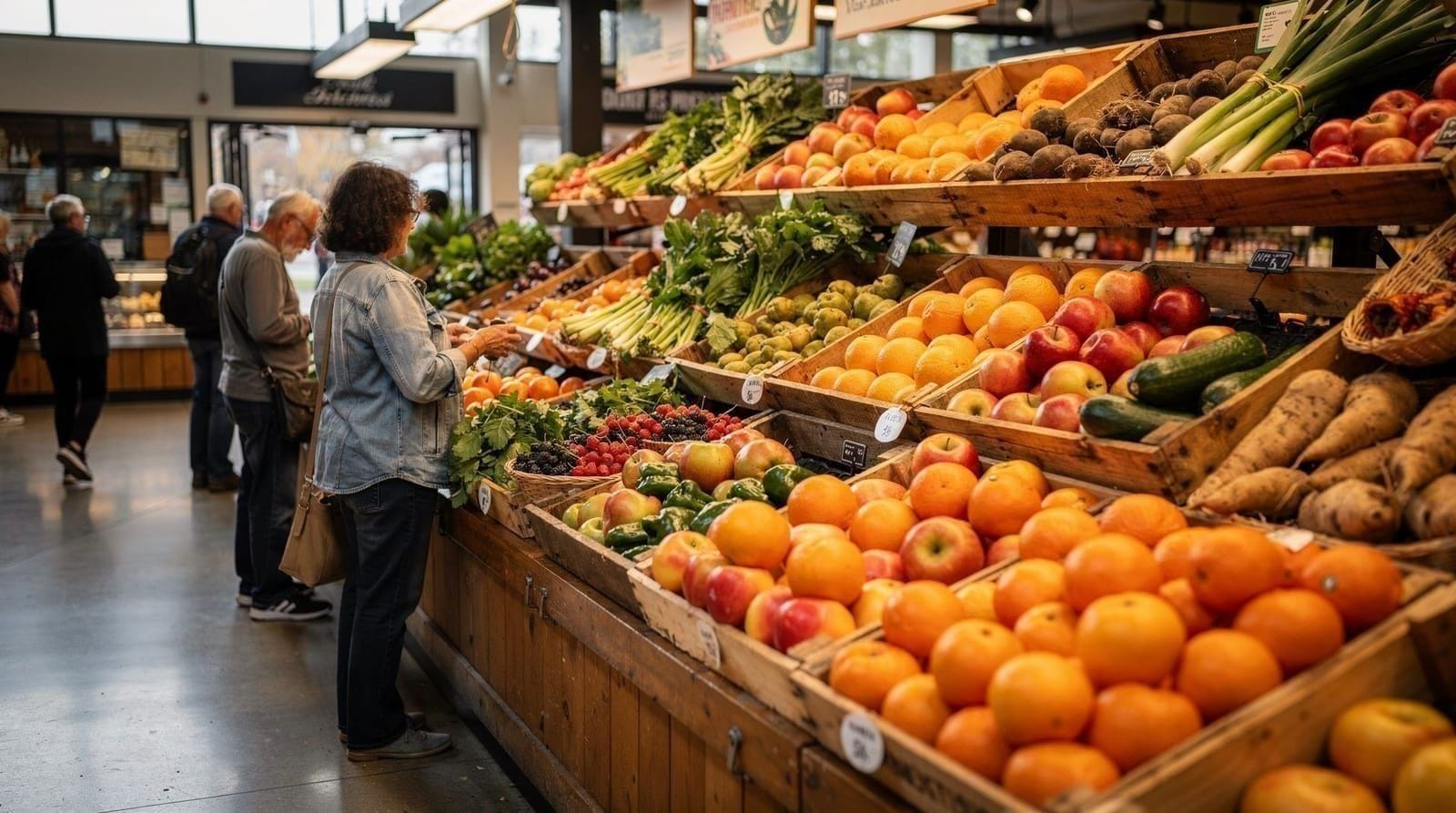
The Net Loft and the main Public Market building hold more than 50 vendors selling produce, fresh seafood, baked goods, cheese, and prepared food, plus a handful of specialty stalls (Oyama Sausage, Lee’s Donuts, Benton Brothers Fine Cheese) that have built genuine followings over decades rather than being recent tourist-oriented additions. It’s a working market first — locals shop here for weekly groceries — which is part of why it holds up better than most “market experiences” built primarily for visitors.
Lee’s Donuts is the one stall guaranteed to have a line at almost any hour; it’s worth the ten-minute wait once, but don’t plan your whole visit around it. Oyama’s cured meats and the market’s seafood counters are better indicators of what makes this place worth visiting than the donut queue.
Granville Island Brewing: the overlooked stop
Granville Island Brewing, founded in 1984, was Canada’s first microbrewery and still operates a small on-site brewery a short walk from the main market building, with tours running multiple times daily for under CAD $10 and tasting flights around CAD $7. It’s easy to miss because it’s tucked slightly off the main pedestrian flow, but for anyone with 30 to 45 minutes to spare, it’s a better use of time than a third lap of the market stalls. A broader look at the market and its history covers what’s changed here over the decades and what’s stayed the same.
Getting there without a car
Granville Island has no direct transit line — the closest approach is a 10 to 15 minute walk from the Broadway-City Hall SkyTrain station, or the small passenger ferries (Aquabus and False Creek Ferries) that run from Yaletown, Science World, and Kitsilano beaches across False Creek for a few dollars each way. The ferries are genuinely part of the experience rather than just transport — tiny, brightly painted boats crossing the harbour every few minutes — and arriving by water beats the walk if you’re coming from Yaletown or Kitsilano anyway.
Driving is the least recommended option. Parking on the island is limited, metered, and fills fast on weekends; the three-hour free lots exist but are routinely full by late morning in summer. If you’re driving regardless, arrive before 10am or plan to park off-island and walk in.
Timing your visit to avoid the crowd crush
Granville Island gets genuinely uncomfortable between 11am and 3pm on summer weekends — narrow aisles in the market building, queues at every food stall, and the outdoor plazas packed shoulder to shoulder. Weekday mornings, particularly before 10:30am, are close to peaceful by comparison, with vendors setting up and locals doing their actual shopping rather than tourists doing their actual sightseeing.
If a weekend visit is unavoidable, going right at opening (9am for most stalls) or arriving after 4pm, once day-trippers head back across the bridge, both work better than the midday window.
Eating without overpaying
The market’s food stalls are reasonably priced for what they are — CAD $8 to $15 for a solid lunch — but the sit-down restaurants ringing the market (Dockside, Sandbar, Tap & Barrel) skew toward tourist pricing for view-driven patios, which is a fair trade if the point is the waterfront view, but not if you’re just hungry.
A guided food walking tour through the market stalls is a reasonable option for visitors who want a curated tasting route rather than guessing which stall is worth the queue — a Granville Island food walking tour hits the market’s better-regarded vendors in about two hours with a guide who knows which stalls rotate seasonally.
For a self-guided version with a tasting focus built in, a Granville Island market tour with tastings covers a similar route with sampling included rather than paying per stall as you go, which works out cheaper if you’d otherwise sample five or six different vendors independently.
Beyond the market: what else is actually here
The island holds two theatres (Arts Club and Carousel), an art college (Emily Carr University moved off-island in 2017, but the arts community it left behind stuck around), and a cluster of working artisan studios — glassblowers, potters, jewellers — most of which allow visitors to watch the process. It’s genuinely worth a slow walk through the Net Loft building and the smaller studio alleys beyond the main market, which most day-trippers skip entirely in favour of the food stalls.
The kids’ market, a smaller building with toy shops and a small water park in summer, sits at the island’s edge and is worth knowing about for anyone traveling with children — it’s not a major attraction on its own but fills 20 to 30 minutes well if you’re managing a restless kid between market stops.
What the market gets wrong that visitors should know
Granville Island’s popularity has pushed prices up over the past decade, and a handful of stalls now trade on foot traffic more than quality — pre-packaged “artisan” goods with markups that don’t reflect anything special about the product. It’s not a scam in the way some Gastown souvenir shops are, but it’s worth applying a little skepticism to anything marketed heavily at the entrance versus the stalls locals actually queue for. Asking a market employee (not a vendor with something to sell) which seafood counter is freshest that day tends to get an honest answer, since staff have no stake in steering you toward a specific stall.
Public washrooms inside the market building get crowded fast at peak hours; the quieter ones near the Kids Market are a better bet than the main building’s during the lunch rush. Free water refill stations exist near the market entrance, worth using given how much walking a full visit involves.
Photography and quiet corners
The market building itself photographs well but is genuinely difficult to shoot without other visitors in frame during peak hours — the boatyard side of the island, with working docks and moored fishing boats against the North Shore mountains, is a much quieter and arguably more interesting subject, and almost nobody bothers walking the extra five minutes to reach it. The Railspur Alley studios, tucked behind the main market building, are similarly overlooked and worth a slow wander for anyone interested in the working-artisan side of the island rather than just the food stalls.
A realistic budget for the day
Between a market lunch (CAD $12 to $18 per person), a brewery tasting flight (around CAD $7), and a ferry crossing each way (roughly CAD $4 to $5 per trip on the Aquabus or False Creek Ferries), a half-day visit runs somewhere around CAD $30 to $45 per person without buying any souvenirs or take-home groceries — reasonable by Vancouver standards, and considerably cheaper than most paid attractions in the city. Produce and seafood bought to take home cooking will naturally push that figure up, but that’s the market functioning as intended rather than as a tourist trap.
Granville Island versus other Vancouver food stops
| Option | Distance from downtown | Vibe | Best for |
|---|---|---|---|
| Granville Island | 10-15 min ferry or walk | Working market, artisan studios | First-time visitors, half-day trips |
| Richmond dim sum scene | 25-35 min transit or car | Authentic, less tourist-facing | Return visitors wanting real local food |
| Chinatown | 10-15 min transit or walk | Historic, heritage restaurants | Cultural depth alongside food |
| Gastown food tour | 15-20 min transit or walk | Compact, walkable, curated | Visitors who prefer a guided route |
Frequently asked questions about Granville Island
Is Granville Island worth visiting on a rainy day?
Yes — the Public Market building itself is indoors, and most of a half-day visit (market stalls, the brewery tour, the Net Loft studios) can be done under cover. The outdoor plazas and ferry ride are the only parts genuinely affected by rain.
Can I visit Granville Island without any advance planning?
Yes, entirely — there’s no admission fee and no timed entry. The only planning worth doing ahead of time is picking a weekday morning or an off-peak time slot to avoid the worst of the midday crowd crush.
Is Granville Island good for a family with young kids?
Yes — the Kids Market at the island’s edge, with toy shops and a small summer water park, gives young children a dedicated stop, and the market’s food variety makes it easy to satisfy picky eaters without a sit-down restaurant reservation.
Combining it with the rest of False Creek
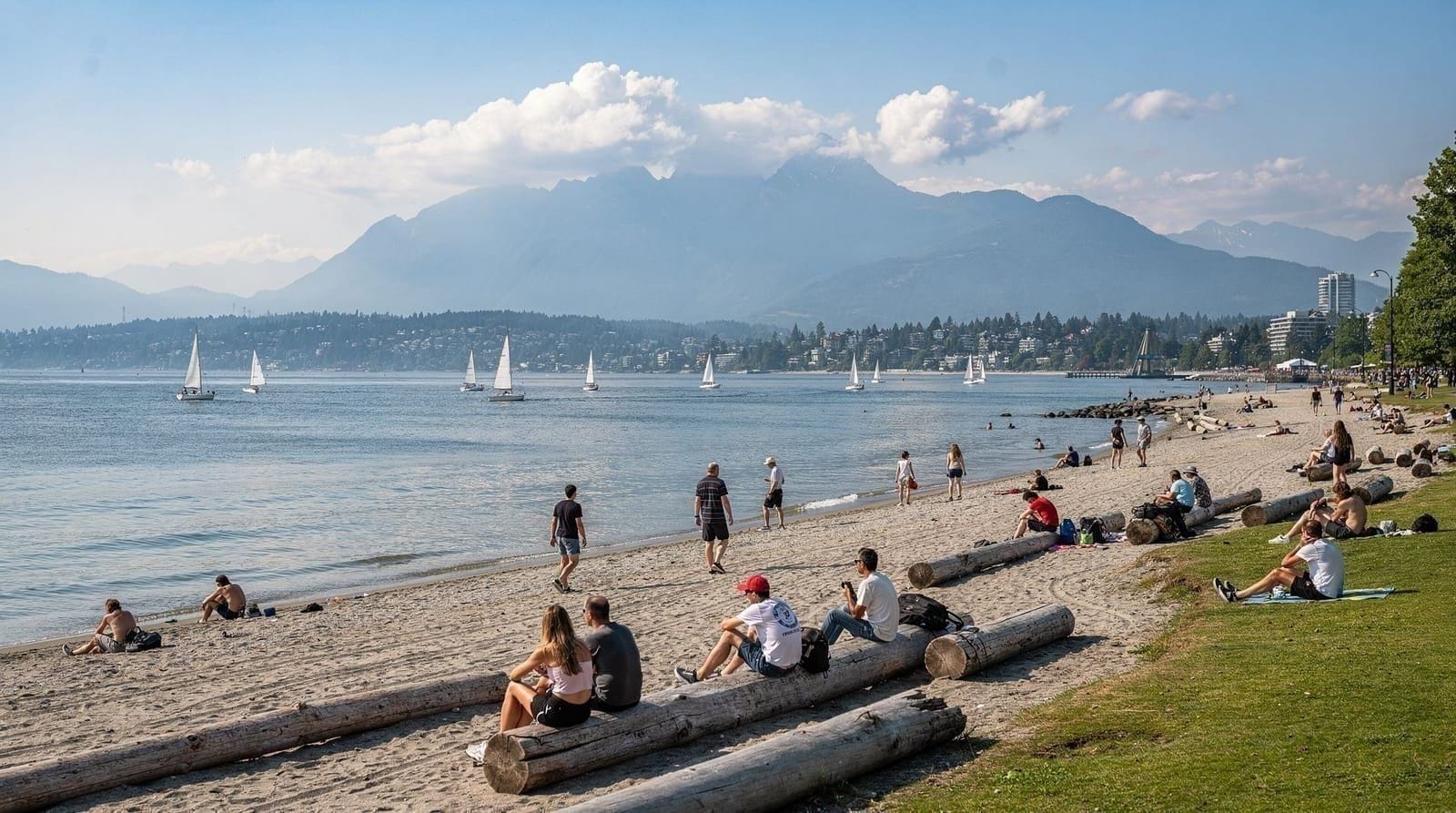
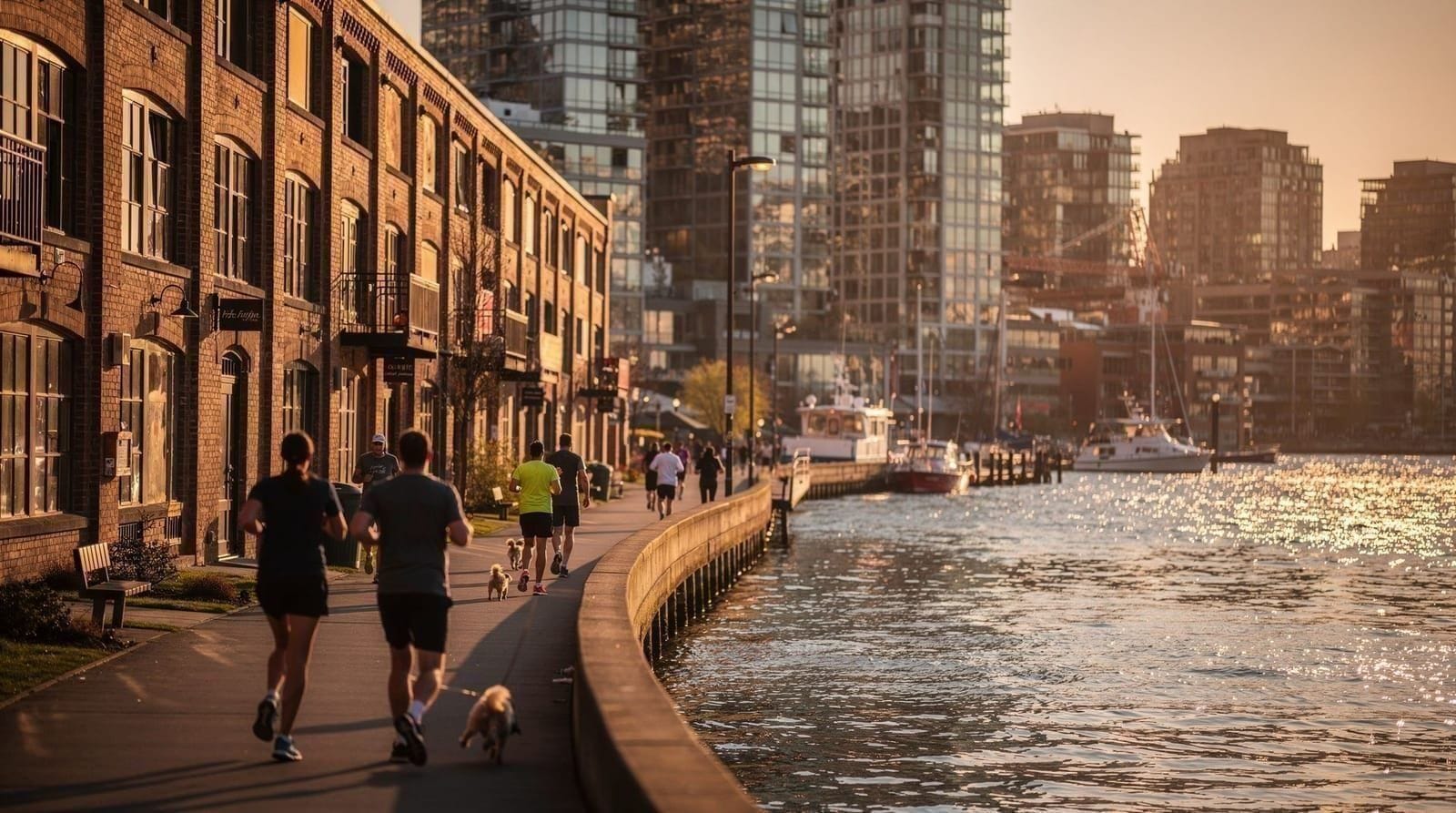
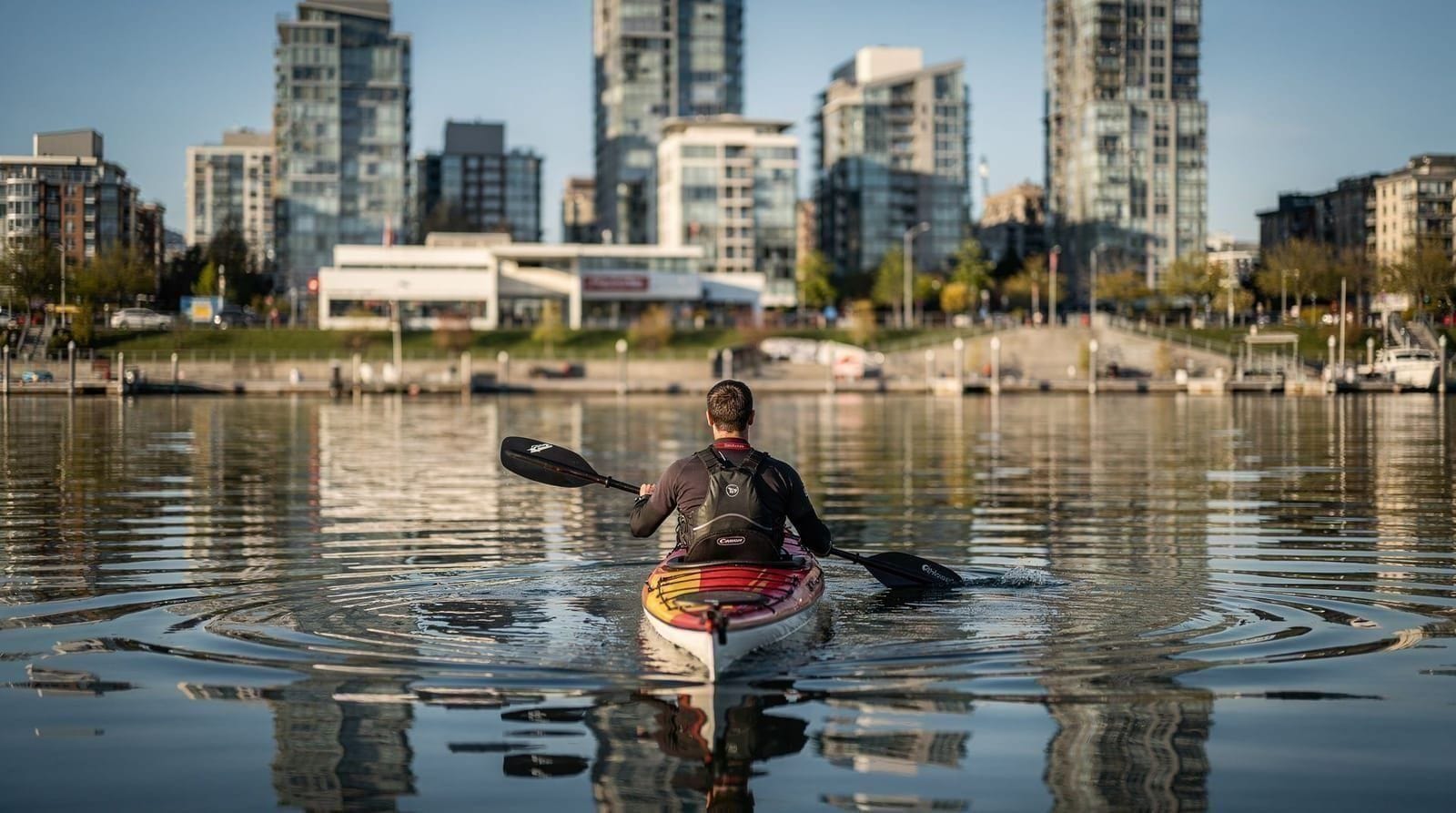
Granville Island pairs naturally with a False Creek loop — walk or cycle the seawall from Yaletown around to the island, then continue toward Kitsilano Beach if there’s daylight left. Visitors building a first Vancouver day around downtown sights and the island can see how it fits into a fuller schedule in the one-day Vancouver itinerary. Kayak and paddleboard rental shops on the island’s edge make it easy to get onto the water directly rather than just looking at it; the kayaking Vancouver guide covers what’s available here versus the calmer put-ins elsewhere in the city.
The honest verdict
Granville Island deserves its reputation, but it rewards visitors who treat it as a half-day stop with intention — a market walk, a brewery tour, maybe a ferry ride — rather than an item to check off in 45 rushed minutes at the busiest hour of the day. Anyone building a broader Vancouver day around it should look at how it fits alongside Stanley Park or downtown sightseeing before committing an entire afternoon here; for most first-time visitors, two to three hours covers the market and one additional stop (the brewery or a studio walk) without feeling rushed or overstaying.
Visitors weighing Granville Island against other Vancouver food stops should also consider Richmond’s dim sum scene and Chinatown’s heritage restaurants as genuine alternatives on a different day of the trip, rather than assuming Granville Island alone represents the city’s food offering — it’s an excellent half-day, not the entirety of what’s worth eating in Vancouver.