Kayaking in Vancouver, a complete guide
Vancouver: Smooth Classic Kayak Tour
Duration: 2.5 hours
Where is the best place to kayak in Vancouver?
For beginners, False Creek around Granville Island and the sheltered water off Kitsilano Beach are the easiest and calmest options. Deep Cove on the North Shore is the classic launch point for paddling into Indian Arm, a dramatic fjord better suited to experienced paddlers or a guided trip. Most first-time visitors are better served by a guided tour than a solo rental, given BC's cold water and variable coastal conditions.
Vancouver sits on the water in a way few North American cities do, wrapped by Burrard Inlet, English Bay, and False Creek, with a genuine fjord — Indian Arm — reaching north into the mountains within half an hour of downtown. That geography makes kayaking one of the more logical ways to see the city, but “kayaking in Vancouver” actually covers several quite different experiences, from a sheltered hour on flat urban water to a genuine backcountry paddle into steep-walled wilderness. This guide is the overview; the honest answer to “where should I paddle” depends heavily on your experience level and how much time you have, which is why the rest of this cluster breaks out the specific spots in more depth.
| Where | False Creek, Kitsilano/English Bay, Deep Cove, Indian Arm |
| Cost | Guided tours from ~CAD 80-90, more for combo trips |
| Time needed | 2-2.5 hours (beginner), 3-4 hours (combo tours) |
| Getting there | Varies by launch point; car or transit + short walk |
| Best time | Late spring through early fall (May-September) |
The quick answer
For most visitors with no kayaking background, the best starting point is a guided tour on sheltered water — either around Granville Island and False Creek or from a launch point near Kitsilano Beach and English Bay. These areas are protected from ocean swell and significant current, which is the main reason they’re considered beginner-friendly.
If you want the more dramatic scenery — steep forested walls, waterfalls, open fjord — that means Indian Arm, and for most people that’s better done as part of a guided trip than a self-guided paddle, for reasons covered below. Deep Cove, the small North Shore village at the mouth of Indian Arm, is the classic middle ground: an easy, well-supported place to rent a kayak independently, with the option to paddle into calmer sections of the Arm without committing to the full fjord.
The main launch points around Vancouver
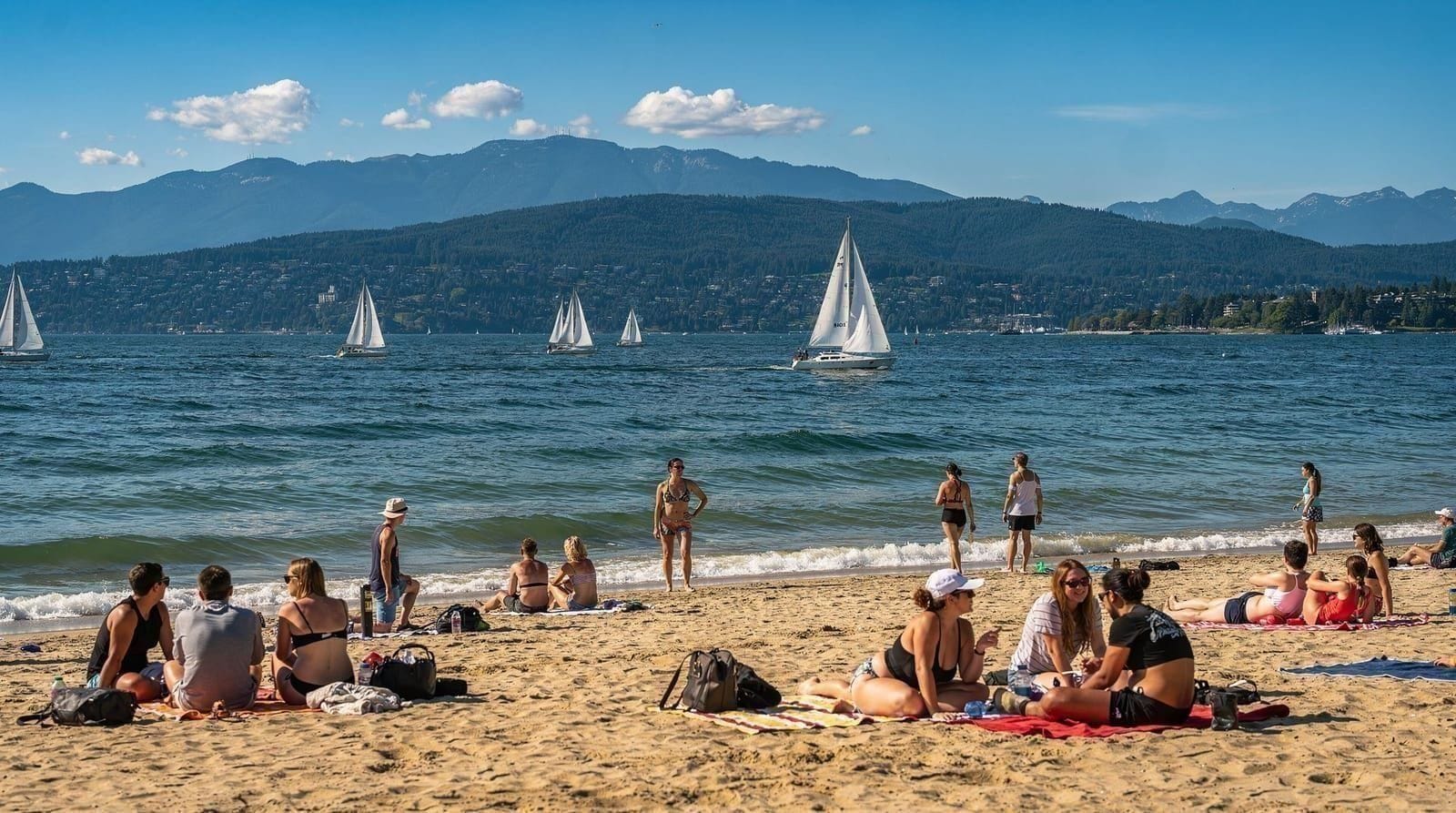
English Bay and Kitsilano Beach. The stretch of water off Kitsilano Beach and into English Bay is one of the more central places to paddle from, close to downtown and generally calm on an average day, though it’s still open water and can pick up wind chop in the afternoon, particularly in spring and early summer. Most guided tours launching from this area are built around beginners and stick to sheltered pockets rather than crossing open water.
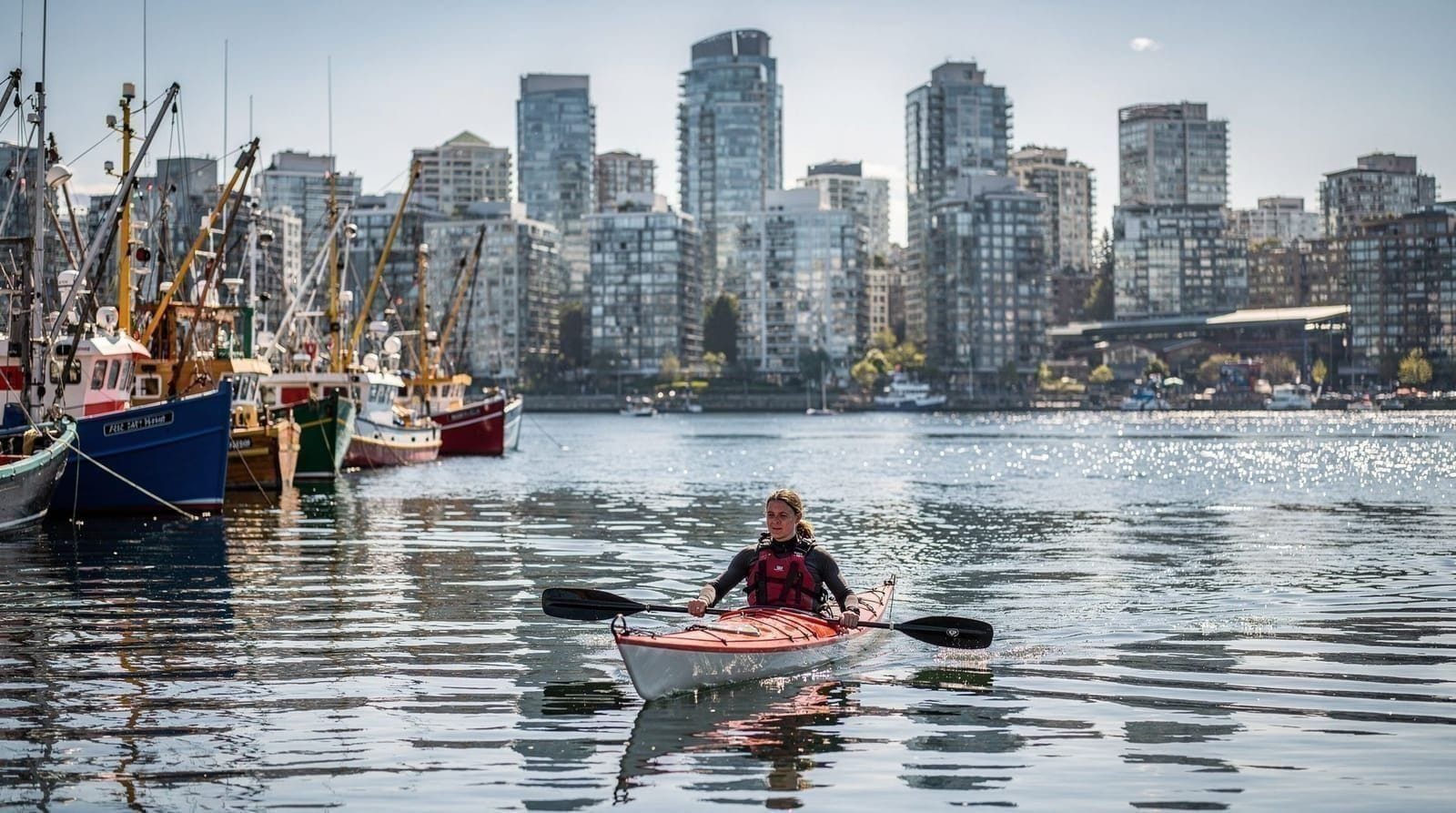
False Creek, near Granville Island. This is the calmest, most protected water covered in this guide, effectively an urban inlet enclosed by bridges and shoreline on most sides. It’s genuinely a different category of paddling from open coastal water — no meaningful current or swell to manage — which is why it’s the spot most often recommended to complete beginners and families. The Granville Island kayak guide covers this route, what you’ll paddle past, and how to pair it with a market visit afterward, in detail.
Deep Cove, North Shore. Deep Cove is the best-known casual kayak-launch village in the region, a small waterfront community with several independent rental operators right on the water and a direct line of sight up Indian Arm. It’s the natural jumping-off point whether you’re renting independently for an easy paddle around the cove itself, or joining a guided trip that goes further. The Deep Cove kayak guide has the transit directions, rental logistics, and a note on pairing the paddle with the short Quarry Rock hike.
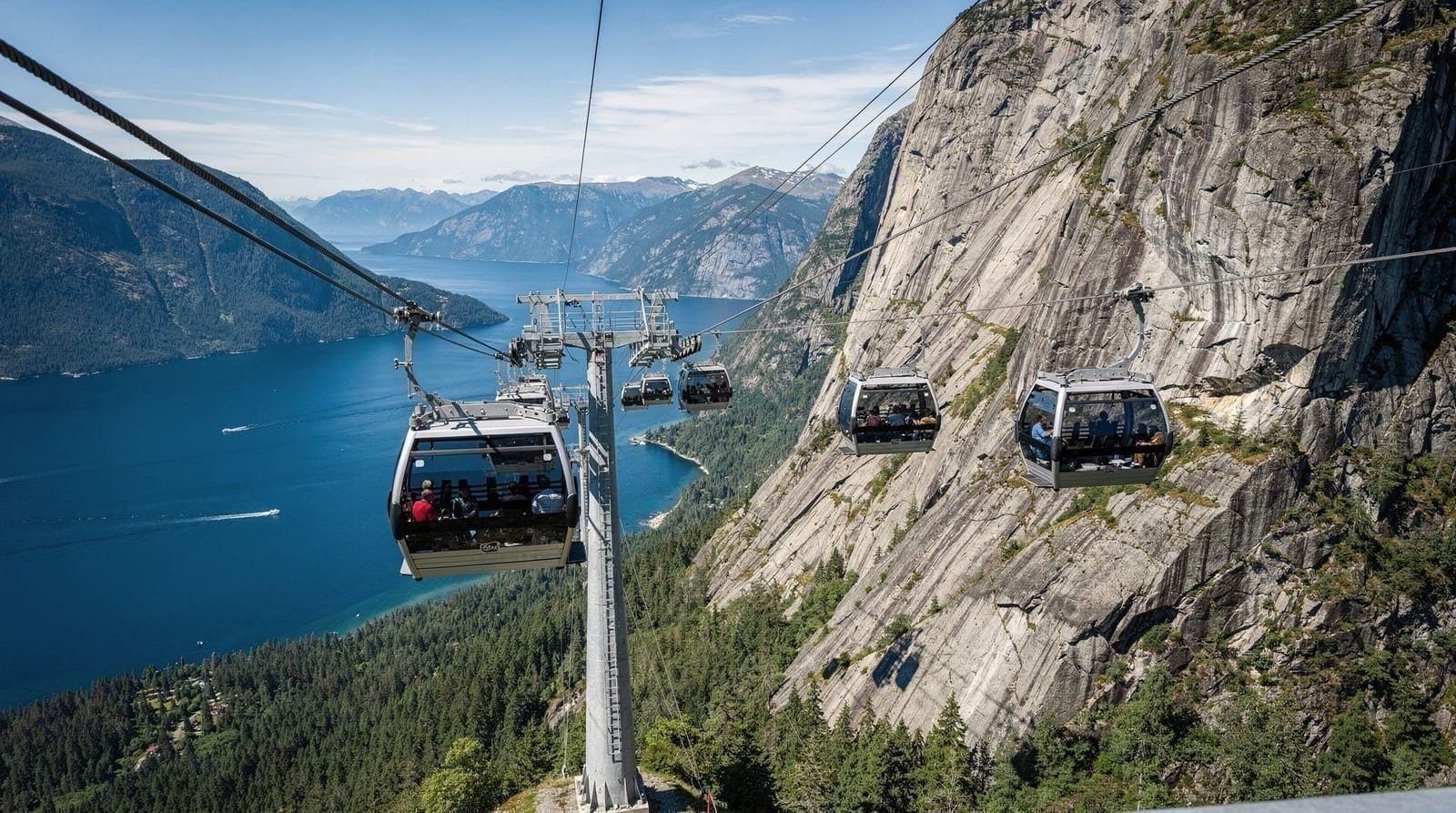
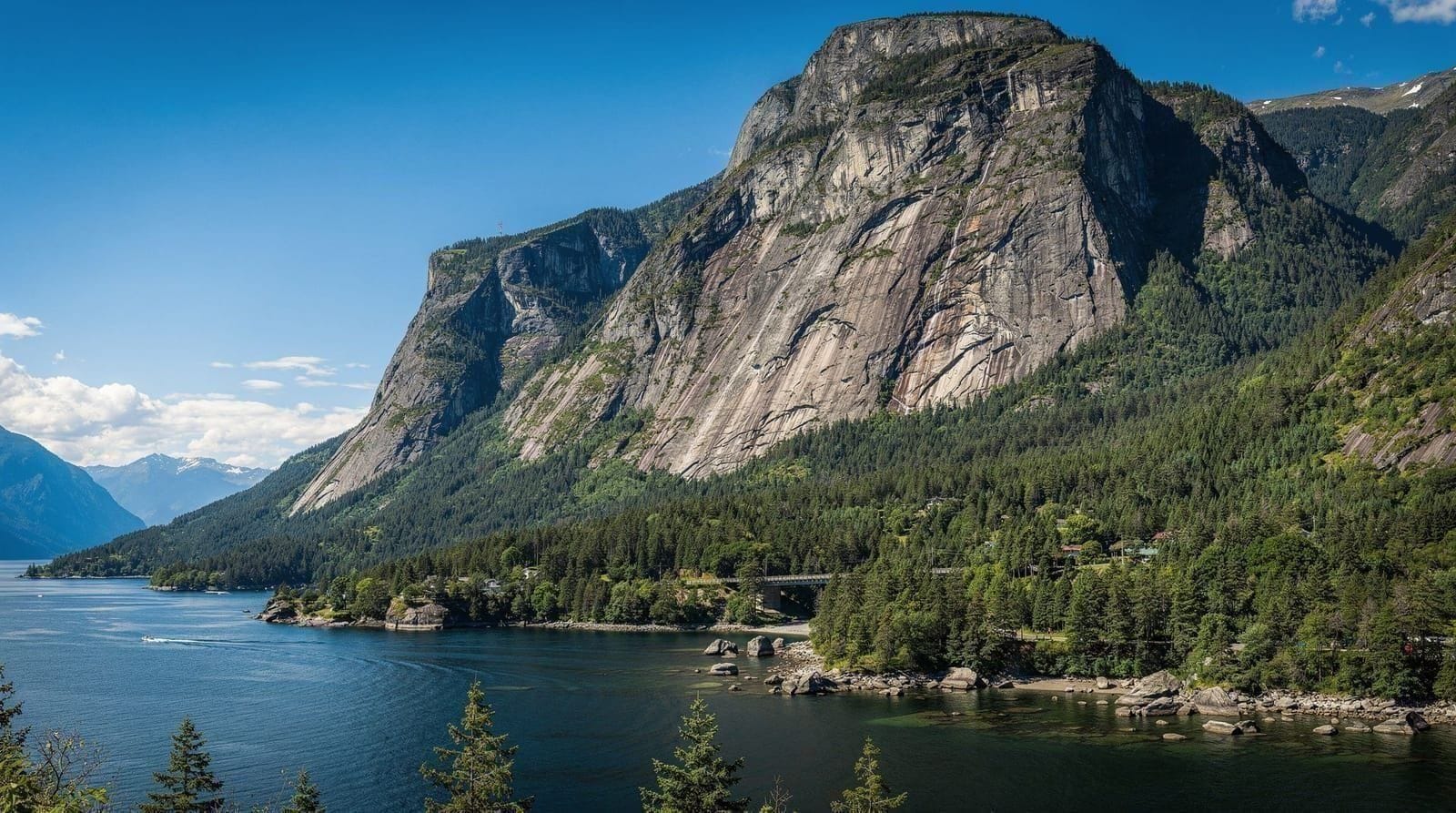
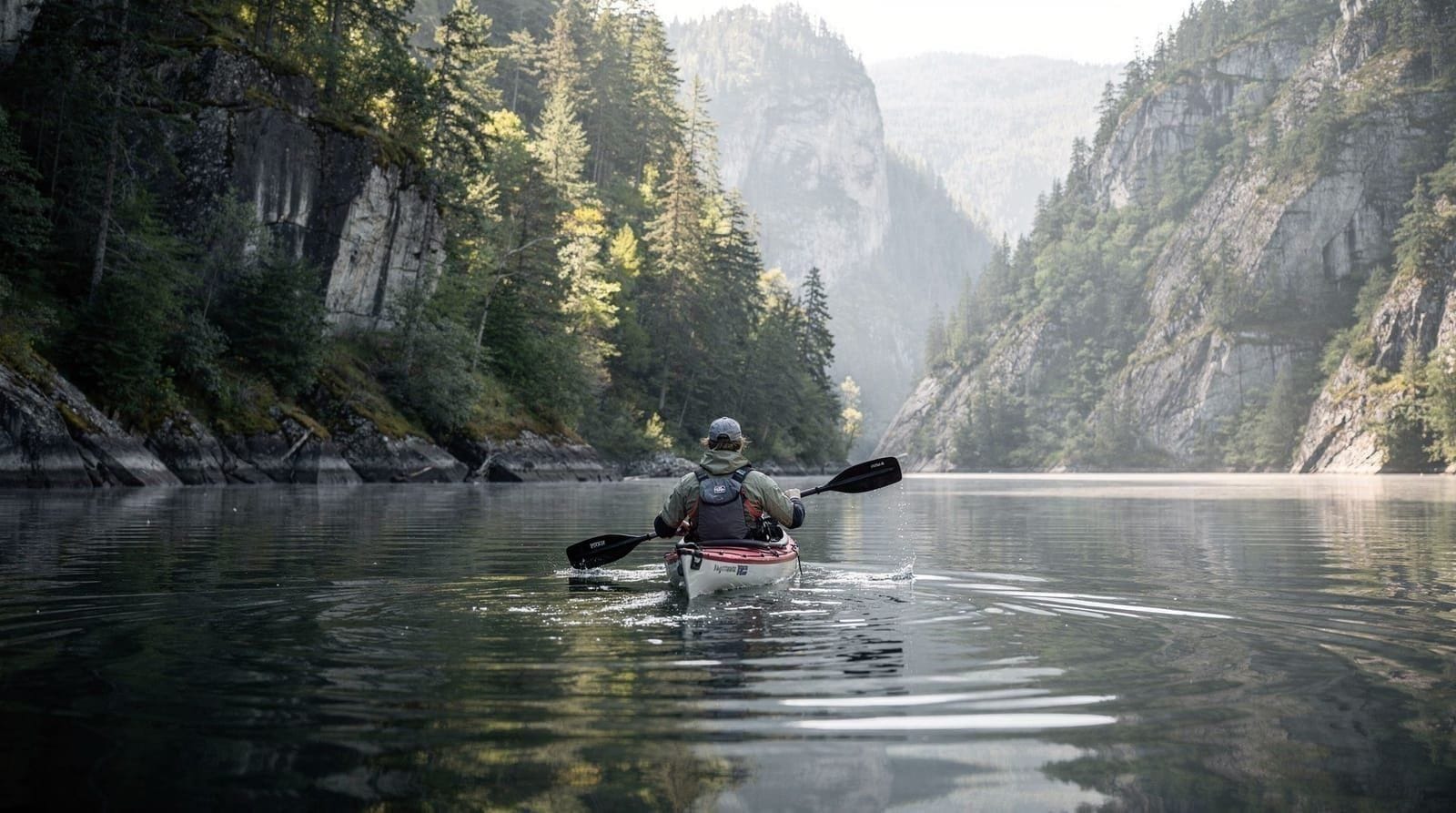
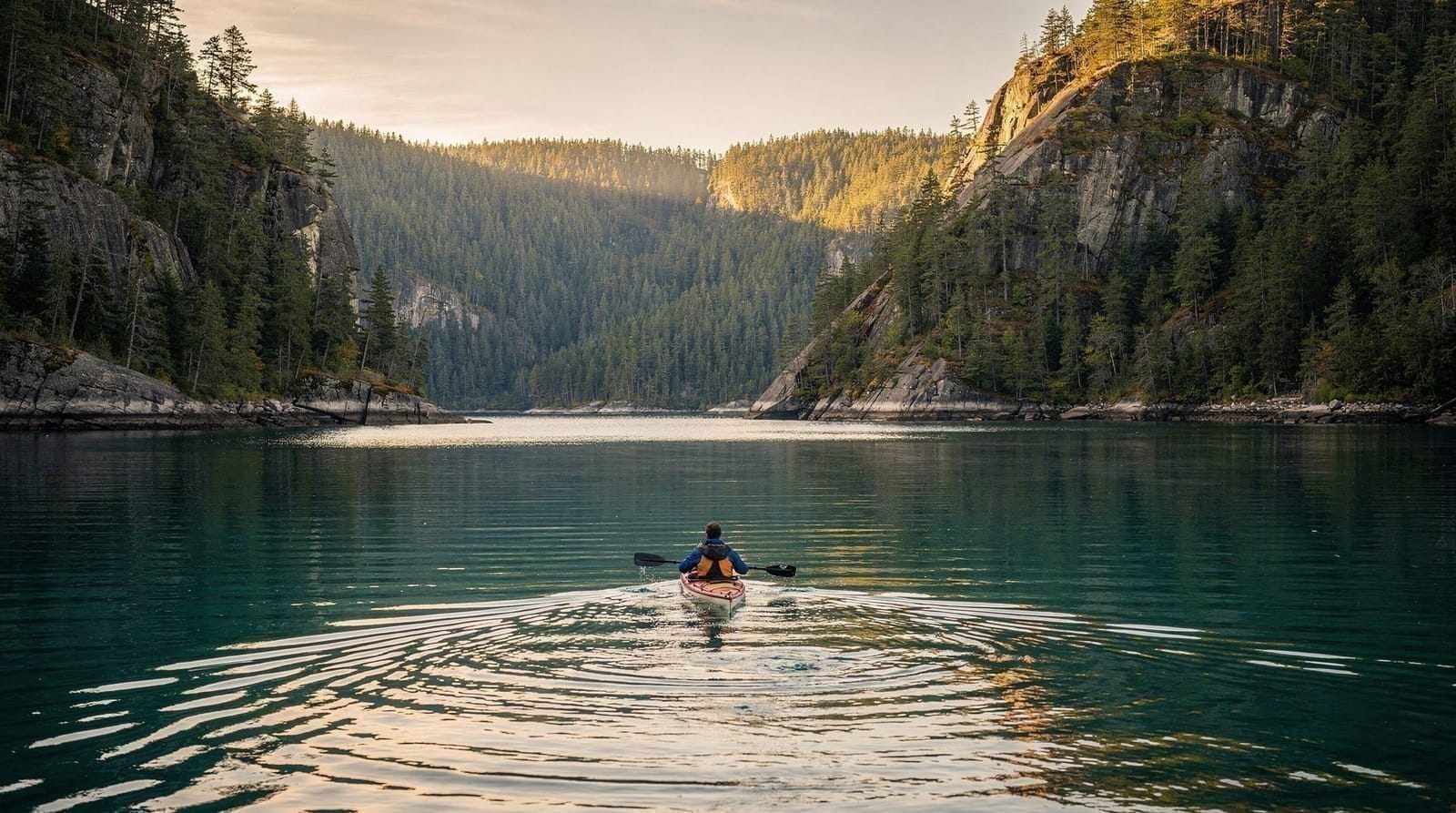
Indian Arm itself. North of Deep Cove, Indian Arm narrows into a long fjord flanked by steep, largely undeveloped forest, with waterfalls including Granite Falls visible from the water further in. It’s the most scenic paddling destination in this cluster and also the most demanding — tides, boat traffic, and rapidly changing weather make a genuine self-guided expedition a serious undertaking best suited to experienced paddlers. The Indian Arm kayak guide is honest about that distinction and covers the guided Zodiac boat tour option that lets most visitors see the same scenery without the risk.
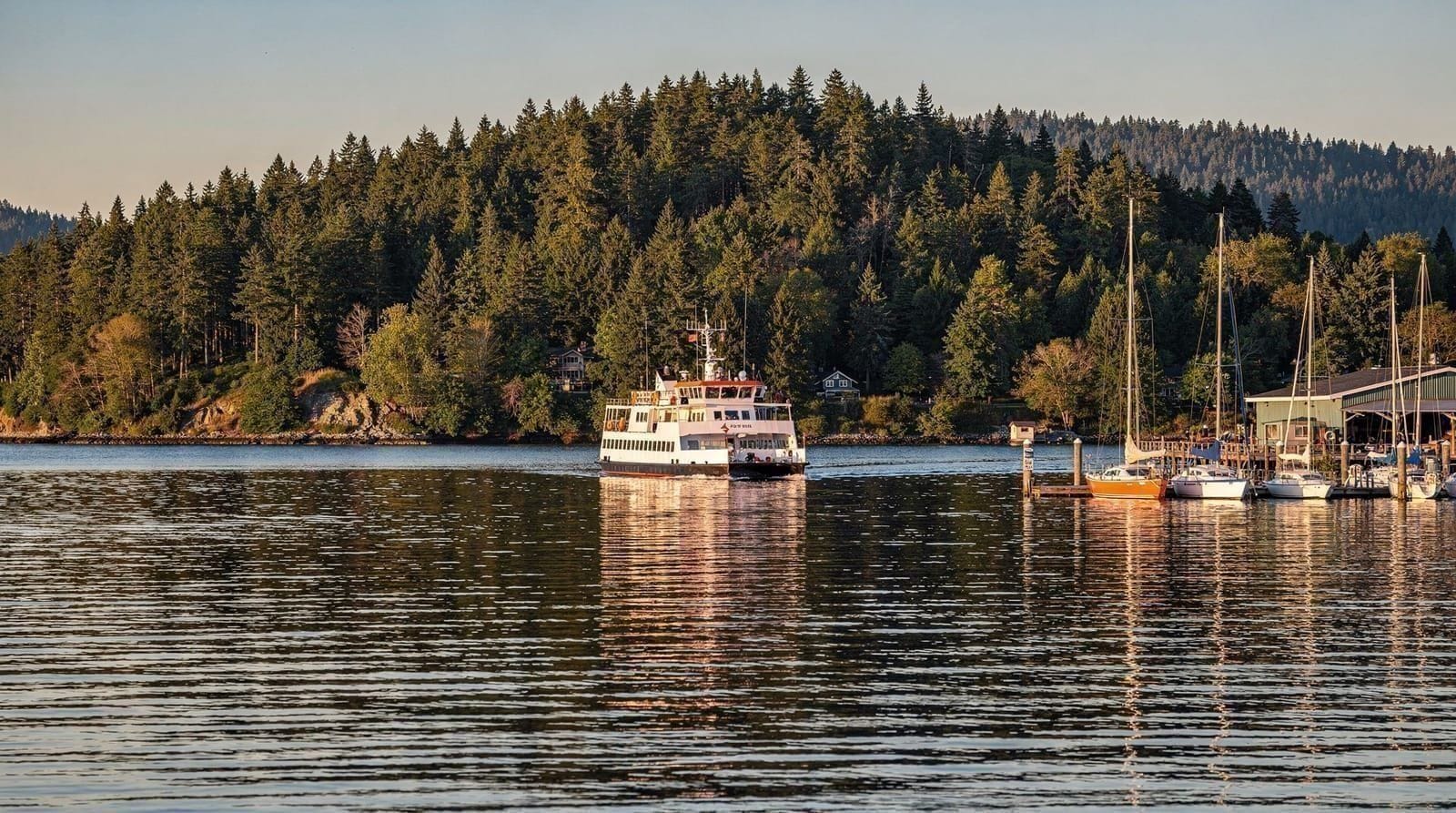
Bowen Island. Not a kayaking destination on its own for most visitors, but reachable via a short BC Ferries crossing from Horseshoe Bay, with kayak and paddleboard rentals available locally on the island for anyone who wants to add paddling to a day trip. See the Bowen Island day trip guide for the ferry logistics and what else fills out a day there.
What you’ll actually see
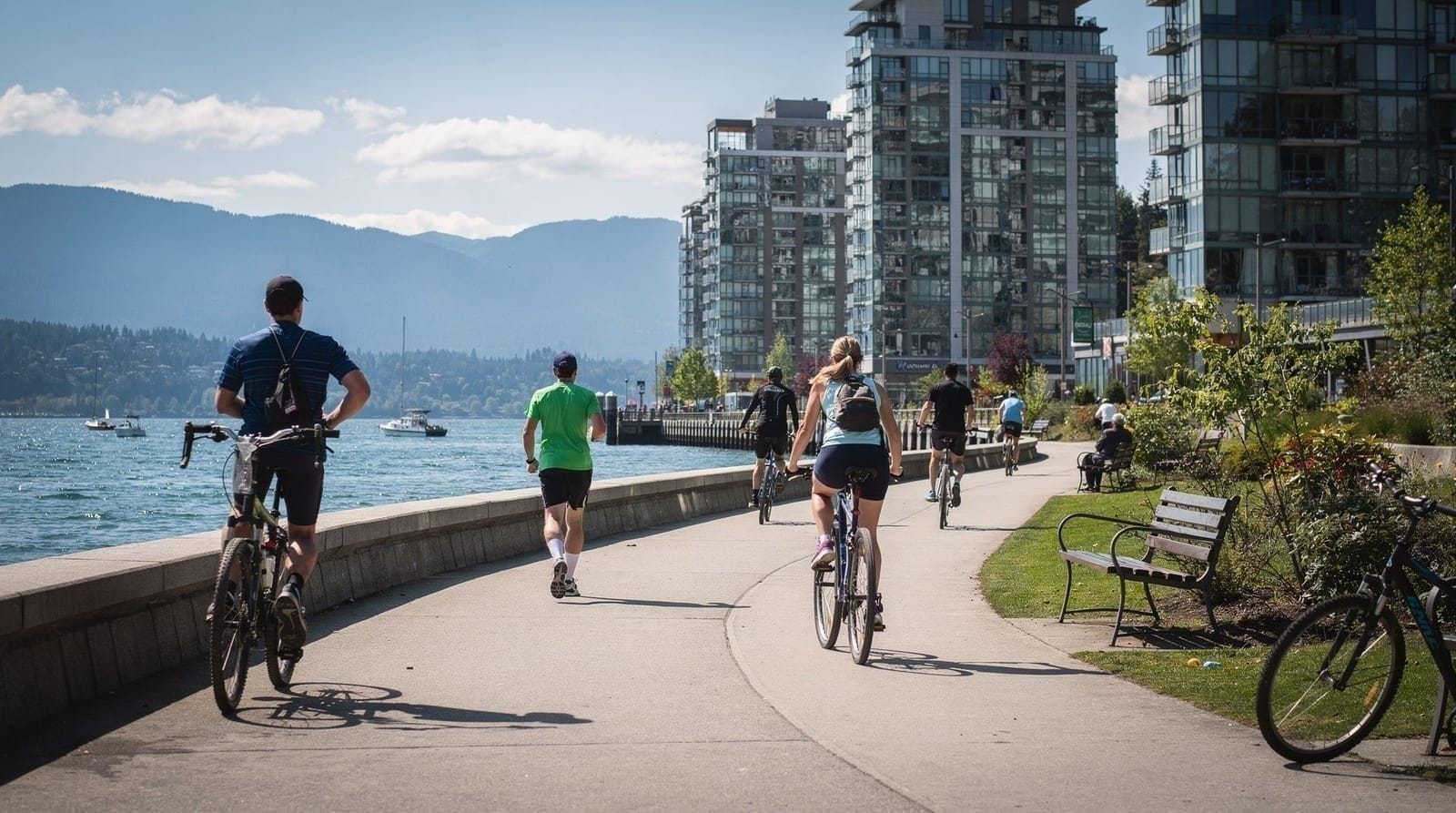
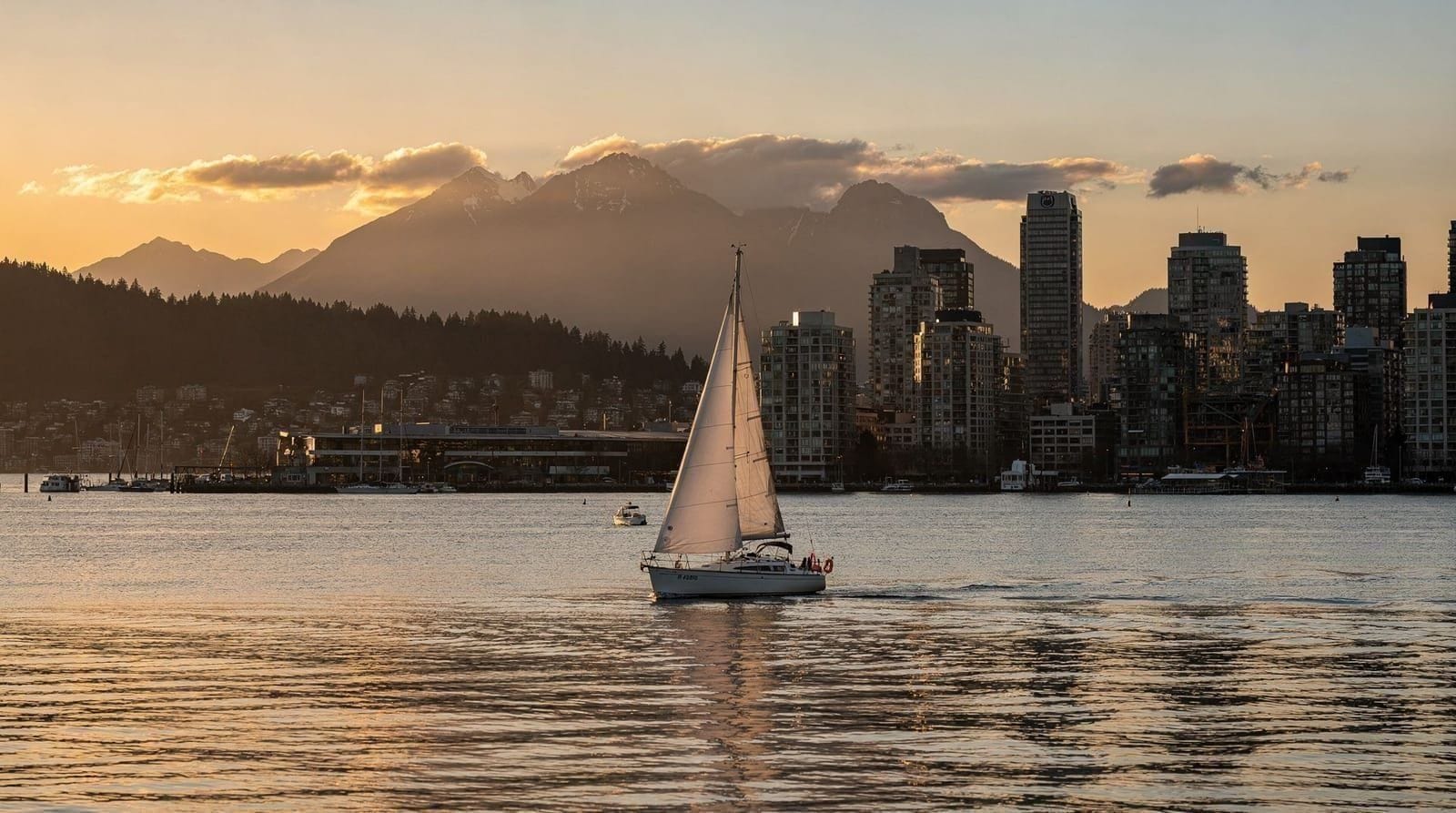
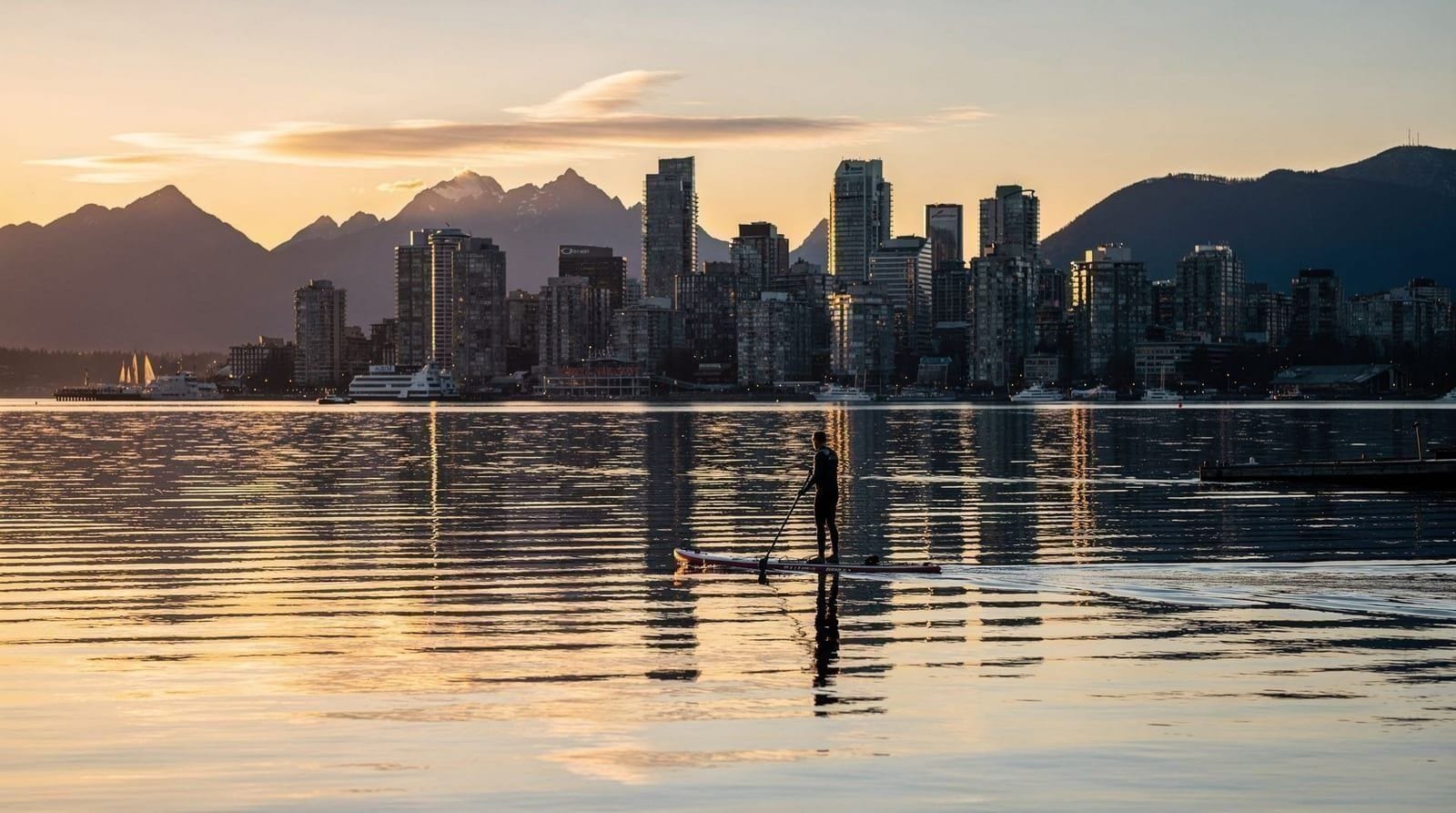
The scenery varies a lot depending on where you launch, which is worth knowing before you pick a spot based on a photo alone. Around False Creek and Granville Island, the view is genuinely urban — glass towers, the underside of three bridges, Science World’s geodesic dome, and a busy waterway shared with the Aquabus and False Creek Ferries. It’s attractive in its own way, but it’s a city paddle, not a wilderness one. Off Kitsilano Beach and English Bay, the outlook opens up toward the North Shore mountains and Stanley Park’s treeline, with more open water and a bit more motion from wind and boat wake.
Deep Cove and Indian Arm are the other end of the spectrum entirely: forested slopes rising straight from the water, minimal development once you’re a few kilometres in, and a genuine sense of leaving the city behind, even though downtown is less than half an hour away by car. If dramatic scenery is the main goal, Indian Arm delivers it more convincingly than any of the city-water options; if an easy, low-stakes paddle with skyline views is the goal, False Creek is the better fit.
Best time of year to go
Late spring through early fall — roughly May to September — is the practical window for most guided kayak tours around Vancouver, both because operators run more frequent departures in that period and because daylight and (relatively) milder weather make the experience more pleasant. July and August bring the calmest, driest conditions on average, though they’re also the busiest months for both bookings and rental availability, so reserving ahead matters more in peak summer than it does in shoulder season.
Spring and early fall can still deliver good paddling days, often with fewer crowds and lower rates, but expect more day-to-day variability in wind and rain. Winter kayaking is possible on the most sheltered water for experienced paddlers with the right gear, but most guided tours scale back or pause entirely, and it’s not a realistic plan for a first-time visitor.
What kayaking in Vancouver typically costs
Pricing varies by operator, duration, and whether the trip includes extras like snorkeling gear or a boat component, but as a general guide, sheltered-water beginner tours in the 2 to 2.5 hour range tend to sit in the lower end of the price spectrum for guided water activities in the city, while longer combo trips that add wildlife viewing, snorkeling, or a boat transfer cost more, reflecting the extra time and equipment involved.
Independent rentals, where available, are typically the cheapest per-hour option, but that’s only a fair comparison if you’re already capable of paddling unsupervised — factoring in a guide’s cost against a rental’s cost only makes sense once you’ve decided which one is actually appropriate for your skill level and the water you want to cover.
Guided tour vs independent rental: the honest trade-off
The core decision for most visitors is whether to book a guided tour or rent a kayak and go it alone. There’s no universally correct answer, but there is a fairly clear way to think about it.
A guided tour makes sense if any of the following apply: you’ve never kayaked before, you don’t know the local water well, you want wildlife or a specific route without researching it yourself, or you’re paddling anywhere other than the calmest, most sheltered water. Guides handle route-finding, watch for changing conditions, and carry the safety and rescue knowledge that matters if something goes wrong — which matters more on BC’s cold, tidal coastline than it might on a warm inland lake. The trade-off is cost and a fixed schedule; you’re paddling on someone else’s timeline, in a group, at a set pace.
An independent rental makes sense if you already know how to paddle, want flexibility on timing, and are sticking to well-sheltered, well-marked water like Deep Cove itself or the calmer pockets of False Creek. It’s cheaper, and there’s no schedule to work around. It’s a poor choice for open water, tidal channels, or anywhere with meaningful boat traffic if you’re not confident reading conditions and traffic patterns yourself.
For a first-time visitor without local paddling experience, the guided route is the more defensible default, and it’s what the tours linked throughout this cluster are built around.
What a “smooth classic” beginner tour actually covers
The smooth classic kayak tour is the entry-level option in Vancouver’s guided kayaking lineup, and the name is a reasonably accurate description: calm, sheltered water, no prior experience required, and a focus on getting comfortable in the boat rather than covering distance or chasing wildlife.
Expect a short on-shore briefing covering basic paddle strokes and what to do if the kayak tips, followed by a couple of hours on the water at an unhurried pace, typically in a stable two-person kayak if you’re paddling with a partner. This is the right starting point if you’ve never kayaked before, or if you’re kayaking with kids or a nervous partner and want the lowest-stakes introduction available.
A similar option, the Vancouver kayaking tour, covers comparable sheltered-water territory with its own route and timing, worth comparing against the smooth classic option if the exact departure time or duration is the deciding factor for your schedule.
Stepping up: seal and snorkel combo tours
The snorkeling, seals, and kayaking boat tour and the similar snorkel, kayak, and seal adventure boat tour are a genuine step up from the smooth classic tour, not because the kayaking itself is harder, but because they add a wildlife-viewing and snorkeling component that asks more of participants.
These trips typically combine a boat transfer to a wildlife-rich area with both kayaking and an actual snorkel in the water, wetsuit provided, to see local marine life such as harbor seals up close. If cold water in a wetsuit sounds appealing and you want wildlife folded into the paddling, these are worth the extra cost and time over the base kayak tour; if you just want a calm paddle and a look at the skyline, the smooth classic tour is the simpler and cheaper choice.
Skill level, honestly assessed
Sheltered-water guided tours genuinely don’t require prior kayaking experience — reasonable fitness, comfort in a life jacket, and the ability to follow basic instructions are enough. Open-water and fjord paddling, particularly self-guided trips into Indian Arm, are a different category and require real paddling competence: the ability to read tides and wind, self-rescue skills, and judgment about when conditions have turned unsafe. If you’re not sure which category you fall into, default to the guided, sheltered-water option; it’s a low-cost way to find out whether you enjoy kayaking before committing to anything more demanding.
Weather, tides, and cold water: the basics
BC’s coastal water is cold year-round, commonly somewhere in the 12 to 16 degree Celsius range even in the height of summer, cold enough that an unplanned swim is a genuine hazard rather than a minor inconvenience. This is the single most important thing for visitors from warmer climates to internalize before booking anything self-guided. Guided tours account for this with appropriate gear, including wetsuits for the wildlife and snorkel combo trips; if you’re renting independently, ask the outfitter directly what they’d recommend for the day’s conditions rather than assuming summer air temperature tells you anything about water temperature.
Tides matter more than most first-time visitors expect, particularly around Indian Arm and any route with a narrow entrance or channel, where tidal current can run faster than a paddler can comfortably work against. Wind is the other major variable — mornings tend to be calmer across most of the region, with wind picking up through the afternoon, especially in open water like English Bay. None of this is a reason to avoid kayaking in Vancouver; it’s the reason guided tours default to sheltered routes and appropriate gear, and why self-guided trips into more exposed water deserve real planning rather than a spontaneous decision.
What to wear and bring
Layered clothing that can get wet, a warm dry layer to change into afterward, sun protection even on overcast days since glare off the water is real, and secure footwear rather than flip-flops or sandals that can slip off. Guided tours typically supply the kayak, paddle, spray skirt, and personal flotation device, and wetsuits for tours that include snorkeling or extended time in cold water; confirm what’s included when booking so you’re not caught out. A dry bag for a phone or camera is worth bringing along or asking whether the operator provides one, since a capsize or splash can end a phone’s life in seconds.
Wildlife you might see
Even on the calmer city routes, it’s not unusual to spot harbor seals, great blue herons, and various waterfowl, particularly around the quieter edges of False Creek and English Bay. The seal and snorkel combo tours are built specifically around more reliable wildlife viewing, taking you to areas where harbor seals haul out or feed regularly, with a wetsuit and snorkel gear included so you can get in the water for a closer look rather than only observing from the kayak. Indian Arm adds the chance of spotting bald eagles along the forested shoreline, especially outside peak summer. None of this is guaranteed — it’s wildlife, not a zoo — but it’s a genuine reason some visitors choose the combo tours over the plain sightseeing paddle.
Booking logistics and group size
Most guided kayak tours in Vancouver run in small groups, commonly somewhere in the range of 6 to 12 participants per guide, which keeps the on-shore instruction manageable and means you’re not waiting long for individual attention if you’re struggling with a stroke or steering. Two-person kayaks are standard for the beginner-oriented tours, which suits couples, friends, or a parent paddling with an older child, while single kayaks are usually available on request for solo travelers who’d rather paddle independently within the group. Booking ahead is worth doing in July and August specifically, when both tour slots and independent rental kayaks can sell out on good-weather days, particularly weekends.
Choosing where to paddle based on what you want
If the priority is the easiest possible introduction with skyline views, Granville Island and False Creek is the answer — genuinely calm water, close to downtown, easy to pair with lunch at the Granville Island public market afterward. If the priority is a classic North Shore village experience with a well-known doughnut stop and a short hike attached, Deep Cove delivers that alongside easy independent rental options.
If the priority is the most dramatic scenery in the region — fjord walls, waterfalls, real wilderness feel — that’s Indian Arm, best approached as a guided trip unless you’re already an experienced paddler. And if a full day away from the city with a ferry crossing and a village to explore sounds appealing, Bowen Island rounds out the options, with kayak and paddleboard rentals available locally alongside hiking and a small-town atmosphere.
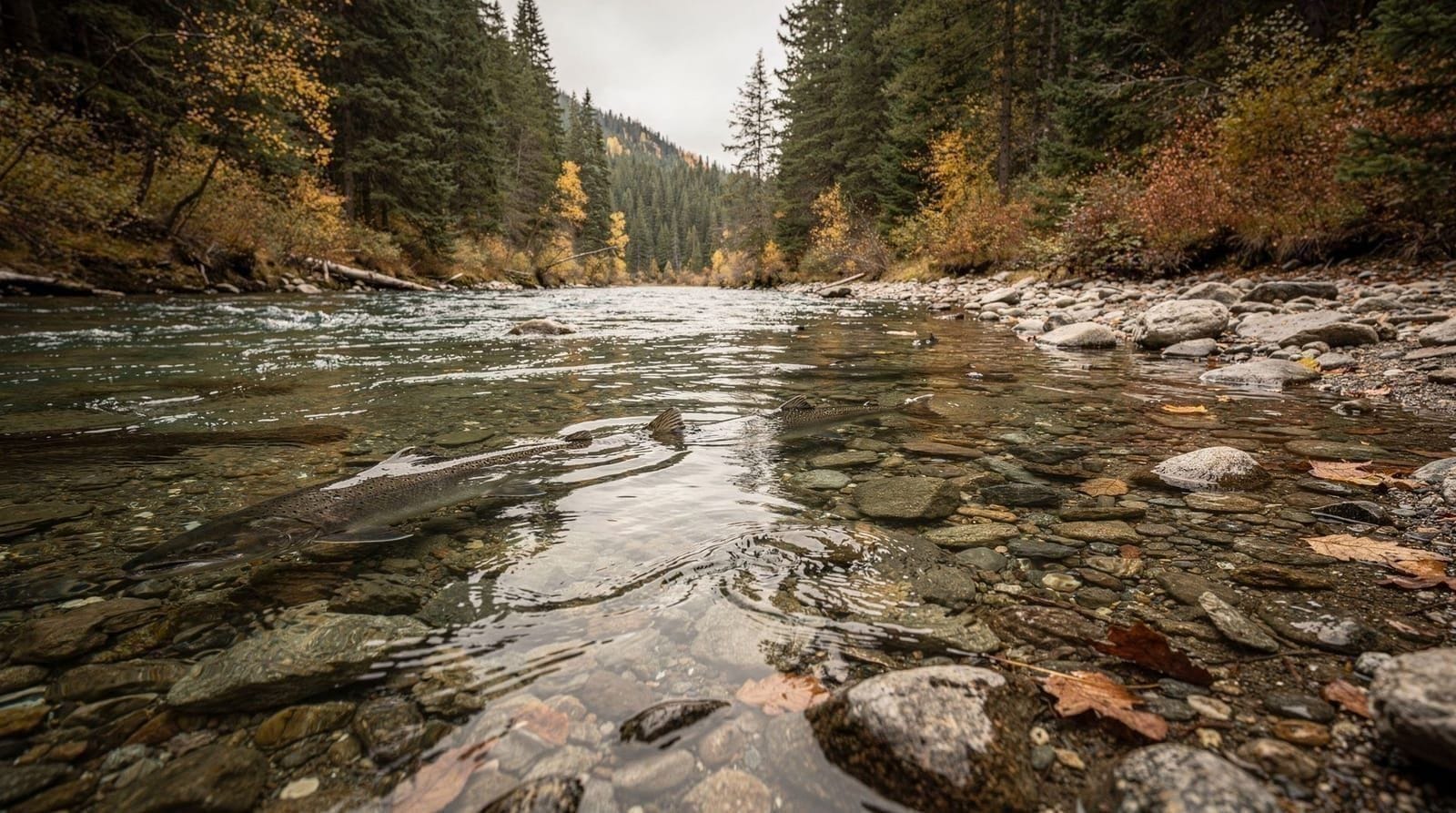
For visitors weighing kayaking against other water-based options in the region, the sailing, jet boat, and paddleboard guides cover the alternatives, and the snorkeling with salmon guide is worth a look if wildlife in the water interests you more than the paddling itself. Whatever you choose, book with the cold water and tidal conditions in mind rather than assuming BC’s summer sunshine means summer-lake conditions — it doesn’t, and the guided tours in this cluster exist largely because that gap between expectation and reality is a real one.
Frequently asked questions — Kayaking in Vancouver, a complete guide
Do I need kayaking experience to paddle in Vancouver?
No, not for the sheltered spots. False Creek around Granville Island and the calm water off English Bay and Kitsilano Beach are protected from ocean swell and current, and guided tours in these areas are built for complete beginners, with a few minutes of on-shore instruction before you launch. Indian Arm and other open-water routes are a different matter and genuinely require prior experience or a guide.Is the water cold in Vancouver, even in summer?
Yes. The Strait of Georgia and Burrard Inlet stay cold year-round, typically somewhere in the 12 to 16 degrees Celsius range even at the height of summer, cold enough that an unexpected capsize is a real risk, not just a discomfort. Guided tours provide wetsuits or splash gear appropriate to the conditions; if you're renting independently, ask the outfitter what they recommend for that day rather than assuming a T-shirt is enough.Where do guided kayak tours in Vancouver launch from?
The most common launch points are near Kitsilano Beach and English Bay for city-based tours, Deep Cove on the North Shore for Indian Arm access, and Horseshoe Bay or nearby North Shore docks for tours that combine kayaking with wildlife viewing, such as seal and snorkel combo trips.What's the difference between a "smooth classic" kayak tour and a seal or snorkel combo tour?
A smooth classic tour is the entry-level option, built around calm, sheltered water, no experience required, and a focus on paddling technique and scenery. Seal and snorkel combo tours add a wildlife and snorkeling component, usually from a support boat, and involve getting in the water in a wetsuit rather than only paddling. The combo tours ask a bit more of participants in terms of comfort with cold water, even though the kayaking portion itself stays relatively easy.Can I rent a kayak in Vancouver without a guide?
Yes, independent rentals are available at several spots, including Deep Cove and Granville Island-adjacent operators near False Creek. Rentals make sense if you already know how to paddle and want the sheltered, well-marked areas. For open water, tidal channels like the entrance to Indian Arm, or if you've never kayaked before, a guided tour is the more sensible choice given how quickly BC coastal conditions can change.How long do kayak tours in Vancouver usually run?
Beginner-friendly city tours are typically around 2 to 2.5 hours, including instruction time on shore. Wildlife-focused combo tours that include snorkeling or a boat component tend to run longer, in the 3 to 4 hour range, since they cover more distance and add a second activity.What should I bring on a Vancouver kayak tour?
Bring layered clothing you don't mind getting wet or salty, a warm layer for after you're back on shore, sun protection, and secure footwear such as water shoes or old sneakers rather than flip-flops. Guided tours typically supply the kayak, paddle, spray skirt, and personal flotation device, and often wetsuits for wildlife or snorkel-inclusive trips; check what's included before assuming you need your own gear.Is kayaking in Vancouver good for families with kids?
The sheltered spots, particularly guided tours around False Creek and calm sections near Kitsilano, work reasonably well for families with kids who are comfortable in a life jacket and can sit still in a boat, though most tour operators set a minimum age, commonly somewhere around 6 to 8 years old. Indian Arm and open-water routes are not a good fit for young children given the distances and conditions involved.
Top experiences
Bookable activities with verified prices and instant confirmation on GetYourGuide.