Bill Reid Gallery of Northwest Coast Art — what to expect and how to visit
Private Vancouver Historical and Heritage Tour
- Private tour
Is the Bill Reid Gallery worth visiting?
Yes, for anyone with even a passing interest in Northwest Coast Indigenous art — it's small enough to see properly in under an hour, sits a short walk from the Vancouver Art Gallery and Canada Place, and focuses tightly on Bill Reid's own work plus rotating exhibitions of contemporary Haida and Northwest Coast artists rather than trying to cover broader territory.
Tucked into a narrow, easy-to-miss building on Hornby Street, the Bill Reid Gallery of Northwest Coast Art is the kind of Vancouver stop that rewards visitors who know it’s there and gets walked past by everyone else heading to the bigger, better-signed Vancouver Art Gallery two blocks away.
| Where | 639 Hornby Street, downtown Vancouver |
| Admission | Around CAD 13 adult, ~CAD 30 family rate |
| Time needed | 45 minutes to 1 hour |
| Hours | Wednesday-Sunday, closed Mon/Tue (check seasonally) |
| Getting there | Short walk from Waterfront Station |
Who was Bill Reid
Bill Reid, born in 1920 to a Haida mother and a father of Scottish and German descent, spent much of his early career as a CBC radio broadcaster before turning to goldsmithing and sculpture in his thirties, eventually becoming the most influential Northwest Coast Indigenous artist of the 20th century.
His work spans small-scale gold and silver jewelry, engraved boxes, and monumental bronze and wood sculpture, and it did more than almost any single body of work to bring Haida formline design into wider public and institutional recognition across Canada and internationally. He died in 1998, but the gallery bearing his name, which opened in 2008, was built specifically to keep his work and the broader tradition he drew from in public view downtown, rather than leaving it solely to university museums or private collections.
The building and layout
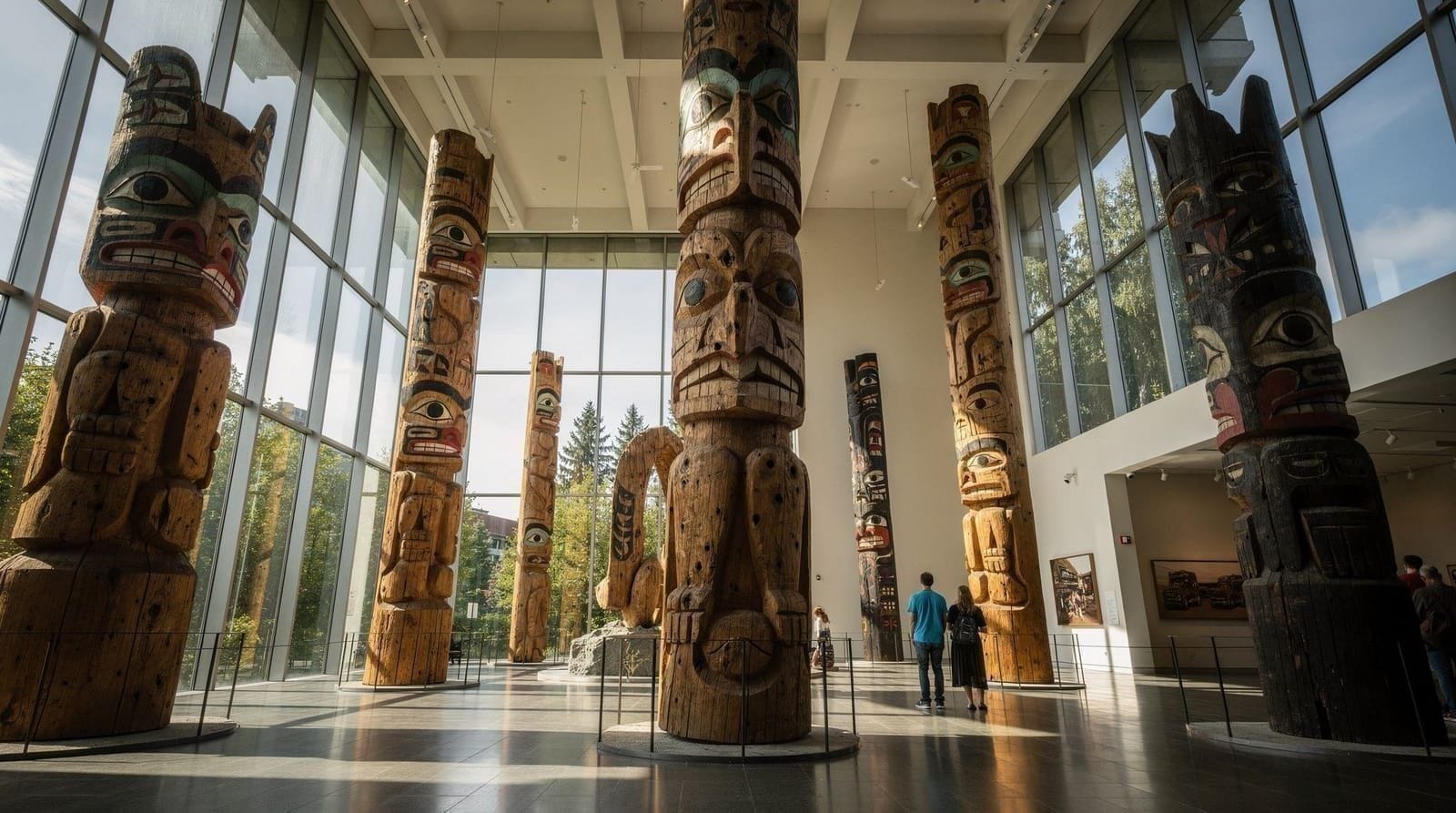
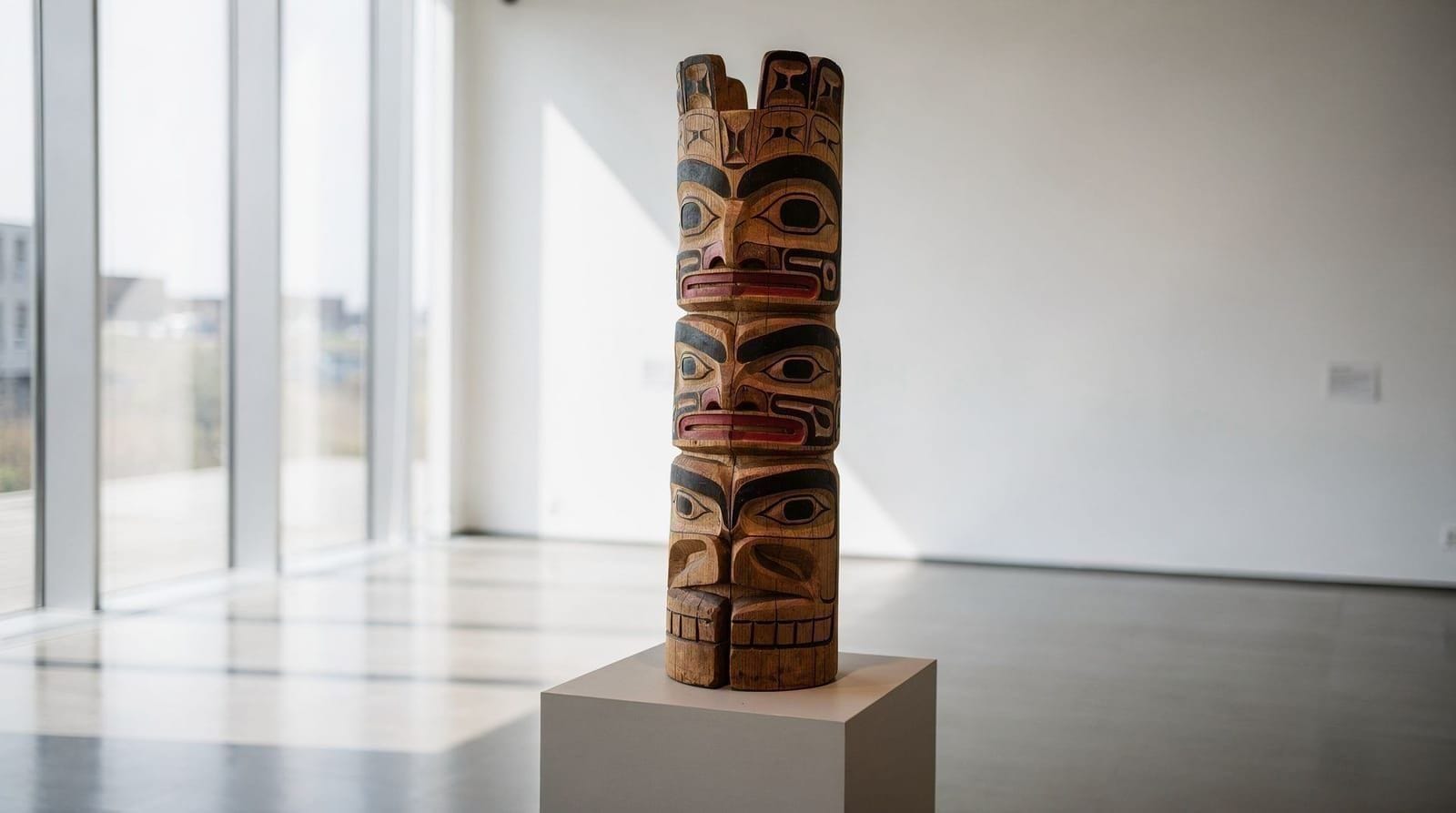
The gallery occupies a compact, multi-level space at 639 Hornby Street, a few minutes’ walk from both the Vancouver Art Gallery and the waterfront near Canada Place. It’s a fraction of the size of a major museum, and that’s largely the point — the lower level typically displays Reid’s smaller-scale gold and silver jewelry and engraved works, while upper levels house larger carved and sculptural pieces alongside rotating exhibitions of contemporary Northwest Coast Indigenous artists working in painting, carving, textiles, and mixed media.
The compact footprint means a visitor can see the entire collection without the fatigue that sets in at a sprawling institution, which is part of why it works well as a focused hour rather than a half-day commitment.
Reid’s most famous works — and where to actually see them
Two of Bill Reid’s best-known pieces aren’t in the gallery itself, which surprises some first-time visitors. “The Raven and the First Men,” a large carved sculpture depicting a Haida creation story, sits in its own rotunda at the Museum of Anthropology at UBC, across town. “Spirit of Haida Gwaii,” a large bronze canoe sculpture often called “The Jade Canoe” for its green patina, sits in the departures area of Vancouver International Airport’s international terminal — visible to millions of travelers who may not realize what they’re looking at — with a black-patina cast of the same work outside the Canadian Embassy in Washington, D.C.
A version of the Jade Canoe image also appeared on the Canadian twenty-dollar bill for several years in the 2000s. The gallery on Hornby Street focuses instead on smaller-scale jewelry, prints, and carved works plus contemporary Indigenous art, making it a complement to these larger public pieces rather than a place to see them directly.
What’s usually on display
Beyond the permanent core of Reid’s own jewelry and smaller sculptural work, the gallery runs a rotating program of temporary exhibitions spotlighting contemporary Haida and other Northwest Coast Indigenous artists — painters, carvers, jewelers, and textile artists working in traditions connected to but distinct from Reid’s own generation.
This rotating program is a meaningful part of the gallery’s identity: rather than presenting Reid as an isolated historical figure, the space positions his work within an ongoing, living artistic tradition that continues to produce new work today. Checking the current exhibition before visiting is worth doing for anyone with a specific interest, since the temporary shows can shift what a repeat visit offers considerably.
Admission and hours
Admission runs in the range of CAD 13 for adults, with reduced rates for seniors and students and a family rate around CAD 30 — modest by downtown Vancouver museum standards and reasonable for the roughly 45 minutes to an hour most visitors spend here. Hours are typically Wednesday through Sunday, with the gallery closed Monday and Tuesday, though schedules shift seasonally and it’s worth checking the current hours before building a visit around it, since it doesn’t keep the same daily hours as larger institutions like the Vancouver Art Gallery.
How much time to budget
Most visitors move through the full gallery in 45 minutes to an hour, which makes it one of the easiest cultural stops in downtown Vancouver to slot into a half-day of other sightseeing. It pairs naturally with a walk through Gastown, a stop at Vancouver Lookout, or a visit to the Vancouver Art Gallery two blocks away, since none of those individually demands a full day and the gallery’s small footprint means it won’t eat into time meant for the rest of a downtown itinerary.
Visitors wanting a guided overview of downtown that naturally passes near the gallery can book a Vancouver city highlights and lookout tour and simply add a short independent stop here before or after.
Getting there
The gallery sits within easy walking distance of Waterfront Station and several downtown SkyTrain stops, making it one of the more transit-convenient cultural stops in the city — no bus transfer or drive required the way the Museum of Anthropology at UBC requires.
Visitors staying anywhere in the downtown core, Yaletown, or Coal Harbour can reasonably walk here in 15 to 20 minutes, and it’s a natural stop to fold into a broader downtown walking day rather than a dedicated outing on its own. For visitors who’d rather have a guide connect the dots between downtown’s historical and cultural sites, a private Vancouver historical and heritage tour can work stops like this into a broader downtown itinerary.
Comparing it to the Museum of Anthropology
The comparison to MOA comes up often enough that it’s worth addressing directly: MOA is a large university museum with a sprawling collection spanning many Northwest Coast Nations and a significant global anthropology collection, requiring genuine travel time to reach and 2 to 3 hours to see properly. The Bill Reid Gallery is smaller, downtown, focused specifically on one artist’s legacy plus contemporary Indigenous art, and doable in under an hour.
Neither replaces the other — visitors with a single afternoon and a preference for staying downtown are better served by the Bill Reid Gallery, while visitors with a fuller day and a deeper interest in Northwest Coast art broadly should make time for both, reading the Museum of Anthropology guide alongside this one to decide how to split limited time.
The gift shop
Like MOA’s, the gallery’s small gift shop is a genuinely credible source for authentic Northwest Coast Indigenous art and jewelry rather than the mass-produced “West Coast style” merchandise sold in some downtown tourist shops. It’s a reasonable stop for visitors specifically looking for a meaningful piece — prints, jewelry, and smaller carved items — connected to artists represented in the gallery’s rotating exhibitions, and prices reflect the authenticity and craftsmanship of the work.
Photography
Photography is generally permitted throughout the gallery’s public spaces for personal use, though as with any Indigenous cultural institution, specific pieces or temporary exhibitions may carry restrictions, and posted signage at the gallery entrance and within individual rooms is the most reliable guide. Flash photography is typically discouraged near older or more fragile pieces regardless of the general policy.
Accessibility
The gallery is wheelchair accessible with elevator access between floors, though the building’s narrow, multi-level layout is more compact than a purpose-built modern museum, and visitors with mobility considerations may find the space takes slightly more navigating than a single-floor gallery would. Staff at the entrance can advise on the most efficient route through the collection for visitors who want it.
Where this fits with downtown’s other Indigenous cultural sites
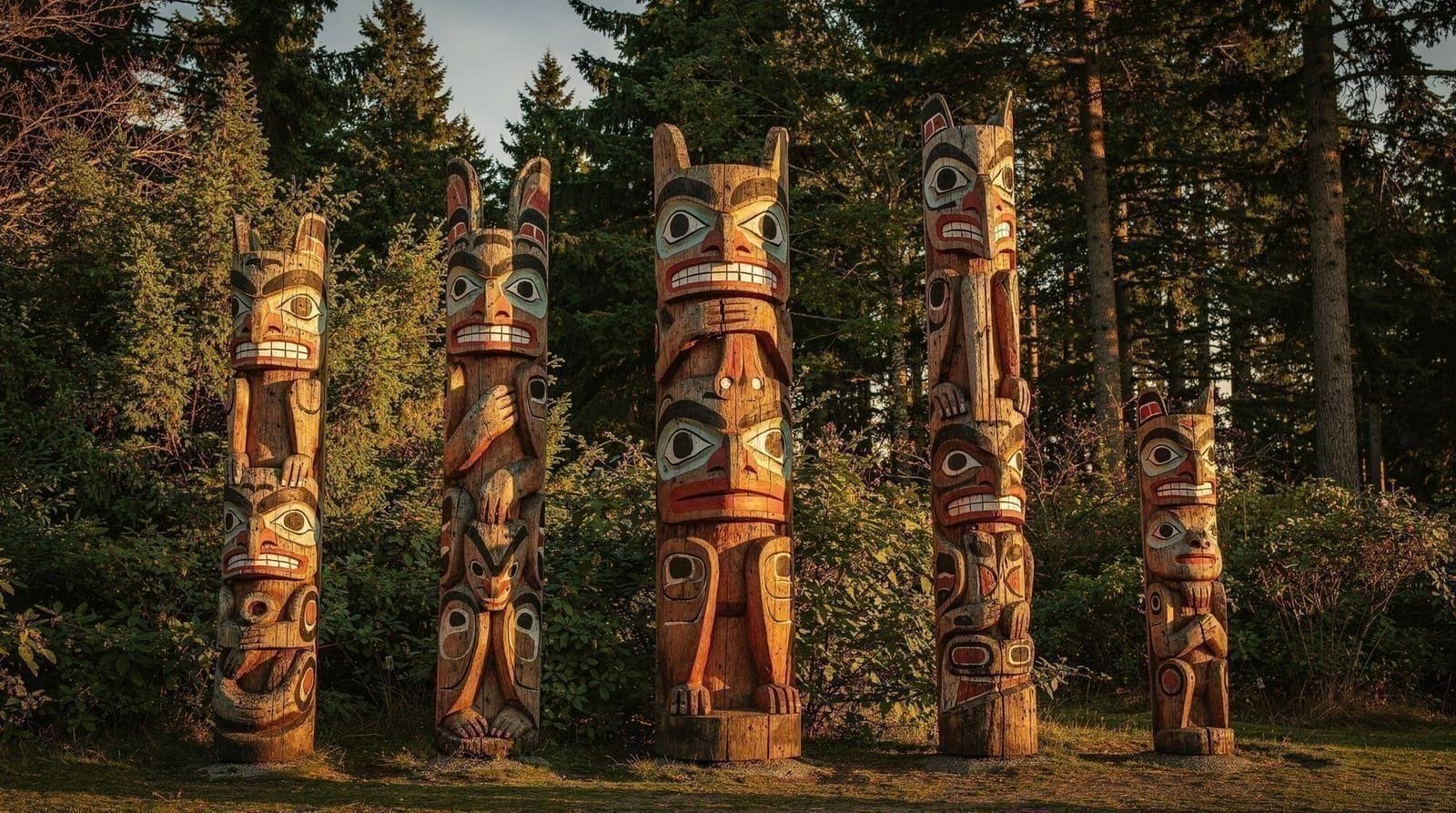
Downtown Vancouver has more Indigenous cultural touchpoints within walking distance of each other than first-time visitors often expect. Beyond the Bill Reid Gallery itself, Stanley Park’s totem pole display near Brockton Point sits a short walk or bike ride away, and several public art installations around the downtown core and waterfront were commissioned from local Coast Salish artists.
Reading the Indigenous culture in Vancouver guide alongside this one gives a fuller picture of how these downtown sites connect to each other and to the broader Indigenous cultural landscape across the city, including the more hands-on, guided options covered in the First Nations experiences guide.
Who should prioritize this visit
The gallery is a strong fit for visitors with limited time who still want a genuine, focused Indigenous art experience without the travel time MOA requires, and for anyone specifically interested in Bill Reid’s own legacy as one of the most significant Canadian artists of the last century. It’s a weaker fit for visitors hoping for a sprawling, half-day museum experience or a broad survey of Northwest Coast Nations beyond Reid’s own Haida heritage and the gallery’s contemporary rotating program — those visitors are better served by MOA, with this gallery as a complementary rather than substitute stop.
Combining with a downtown sightseeing day
Because the gallery sits so centrally, it slots easily into a broader downtown day built around the Vancouver Art Gallery, a walk through Gastown, and a stop at the Vancouver Lookout for a harbour view. Visitors following a hop-on-hop-off route through downtown can reasonably add a stop here without derailing the rest of a planned day, and it works equally well as a rainy-day option given its fully indoor format.
A note on cultural protocol
As with any Indigenous cultural institution, some works on display carry specific cultural or ceremonial context that exhibition text addresses directly rather than presenting the collection as a neutral display case. Taking a few extra minutes to read the didactic text alongside the pieces — rather than moving quickly through as a purely visual gallery — is the most respectful and genuinely rewarding way to experience the collection, particularly for visitors less familiar with Haida artistic traditions and formline design conventions before arriving.
Understanding formline design
Northwest Coast formline is the visual language underlying most of what’s on display here — a system built from continuous, flowing lines that thicken and thin to form ovoids, U-shapes, and split representations of animal and ancestral figures, rather than the naturalistic representation a first-time visitor might expect from a Western art background. Reid was among the artists most responsible for codifying and teaching this system in the mid-20th century, drawing on older Haida carving and engraving traditions and adapting them for new mediums like gold and silver jewelry.
Spending a few minutes with the gallery’s introductory text on formline before moving through the collection makes the rest of the visit considerably more legible, since recognizing the recurring visual grammar — rather than viewing each piece purely as an isolated object — is a big part of what makes the collection rewarding rather than merely decorative.
The wider “renaissance” movement
Reid’s career unfolded alongside what’s often called the Northwest Coast art renaissance of the mid-to-late 20th century, a period when a small group of Indigenous artists — including figures like Robert Davidson, Bill Reid’s own contemporary and, at points, collaborator — worked to revive and formalize carving, engraving, and formline traditions that had been suppressed for decades under Canadian policies including the potlatch ban.
The gallery’s rotating contemporary exhibitions are a direct continuation of that renaissance rather than a separate, disconnected program, generally featuring artists who trained under or were directly influenced by Reid, Davidson, and their generation, alongside a newer wave working in expanded mediums like textiles, printmaking, and digital media.
Artist talks and public programs
Beyond its exhibitions, the gallery periodically hosts artist talks, small workshops, and public programs tied to whatever contemporary exhibition is currently on display, usually announced on the gallery’s own website and social channels rather than published on a fixed annual calendar. These aren’t guaranteed to align with any given visit, but travelers with some schedule flexibility and a genuine interest in contemporary Northwest Coast art may find it worth checking the current program before finalizing exact dates, since a well-timed artist talk can add real depth beyond a standard self-guided walk-through.
The building’s setting on Hornby Street
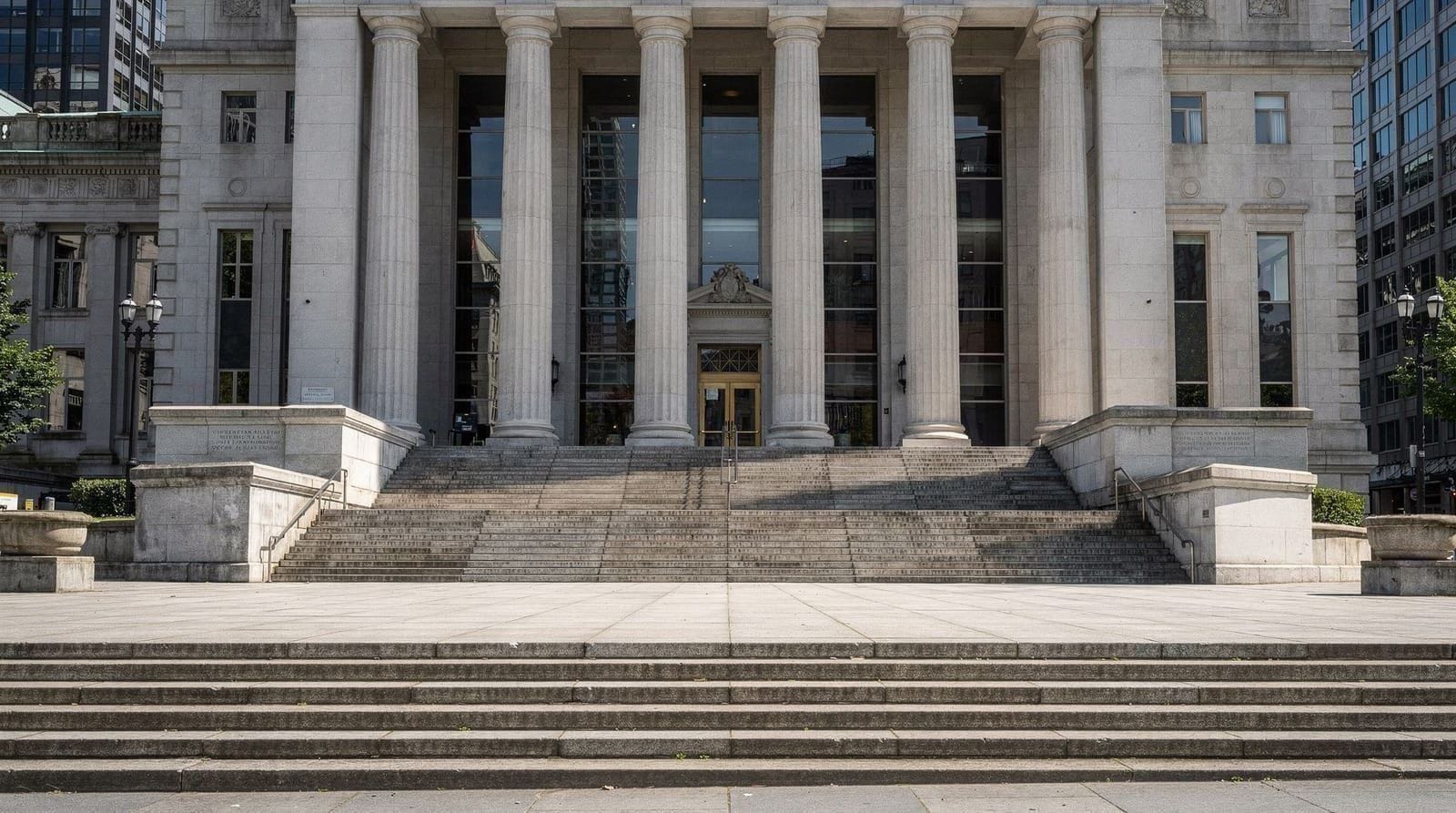
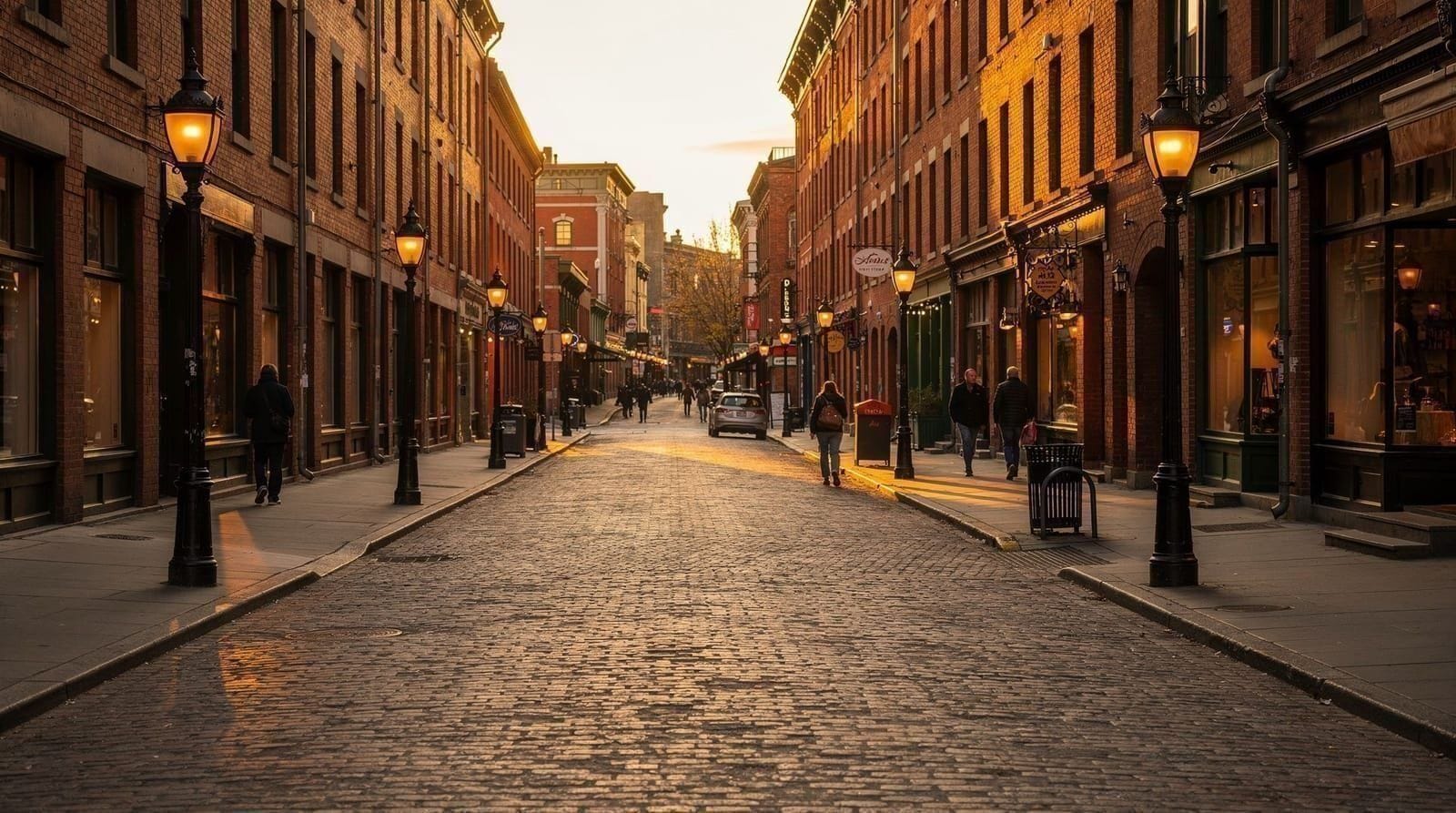
The gallery’s Hornby Street address puts it within Vancouver’s financial and cultural downtown core, a block or two from Robson Square, the Vancouver Art Gallery, and a short walk from Robson Street’s shopping strip — useful context for visitors trying to figure out how to fold a short cultural stop into a day otherwise built around downtown shopping, dining, or business. The building itself is unassuming from the street, with modest signage that means it’s genuinely easy to walk past without noticing; looking specifically for the address rather than expecting an obvious museum facade is worth keeping in mind when navigating there on foot.
Crowd levels and best time to visit
Given its small footprint and lower profile relative to MOA and the Vancouver Art Gallery, the Bill Reid Gallery rarely feels crowded even during peak summer tourist season, and there’s little practical benefit to targeting a specific time of day purely to avoid lines the way there might be at a larger, more heavily trafficked attraction. Weekday mornings shortly after opening tend to be the quietest if a fully uncrowded visit matters, but even weekend afternoons rarely feel busy enough to meaningfully affect the experience.
Souvenir authenticity beyond the gift shop
Because Vancouver’s downtown core has no shortage of shops selling mass-produced “Native-style” merchandise with no connection to actual Indigenous artists, the gallery’s own shop is worth treating as a benchmark for what authentic sourcing looks like — pieces connected to named, credited artists, often with information about the specific Nation and tradition they work within. Visitors who want to shop more broadly for authentic Northwest Coast art elsewhere in the city can use this as a reference point for the kind of provenance and artist information a legitimate piece should come with, a topic covered in more depth in the Indigenous culture in Vancouver guide.
Combining with a rainy-day itinerary
Vancouver’s rainy stretches, common outside the summer months, make fully indoor stops like this one disproportionately useful for keeping a trip on schedule regardless of weather. A rainy-day downtown loop pairing the Bill Reid Gallery with the Vancouver Art Gallery and a wander through Gastown’s covered arcades and shops covers several hours of genuinely engaging sightseeing without depending on clear skies, which is worth keeping in mind for travelers visiting in the shoulder or winter seasons.
The honest verdict
The Bill Reid Gallery punches well above its physical footprint — a single artist’s legacy, told well, in a space small enough to see properly without a full day’s commitment, positioned exactly where downtown sightseeing itineraries already pass. It’s not a substitute for the scale and depth of MOA, but for travelers working with a tight downtown schedule or simply looking for a genuinely worthwhile hour between other stops, it’s one of the better-value cultural visits in the city relative to the time it demands. Pair it with the Vancouver Art Gallery or a walk through Gastown on the same day, and it barely costs any extra planning to include.
Comparing an independent visit to a guided add-on
Most visitors see the Bill Reid Gallery independently, simply walking in during a downtown day, and there’s little reason to overthink that approach given the gallery’s small footprint and no-reservation-needed format. Travelers who’d rather have context woven into a broader downtown walk, though, can fold it into a private historical and heritage tour, where a guide connects the gallery to nearby sites like Gastown and the waterfront rather than visiting each independently.
Neither approach is wrong — independent visits suit travelers who prefer to read at their own pace, while a guided add-on suits those who want the connections between sites explained along the way rather than pieced together from separate guide pages.
Ticketing and booking ahead
Because the gallery is small and rarely reaches capacity, there’s little practical need to book a specific time slot in advance the way a larger, more heavily trafficked attraction might require. Tickets are generally available at the door, and for visitors wanting a broader downtown introduction that naturally passes near the gallery, a Vancouver city highlights and lookout tour covers the surrounding blocks, leaving the gallery itself as a simple independent add-on before or after.
Frequently asked questions about Bill Reid Gallery of Northwest Coast Art — what to expect and how to visit
How long does a visit to the Bill Reid Gallery take?
Most visitors move through the full collection in 45 minutes to an hour, making it one of the easiest cultural stops in downtown Vancouver to fit into a half-day of other sightseeing.
Is the Bill Reid Gallery good for kids?
It works reasonably well for older children and teens with some interest in art or Indigenous culture, though the small, quiet gallery format and reading-heavy exhibition text suit older kids better than toddlers or very young children who need more interactive engagement.
Do I need to book tickets in advance?
Generally no — the gallery’s small size means it rarely reaches capacity, and tickets are typically available at the door. Checking current hours before visiting is more important than booking ahead, since the gallery keeps different hours than larger downtown institutions.
Is photography allowed inside?
Yes, in most public areas for personal use, though some temporary exhibitions or specific pieces may carry restrictions — posted signage at the entrance and within individual rooms is the reliable guide, and flash is generally discouraged near older or fragile pieces.
Top experiences
Bookable activities with verified prices and instant confirmation on GetYourGuide.