Gastown history — from sawmill saloon to Vancouver's oldest neighbourhood
Vancouver: Self-Guided Smartphone Walking Tour of Gastown
Why is Gastown called Gastown and what makes it historically significant?
Gastown is named after "Gassy Jack" Deighton, a saloon owner whose bar drew the first settlement around the Hastings Mill sawmill in 1867 — making the neighbourhood Vancouver's actual founding site, predating the city's 1886 incorporation. Its Victorian-era buildings, largely rebuilt after the 1886 Great Fire, are now protected as a National Historic Site.
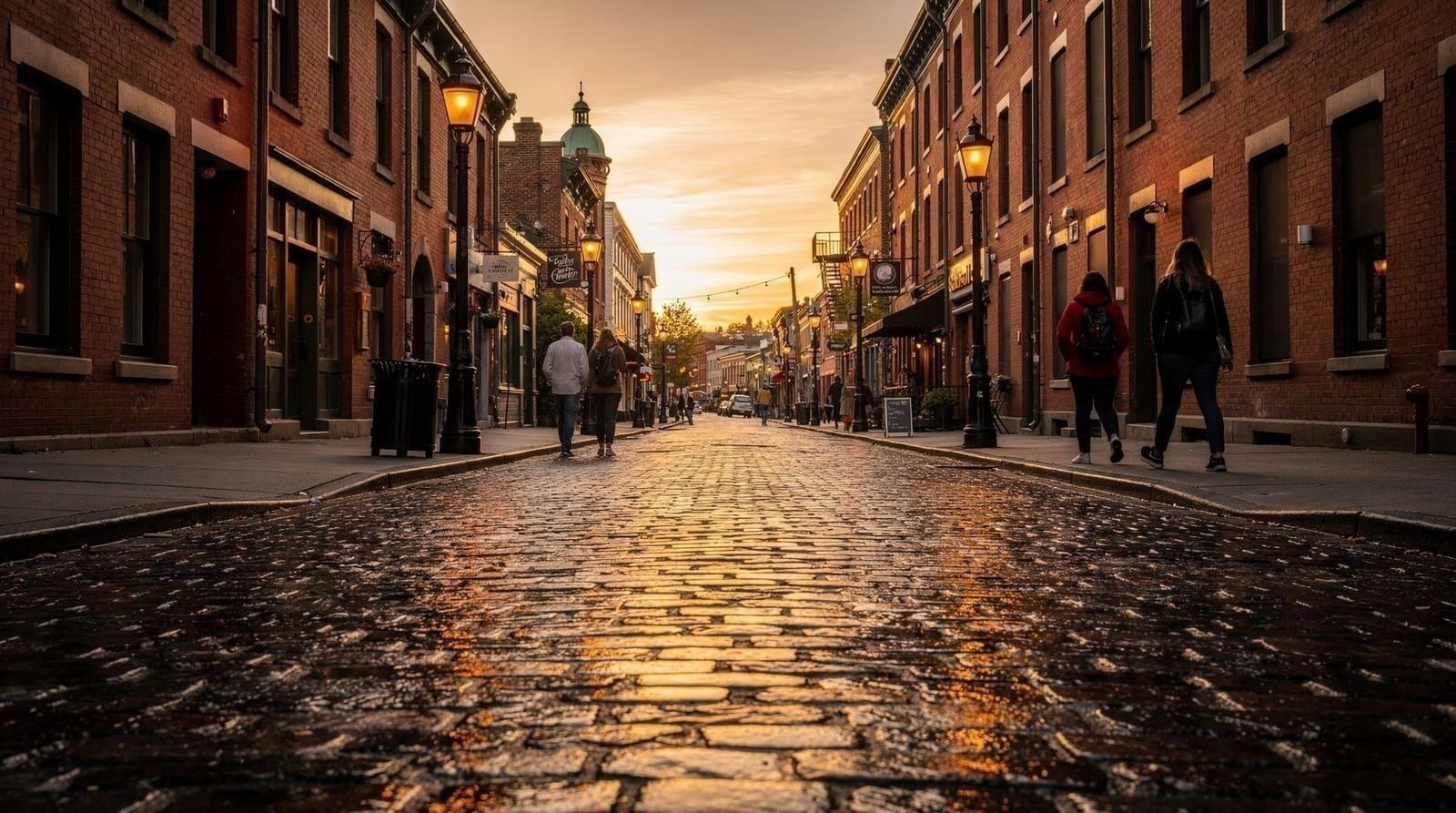
Gastown’s cobblestone streets and Victorian facades read, at first glance, like a preserved historical district built for tourists — and to some extent, its current form is exactly that, a deliberately restored heritage area. But its history runs deeper than the steam clock and gift shops suggest: this is the actual site where Vancouver began, decades before the city existed in any official sense.
| Where | Water Street and Maple Tree Square, downtown Vancouver |
| Cost | Free to walk |
| Time needed | 45 min–1 hour for the core historic route |
| Best time | Early mornings before roughly 10am for a quieter walk |
| Getting there | 5-min walk from Waterfront SkyTrain/SeaBus |
Gassy Jack and the founding of the settlement
The neighbourhood takes its name from John “Gassy Jack” Deighton, an English sailor and saloon keeper who, in 1867, rowed up to the shore near the Hastings Mill sawmill with a barrel of whisky and persuaded local mill workers to help him build a bar in exchange for drinks. The saloon drew enough of a following that a small settlement, informally called “Gastown” after Deighton’s reputation as a talkative storyteller, grew up around it — predating Vancouver’s official incorporation as a city by nearly two decades. A statue of Gassy Jack, standing on a whisky barrel, marks the approximate site today at what’s now Maple Tree Square, the informal centre of the historic district.
The Great Fire of 1886
Vancouver was officially incorporated in April 1886, and just two months later, on June 13, a land-clearing fire set on the edge of the young city spread out of control and destroyed nearly the entire settlement, including most of Gastown, within about 20 minutes. The fire killed at least several people (exact counts vary in historical accounts) and left the fledgling city largely in ashes.
Rebuilding began almost immediately, and much of what visitors see in Gastown today — the Victorian and Edwardian brick and stone buildings lining Water and Cordova Streets — dates from this rapid post-fire reconstruction period through the following two decades, rather than from the original 1867-to-1886 settlement, which was almost entirely wooden and burned completely.
From city centre to skid road
For much of the early 20th century, Gastown functioned as Vancouver’s commercial core, but as the city’s business district shifted westward through the century, the neighbourhood declined into a rougher, poorer area, closely associated with the Downtown Eastside’s ongoing social and economic challenges. By the 1960s, much of Gastown’s Victorian architecture was under real threat of demolition for redevelopment, a fate that had already befallen significant portions of historic buildings elsewhere in the city.
Heritage preservation and revival
A concerted preservation campaign in the late 1960s and early 1970s, driven by local activists and heritage advocates, successfully blocked wholesale demolition and led to Gastown’s designation as a protected historic area by the province in 1971, followed later by National Historic Site status.
This preservation effort is directly why Gastown’s Victorian streetscape survives largely intact today, in contrast to many North American cities where comparable 19th-century commercial districts were lost to mid-20th-century urban renewal. The neighbourhood’s more recent revival — the boutique shops, cocktail bars, and restaurants that now anchor its economy — took shape gradually from the 1990s onward, building on the heritage-protected bones the earlier preservation campaign secured.
The steam clock
Gastown’s steam clock, at the corner of Water and Cambie Streets, is one of the neighbourhood’s most-photographed features, and it’s worth knowing it’s a more recent addition than the surrounding architecture — built in 1977, not a genuine Victorian artifact, though it’s designed to blend with the district’s historic aesthetic. It’s powered by the city’s underground steam heating system, whistling and chiming on the quarter hour, and while its relative youth surprises some visitors expecting a 19th-century original, it remains a legitimate piece of local design history and a reliable meeting point in the neighbourhood.
Walking the historic core today
Water Street, Gastown’s main historic strip, is the easiest way to see the preserved Victorian architecture in a single walk, running from Maple Tree Square past the steam clock toward the edge of Chinatown. A self-guided smartphone walking tour of Gastown is a low-cost way to get historical context at each stop without needing to book a fixed-time guided walk, useful for visitors wanting to set their own pace through the neighbourhood.
Elite and small-group food tour options
For a more intimate version of the food-and-history combination, a Gastown elite walking food tour runs smaller groups through a similar route of historical commentary and tastings, generally with more time at each individual stop than a larger standard group tour allows. Either food tour option pairs naturally with the broader Vancouver food tours guide for visitors comparing Gastown’s offering against other neighbourhood food-tour options across the city.
Food and history combined
For visitors who want the neighbourhood’s history delivered alongside its current dining scene, a Gastown historical walking food tour combines guided historical commentary with tastings at several local restaurants and shops, a practical way to cover both the district’s past and its present in a single outing rather than treating them as separate visits.
The Woodward’s building and later redevelopment
The former Woodward’s department store, on the edge of Gastown toward the Downtown Eastside, is a useful marker of the neighbourhood’s more recent history beyond the Victorian core — a major early-20th-century retail anchor that closed in the 1990s and sat vacant for years before a contentious redevelopment into mixed-use housing and retail in the 2000s.
The building’s illuminated “W” sign, a longtime Vancouver landmark, was restored as part of that redevelopment and remains visible today, a link between the neighbourhood’s department-store-era prominence and its present mixed identity. The project remains a reference point in local debates about gentrification and affordable housing in the area, relevant context for visitors trying to understand Gastown’s edges beyond the polished tourist core.
What to look for in the architecture
Beyond the steam clock, the neighbourhood’s genuine architectural interest lies in its Victorian and Edwardian commercial buildings — ornate brickwork, cast-iron storefronts, and the distinctive angled facade of the Hotel Europe, one of the first reinforced-concrete buildings in Canada when it was completed in 1909, built to fit its unusual triangular lot at the intersection of Powell, Alexander, and Water Streets. Looking up, above the ground-floor shopfronts that have changed hands many times over, is generally the best way to appreciate what survives from the district’s original rebuilding period.
Gastown’s name in context of Vancouver’s other historic districts
Compared to Granville Island’s industrial-turned-artisan history or the North Shore’s more nature-focused historic sites, Gastown stands out as Vancouver’s only neighbourhood whose historical identity centres specifically on the city’s founding moment rather than a later phase of its development. That distinction is worth keeping in mind when deciding how much time to allocate across a broader historic Vancouver itinerary — Gastown is the one stop that answers “why does Vancouver exist here at all,” while most of the city’s other historic districts address later chapters of growth and change.
Honest notes for visitors
Gastown today is a mix of genuine heritage architecture and fairly heavily marketed tourism — some restaurants and shops along the most-photographed stretches of Water Street cater specifically and somewhat aggressively to visitor traffic, with pricing to match.
It’s also worth knowing that Gastown sits immediately adjacent to Vancouver’s Downtown Eastside, an area facing serious, visible social and public health challenges; most tourist activity stays within a few well-trafficked blocks, but visitors should be aware of the broader context rather than assuming the entire surrounding area matches Gastown’s restored, tourist-facing core. Understanding this adjacency also adds useful context to Gastown’s own mid-20th-century decline described above — the neighbourhood’s rougher decades and its geographic closeness to today’s Downtown Eastside are directly connected rather than coincidental.
Before Gassy Jack: the Indigenous history beneath Gastown
Gassy Jack’s saloon and the settlement that grew around it didn’t arrive in an empty landscape — the shoreline that became Gastown and the surrounding downtown peninsula was long used and inhabited by the Musqueam, Squamish, and Tsleil-Waututh Nations before European settlement, with village and resource-use sites throughout the area now covered by downtown Vancouver.
This context is often left out of the standard Gassy Jack founding narrative, but it’s worth knowing that “Vancouver’s founding” in 1867 refers specifically to the beginning of European settlement in this location, not the area’s first human habitation, which predates it by thousands of years. For a fuller picture of this history, the Indigenous culture in Vancouver guide covers the region’s Host Nations in more depth.
Blood Alley and the neighbourhood’s rougher edges
Just off the main tourist-facing stretch of Water Street, Blood Alley — its dramatic name reportedly tied to its early 20th-century reputation as a rough, crime-associated back lane near the old police station and jail rather than any single documented incident — is a reminder that Gastown’s history includes considerably grittier chapters than its current polished aesthetic suggests. The lane has itself been partially gentrified in recent years with restaurants and bars, but its name and the general texture of the surrounding back streets still hint at the neighbourhood’s rougher mid-20th-century decades.
The Hastings Mill connection
The Hastings Mill sawmill, whose workers formed Gassy Jack’s original clientele, was itself a significant early industrial operation on Burrard Inlet, predating the settlement that grew up around Deighton’s saloon and playing a central role in the area’s early economy. Though the mill itself is long gone from its original Gastown-adjacent site, the Hastings Mill Store Museum, relocated to Alma Street near Kitsilano Beach, preserves the mill’s original 1865 store building — reportedly the oldest building still standing in Vancouver — for visitors interested in tracing the city’s industrial origins beyond the saloon-and-settlement story that usually dominates Gastown’s own historical narrative.
Maple Tree Square today
Maple Tree Square, where Gassy Jack’s statue stands, functions today as a small public gathering space and the informal starting point for most visitors’ exploration of the neighbourhood, framed by some of the district’s oldest surviving post-fire buildings. It’s a useful orientation point precisely because of its historical significance — starting a Gastown walk here, rather than at the more commercially dense steam clock end of Water Street, gives a clearer sense of where the original 1867 settlement actually stood before working through the later Victorian-era rebuilding.
Public art and murals
Beyond its preserved Victorian architecture, Gastown has developed a notable contemporary public art scene in its back lanes and side streets, with large-scale murals appearing throughout the neighbourhood over the past decade, part of a broader citywide mural festival movement. These add a modern layer to a district otherwise defined by 19th-century preservation, and wandering the lanes just off the main tourist strip — rather than sticking strictly to Water Street — reveals considerably more of this contemporary artistic layer than a quick photo stop at the steam clock alone.
Shopping and the current commercial scene
Gastown’s retail mix today ranges from higher-end fashion and design boutiques to more conventional souvenir shops catering to cruise-ship and casual tourist traffic, a split that reflects the neighbourhood’s gradual gentrification since the 1990s. Visitors specifically interested in local design and independent Vancouver-based brands will find a reasonable concentration of them along and just off Water Street, distinct from the more generic tourist-market shops clustered closest to the steam clock itself.
Gastown and Chinatown’s shared and separate histories
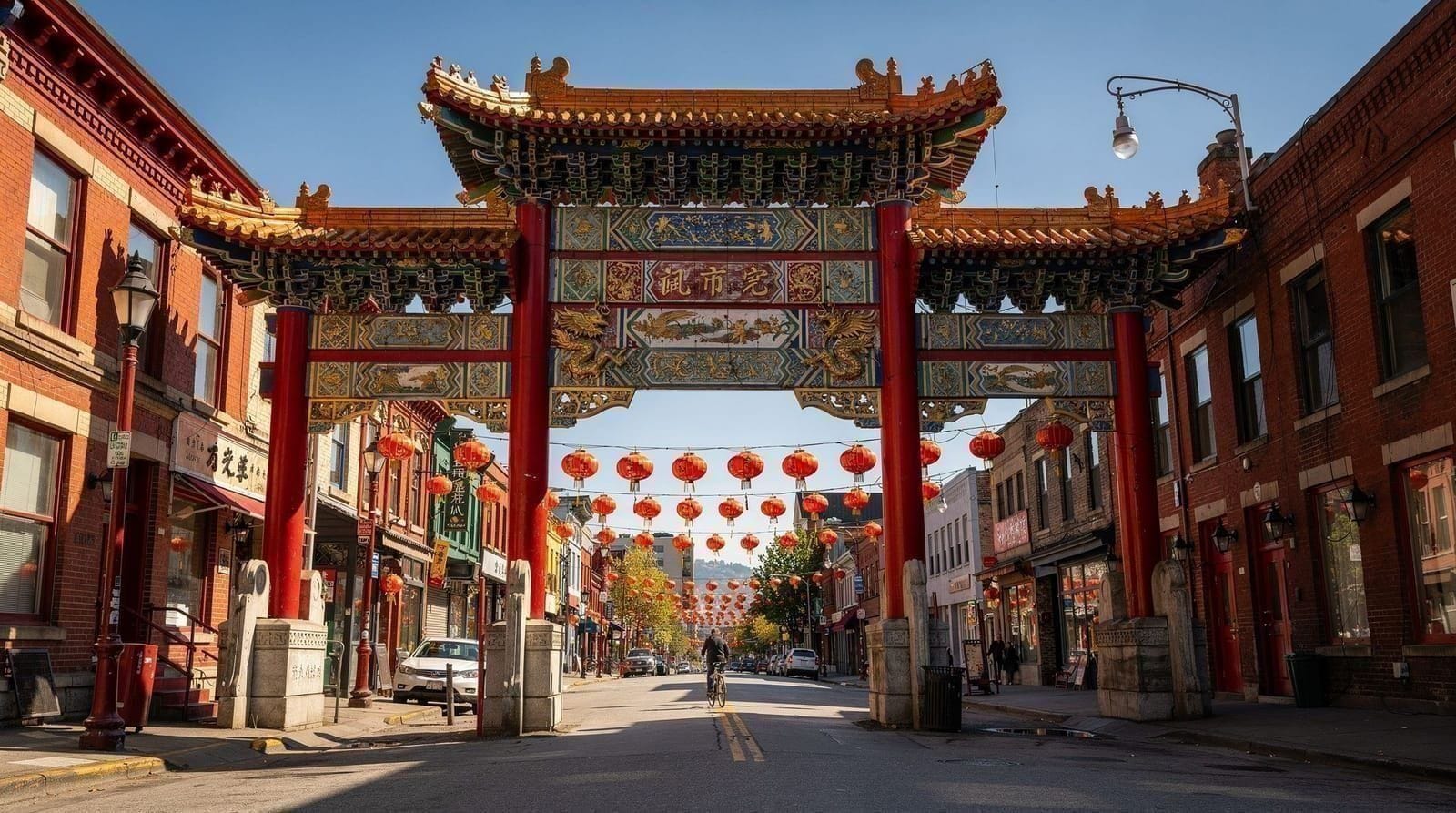
Gastown sits immediately adjacent to Chinatown, and the two neighbourhoods’ histories intertwine at points — both trace back to Vancouver’s earliest decades and both faced significant threats of demolition or decline through the mid-20th century before heritage preservation efforts secured their survival.
But their specific histories diverge sharply: Chinatown’s story is inseparable from the discriminatory laws and violence Chinese immigrants faced in early Vancouver, a very different narrative than Gastown’s saloon-founding and Victorian commercial history. Visitors walking both neighbourhoods in the same day benefit from understanding them as distinct histories rather than a single undifferentiated “old Vancouver” experience.
Best times to visit for a quieter walk
Water Street and Maple Tree Square get genuinely crowded during peak cruise-ship season, roughly May through September, when ships docked at nearby Canada Place send large groups of passengers directly into Gastown as one of the closest walkable attractions to the port. Early mornings, before roughly 10am, or visits timed outside the heaviest cruise arrival days offer a considerably quieter experience of the same streets, letting the architecture and history register without navigating dense foot traffic the whole way through.
A practical walking route
For visitors wanting a structured way to see the neighbourhood’s key historical points without a guided tour, a reasonable self-directed route starts at Maple Tree Square and the Gassy Jack statue, proceeds along Water Street past the Hotel Europe’s distinctive triangular facade and the steam clock, and finishes by cutting through one of the side lanes — Blood Alley among them — to see the mural and public art layer before continuing on toward Chinatown or back toward downtown Vancouver. This covers the district’s core historical sites in roughly 45 minutes to an hour at an unhurried pace, longer if paired with a meal or shopping stop along the way.
The honest verdict
Gastown’s history is more substantial than its current gift-shop-and-cocktail-bar reputation might suggest — this is genuinely where Vancouver began, and the Victorian streetscape that survives today exists specifically because of a deliberate 1970s preservation fight rather than accident. Visitors who take a few minutes to understand the Gassy Jack story, the 1886 fire, and the district’s near-demolition before its heritage protection get considerably more out of a Gastown walk than those who treat it purely as a photogenic backdrop for the steam clock.
Top experiences
Bookable activities with verified prices and instant confirmation on GetYourGuide.