Kayaking Indian Arm, what to know before you go
Vancouver: Indian Arm and Granite Falls Zodiac Boat Tour
Duration: 3 hours
Can I kayak Indian Arm without a guide?
Technically yes if you're an experienced paddler, but self-guided kayaking deep into Indian Arm is a serious undertaking, involving tidal current, active boat traffic, and weather that can change quickly in a narrow fjord. For most visitors, the realistic way to see Indian Arm's scenery, including Granite Falls, is a guided Zodiac boat tour rather than a full-day self-paddle.
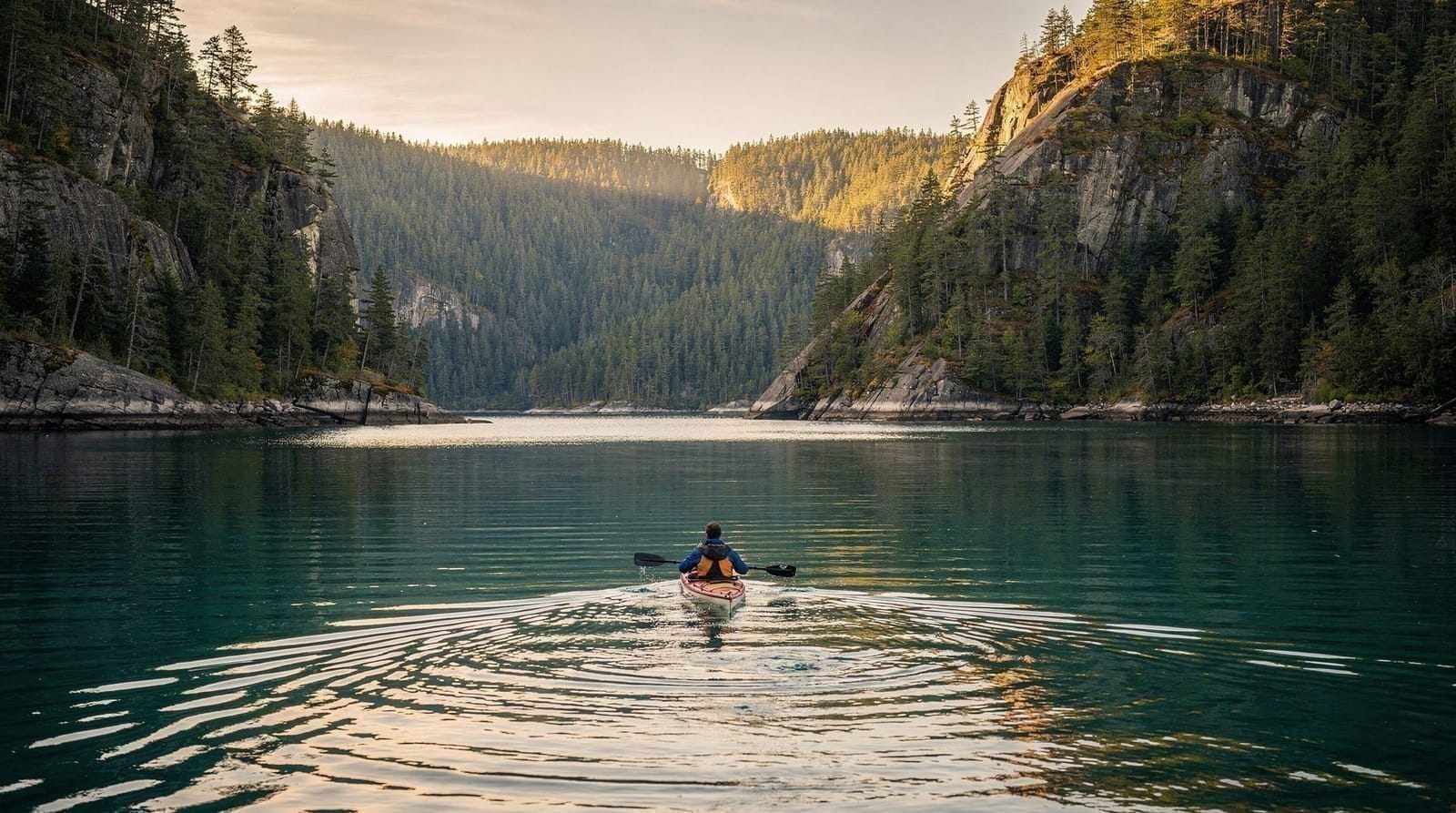
Indian Arm is a long, narrow fjord that reaches north from Burrard Inlet, starting near Deep Cove on Vancouver’s North Shore and cutting roughly 20 kilometres into the Coast Mountains. It’s genuinely dramatic scenery — steep, forested walls rising straight from cold, dark water, waterfalls tumbling into the fjord, and almost no development once you’re a few kilometres past the mouth — and it’s the closest thing to true wilderness scenery within easy reach of downtown Vancouver. It’s also, honestly, not a casual kayaking destination for most visitors, and this guide is written to make that distinction clear before you plan around it.
| Where | North Shore fjord starting at Deep Cove, ~20km long |
| Cost | Zodiac tour: around CAD 130-160/person |
| Time needed | Guided tour: 3-4 hours; self-guided: full day+ |
| Getting there | SeaBus to Lonsdale Quay + bus, or car to Deep Cove |
| Best time | Late spring through early fall |
What Indian Arm actually is
Indian Arm sits within Say Nuth Khaw Yum Provincial Park, a protected area that covers most of the fjord’s shoreline. From the mouth near Deep Cove, the Arm runs north past Belcarra Regional Park on its western shore, narrowing and steepening as it goes, with Granite Falls appearing on the eastern side roughly two-thirds of the way up. Beyond that, the fjord continues into increasingly remote terrain before terminating near Wigwam Inn, a historic lodge site accessible only by water or float plane. The whole area is administered partly as parkland and partly under First Nations stewardship, and it’s worth treating it with the same respect for wilderness travel that you’d apply to any BC backcountry setting, not as an extension of the city.
Why a genuine kayak expedition here is a serious undertaking
Three factors make self-guided kayaking on Indian Arm meaningfully harder than the sheltered urban paddling covered in the main kayaking Vancouver guide or at Granville Island.
Tides and current. Indian Arm connects to Burrard Inlet through a relatively narrow passage near its mouth, and tidal exchange through that passage creates current that can be genuinely difficult to paddle against, particularly for less experienced kayakers. Planning a route around slack tides and predictable current windows is a basic requirement for anyone attempting a self-guided trip, not an optional refinement.
Boat traffic. The Arm sees recreational boat traffic, particularly on summer weekends, including motorboats moving faster than a kayak and not always watching closely for small craft close to shore. Sharing water with faster vessels in a narrow fjord adds a layer of risk that doesn’t exist on protected water like False Creek.
Weather that changes fast. Fjords funnel wind, and Indian Arm is no exception — conditions that look calm at the Deep Cove end can shift within an hour further up the Arm, and a narrow body of water surrounded by steep terrain doesn’t give paddlers many easy places to pull out and wait out a change. Afternoon winds picking up through the day are a common pattern worth planning around if you’re on the water independently.
None of this means Indian Arm is off-limits to kayakers — it’s a legitimate and rewarding paddling destination for people with the right experience — but it does mean the honest recommendation for most visitors, including reasonably fit and enthusiastic beginners, is a guided trip rather than a solo attempt.
What you’ll see along the way
The scenery changes noticeably the further up the Arm you go, whether by kayak or boat. Near Deep Cove, the fjord still feels connected to the city — homes and docks visible along the shore, other boats around, Burrard Inlet’s wider water not far behind. A few kilometres in, development thins out fast, replaced by steep, forested slopes rising directly from the water with little flat ground for anything to be built on. Belcarra Regional Park sits on the western shore roughly midway up, a rare pocket of accessible parkland with picnic areas and short trails, reachable by road from the Tri-Cities area as well as by water.
Granite Falls appears on the eastern shore further along, a genuine waterfall dropping into the fjord rather than a trickle, and it’s the most commonly cited highlight for both kayakers and boat tour passengers. Beyond the falls, the Arm continues into terrain that sees relatively few visitors, ending near Wigwam Inn, a historic lodge accessible only by water or float plane, closed to casual drop-in visits.
Wildlife on Indian Arm
The fjord’s relative lack of development supports more wildlife than the busier, more urban paddling spots covered elsewhere in this cluster. Bald eagles are a regular sight along the forested shoreline, particularly in the fall and winter months outside peak tourist season. Harbor seals are sometimes visible hauled out on rocks or swimming near shore.
Black bears live in the surrounding forest and are occasionally spotted along the shoreline from the water, which is one of several reasons careful food storage matters for anyone camping overnight along the Arm. None of this is guaranteed on any given visit — it’s a wild area, not a managed wildlife park — but it’s part of what separates Indian Arm from the more purely scenic, wildlife-light paddling around False Creek or English Bay.
Best time of year for Indian Arm
Late spring through early fall is the most practical window for both guided boat tours and independent paddling trips, with July and August offering the most reliable weather and the longest daylight for a full-day attempt. Guided Zodiac tours typically run through this same season, scaling back or pausing over winter.
Spring can bring higher water and more dramatic waterfall flow at Granite Falls following snowmelt, which is worth factoring in if seeing the falls at their most impressive is a priority, though spring weather is also more variable and less predictable for a self-guided paddle. Winter kayaking on the Arm is realistically limited to experienced local paddlers with appropriate cold-weather gear and isn’t something to plan a visit around.
What a genuine multi-day or long-day paddle involves
For experienced paddlers, Indian Arm is a classic regional destination, often done as a full-day out-and-back from Deep Cove or as a multi-day trip with camping at a handful of designated spots along the shoreline. A full-day paddle to Granite Falls and back covers a meaningful distance — the falls sit a good way up the fjord — and requires an early start, a clear read on the tide tables, and a realistic pace assessment given wind and current on the return leg.
Camping is possible at a small number of designated sites within the provincial park, generally used by paddlers or boaters comfortable with backcountry self-sufficiency: no facilities to speak of, careful food storage given the presence of black bears in the area, and planning around variable weather. This is genuinely a backcountry undertaking, not a casual overnight, and it’s not something to improvise without prior experience in tidal coastal paddling.
If you do have that experience and want to attempt it, the sensible approach is the same as any BC backcountry trip: check current tide and weather forecasts close to departure, tell someone your planned route and return time, carry appropriate safety and navigation equipment, and build in a wide safety margin on timing given how quickly conditions can turn in a narrow fjord.
The realistic option for most visitors: a guided Zodiac boat tour
For the large majority of visitors who want to see Indian Arm’s scenery without the tides, distance, and risk management a genuine kayak expedition requires, a guided boat tour is the honest recommendation, and it delivers a lot of what makes the Arm worth visiting in the first place.
The Indian Arm and Granite Falls Zodiac boat tour covers the fjord by inflatable Zodiac boat rather than kayak, reaching Granite Falls and other scenic points along the way in a fraction of the time a paddle would take, with a guide handling navigation and local knowledge of the area. It’s a legitimately different kind of experience from kayaking — faster, more scenery covered per hour, less physical effort required — but for most travelers with a single day or half-day to spend, it’s the more realistic way to actually see what makes Indian Arm worth the trip.
For a different pace entirely, the Indian Arm luncheon half-day cruise takes a larger, slower vessel up the fjord with lunch included, trading the Zodiac’s speed and closer-to-the-water feel for a more relaxed, seated experience. It suits visitors who want the fjord scenery without any physical activity at all, including those who might not be comfortable in a smaller open boat.
Neither of these tours is a kayaking product, and it’s worth being clear-eyed about that distinction: they’re the accessible way to see Indian Arm’s landscape for people who aren’t set up for a genuine paddling expedition, not a substitute for actually kayaking the fjord. If paddling itself, rather than just seeing the scenery, is the priority, the more honest starting point is a guided kayak tour on calmer, more contained water — the Vancouver kayaking tour covers that kind of sheltered-water paddling experience, or consider building paddling skill and confidence on protected water before attempting anything on Indian Arm itself.
Zodiac tour vs. genuine kayak trip: what each actually gives you
It’s worth spelling out the trade-off in concrete terms, since the two options deliver genuinely different experiences rather than just different levels of effort. A guided Zodiac tour covers the distance to Granite Falls and back in a few hours, with a guide narrating the landscape, local history, and points of interest along the way, and no physical exertion required beyond holding on as the boat moves. It’s a sightseeing experience, fast-paced and comfortable, and it reliably reaches the falls regardless of your fitness or paddling background.
A genuine kayak trip, by contrast, is slower, physically demanding, and puts you at water level in a way a boat simply doesn’t — there’s a real difference between watching the fjord walls go by from a Zodiac and paddling past them at a pace where you notice the water temperature change, the wind shift, and the silence once the boat traffic thins out. Neither is objectively better; they’re suited to different priorities. Visitors who want the scenery efficiently and comfortably should book the boat tour. Paddlers who specifically want the physical and immersive experience of covering the distance under their own power, and who have the skills to do it safely, should plan a genuine kayak trip.
Safety essentials for a self-guided attempt
For anyone with the experience to consider a genuine paddle, a realistic safety checklist includes: a marine VHF radio or a satellite communicator for areas without cell coverage, a current tide table and marine forecast checked the morning of departure, a properly fitted personal flotation device worn at all times rather than just carried, a spare paddle, a bilge pump or other means of clearing water from the kayak after a capsize, and a filed float plan with someone onshore who knows your route and expected return time.
Cold water immersion is the single biggest risk on the Arm — even strong swimmers can lose muscle function within minutes in water this cold, which is why self-rescue practice matters more here than it would on a warm inland lake. None of this is meant to discourage experienced paddlers; it’s the standard preparation that separates a genuinely enjoyable Indian Arm trip from a dangerous one.
Deep Cove: the access point either way
Whether you’re attempting a genuine paddle or joining a guided boat tour, Deep Cove is the practical starting point for Indian Arm — it sits directly at the fjord’s mouth, with independent kayak rental operators on the waterfront and easy access from central Vancouver. The Deep Cove kayak guide covers getting there by SeaBus and bus versus car, the rental scene in the village itself, and the short Quarry Rock hike that pairs naturally with a day spent around the cove. For the full North Shore transit picture, including SeaBus timing and bus connections through North Vancouver, see the North Vancouver destination guide.
How Indian Arm compares to the rest of the kayaking cluster
It’s worth being direct about how Indian Arm stacks up against the other paddling options covered on this site. It has by far the most dramatic scenery of anything in the kayaking Vancouver cluster — genuine fjord walls and waterfalls rather than city skyline — but it demands the most experience and planning to do independently. Granville Island and the sheltered water around False Creek sit at the opposite end: calm, protected, genuinely beginner-friendly, with none of the tidal or weather considerations that apply here.
Deep Cove is the middle ground, offering an easy independent paddle around the cove itself with the option to explore calmer, more contained sections without committing to the open fjord. Bowen Island is a different kind of day trip entirely — a ferry crossing to a village with its own kayak and paddleboard rentals — worth considering if a boat crossing and a different island atmosphere appeal more than fjord scenery specifically.
If sailing rather than paddling sounds like a better way to cover open water with less physical demand, the sailing Vancouver guide is worth a look as an alternative way to get out on the water around the city.
Cost expectations
Guided Zodiac tours to Granite Falls typically run a few hours and are priced accordingly for a small-group boat tour with fuel, equipment, and a guide’s time factored in — generally more than a basic sheltered-water kayak tour elsewhere in the region, reflecting the distance covered and the boat itself. The luncheon cruise option sits in a similar or slightly higher range once a meal is included. Independent kayak rental from Deep Cove is comparatively inexpensive per hour, but again, that comparison only makes sense if you’re already equipped to paddle the Arm safely — renting a kayak cheaply and then turning back after twenty minutes because the conditions are more than you bargained for isn’t a bargain at all.
Realistic planning advice
If you’re an experienced paddler set on a genuine Indian Arm trip: check tide tables and marine weather forecasts in the days leading up to departure, not just the morning of; plan your route around slack tides where possible, particularly near the narrower passage close to Deep Cove; carry a means of communication that works without cell coverage, since parts of the Arm sit outside reliable signal; and build a wide time buffer into your plan so an unexpected wind shift doesn’t leave you paddling against current in fading light.
If you’re not an experienced paddler, or simply don’t have a full day to dedicate to a self-guided trip, the guided boat tours are a legitimate, honestly recommended way to see Indian Arm’s landscape without taking on risk that the scenery, while genuinely worthwhile, doesn’t require you to accept. There’s no real shame in choosing the boat over the paddle here — the fjord’s scale and remoteness are exactly why most visitors, including plenty of capable paddlers with limited time, choose that option.
Frequently asked questions — Kayaking Indian Arm, what to know before you go
Is Indian Arm suitable for beginner kayakers?
Not as a self-guided trip. The Arm has tidal current, boat traffic, and open sections exposed to wind, and conditions can shift quickly for a fjord this size. Beginners who want to experience Indian Arm's scenery are better served by a guided Zodiac boat tour, which handles the navigation and safety planning.How do I get to Indian Arm from Vancouver?
Deep Cove, at the mouth of the Arm, is the usual access point, reached via SeaBus to Lonsdale Quay followed by a connecting bus, or by car through North Vancouver. See the North Vancouver destination guide for the full transit and driving directions.What is Granite Falls and can I see it by kayak?
Granite Falls is a waterfall partway up Indian Arm, one of the more scenic landmarks on the fjord. It's reachable by kayak for experienced paddlers with enough time and the right conditions, but most visitors see it via a guided Zodiac boat tour, which covers the distance in a fraction of the time a paddle would take.Can you camp on Indian Arm?
Camping is possible at a small number of designated spots along the fjord, generally used by experienced multi-day paddlers or boaters rather than casual visitors. It requires real planning around tides, weather, and self-sufficiency, and isn't something to attempt without prior backcountry paddling experience.
Top experiences
Bookable activities with verified prices and instant confirmation on GetYourGuide.