Kayaking from Deep Cove, the easiest launch point on the North Shore
Vancouver: Smooth Classic Kayak Tour
Duration: 2.5 hours
Can I rent a kayak in Deep Cove without a guide?
Yes. Several independent operators rent kayaks and paddleboards directly on the Deep Cove waterfront, and it's a genuinely reasonable option if you already know how to paddle, since the cove itself is calm and sheltered. Deep Cove Kayak is one of the longer-established local outfitters if you're looking for a name to start with, though it's worth comparing current options once you arrive.
| Where | Deep Cove village, North Shore, mouth of Indian Arm |
| Self-rental cost | Affordable hourly rate, one of the cheaper options regionally |
| Getting there | SeaBus to Lonsdale Quay + bus, or car (parking fills fast) |
| Best for beginners | Yes, within the sheltered cove itself |
| Classic pairing | Quarry Rock hike, ~3.8 km round trip |
Deep Cove is BC’s best-known casual kayak-launch village, a small waterfront community tucked into the North Shore where Indian Arm begins, and it’s earned that reputation honestly. It’s compact, easy to reach without a car, has several independent rental operators right on the water, and functions as the natural jumping-off point for anyone curious about paddling in the region without needing a guided tour to get started. It’s also, not incidentally, home to Honey’s Doughnuts, a genuine local institution that draws real weekend lines on its own merits.
Why Deep Cove is the easiest launch point on the North Shore
The cove itself is sheltered — a pocket of calm water tucked in before Indian Arm opens up further north — which makes it meaningfully easier and lower-stakes than paddling in open water further along the fjord or off the exposed coastline elsewhere in the region. That combination of calm water, easy access, and an established rental scene is exactly why Deep Cove has become the default answer to “where should I rent a kayak near Vancouver” for so many visitors and locals alike. It’s genuinely calmer than Indian Arm’s open sections, which is worth repeating clearly: paddling around the cove itself is a different, much easier proposition than heading north into the fjord.
Renting independently in the village
Several independent operators rent kayaks and paddleboards directly on the Deep Cove waterfront, generally offering both single and tandem kayaks by the hour or for a half day. Deep Cove Kayak is a long-established, genuinely real local outfitter worth knowing by name if you want a starting point, though it’s sensible to compare current options, availability, and pricing once you’re actually in the village rather than assuming any one operator is the only choice — conditions and businesses can change, and it costs nothing to look around for ten minutes before committing.
Independent rental is a reasonable choice here specifically because the cove is so sheltered. If you already know the basics of paddling, renting for an hour or two and setting your own pace around the cove is a straightforward, flexible way to spend part of a day, without the fixed schedule a guided tour requires. It’s worth confirming what’s included with the rental — paddle, life jacket, and any brief safety orientation — and asking the operator directly about that day’s conditions before heading out, particularly if you’re planning to paddle beyond the immediate cove.
When a guided tour makes more sense than renting
If you’ve never kayaked before, or you want to actually get a look at Indian Arm’s more scenic stretches rather than just the cove itself, a guided option is the more sensible choice. The smooth classic kayak tour offers the same beginner-friendly, no-experience-required structure covered in the main kayaking Vancouver guide, with basic instruction before launching and a relaxed pace throughout. The Vancouver kayaking tour is a comparable option worth checking against it for departure time and route specifics.
For visitors who want to see further into Indian Arm — Granite Falls and the more dramatic fjord scenery — without taking on a genuine paddling expedition, the Indian Arm and Granite Falls Zodiac boat tour departs from this general area and covers that ground by boat rather than kayak, reaching much further up the fjord than a self-guided paddle from Deep Cove realistically would in a single day.
The Indian Arm kayak guide goes into more depth on why a genuine kayak expedition up the Arm is a serious undertaking best suited to experienced paddlers, and why the Zodiac tour is the more realistic option for most visitors who want that scenery without the risk.
What you’ll see on the water
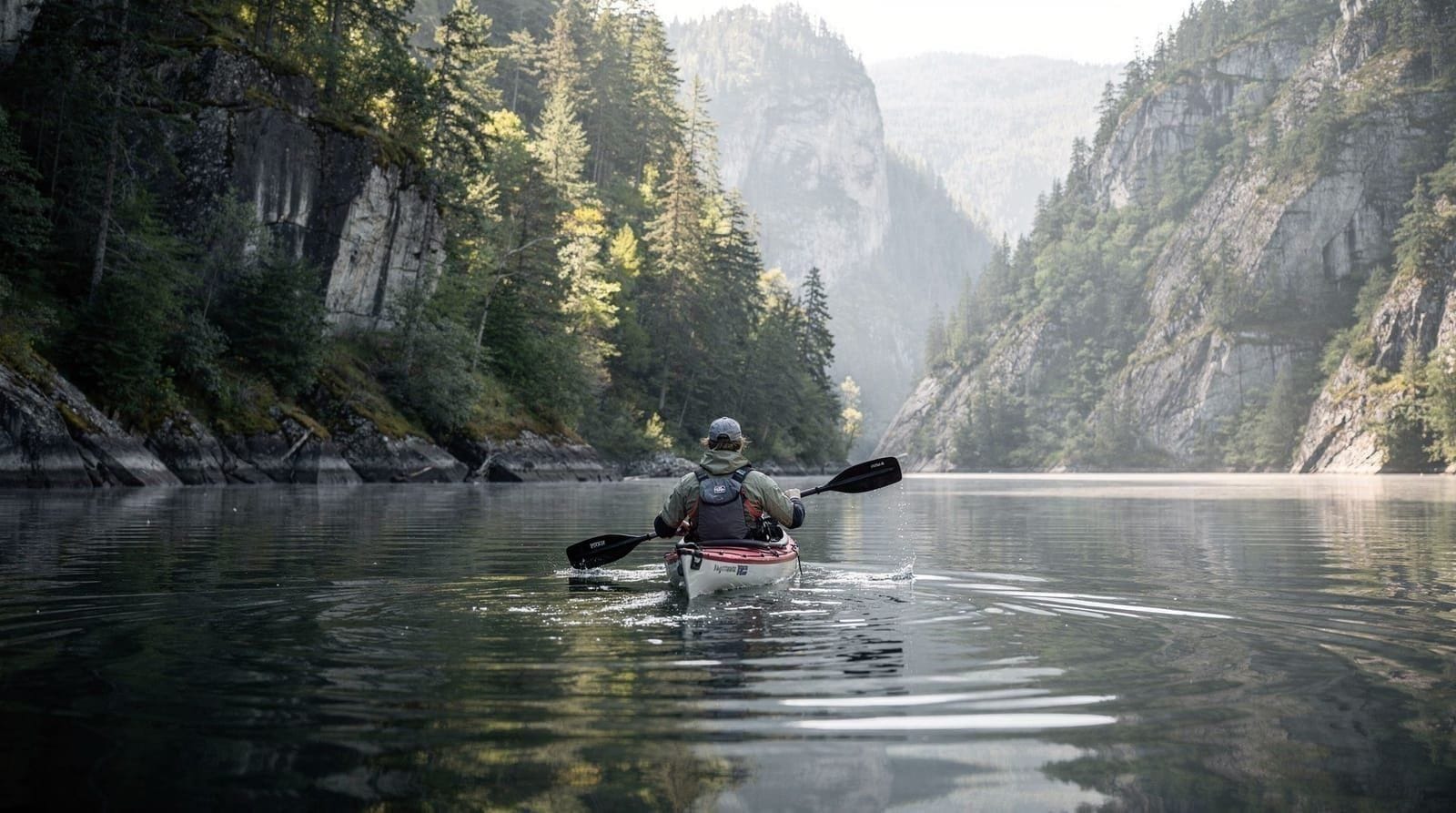
Paddling around Deep Cove itself, expect a mix of forested slopes rising behind the waterfront homes, moored sailboats and small craft in the cove, and the first hint of Indian Arm’s more dramatic scenery visible to the north, even if you don’t paddle far enough to reach it.
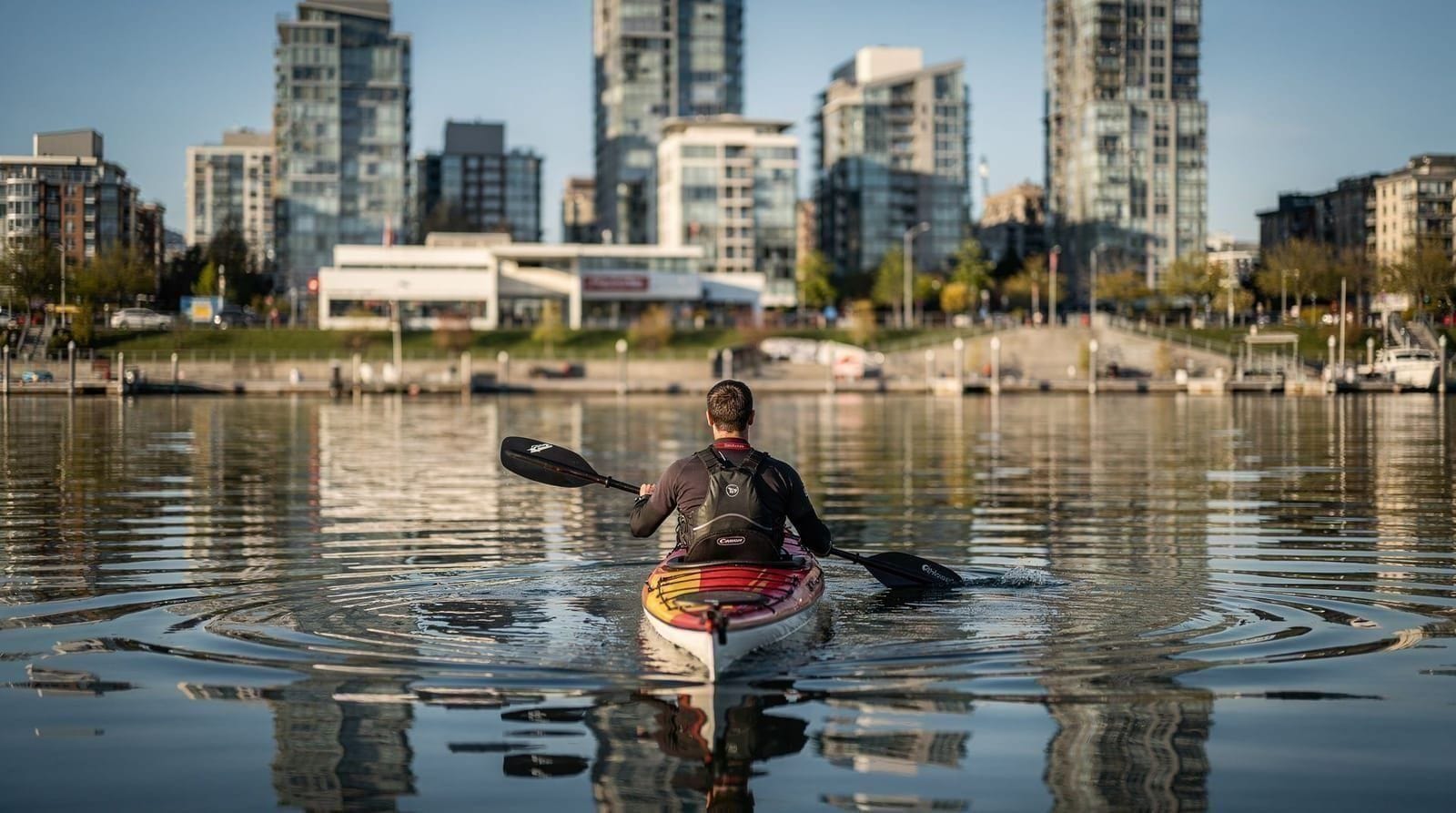
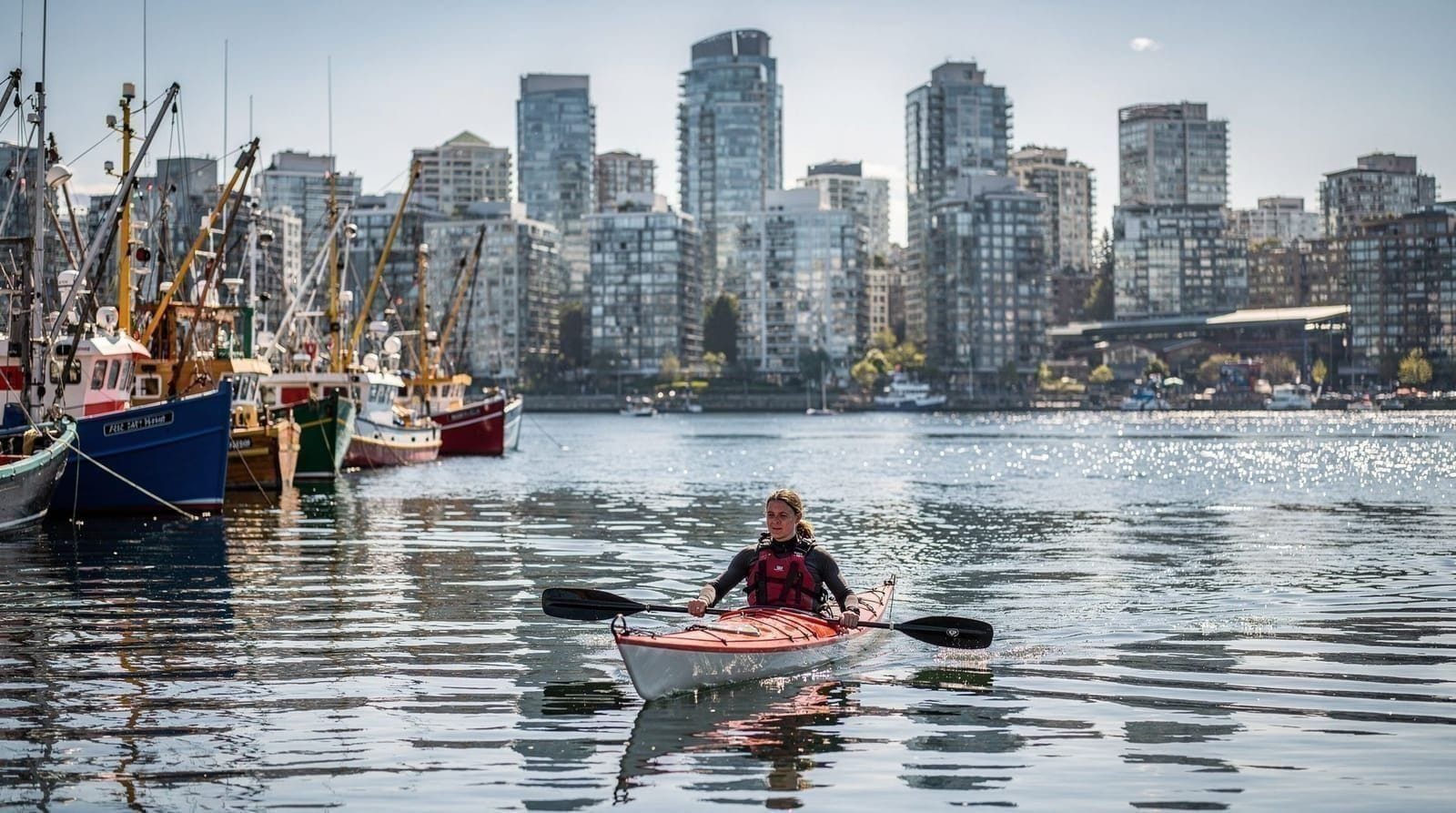
It’s a noticeably different visual character from the urban skyline views around Granville Island — greener, quieter, and closer to what people generally picture when they imagine BC’s coastline, even within the relatively contained cove. Paddle even a short distance beyond the immediate cove and the shoreline starts to feel more remote, homes thinning out and forest taking over, a preview of what the fuller Indian Arm experience looks like further in.
Wildlife around Deep Cove
Harbor seals are a fairly regular sight in and around the cove, and bald eagles are commonly spotted in the surrounding trees, particularly outside the busiest summer months. It’s not a dedicated wildlife-viewing destination the way the seal and snorkel combo tours elsewhere in this site’s coverage are, but it’s a genuine bonus of paddling here rather than on the more purely urban water around False Creek.
Best time of year to paddle at Deep Cove
Late spring through early fall is the most reliable season, both for weather and for rental and tour availability, with July and August being the busiest months for both the water and the village itself. Weekday visits and early starts help avoid the worst of the crowds, both on the water and in the village, particularly if Honey’s Doughnuts and Quarry Rock are both on the agenda for the same day. Shoulder season — May, June, and September — often delivers a quieter, still perfectly paddleable cove with noticeably less competition for parking and rental kayaks.
Self-rental vs. guided tour: the honest trade-off at Deep Cove
The calculation here is fairly straightforward compared to open coastal spots. If you’re staying within the cove itself and you already know how to paddle, independent rental is cheaper, more flexible, and entirely reasonable given how sheltered the water is. If you’re new to kayaking, want instruction, or want to head further out toward the more scenic parts of Indian Arm, a guided tour or the Zodiac boat option is the safer and more rewarding choice — Deep Cove’s own sheltered water doesn’t extend the dramatic fjord scenery that draws people to Indian Arm in the first place, so a purely independent paddle around the cove, while pleasant, won’t deliver the postcard views without going further than a beginner should attempt alone.
Getting to Deep Cove without a car
Deep Cove is reachable from downtown Vancouver via SeaBus to Lonsdale Quay, a 12-minute harbour crossing, followed by a connecting bus through North Vancouver — the full route and timing are covered on the North Vancouver destination guide, which is worth reading before you go if you’re relying on transit.
It’s not a fast trip end to end — figure on 45 minutes to an hour from downtown depending on bus connections — but it’s a manageable and scenic one, and it removes the need to find parking in a village that fills up quickly on weekends. Drivers can reach Deep Cove via the Ironworkers Memorial Bridge (Second Narrows) or the Lions Gate Bridge, then up through North Vancouver; the same parking crunch that affects Capilano and Grouse Mountain on busy days applies here too, so arriving early or on a weekday is worth planning for if driving is the plan.
Families and first-timers
Deep Cove’s sheltered water and easy village access make it a solid option for families, provided the plan stays within the cove itself rather than venturing toward Indian Arm’s more open sections. Tandem kayaks are widely available from the independent rental operators, useful for a parent paddling with a child, and the short distance back to shore if plans change partway through gives more flexibility than a longer guided route would. As with other spots in this cluster, most guided tours set a minimum age for participants, generally somewhere around 6 to 8 years old, worth confirming directly with the operator if traveling with younger kids.
What it typically costs
Independent rental by the hour at Deep Cove tends to be one of the more affordable ways to get on the water in the region, reflecting both the short distance covered and the lack of a guide’s time built into the price — a reasonable option specifically because the cove is sheltered enough to make solo paddling safe for anyone with basic competence.
Guided tours and the Zodiac boat trip cost more, in line with the added instruction, safety oversight, and, for the Zodiac option, the boat itself and the greater distance covered up the fjord. None of these are unreasonable prices for what’s included; the point is simply that the right choice for your budget depends on how experienced a paddler you already are and how far into Indian Arm’s scenery you actually want to go.
A bit of history
Deep Cove has been a boating and cottage community for well over a century, long before it became a well-known day-trip destination for visitors — many of the waterfront homes date back decades, and the cove’s sheltered position at the mouth of Indian Arm made it a natural place for small craft moorage long before recreational kayaking became popular. That long history as a genuine boating village, rather than a purpose-built tourist stop, is part of why it still feels like an actual community rather than a manufactured attraction, even on its busiest summer weekends.
Honey’s Doughnuts and the village itself
Honey’s Doughnuts is a genuine, well-known local institution right in Deep Cove village, and it draws real lines on weekends, particularly in summer — worth building into your timing if it’s part of the plan, either as an early stop before the crowds build or accepted as a wait later in the day. Beyond the doughnuts, the village has a small cluster of cafes and shops within easy walking distance of the waterfront, enough to fill time before or after a paddle without needing to travel further.
Pairing a paddle with Quarry Rock
The hike to Quarry Rock is the classic pairing for a Deep Cove day, a roughly 3.8 km round trip on the Baden-Powell Trail that climbs to a rock outcrop with views over Indian Arm — short, moderately steep in sections, and one of the better view-to-effort ratios on the North Shore, which is exactly why it gets busy on weekends.
Doing the hike either before or after a paddle makes for a full, varied half-day or full day without needing to leave the immediate area: paddle the calm cove water, then head up to Quarry Rock for a different, elevated view of the same fjord you were just floating on. Weekday mornings or an early start are the way to actually enjoy the trail without treating it as a queue, and the same advice about arriving early applies to parking in the village generally.
How Deep Cove compares to the rest of the kayaking cluster
Deep Cove sits in a clear middle position within this site’s kayaking coverage. It’s meaningfully easier and calmer than Indian Arm proper, since the cove itself is sheltered, but it offers open water and a real, if optional, path toward more open and scenic paddling that spots like Granville Island simply don’t have — False Creek is enclosed on nearly all sides, with no route out to open fjord scenery at all.
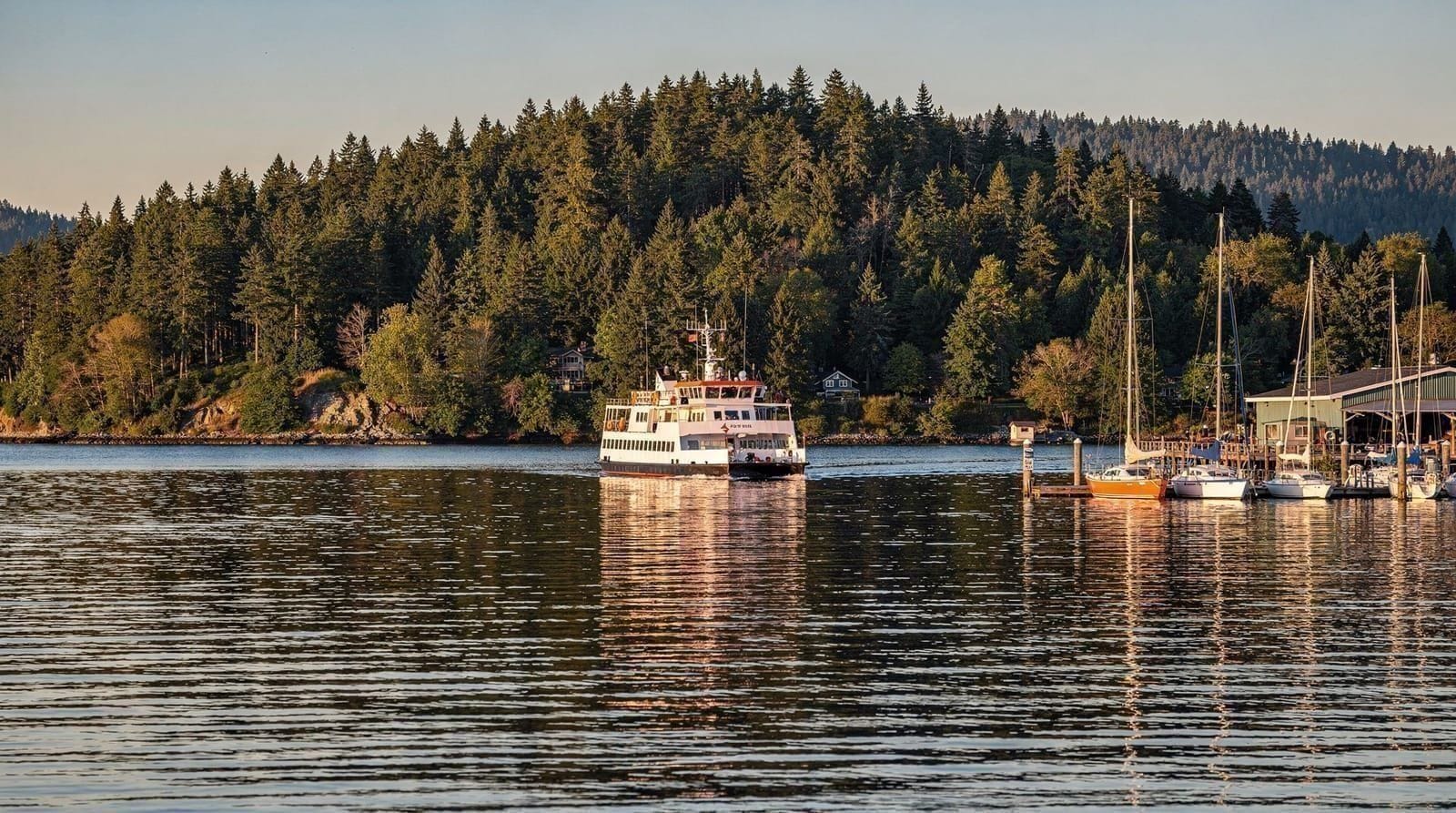
If the goal is the single easiest, lowest-stakes paddle in the region, Granville Island’s sheltered False Creek water edges out Deep Cove slightly. If the goal is an easy launch point with the option to see more dramatic scenery, either independently with enough experience or via a short guided extension, Deep Cove is the better starting point. Bowen Island offers a different kind of day again — a ferry crossing to an island village with its own casual rentals — worth considering as an alternative rather than a direct substitute for a Deep Cove day.
For a broader comparison of all the paddling options around Vancouver, including how sailing and paddleboarding fit alongside kayaking, the main kayaking Vancouver guide is the place to start before narrowing down to a specific spot.
What to bring
The same general kayaking gear advice applies here as elsewhere in the region: layered clothing you don’t mind getting wet, a warm dry layer for afterward, sun protection, and secure footwear rather than sandals. Cold water is a real consideration at Deep Cove just as it is everywhere else on this coast, even inside the relatively sheltered cove, so don’t assume the calmer conditions mean the water itself is any warmer — it isn’t. Guided tours supply the kayak, paddle, and life jacket; independent renters should confirm the same and ask directly about conditions before setting out, particularly if there’s any thought of paddling beyond the immediate cove toward the open sections of Indian Arm.
Parking and weekend crowds
Parking is the most common practical headache for anyone driving to Deep Cove, particularly on summer weekends when the village’s limited lots and street spaces fill early, sometimes by mid-morning.
Arriving before 9am or accepting a longer walk from parking further from the waterfront are the two realistic options if driving during peak season; taking transit sidesteps the problem entirely, and given the SeaBus and bus connection through North Vancouver is genuinely manageable, it’s worth serious consideration even for visitors who’d default to renting a car for the rest of their trip. Weekday visits are dramatically quieter across the board — parking, rental availability, and the Quarry Rock trail all feel like a different, more relaxed place outside weekend hours.
Realistic time budgeting
A paddle around the cove itself, whether rented independently or via a guided tour, typically runs 1.5 to 2.5 hours depending on pace and whether it’s a rental or a structured tour. Add the Quarry Rock hike and you’re looking at a comfortable half day, or closer to a full day once transit time from downtown is factored in for visitors without a car. For anyone wanting to see further into Indian Arm on the same trip, the Zodiac boat tour runs longer, in the 3-hour range, and is worth treating as a separate booking around the paddling and hiking rather than squeezing everything into one rushed day.
Putting it all together, Deep Cove rewards a bit of planning around timing more than it requires any special skill or gear beyond what’s covered above. Get there early, particularly on a weekend, pick either the independent rental or a guided tour based honestly on your own paddling experience, and leave enough time afterward for both Quarry Rock and a stop at Honey’s Doughnuts if the line looks manageable. Few spots on the North Shore pack an easy paddle, a real hike, and a genuine local landmark into a single walkable village quite as efficiently as Deep Cove does — and unlike a lot of destinations that trade on reputation alone, it holds up reasonably well against that reputation once you’re actually standing on the dock.
Frequently asked questions — Kayaking from Deep Cove, the easiest launch point on the North Shore
Do I need a car to kayak at Deep Cove?
No. Deep Cove is reachable from downtown via SeaBus to Lonsdale Quay followed by a connecting bus through North Vancouver, covered in more detail on the North Vancouver destination guide. Driving works too, via the Ironworkers Memorial Bridge or Lions Gate Bridge, but parking in the village fills up fast on weekends.Is Deep Cove good for beginner kayakers?
Yes, more so than most other spots in the region with direct access to open water. The cove itself is calm and sheltered, making it one of the easiest places to start, though paddling further out into Indian Arm's open sections requires more experience or a guide.What else is there to do at Deep Cove besides kayaking?
The short, steep hike to Quarry Rock is the classic pairing, roughly 3.8 km round trip with views over Indian Arm from the outcrop at the top. Honey's Doughnuts, a well-known local institution right in the village, is worth the wait if there's a line, and the village itself has a handful of cafes and shops worth a wander before or after paddling.How does Deep Cove compare to kayaking at Granville Island?
Deep Cove offers open water and direct access to Indian Arm's dramatic scenery, along with more established independent rental infrastructure, while Granville Island's False Creek is fully enclosed and calmer, with no meaningful current or ocean swell to manage. Deep Cove is the better choice if you want the option to paddle further into more scenic, open terrain; Granville Island is the better choice for the most beginner-friendly, lowest-stakes paddle available.
Top experiences
Bookable activities with verified prices and instant confirmation on GetYourGuide.