Whale watching from Vancouver: what you'll actually see
Vancouver: Open-air Whale Watching Tour, Granville Island
Duration: 5 hours
What you’re actually booking
Whale watching from Vancouver puts you on a boat heading out through the Salish Sea — the network of waterways between Vancouver Island and the mainland — in search of resident and transient orcas, humpback whales, and along the way, a reliable supporting cast of harbour seals, sea lions, and porpoises. It’s one of the more genuinely wildlife-dependent tours on this list, which is worth being upfront about: you’re not visiting a fixed attraction, you’re going out to find animals that move.
The honest framing: peak-season sighting rates from reputable operators run well above 90 percent, largely because BC’s whale watching fleet shares real-time sighting information across the region, so boats aren’t searching blind. But “well above 90 percent” isn’t 100 percent, and outside the April–October season, most operators stop running tours entirely rather than take guests out on poor odds.
| Where | Departs Granville Island or Steveston |
| Cost | CAD 150–190 per adult, 3–5 hour trip |
| Time needed | 3–5 hours round trip |
| Getting there | Short ride from downtown, or 30–40 min to Steveston |
| Best time | April–October; July–September for the strongest odds |
What whales you’ll actually see, and when
The species mix near Vancouver has shifted over the past couple of decades, and it’s worth knowing the current picture rather than assuming it’s all orcas:
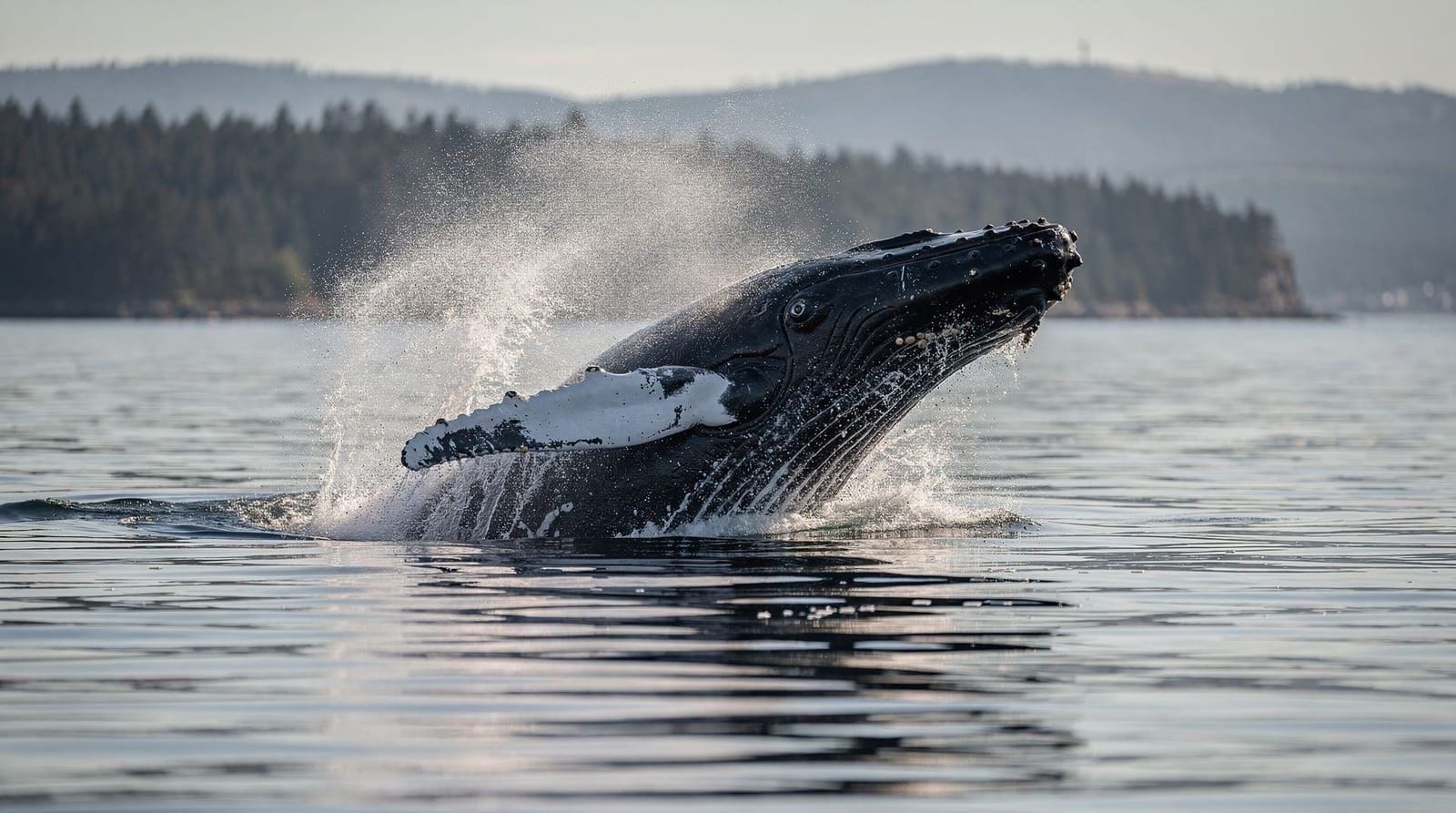
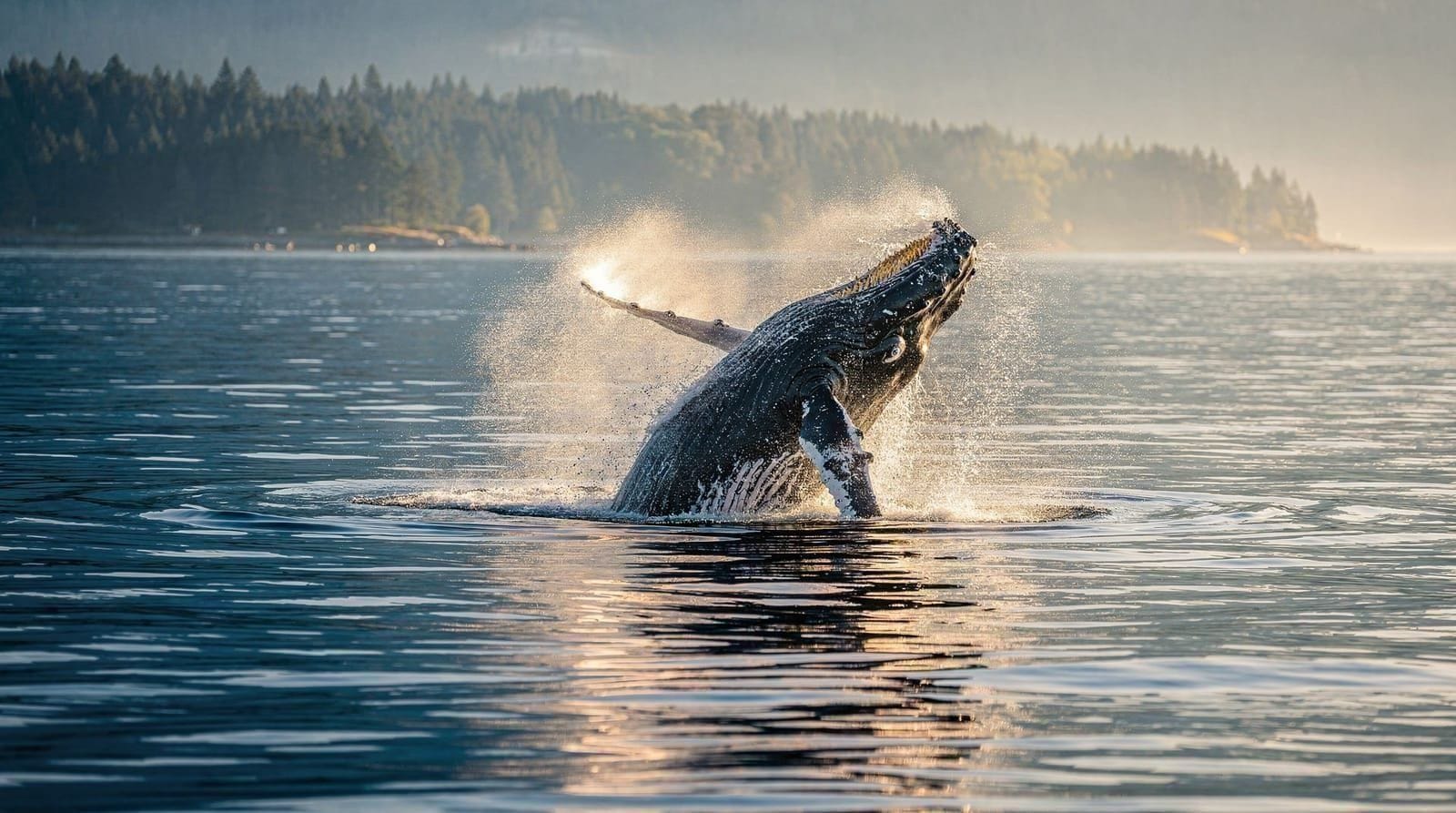
- Humpback whales have become the more consistent summer-through-fall sighting in the waters around Vancouver and the Salish Sea, with numbers rebounding significantly since the species was heavily depleted by historical whaling. Peak season runs roughly July through October.
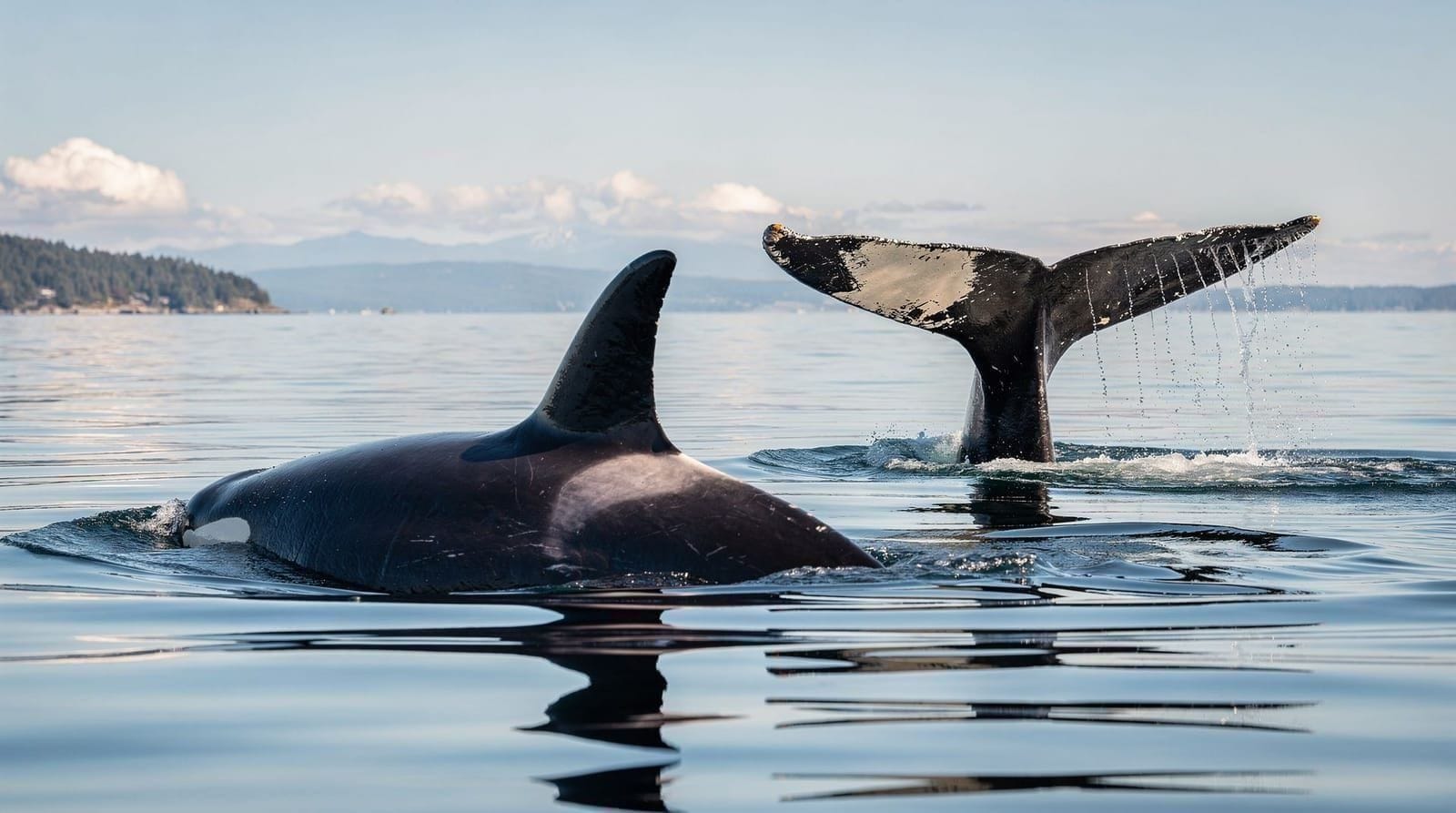
- Orcas (killer whales) are still seen, both resident pods that feed primarily on salmon and transient (Bigg’s) orcas that hunt marine mammals. Peak viewing runs June through September, though Bigg’s orcas can appear somewhat unpredictably across a wider window.
- Harbour seals, Steller and California sea lions, Dall’s porpoises and bald eagles round out most trips as reliable secondary sightings even on days when whales prove elusive.
Tours typically travel well beyond Vancouver’s immediate harbour — often toward the Gulf Islands or the wider Strait of Georgia — to reach the areas where whales are most active, which is part of why trip lengths run 3 to 5 hours rather than a quick hour on the water. An open-air whale watching tour from Granville Island is a strong first pick if you want a proper outdoor viewing experience without going fully open-hull.
Boat types: open Zodiac vs. covered vessel
Two main boat styles are on offer, and the choice matters more than it might seem:
- Open Zodiac (rigid-inflatable) boats sit low and fast on the water, giving a closer, more visceral wildlife-viewing experience and better maneuverability, but expose you fully to wind, spray and weather. Operators provide heavy insulated flotation suits, which help, but these trips run cold even in summer.
- Covered/semi-covered vessels offer indoor seating, washrooms, and shelter from weather, trading some of the Zodiac’s speed and closeness for comfort — a better fit for families with young kids, older travellers, or anyone prone to seasickness who wants the option to step inside.
Neither type meaningfully changes your odds of seeing whales; the choice comes down to comfort preference and how much weather exposure you’re up for. A covered whale and wildlife watching tour with free photos is a solid pick for the comfort-first option.
Prices and how to book
Vancouver whale watching tours typically run CAD 150 to 190 per adult for a standard 3-to-5-hour trip, with pricing varying by boat type, trip length, and departure point (Granville Island and Steveston are the two most common Vancouver-area departure points). Photo packages are sometimes offered as an add-on — professional crew-shot photos of your trip — but several operators include basic photos free as part of their guarantee-style offering.
Booking a day or two ahead during peak season (July–August) is worth doing, since popular departure times fill, though same-week availability is usually still findable outside the absolute peak weeks. A half-day whale watching adventure with a guide is a reasonable middle-ground booking if you’re not sure which boat style to pick.
Vancouver vs. Victoria for whale watching
This comparison comes up constantly, and the honest answer is that both are legitimate, with a real but modest trade-off. Victoria departures sit closer to the southern Strait of Juan de Fuca and the waters around the San Juan and Gulf Islands, which see some of the most consistent orca and humpback activity in the region — so Victoria-based operators often report marginally higher sighting statistics. Vancouver departures mean a longer run out to the same general whale-rich waters, adding time to the trip, but save you the cost and time of getting to Victoria first.
If whale watching is your single top priority and you’re already planning a Victoria day trip, booking the whale watching portion from Victoria makes sense. If whale watching is one part of a broader Vancouver-based day, a Vancouver departure keeps the logistics simpler without a meaningful drop in your actual odds of a good sighting — a small-group Zodiac whale watching tour is the closer-to-the-water option for that Vancouver-based trip.
Is it worth it
For visitors traveling between roughly May and September, yes — sighting rates are strong enough, and the broader experience (open ocean, mountain backdrops, seals and eagles as a reliable baseline even without whales) holds up on its own. Outside that window, it’s genuinely not worth chasing; most operators pause tours because the odds don’t justify the price, and you’re better off putting the budget toward a different activity and catching whale watching on a future trip timed to the season.
Seasonality at a glance
| Month | Species most active | Sighting odds |
|---|---|---|
| April–May | Early transients, gray whales passing through | Building |
| June–September | Resident and transient orcas peak | Strongest |
| July–October | Humpback whales peak | Strongest |
| November–March | Very limited operator schedules | Low — most tours pause |
How operators actually find whales
Sighting rates well above 90 percent in peak season aren’t a matter of luck — BC’s whale watching industry runs on a genuinely collaborative real-time spotting network, with captains sharing sighting locations by radio across the fleet, informed by shore-based observation groups, research organizations tracking known pods, and even, in some cases, hydrophone networks that pick up orca vocalizations underwater.
This is worth knowing because it explains why a boat that leaves the dock without a confirmed sighting nearby will often still find whales within an hour or two — it’s actively working a network of information rather than searching blind. It also means responsible operators follow guidelines on approach distance and boat speed around marine mammals, both for animal welfare and, practically, because a spooked or disturbed pod tends to dive and become harder to observe anyway.
Photography and what to realistically expect from your photos
Because respectful viewing distances (typically several hundred metres, sometimes more depending on current regulations) are standard practice, phone cameras generally capture whales as small shapes on the water rather than the close-up breaches seen in professional marketing photos. A zoom lens of at least 200mm makes a meaningful difference if photography matters to you; otherwise, many operators offer professional photo packages shot by onboard crew with appropriate equipment, either included in the ticket price or available as a paid add-on. Binoculars are worth bringing regardless of camera gear, since spotting behaviour (a distant blow, a dorsal fin breaking the surface) often happens well before the boat closes the distance.
What a typical 3-to-5-hour trip actually looks like
Most tours follow a similar arc regardless of operator: a dockside safety briefing and gear check (heavier flotation suits for open Zodiac trips), a run out through Vancouver’s harbour and into the Strait of Georgia or toward the Gulf Islands, coordination with the fleet’s real-time spotting network en route, viewing time once wildlife is located, and the return run. Crew typically narrate throughout, covering not just the whales themselves but the broader Salish Sea ecosystem — salmon runs, seabird colonies, and how tides and currents concentrate marine life in specific channels. Even a quiet whale day tends to deliver a genuinely scenic few hours on the water, with mountain backdrops on most routes.
Departure points: Granville Island vs. Steveston
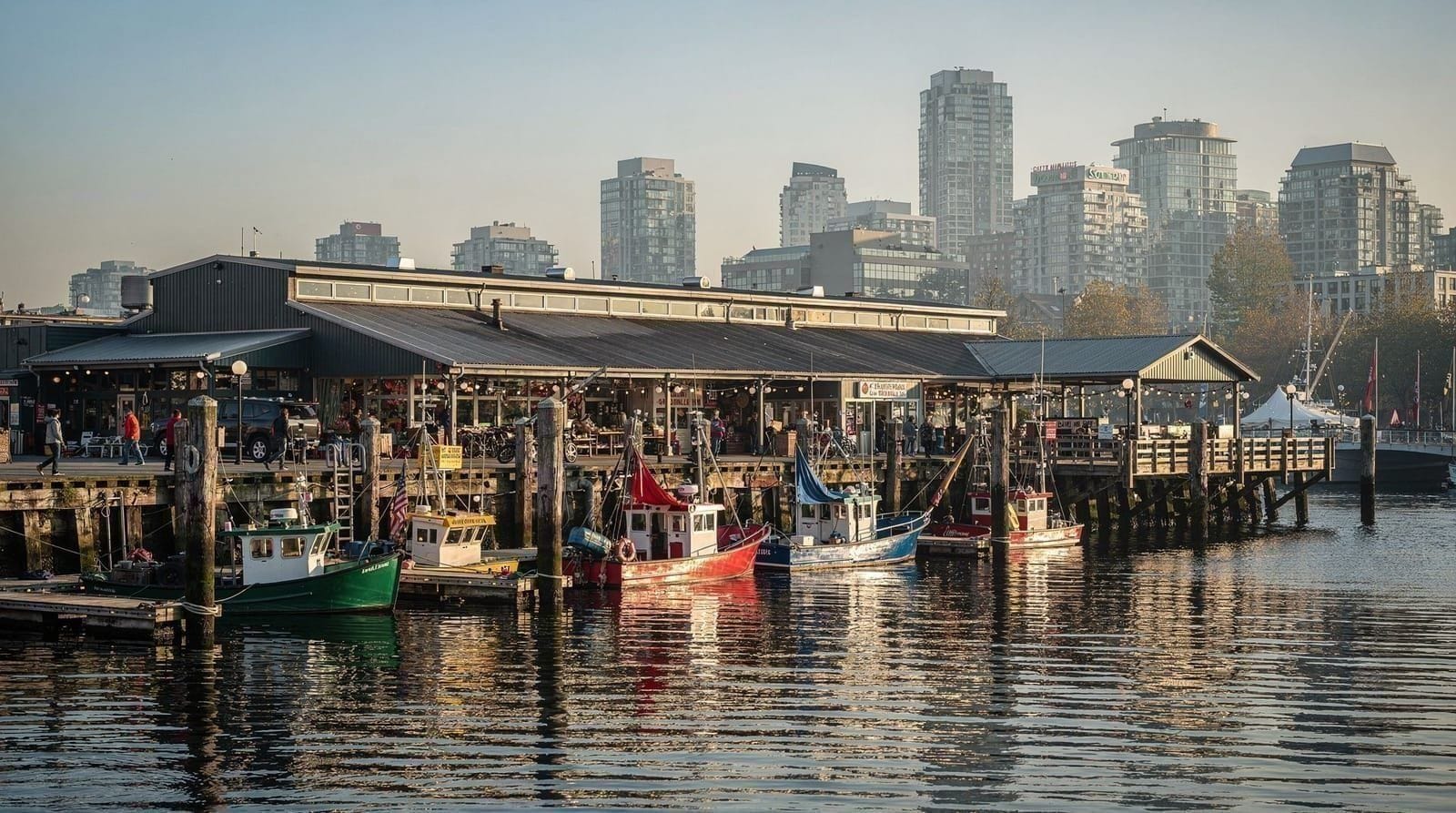
Vancouver whale watching tours generally leave from one of two areas: Granville Island, a short walk or ride from downtown and easy to combine with a market visit before or after, or Steveston, a historic fishing village in Richmond, closer to the Fraser River mouth and roughly 30 to 40 minutes from downtown by car or transit.
Steveston’s departure point sits somewhat closer to the open Strait of Georgia, which can shave a little time off the outbound run to open water, while Granville Island is more convenient if you’re not renting a car and want to stay within the core downtown-and-False-Creek area. Neither location carries a meaningful sighting-rate advantage over the other; the choice mostly comes down to which fits better with your day’s broader logistics.
Families and younger kids on whale watching tours
Whale watching tours generally work well for families, though the boat type matters more here than almost any other factor. Covered or semi-covered vessels with washrooms and some indoor seating tend to suit younger kids better than open Zodiac boats, both for comfort over a multi-hour trip and for the practical matter of a place to warm up if a child gets cold or restless. Most operators set a minimum age (commonly around 3 to 5 years) for open Zodiac departures specifically, given the cold-water exposure and the boat’s more physical ride; covered vessels are typically more flexible on minimum age.
It’s worth checking a specific operator’s age and mobility policies directly if you’re booking with young children, rather than assuming all whale watching tours have identical requirements. Bathroom access is another practical consideration for families: covered vessels generally have an onboard washroom, while open Zodiac boats typically don’t, which matters more over a longer 4-to-5-hour trip than a shorter route.
Practical tips
- Dress warmer than you think you need to, especially on open Zodiac boats — being on open water is consistently colder than shore temperatures, even in July.
- Bring motion sickness precautions if you’re prone to it, particularly for longer trips into open water; most pharmacies sell over-the-counter options, and it’s worth taking one before boarding rather than after symptoms start.
- Ask about the sighting guarantee before booking — many operators offer a free return trip if no whales are seen, which is a meaningful hedge worth confirming.
- Bring your own camera with a zoom lens if photography matters to you — most sightings happen at a respectful legal distance from the animals, so phone cameras often struggle to capture more than a distant fin.
- Book earlier in the week if your schedule allows — weekend departures during peak summer sell out faster than weekday trips.
For more on timing a visit around wildlife, see our best time for whale watching in BC guide and the orca vs. humpback season breakdown. If you’re weighing Vancouver against a Victoria-based trip, our Victoria whale watching review covers that side of the comparison, and the Vancouver destination guide has broader logistics for building a full day around Granville Island and the harbour. The Granville Island destination page covers the market and neighbourhood if you’re pairing whale watching with a broader visit there.
Compare alternative tours
Frequently asked questions — Whale watching from Vancouver
What's the best time of year for whale watching from Vancouver?
The season runs roughly April through October. Orcas (killer whales) are most reliably seen June through September, while humpback whales — now the more common sighting near Vancouver — peak July through October as they pass through the Salish Sea on their feeding migration. Outside this window, most operators pause tours entirely since sighting odds drop too low to be worth running.Are whale sightings guaranteed on a Vancouver whale watching tour?
No tour can guarantee wildlife sightings, but most reputable operators report sighting rates above 90 percent during peak season (July–September), since they coordinate in real time with other boats and shore-based spotting networks across the Salish Sea. Many operators offer a free repeat trip if you don't see whales, which is worth confirming before booking.How long does a Vancouver whale watching tour take?
Most tours run 3 to 5 hours round trip, including the boat ride out to where whales are likely to be (often well beyond Vancouver's immediate waters, toward the Gulf Islands or the Strait of Georgia), viewing time, and the return. Zodiac (open rigid-inflatable boat) tours tend toward the shorter end; larger covered vessels sometimes run longer routes.Should I do whale watching from Vancouver or from Victoria?
Victoria departures are generally closer to the core orca and humpback feeding grounds in the southern Strait of Juan de Fuca, so Victoria-based tours often report marginally higher sighting rates. Vancouver departures save you the ferry crossing and are more convenient if whale watching is one of several things you're doing in the city that day. Both are legitimate options; Victoria has a slight statistical edge, Vancouver has the convenience edge.What should I wear on a whale watching tour?
Layers, a waterproof outer layer, and closed-toe shoes, regardless of season — open Zodiac boats especially can mean cold spray even on a warm day, and it's noticeably colder on the water than on land. Most operators provide a heavy flotation/warm suit for open-boat tours; covered vessels are more sheltered but still cooler than shore temperatures.What happens if no whales are seen on my Vancouver tour?
Most reputable operators offer a free return trip if no whales are sighted, though the exact policy varies — some define it strictly (zero cetaceans of any kind), others more loosely. It's worth confirming the specific guarantee terms before booking, since 'no whales' guarantees don't always cover a trip that saw seals and porpoises but no whales specifically.