Whale watching from Victoria: why it has the sighting edge
Victoria BC: 3 Hour Expedition Catamaran Whale Watching Tour
Duration: 3 hours
Why Victoria has the edge over Vancouver for whale watching
Victoria sits at the southern tip of Vancouver Island, close to the Strait of Juan de Fuca and the waters around the San Juan and Gulf Islands — an area with some of the most consistent orca and humpback activity anywhere in the Salish Sea. That geography is the honest reason Victoria-based whale watching tours generally edge out Vancouver-based ones on sighting statistics: boats reach prime wildlife territory faster, spending less of the trip in transit and more of it actually searching a productive area.
That’s not to say Vancouver-based tours are a weak option — they’re not, and the earlier review of whale watching from Vancouver covers that side fairly. But if maximizing your odds of a strong sighting is the priority and you’re already planning time in Victoria, booking the whale watching portion there rather than from Vancouver is the better statistical bet.
| Where | Departs Victoria’s Inner Harbour or Fisherman’s Wharf |
| Cost | CAD 130–170 per adult, standard 3-hour tour |
| Time needed | About 3 hours including boarding |
| Getting there | Walking distance from most downtown Victoria hotels |
| Best time | May–October; July–September for the strongest odds |
What you’ll see, and when
The species picture near Victoria mirrors the wider Salish Sea pattern, with a slight edge in consistency given the proximity to core feeding grounds:
- Resident orcas, which feed primarily on Chinook salmon and travel in stable, well-studied family pods — sightings peak roughly May through September, though numbers have fluctuated with salmon abundance in recent years.
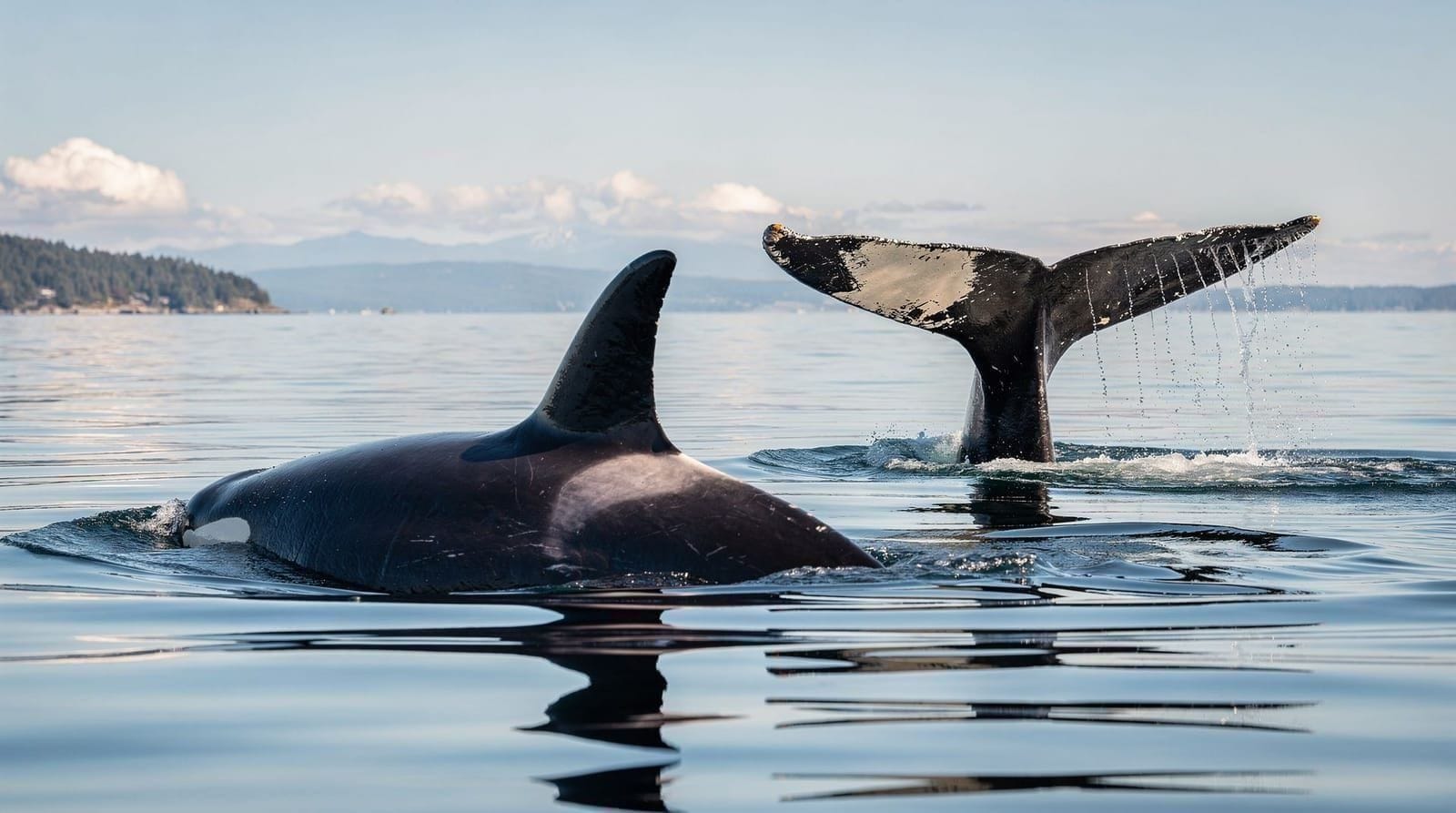
- Transient (Bigg’s) orcas, which hunt marine mammals and range more widely and less predictably than residents, appearing across a broader window.
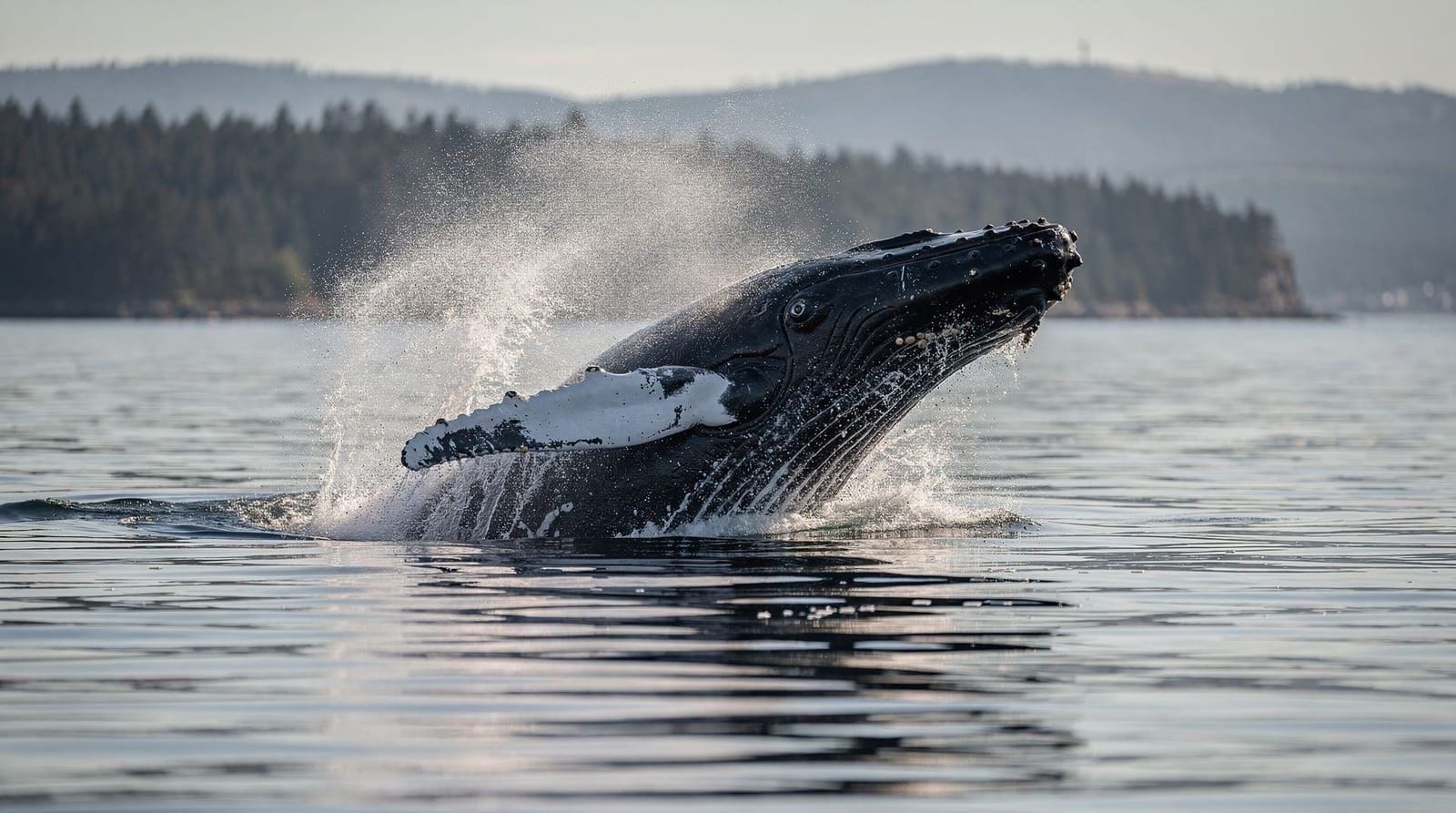
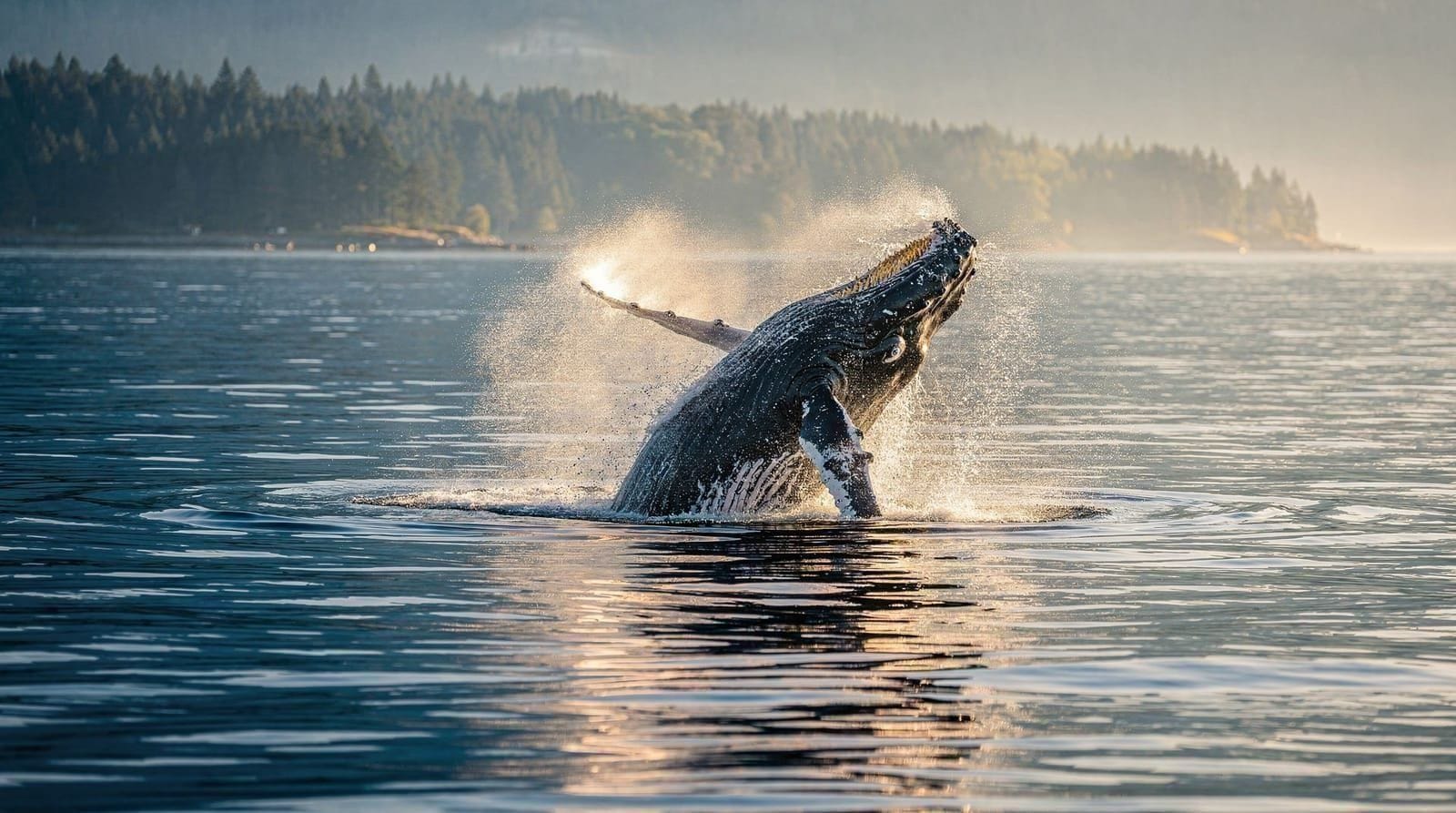
- Humpback whales, now a consistently strong summer-through-fall sighting as the regional population continues recovering from historical whaling — peak season runs roughly July through October.
- Harbour seals, sea lions, porpoises and bald eagles as reliable secondary wildlife even on quieter whale days.
A 3-hour expedition catamaran whale watching tour is one of the most-booked Victoria options, balancing stability with a genuine outdoor viewing deck.
Boat options: Zodiac, catamaran, or covered vessel
Victoria’s whale watching fleet offers a bit more variety than Vancouver’s, with three broad categories worth knowing about:
- Open Zodiac boats — fast, low to the water, and closer to the wildlife-viewing experience serious enthusiasts want, at the cost of full weather exposure. Heavy flotation suits are provided, but these trips run genuinely cold.
- Catamarans — a middle ground offering more stability and some covered seating while still keeping decent outdoor viewing space, often with a slightly smoother ride in choppier water than a Zodiac.
- Covered/semi-covered vessels — the most comfortable option, with indoor seating and washrooms, better suited to families, older travellers, or anyone prone to seasickness.
A covered boat whale watching trip from Victoria is the comfort-first pick among the three.
None of these meaningfully change your sighting odds — the choice comes down to how much weather exposure and boat motion you’re comfortable with over a 3-hour trip.
Prices and how to book
A standard 3-hour Victoria whale watching tour typically runs CAD 130 to 170 per adult, somewhat below the equivalent Vancouver-departure pricing, reflecting the shorter run time to prime wildlife areas. Morning and afternoon departures are usually similarly priced; sunset tours sometimes carry a small premium for the added atmosphere. A 3-hour Zodiac whale watching tour is the closer-to-the-water option for enthusiasts who don’t mind the cold spray.
Booking a day or two ahead during peak season (July–August) is sensible, though Victoria’s larger whale watching fleet generally has more same-week availability than the more limited Vancouver-departure options.
Morning vs. sunset tours
Morning departures tend to catch calmer water and clearer air, a practical advantage for photography and general comfort, especially for visitors prone to seasickness who benefit from smoother conditions. Sunset tours trade slightly choppier evening water for dramatic golden-hour lighting, and are a popular pick for couples or anyone prioritizing atmosphere over comfort.
Whale activity itself isn’t strongly tied to time of day, so neither option carries a meaningful sighting-odds advantage over the other — it’s a comfort and atmosphere choice, not a wildlife one. A dedicated sunset whale watching tour is worth booking specifically for the golden-hour lighting rather than as a fallback if morning slots sell out.
Combining whale watching with the rest of a Victoria visit
Because Victoria whale watching tours run about 3 hours, they fit naturally alongside a half-day of inner harbour sightseeing, the Royal BC Museum, or a Butchart Gardens visit if you’re staying overnight rather than doing the full Vancouver-to-Victoria trip as a single rushed day. Visitors doing the classic Victoria-and-Butchart-Gardens day trip from Vancouver should note that adding a 3-hour whale watching excursion on top makes for a very long day given the ferry crossing already built into that itinerary — it’s a more realistic add-on if you’re staying in Victoria overnight.
How Victoria’s spotting network compares to Vancouver’s
The sighting-rate advantage Victoria holds over Vancouver isn’t just about proximity to the water — it’s also about the density of the regional spotting network. Victoria sits within a tightly monitored stretch of the Salish Sea that includes research organizations tracking known resident pods by individual animal, cross-border cooperation with Washington State-based operators around the San Juan Islands, and a long-established community of naturalist guides who’ve followed the same family groups for years. That institutional depth means Victoria-based crews often have a strong sense of where a specific pod is likely to be on a given day, not just where whales were last seen generally — a meaningful edge over a purely reactive search.
What a typical 3-hour trip actually looks like
Most tours follow a similar arc: a briefing at the dock covering safety and what to expect, a run out toward the day’s most promising area (informed by the morning’s spotting network updates), 45 minutes to over an hour actually near wildlife once located, and the return trip, often with a scenic detour past a lighthouse or seal haul-out if time allows and nothing more exciting is nearby. Naturalist guides on board typically narrate throughout, covering not just whale behaviour but the broader Salish Sea ecosystem — salmon runs, seabird populations, and the tidal patterns that shape where marine life concentrates. It’s a genuinely educational few hours even setting aside the wildlife itself.
Victoria vs. Vancouver whale watching at a glance
| Victoria | Vancouver | |
|---|---|---|
| Cost | CAD 130–170 | CAD 150–190 |
| Trip length | ~3 hours | 3–5 hours |
| Sighting statistics | Slight edge | Strong, marginally lower |
| Convenience | Requires a ferry crossing or overnight stay first | Direct from downtown |
The honest takeaway: if whale watching is your single top priority, book it from Victoria. If it’s one part of a broader Vancouver day, the convenience of a direct departure usually outweighs the small statistical edge.
What to bring on the boat
Beyond warm layers and a waterproof shell, a few smaller items make a real difference on a 3-hour trip: sunglasses (glare off open water is stronger than it looks, even on overcast days), sunscreen regardless of cloud cover, a hat with a chin strap or clip if the boat runs fast enough to catch wind, and a dry bag or waterproof phone case if you’re on an open Zodiac, since spray is a near-certainty rather than a possibility. Seasickness medication, taken well before boarding rather than after symptoms start, is worth considering even for travellers who don’t normally get seasick, since open-water motion differs from anything experienced on land or a larger ferry.
Is it worth it
For visitors already spending time in Victoria between May and October, yes — the combination of strong sighting statistics, the scenic Strait of Juan de Fuca backdrop, and reliable secondary wildlife makes this one of the more consistently satisfying wildlife tours in the region. Outside that season, most operators scale back or pause entirely, and it’s not worth chasing a low-odds winter trip when the same activity delivers far better results a few months later.
Children and mobility on Victoria whale watching tours
Covered and catamaran vessels tend to be the better choice for families with younger children, both for onboard washroom access over a 3-hour trip and for a place to warm up if a child gets cold. Most operators set a minimum age (commonly 3 to 5 years) specifically for open Zodiac departures, given the cold-water exposure and more physical ride; covered options are typically more flexible. It’s worth checking a specific operator’s age and mobility policy directly before booking with young children or travellers with limited mobility, since practices vary between the fleet’s different boat types.
Departure points around Victoria
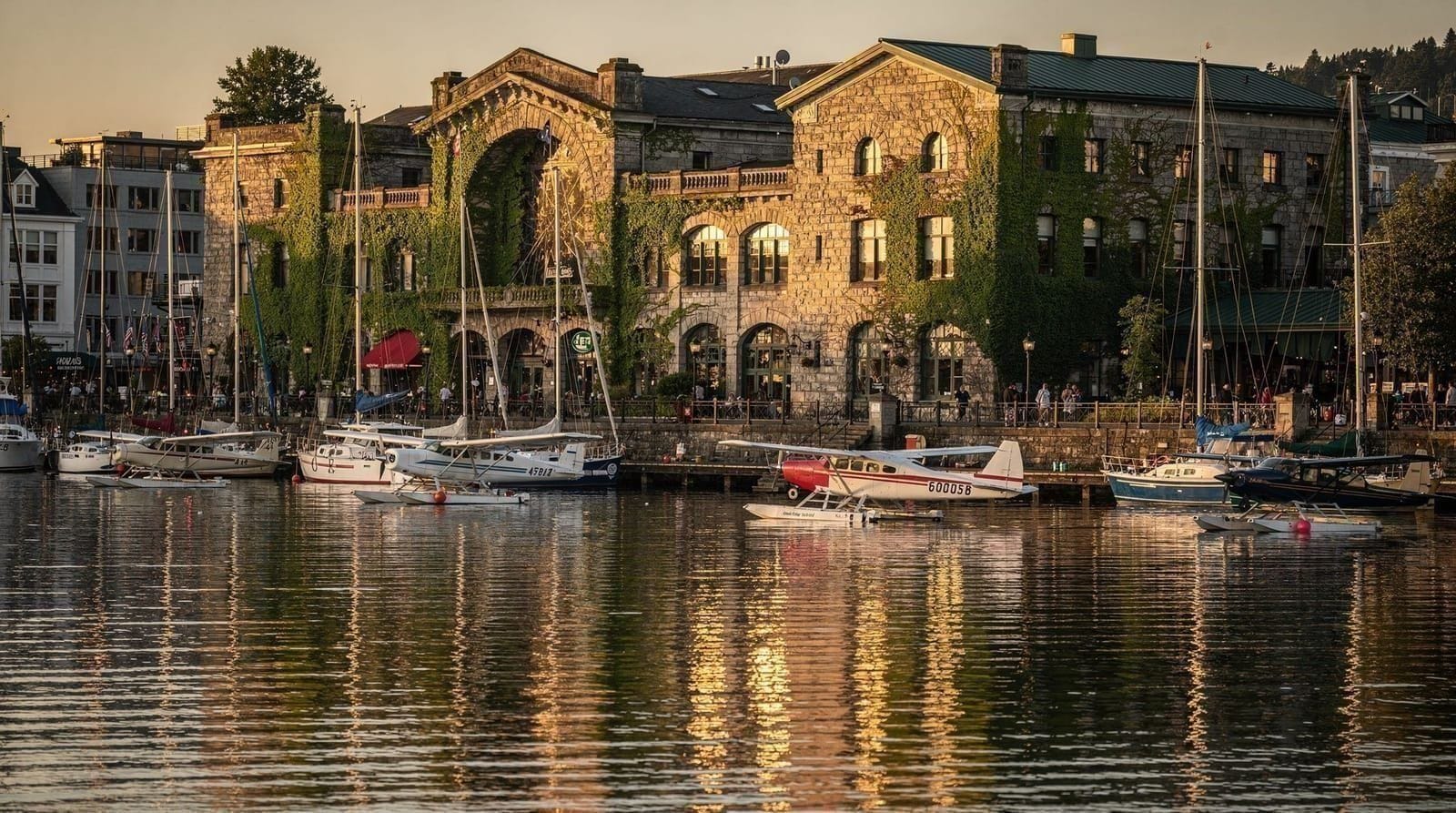
Most Victoria whale watching operators depart from one of two general areas: the Inner Harbour, within easy walking distance of the Fairmont Empress and the Parliament Buildings, or Fisherman’s Wharf, a slightly longer walk or short taxi ride from downtown but with its own charm — a colourful floating community of houseboats and seafood shacks worth a look before or after your trip.
Both departure points put you within a similar range of the prime wildlife-watching areas further out in the strait, so the choice mostly comes down to which fits better with the rest of your day’s plans in Victoria rather than any meaningful difference in the tour itself. If you’re staying near the Inner Harbour, an Inner Harbour departure saves a short taxi ride; if you’re curious about Fisherman’s Wharf’s houseboats and seafood shacks, building in 15 to 20 minutes there before or after your tour is a worthwhile detour regardless of which departure point you eventually book.
What to do with the rest of your day around a whale watching tour
Since a standard trip runs about 3 hours including boarding and disembarking, it leaves a solid half-day free either before or after for other Victoria sightseeing. A common pattern for visitors staying overnight is a morning whale watching tour followed by an afternoon at Butchart Gardens or a walk through the Inner Harbour and up to the Parliament Buildings, or the reverse — sightseeing in the morning followed by a sunset whale watching tour to close out the day on the water. Either sequencing works well; the main thing to avoid is trying to cram a whale watching tour into the same tightly-scheduled day as a full Vancouver-to-Victoria ferry round trip, which leaves too little slack if the tour runs long chasing a distant sighting.
Practical tips
- Dress in warm layers with a waterproof outer shell, regardless of season — open water runs consistently colder than shore temperatures.
- Book morning departures if seasickness is a concern, since water tends to be calmer earlier in the day.
- Bring a zoom lens if photography matters, since respectful viewing distances from the animals mean phone cameras often can’t capture more than a distant silhouette.
- Ask about the operator’s sighting guarantee policy before booking — a free return trip if no whales are seen is a common and worthwhile hedge.
- If you’re day-tripping from Vancouver, plan whale watching as its own trip rather than bolting it onto a Butchart Gardens day — the combined itinerary gets exhausting fast.
For more on timing your trip around wildlife season, see our best time for whale watching in BC guide and the orca vs. humpback season breakdown. If you’re comparing against a Vancouver departure, our Vancouver whale watching review covers that option in full, and the 5-day Vancouver and Victoria itinerary shows how to build an overnight Victoria stay that leaves proper time for a whale watching tour.
Compare alternative tours
Frequently asked questions — Whale watching from Victoria
Why is whale watching from Victoria better than from Vancouver?
Victoria sits closer to the southern Strait of Juan de Fuca and the waters around the San Juan and Gulf Islands, which see some of the most consistent resident orca, transient orca and humpback activity in the Salish Sea. That proximity means Victoria-based boats generally reach prime wildlife areas faster, and operators often report marginally higher sighting statistics than Vancouver-based trips.What's the best time of year to see whales from Victoria?
The season runs roughly April through October. Resident and transient orcas are seen most consistently May through September, while humpback whale sightings have grown increasingly reliable July through October as the regional population recovers. Winter tours are rare, since sighting odds drop enough that most operators pause the season entirely.How much does whale watching from Victoria cost?
Expect roughly CAD 130 to 170 per adult for a standard 3-hour tour, with pricing varying by boat type (open Zodiac vs. covered catamaran) and departure time. Sunset tours and premium boat options sometimes run slightly higher.Should I book a morning or sunset whale watching tour in Victoria?
Morning tours tend to see calmer water and cooler, clearer air, which some visitors prefer for comfort and photography. Sunset tours trade slightly rougher evening winds for dramatic lighting and are a popular choice for couples — sighting odds are broadly similar between the two, since whale activity isn't strongly tied to time of day.Can I combine whale watching with a Victoria and Butchart Gardens day trip from Vancouver?
Yes, though it makes for a very long day if you're departing from Vancouver — most full-day Victoria tours from Vancouver focus on Butchart Gardens and city sightseeing rather than adding a 3-hour whale watching excursion on top. If whale watching is a priority, it's more realistic to book it as a standalone activity during an overnight Victoria stay, or as a dedicated seaplane-plus-whale-watching combo trip.Is Victoria whale watching cheaper than Vancouver?
Generally yes, by a modest margin — Victoria's roughly CAD 130 to 170 per adult for a standard 3-hour tour compares to CAD 150 to 190 for a typical Vancouver departure, reflecting the shorter run time to prime wildlife areas from Victoria's closer starting point.