Orca vs. humpback whale season in BC
Vancouver, BC: Whale Watching Tour with Guide
What's the difference between orca and humpback whale season in BC?
Orca season runs June through September, peaking late June to early September, while humpback whale season runs July through October, peaking in August and September. September is the overlap month with strong odds for both, and the two species also behave quite differently on the water — fast-moving orca pods versus slower, often breaching humpbacks.
Orcas and humpback whales don’t share the same calendar, the same behavior, or even quite the same waters, so “when should I go whale watching” and “when should I go orca watching” aren’t the same question. Orca season runs June through September, peaking late June to early September. Humpback season runs July through October, peaking in August and September. The two overlap for a solid two-month stretch, but planning around the wrong peak can mean missing the species you actually wanted to see.
| Orca | Humpback | |
|---|---|---|
| Season | June–September | July–October |
| Peak | Late June–early September | August–September |
| Group size | Pods, several individuals | Solo or loose pairs |
| Best region | Salish Sea / Victoria | Georgia Strait / Vancouver, Telegraph Cove |
| Signature behavior | Coordinated surfacing, travel | Breaching, tail-slapping |
Two different animals, two different seasons
Resident and transient — also called Bigg’s — orcas follow the more predictable of the two calendars. Resident pods return to familiar Salish Sea and Gulf Islands routes with real seasonal consistency, tracking salmon runs that peak through summer, which is why late June through early September is treated as the core orca window across BC. Transient orcas, which hunt marine mammals rather than fish, move less predictably but are sighted throughout the same general window.
Humpback whales run later and longer. They migrate into BC waters to feed through summer and into fall, building through July, peaking in August and September, and often lingering into October before heading south again. That later peak is worth building into trip planning specifically — a late-June trip timed perfectly for orcas may be a few weeks too early for strong humpback numbers.
Why humpbacks are the newer story
It’s worth understanding why this comparison even needs making. Humpback whales were hunted to near-local extinction along the BC coast through commercial whaling that continued into the mid-20th century, and for decades afterward they were a genuinely rare sighting in these waters. The population has only rebounded meaningfully over roughly the past 15-20 years, to the point where sightings that would once have been remarkable are now a routine part of a summer tour out of Vancouver or Victoria. Orcas, by contrast, never disappeared from BC waters in the same way, so their seasonal patterns reflect long-standing behavior rather than a recovering population finding its way back.
How they behave differently on the water
The two species don’t just show up at different times — they look and act differently once you find them, which changes what kind of tour experience to expect.
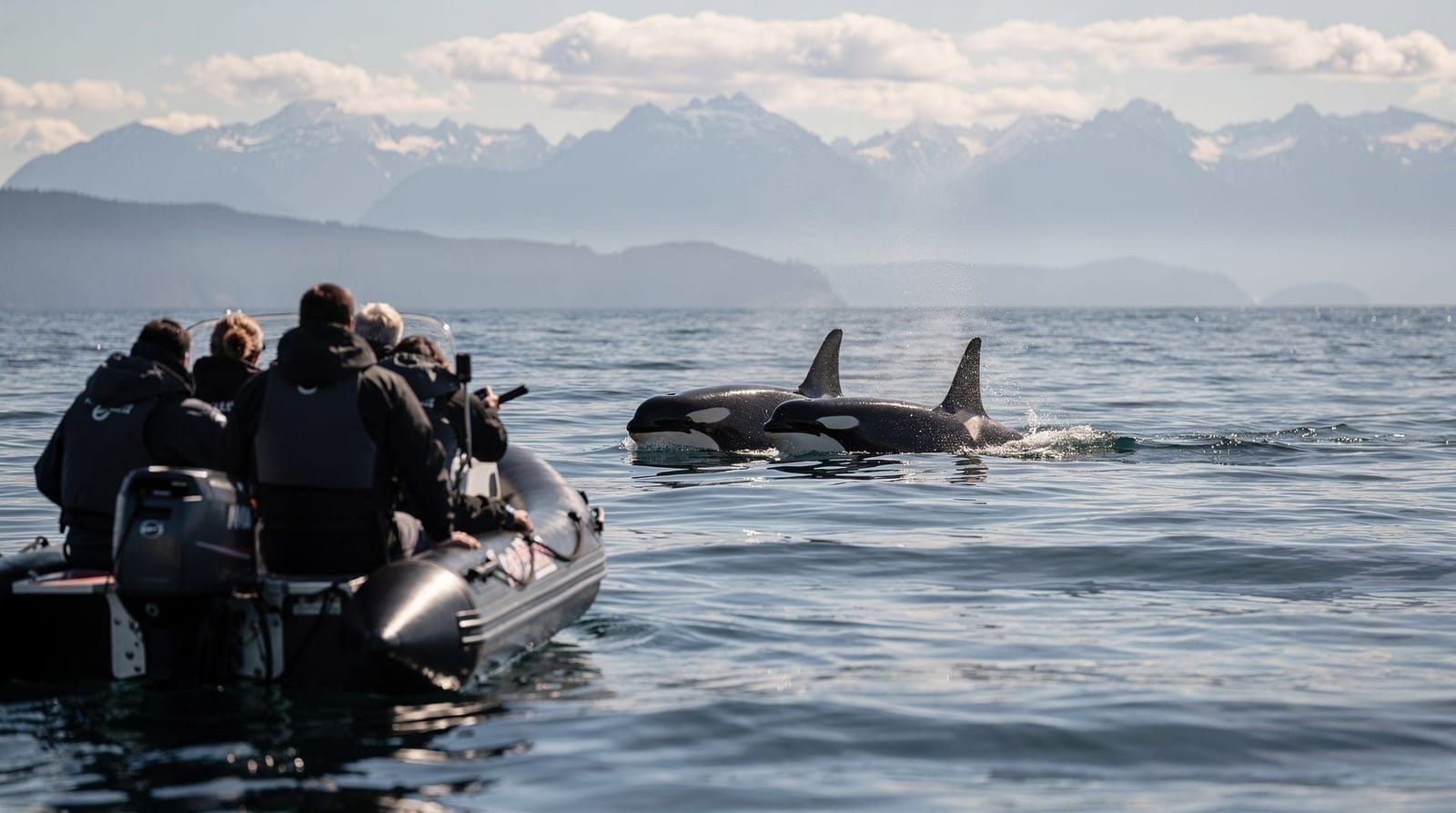
Orca pods move as a coordinated group, often several individuals surfacing together in a rolling rhythm as they travel or hunt. A pod can cover significant distance quickly, and part of the appeal is the social, almost synchronized quality of watching a family group move through the water together. Adult males are unmistakable once spotted, with a dorsal fin that can stand over a metre tall and dead straight; females and juveniles have a shorter, more curved fin.
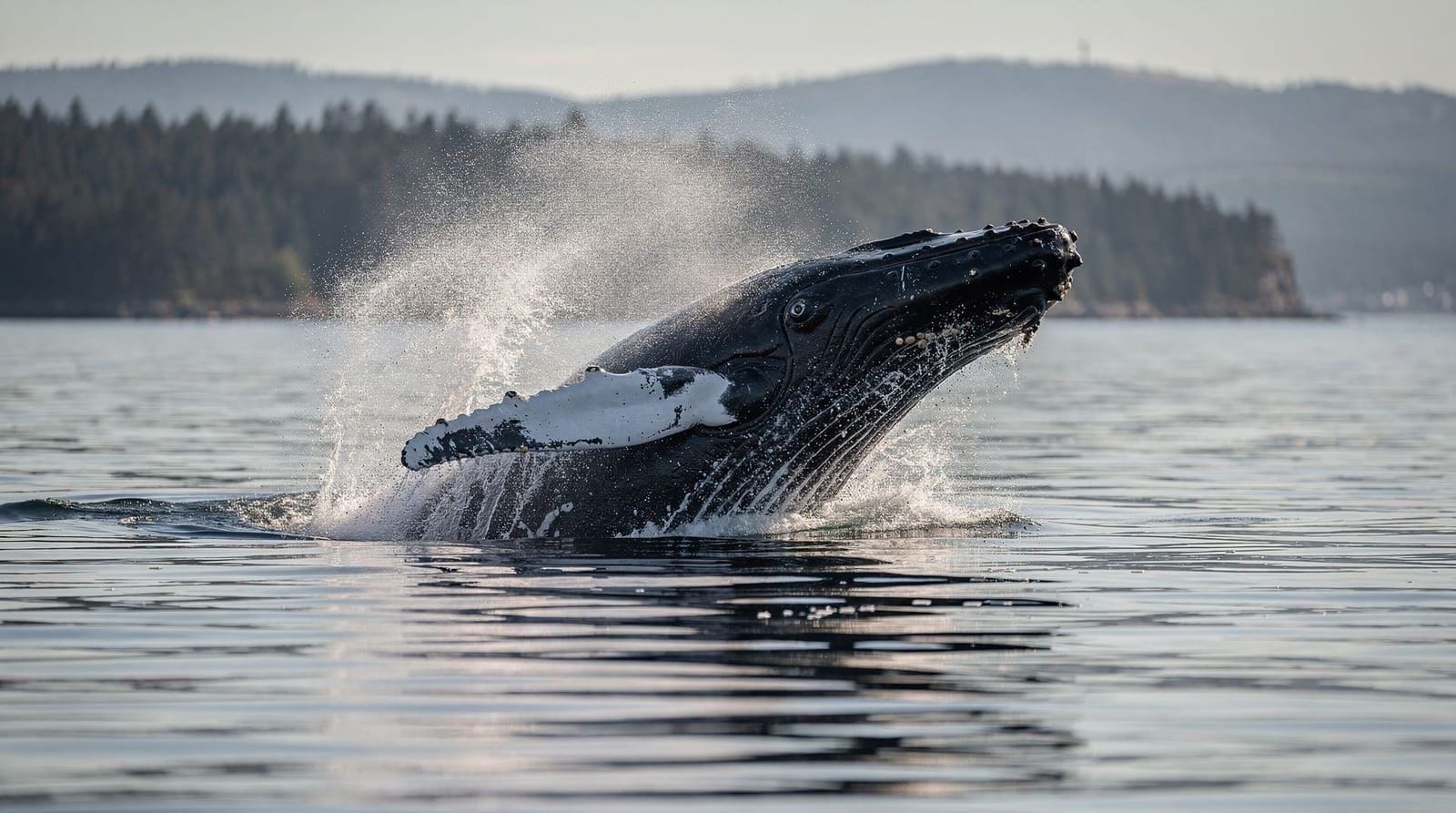
Humpbacks are typically seen alone or in loose pairs rather than groups, and their appeal is more about individual, dramatic behavior — breaching clear out of the water, slapping a massive tail fluke on the surface, or lunge-feeding through a bait ball near the surface. A humpback sighting tends to hold a boat’s attention on one animal for longer, where an orca pod sighting often involves tracking a moving group. Neither is more or less exciting, but they reward different kinds of attention, and it’s worth knowing which experience you’re actually hoping for before booking.
There’s also an occasional overlap worth knowing about: transient orcas hunt marine mammals and have been documented targeting humpback calves, while adult humpbacks are known to actively intervene when they detect orcas hunting other animals nearby, sometimes aggressively. It’s not a common sighting, but it’s part of why naturalist guides on a good tour add real value beyond just spotting animals — they can read and explain behavior that looks confusing from the boat.
Diet is the reason the two calendars don’t match
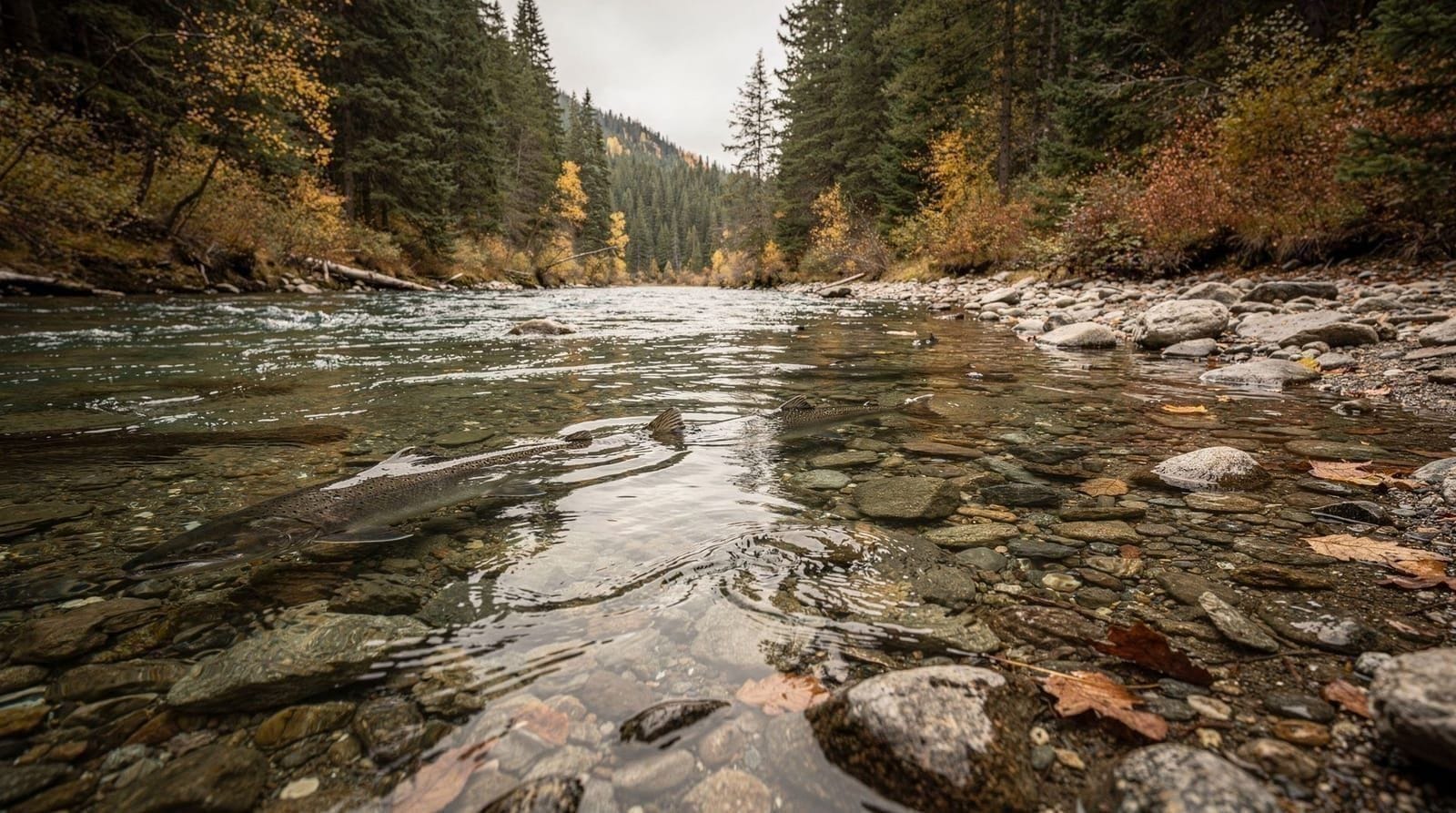
The seasonal difference between orcas and humpbacks traces back to what each animal eats, and it’s worth understanding because it explains a lot of the behavior described above. Resident orcas are fish specialists, feeding almost exclusively on Chinook and other salmon species, which is why their movements track BC’s salmon runs so closely — they follow the fish, and the fish follow a fairly predictable seasonal migration into the Fraser River and other regional systems, peaking through summer.
This is also the direct link to the BC salmon run guide: understanding when and where salmon are running explains a meaningful amount of resident orca behavior, not just as trivia but as a genuine predictor of where pods are likely to be on a given week.
Transient orcas eat marine mammals — seals, sea lions, porpoises and occasionally other whales — so their movements track prey density rather than salmon runs specifically, which is part of why they’re less seasonally predictable than resident pods even though they’re sighted in the same general June-through-September window.
Humpback whales are baleen filter feeders, working through dense concentrations of small schooling fish and krill by lunging through bait balls with their mouths open, sometimes solo and sometimes in cooperative “bubble-net” feeding groups where several whales coordinate to trap prey.
Their BC visit is a feeding stopover on a much longer migration — many of the humpbacks seen off Vancouver and Vancouver Island spend winters breeding in Hawaii or Mexico before making the multi-thousand-kilometre swim north to feed through BC’s productive summer and fall waters. That migration pattern, rather than a fixed local habitat the way resident orcas have, is why humpback season runs later and stretches longer into October — they’re not tied to a single regional food source the way salmon-tracking orcas are.
Identifying individuals, and why it matters on a tour
Both species are identified by researchers using natural markings, which experienced naturalist guides often reference during a tour. Orcas are identified primarily by the shape of the dorsal fin and the grey “saddle patch” behind it, unique enough to individual animals that long-term researchers maintain photo-identification catalogues going back decades for the southern resident population specifically. Humpbacks are identified by the black-and-white pattern on the underside of the tail fluke, visible each time the whale lifts its tail before a deep dive — distinctive enough that individual humpbacks are tracked across years and even across their full migration route between BC and their breeding grounds.
This matters for a tour experience beyond trivia value: a guide who can identify the specific whale in front of the boat, note that it was last seen off the same stretch of coast the week before, or mention a known calf traveling with its mother, turns a distant sighting into something considerably more informative than “there’s a whale.” It’s one of the genuine differences between operators — naturalist knowledge doesn’t show up in a price comparison, but it shapes how much the trip actually teaches you.
Conservation status shapes what you’ll be told on the water
The two species also carry different conservation weight, and it affects how tours operate around them. The southern resident killer whale population is listed as endangered, with a small, closely studied population whose numbers are tracked individually — this is why distance regulations around resident orcas tend to be applied especially strictly, and why guides often discuss population health and threats like prey scarcity and vessel noise as part of the commentary.
Transient orca numbers are healthier and less closely regulated by comparison, though the same general distance rules apply. Humpback whales, once critically depleted by commercial whaling, are no longer considered endangered in BC waters given the strong recovery of recent decades, though they remain a species of conservation interest and are still subject to standard viewing distance rules.
Photography considerations for each species
Because the two species behave so differently, they also reward different photography approaches. Orca sightings tend to be fast-moving and social, so a burst-mode camera setting and a willingness to track a moving pod rather than a fixed point pays off — the classic shot is a dorsal fin breaking the surface with water still streaming off it, which requires quick reaction more than patience.
Humpback sightings reward the opposite approach: staying focused on one animal and waiting, since the tail-fluke-up dive sequence and occasional breach both happen with a few seconds of visible warning if you’re watching closely, but require patience through longer stretches of nothing happening on the surface. Zodiac and open-boat tours generally offer the least obstructed sightlines for either species; covered boats sometimes require positioning near open windows or the outer deck rail to get a clean shot.
Sound as much as sight
Hydrophones — underwater microphones — are standard equipment on most naturalist-led BC whale watching tours, and the two species produce genuinely different soundscapes worth knowing about before a trip. Resident orcas are highly vocal, using a repertoire of clicks, whistles and pulsed calls to communicate within and between pod members, and each resident pod has been documented to have its own distinct dialect recognizable to researchers. Hearing a pod “talking” over a hydrophone while watching them surface nearby is often described by repeat visitors as a more memorable part of the trip than the visual sighting itself.
Humpbacks are famous for far more elaborate, structured songs, but these are mostly sung by males on their breeding grounds in Hawaii or Mexico rather than during BC feeding season — a humpback encountered off Vancouver Island in August is far more likely to be heard blowing air explosively at the surface than singing. It’s a small but genuine difference in what a hydrophone-equipped tour actually delivers depending on which species shows up.
Where each is more likely
Geography matters as much as timing here. Orcas are most reliably found around the Salish Sea and Gulf Islands, which is the core reason Victoria has built its reputation specifically around orca watching — its Juan de Fuca Strait location sits directly on the routes resident and transient pods travel most consistently, with a covered boat tour from Victoria offering a stable, comfortable way to work those waters.
Humpbacks have a broader footprint. They’re increasingly common in Georgia Strait close to Vancouver itself, which is one of the more notable shifts in BC whale watching over the past decade — a species that used to require a special trip north is now sometimes seen on a standard Vancouver-based tour like the half-day whale watching adventure.
Further north, Telegraph Cove on northern Vancouver Island offers strong odds for both species in the same trip, with resident orca rubbing beaches nearby and dense humpback feeding grounds in the surrounding waters — a Telegraph Cove whale watching tour is a genuinely different proposition from a Vancouver or Victoria day tour, though it only makes sense as part of a longer northern Vancouver Island trip rather than a Vancouver day trip.
Picking a region based on what you want to see
If seeing an orca pod is the priority and the schedule is flexible, Victoria in July or August offers the strongest documented odds in the province, per the success-rate data covered in the Victoria whale watching guide. If humpbacks specifically are the goal — more breaching, more dramatic single-animal behavior — August through October gives the strongest numbers, and a Vancouver or Victoria departure both have a genuine shot at this point in the season, since humpback range has expanded closer to both cities. If the goal is simply “see a whale, any whale, with the best possible odds,” September is the answer regardless of species preference, since it’s the strongest overlap month across the board.
Planning around the overlap
September deserves specific attention because it’s the month where the two seasons genuinely overlap rather than just brushing against each other. Orca sightings remain solid into the first half of the month even past their true peak, and humpback numbers are typically at or near their annual high. It’s also past the July-August crowd surge, meaning smaller groups on boats and, in some cases, slightly better pricing as operators move into shoulder season. For a full month-by-month breakdown of the entire April-October season across all four BC whale watching regions, the best time for whale watching in BC guide covers the complete calendar in one place.
Group size and social structure, compared
The social structure of the two species is one of the more genuinely interesting differences to watch for on the water, beyond the surface-level “pods versus loners” summary. Resident orca matrilines are built around female lineage — a pod typically consists of a matriarch, her offspring, and often her daughters’ offspring, staying together for life in a way that’s unusual among marine mammals. Watching a resident pod on a good day means watching an actual extended family unit moving, hunting and resting together, which is part of what makes their coordinated surfacing pattern so distinctive; several dorsal fins breaking the surface in a rough line, moving at a shared pace, is a genuinely different visual than any single animal.
Humpbacks don’t form long-term family groups in the same way. Mother-and-calf pairs are the most stable humpback social unit, staying together through roughly the calf’s first year, but adult humpbacks otherwise associate loosely and temporarily, sometimes gathering in larger numbers at particularly productive feeding areas without the enduring social bond seen in orca matrilines. This is part of why a humpback sighting can range from a single animal to a surprising temporary cluster of several whales feeding in the same patch of water, depending on how concentrated the prey is that week.
What a genuinely good tour operator adds, regardless of species
Given how much of the difference between orcas and humpbacks comes down to behavior and identification rather than just “which animal showed up,” the quality of the naturalist guide on board matters more for this comparison than for a lot of other wildlife tours.
A guide who can distinguish resident from transient orcas on sight, explain what a particular surfacing pattern likely means, or note that a humpback’s feeding behavior suggests a bait ball nearby adds real, specific value — the difference between watching an unexplained animal in the water and understanding what’s actually happening. This is worth factoring into the choice of operator as much as boat type or price, though it’s admittedly harder to research in advance than a published price or boat spec.
A note on realistic expectations
Whichever species is the priority, it’s worth going in with realistic expectations about what a sighting actually looks like. Most sightings happen at a genuine distance — a dorsal fin breaking the surface, a spray of breath, a tail fluke lifting before a dive — rather than a close-up breach directly beside the boat. Breaching and other dramatic surface behavior happens, more often with humpbacks than orcas, but it’s a bonus rather than something to expect on every trip. A good naturalist guide narrating what’s happening and why adds real value here regardless of species, turning a distant sighting into something genuinely informative rather than just a shape in the water.
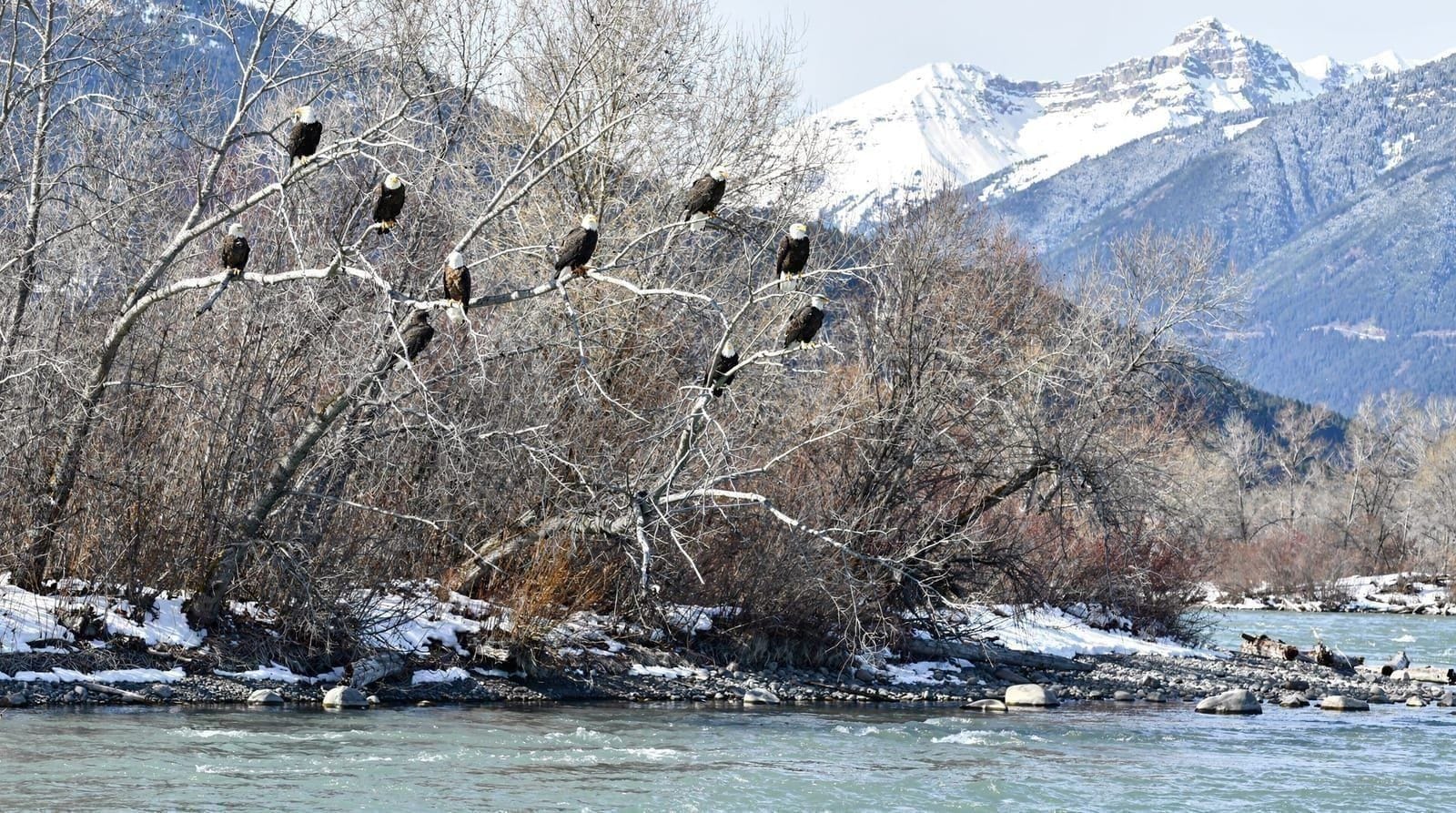
For travelers building a wider wildlife-focused trip around this comparison, eagle watching in Squamish and the BC salmon run guide both connect to the same seasonal ecosystem — salmon runs are part of what draws resident orca pods to the Salish Sea in the first place, and understanding that link makes the whole picture click into place rather than treating each sighting as an isolated event.
Choosing a boat type for either species
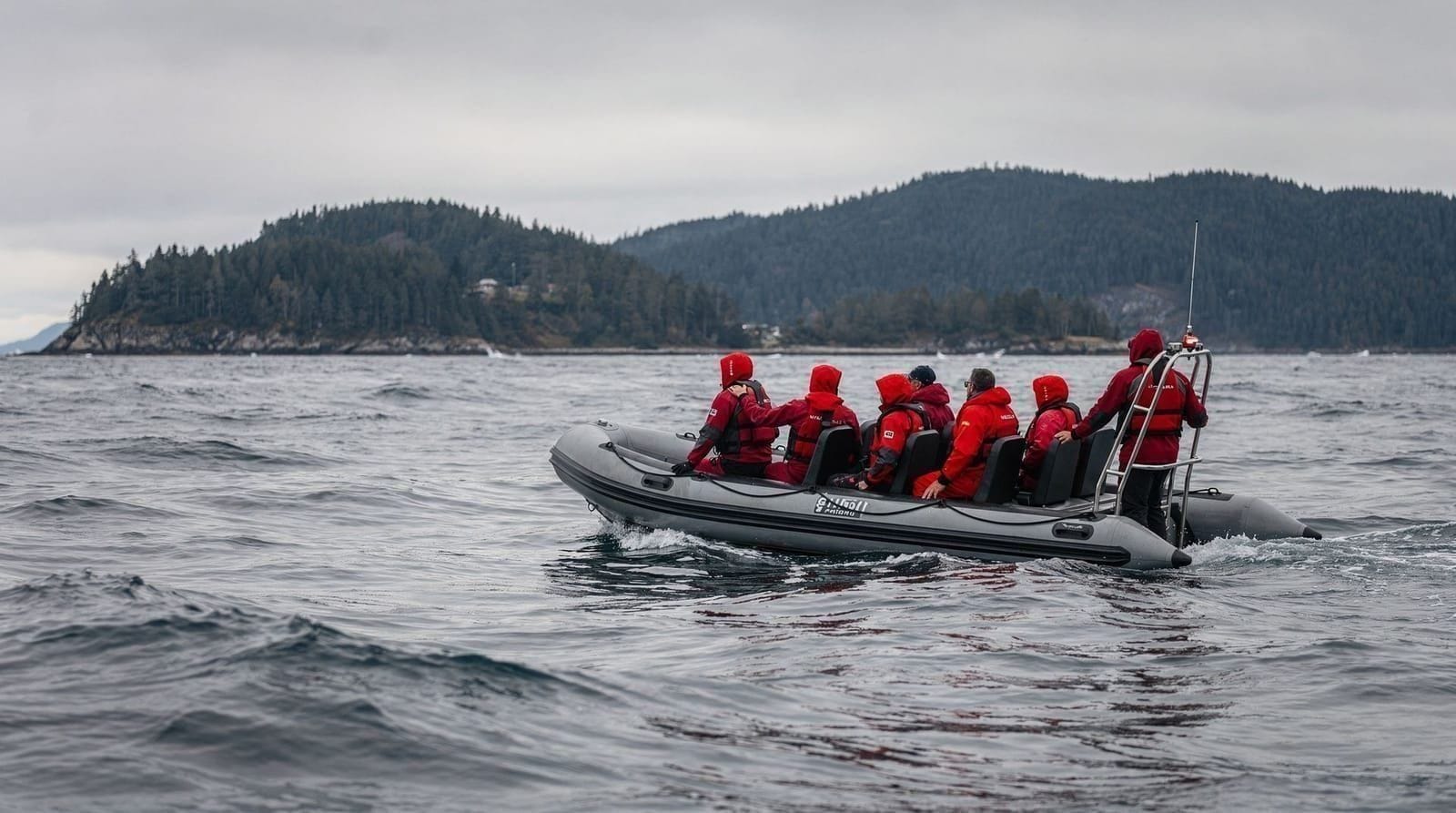
Boat type shapes the experience for both species, but in slightly different ways. Zodiac and open-boat tours put you lower and closer to the water, which suits orca sightings especially well since pods often surface reasonably close to shore in the Salish Sea and a low vantage helps with photography and that visceral sense of the animal’s speed.
Covered or larger vessel tours trade some of that immediacy for warmth, washroom access, and a steadier ride — a real consideration on longer humpback-focused trips further offshore, or for travelers sensitive to cold spray and choppy water. Neither boat type meaningfully changes the odds of a sighting, since operators position based on recent reports regardless of vessel type; the choice comes down to comfort and photography preference rather than sighting probability.
What “no sighting” policies typically cover
Reputable operators in both Vancouver and Victoria generally offer some form of sighting guarantee — a free return trip, partial refund, or similar — if a tour comes back without a confirmed whale sighting, a policy worth checking before booking since it varies by operator. Sighting rates during peak season (July through September) run high with established companies working a network of real-time reports from other boats, but a guarantee is worth having as a backstop regardless, particularly for shoulder-season trips in June or October when either species’ numbers are building or tapering off rather than at their peak.
Frequently asked questions — Orca vs. humpback whale season in BC
Which season is better, orca or humpback?
Neither is objectively better — it depends what you want to see. Orcas offer the drama of a fast-moving family pod working the water together, often close to shore; humpbacks offer the more visually dramatic single-animal behavior of breaching, tail-slapping and lunge-feeding, but usually spotted alone or in loose pairs rather than pods.Is it true that humpback whales are new to BC waters?
Relatively, yes. Humpbacks were hunted to near-local extinction along the BC coast through the mid-20th century, and the population has only recovered meaningfully over roughly the past 15-20 years. Sightings that were rare a generation ago are now a routine part of summer tours in the Salish Sea and Georgia Strait.Where are you more likely to see orcas versus humpbacks?
Orcas are more reliably seen around the Salish Sea and Gulf Islands, which is why Victoria has the strongest reputation for orca sightings specifically. Humpbacks are increasingly common in Georgia Strait near Vancouver as well as further north, and both species show up with strong odds around Telegraph Cove on northern Vancouver Island.What month gives the best chance of seeing both orcas and humpbacks?
September. Orca sightings remain solid into the first half of the month even past their peak, while humpback numbers are typically at or near their annual high, making it the strongest single month for a combined sighting on one trip.Do orcas and humpback whales ever interact?
Occasionally, and not always peacefully — transient (Bigg's) killer whales are marine mammal hunters and have been documented harassing humpback calves, while adult humpbacks are known to actively intervene in orca hunts on other species, sometimes aggressively. Resident orcas, which eat fish rather than marine mammals, don't pose the same risk and largely ignore humpbacks.How do you tell an orca and a humpback apart from a distance?
Orcas have a tall, distinctive dorsal fin — dramatically curved in females and juveniles, straight and towering in adult males — and travel in visible groups with quick, synchronized surfacing. Humpbacks have a small, stubby dorsal fin, a much bulkier body, and are usually alone or in pairs, with a distinctive high tail fluke shown when diving deep.Which tour type is better for seeing breaching behavior?
Humpbacks are the more reliable bet for visible breaching and tail-slapping, especially during peak season from August through September. Orcas are more likely to be seen surfacing, spy-hopping and traveling as a pod than performing dramatic aerial behavior, though it does happen.
Top experiences
Bookable activities with verified prices and instant confirmation on GetYourGuide.