Car rental in Vancouver — when you need one and when you don't
From Vancouver: Full-Day Whistler Tour
Duration: 10.5 hours
Do I need to rent a car in Vancouver?
Not for the city itself — TransLink covers downtown, the North Shore, and most core sightseeing well. A rental car earns its cost for day trips beyond transit's reach, particularly Whistler, Squamish and the Sea-to-Sky corridor, or a self-driven Vancouver Island loop. Expect CAD 50-100/day for an economy car and CAD 120-200/day for an SUV, plus downtown parking at CAD 3-6/hour.
The honest answer to whether you need a rental car in Vancouver depends entirely on where your itinerary goes — inside the city, a car is closer to a liability than a convenience, but the moment a trip includes Whistler, Squamish, or a self-driven loop around Vancouver Island, a rental starts earning its cost quickly.
| Economy car | Around CAD 50-100/day |
| SUV | Around CAD 120-200/day |
| Downtown parking | CAD 3-6/hour |
| Skip it for | Downtown, Gastown, Kitsilano, North Shore day trips via SeaBus |
| Rent it for | Whistler, Squamish, Sea-to-Sky corridor, Vancouver Island loop |
| Pickup | YVR Airport (heading straight out of town) or downtown |
Why you probably don’t need one downtown
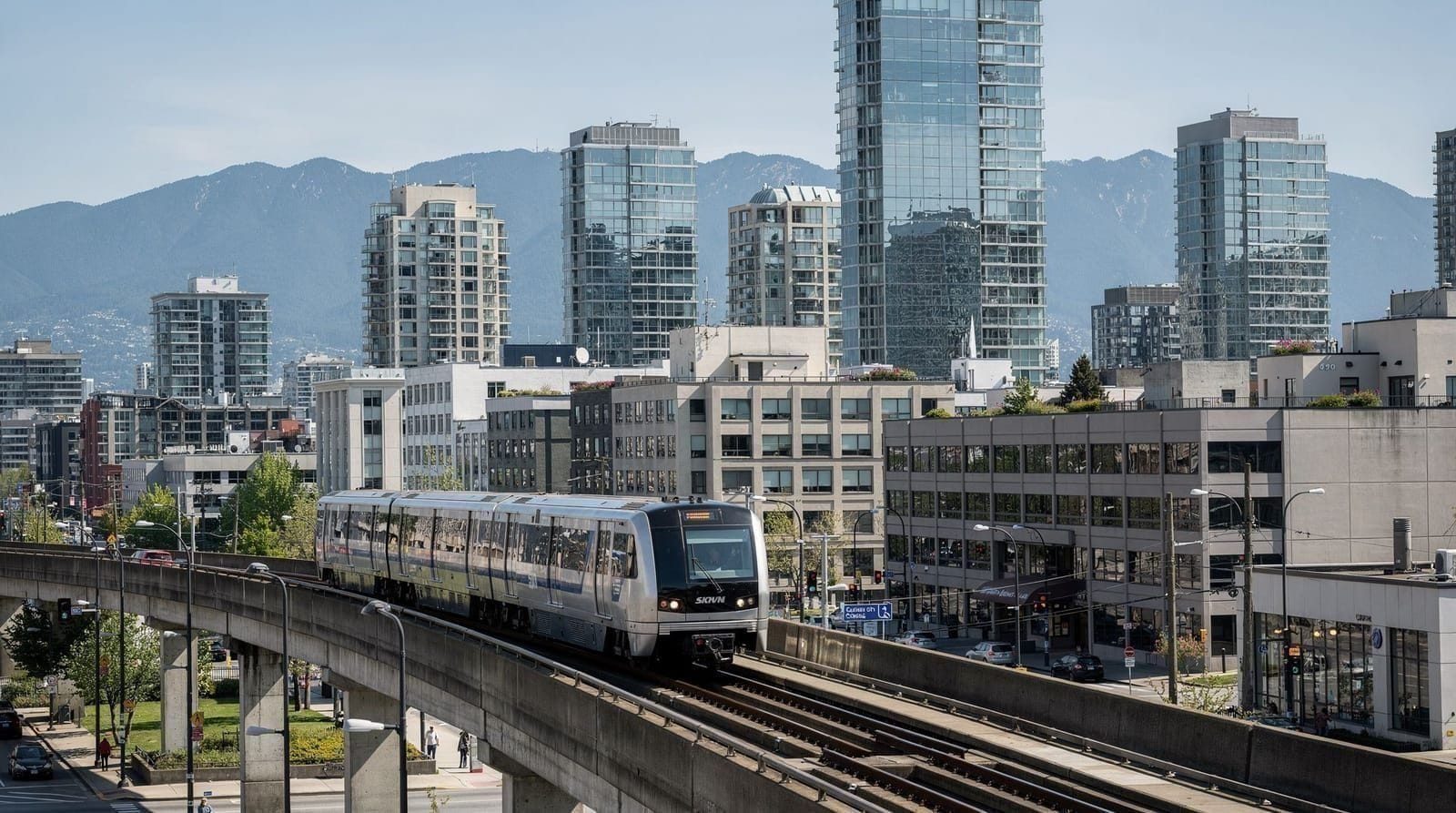
Vancouver’s core neighbourhoods — downtown, Gastown, Yaletown, the West End, Kitsilano, Granville Island — are compact, walkable, and well covered by TransLink’s SkyTrain, SeaBus, and bus network. Parking downtown runs CAD 3-6 per hour at commercial lots, street parking is limited and metered in most areas, and driving during peak hours means contending with genuinely heavy traffic on the Lions Gate Bridge, the Georgia Viaduct, and the Granville Bridge approaches. A visitor spending three or four days entirely within the city core, using transit for North Shore day trips via the SeaBus, is very unlikely to find a rental car worth its cost once parking is factored in.
When a rental car genuinely earns its cost
The calculation flips once an itinerary reaches beyond TransLink’s coverage area. Whistler and the Sea-to-Sky corridor aren’t served by any transit line — reaching them requires either a rental car, a guided tour bus, or a private transfer.
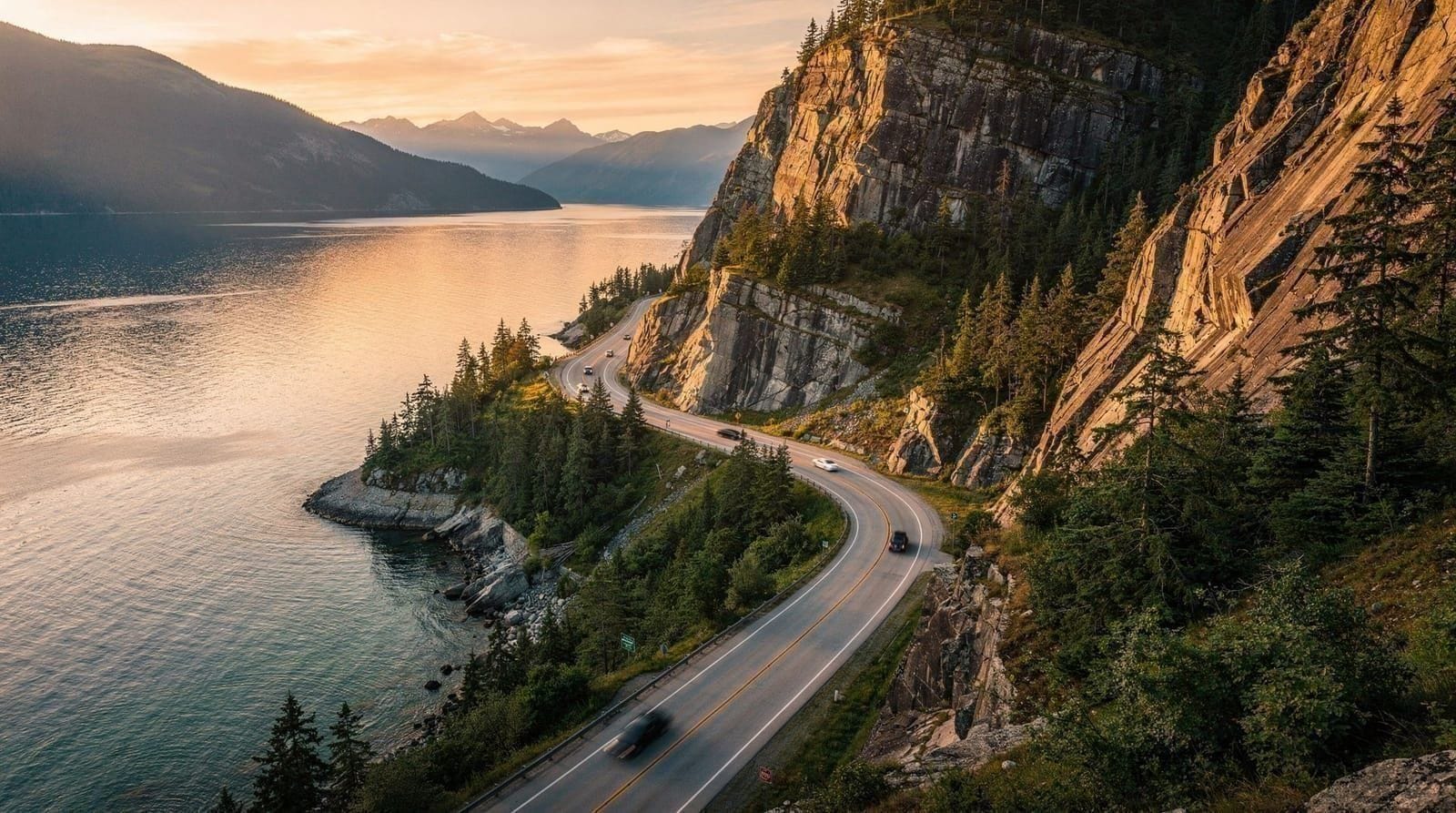
Vancouver Island beyond Victoria’s immediate downtown core (Tofino, Nanaimo, the wine regions) has minimal public transit, making a rental close to essential for a self-driven multi-day loop. And travelers wanting flexibility to stop at multiple viewpoints along Highway 99 — Shannon Falls, the Sea to Sky Gondola, Britannia Beach — on their own schedule rather than a tour bus’s fixed itinerary get real value from having their own vehicle.
What it actually costs
Economy car rentals in Vancouver typically run CAD 50-100 per day, with SUVs and larger vehicles running CAD 120-200 per day. Pricing fluctuates meaningfully with season — summer (peak tourist season) and ski season (roughly December through March, when Whistler-bound renters spike demand) both push prices toward the higher end, while shoulder season months see more competitive rates. Booking further in advance generally secures better pricing than a walk-up rental, particularly during peak weeks.
On top of the daily rate, budget for insurance (rental companies offer collision damage waivers and liability coverage; many travelers’ credit cards include some rental coverage, worth confirming before declining the rental company’s own insurance), fuel, and any parking costs at the destination end — Whistler Village, for instance, has its own paid parking structure separate from anything paid in Vancouver.
Pickup location: airport versus downtown
Picking up a rental car directly at YVR Airport makes the most sense for travelers heading straight out to Whistler, Squamish, or Victoria without spending time in Vancouver’s core first — it avoids the detour of taking transit into downtown and then driving back out through the same traffic. For visitors starting with several days of city-based sightseeing before a day trip or road trip portion, renting downtown just before the car is actually needed avoids paying for a vehicle that sits in a parking garage racking up daily fees during days spent using transit.
Driving basics for visitors
British Columbia drives on the right side of the road, the same as the United States and most of continental Europe, which is a non-issue for visitors from those regions and a genuine adjustment period for anyone from a left-hand-drive country like the UK, Australia, or Japan. Speed limits are posted in kilometres per hour, not miles. Most visitors can drive in BC using a valid license from their home country for visits up to several months, though rental companies sometimes request an International Driving Permit for licenses not printed in English or French — worth checking with the specific company ahead of arrival if that applies.
Downtown Vancouver’s street grid is fairly conventional and easy to navigate, but rush hour (roughly 7:30-9:30am and 3:30-6:30pm on weekdays) brings real congestion on the bridges connecting downtown to the North Shore and the rest of the region. Visitors planning a day trip should aim to leave the city before or after these windows where possible.
Highway driving beyond the city
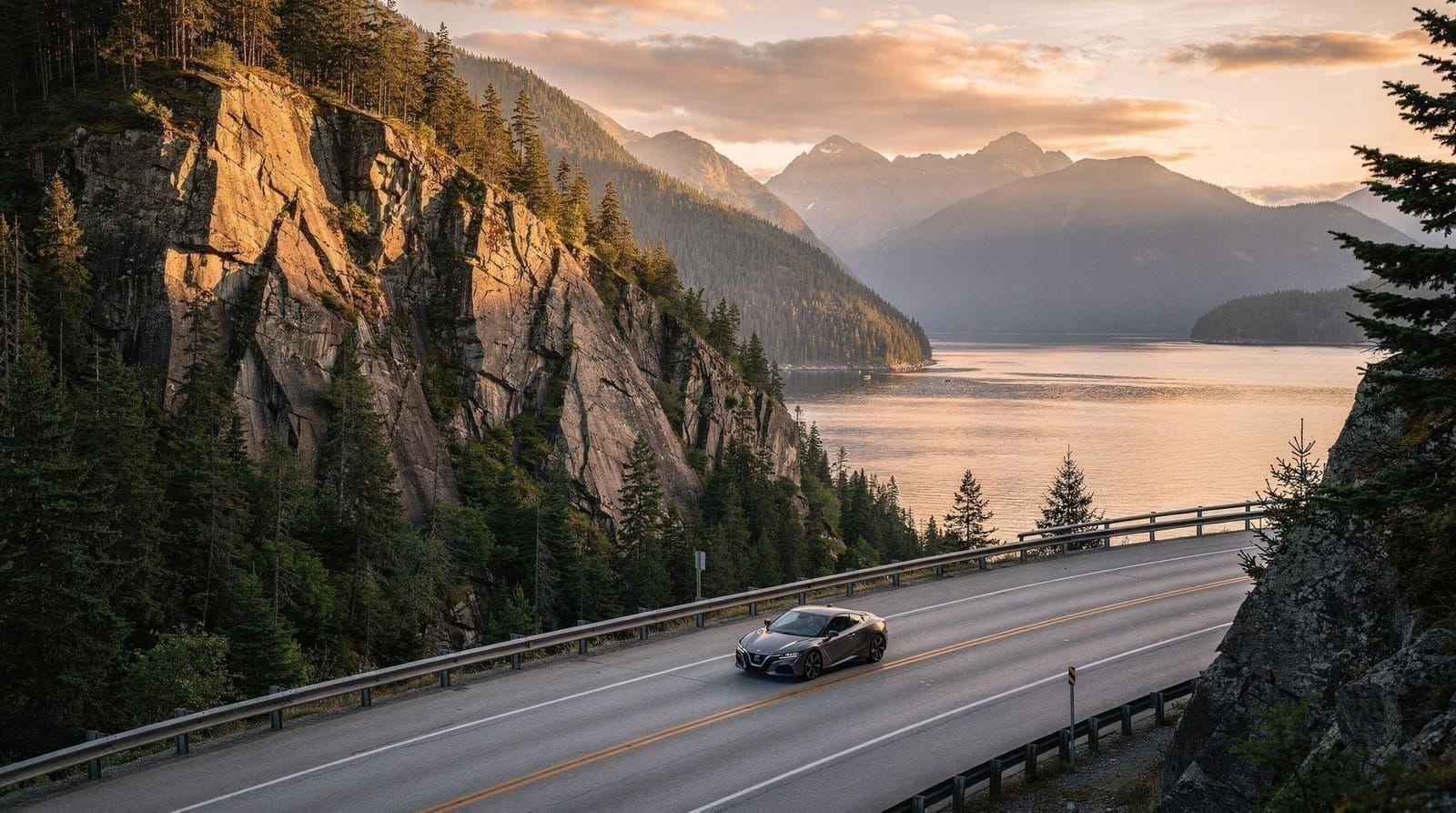
Once outside the downtown core, BC’s highways are generally well-maintained and straightforward, though the Sea-to-Sky Highway (Highway 99) to Whistler involves genuine mountain driving — winding sections, changing weather, and occasional winter conditions (snow, ice) between November and April that visitors unfamiliar with mountain roads should approach cautiously, checking DriveBC’s road conditions before departure during winter months. Summer driving on the same route is comparatively straightforward, though weekend traffic heading to and from Whistler can be heavy.
Rental car versus a guided tour or private transfer
For a single day trip — Whistler, the Sea-to-Sky Gondola, Victoria — it’s worth genuinely comparing the cost of a rental (daily rate, gas, parking at the destination) against a guided day tour or a private transfer with stops.
For a solo traveler or a couple, a guided tour sometimes costs about the same as a rental once all the incidental costs are added up, with the added benefit of a driver who knows the route and no need to navigate mountain roads in unfamiliar conditions. For groups of three or four splitting a rental’s cost, or travelers wanting full flexibility to stop wherever they like, a rental car remains the more economical and more independent choice.
Multi-day road trips: Sea-to-Sky and Vancouver Island
A rental car becomes close to essential for multi-day self-driven itineraries — the Sea-to-Sky road trip through Squamish and Whistler, or a longer loop through Vancouver Island covering Victoria, Tofino, and points between. These routes involve stops far enough apart, and with transit coverage thin enough, that a rental genuinely opens up the itinerary in a way that would be impractical to piece together with buses and ferries alone. Renting for the full duration of a road trip segment (rather than day-by-day) usually secures better per-day pricing than repeated short rentals.
Choosing a vehicle size
An economy or compact car is sufficient for most itineraries, including the drive up Highway 99 to Whistler, and it’s both cheaper to rent and easier to park in tight downtown or mountain-village lots than a full-size SUV. A larger vehicle earns its keep for groups of four or more with substantial luggage, for anyone planning to carry ski or snowboard gear during winter months, or for a Vancouver Island road trip where extra cargo space for camping or outdoor gear makes a real difference. All-wheel drive is worth prioritizing for winter Whistler trips specifically, even with proper winter tires fitted, given the mountain driving conditions between November and April.
Parking at the destination
Whistler Village has paid parking lots separate from anything in Vancouver, with rates that climb during peak ski season. Squamish and most Sea-to-Sky stops (Shannon Falls, the Sea to Sky Gondola base) have free or low-cost parking. Victoria’s downtown core has metered street parking and paid lots similar in structure to Vancouver’s. Budgeting a small amount for destination parking on top of the daily rental rate avoids an unwelcome surprise at the end of a trip.
Tolls and bridge crossings
Most of Metro Vancouver’s bridges, including the Lions Gate Bridge to the North Shore and the Port Mann Bridge on Highway 1, are toll-free, which surprises some visitors coming from cities where crossing a harbour or river routinely costs money. The Sea-to-Sky Highway to Whistler is also toll-free along its full length. This keeps the cost of a self-driven day trip predictable — the daily rental rate and fuel are the only real variable costs beyond parking at the destination, with no toll charges to budget for on the standard Vancouver-to-Whistler or Vancouver-to-Victoria-area routes.
Fuel and returning the car
Most rentals in BC follow a “full-to-full” fuel policy — pick up with a full tank, return with a full tank, or pay a refueling surcharge that’s typically more expensive than filling up independently. Gas stations are common along Highway 99 and throughout Metro Vancouver, so refueling before returning a car at the airport or a downtown location is straightforward as long as it’s not left until the very last few kilometres before drop-off.
Winter tire requirements
British Columbia legally requires winter tires or chains on designated mountain highways between October 1 and April 30 each year, and Highway 99 through the Sea-to-Sky corridor to Whistler is one of the routes this applies to. Rental companies serving Vancouver generally equip their fleets appropriately during these months, but it’s worth confirming a specific vehicle has winter tires fitted before driving up to Whistler in winter, rather than assuming — driving without proper equipment on a designated route isn’t just a safety risk, it can result in a fine if checked. Summer rentals (May through September) don’t carry this requirement.
One-way rentals: pick up in Vancouver, drop off elsewhere
Some rental companies offer one-way rentals, letting travelers pick up a car in Vancouver and drop it off in Victoria, Whistler, or another city entirely rather than looping back to the original pickup point. This suits itineraries that don’t want to backtrack — flying into Vancouver, road-tripping up through Whistler and the Sea-to-Sky corridor, then flying out from a different airport, for instance. One-way rentals typically carry a drop fee on top of the standard daily rate, which can be substantial depending on distance and the specific company’s policy, so comparing the one-way fee against simply returning to the original pickup point is worth doing before booking.
Electric vehicle rentals
A growing number of Vancouver rental agencies offer electric vehicles alongside standard gas models, and BC’s charging infrastructure along major routes, including the Sea-to-Sky corridor, has expanded considerably in recent years. An EV rental can work well for a Whistler day trip given charging stations are available at both ends, but it requires more trip planning than a gas vehicle — checking charger availability and factoring in charging time — and isn’t the default recommendation for a first-time visitor unfamiliar with the specific charging network in BC. Travelers interested in an EV rental should confirm charger locations along their planned route before committing.
Common mistakes to avoid
Renting a car for the entire length of a stay when only one or two days actually involve driving beyond the city is the most frequent overspend — the daily parking cost downtown alone can exceed what a single-day rental or a guided tour would have cost for the portion of the trip that actually needed a vehicle.
Underestimating drive times on mountain roads is another: Highway 99 to Whistler involves curves and elevation changes that make it a slower drive than the raw distance suggests, particularly with any traffic or weather. And assuming toll-free travel throughout the region catches some visitors off guard — while most of Metro Vancouver’s bridges are toll-free, some regional crossings elsewhere in BC do carry tolls, so checking the specific route for any toll roads before departure avoids a surprise charge.
Renting for an Okanagan wine trip
The Okanagan wine region sits roughly 4-5 hours by car from Vancouver, well beyond any day-trip range, and a rental car becomes the standard way to explore the wineries once there, since the region itself is spread across a valley with limited transit between individual wineries. Visitors combining Vancouver with an Okanagan extension typically rent for that specific leg of the trip, either continuing with the same rental from Vancouver or renting locally in Kelowna after flying or driving in — either approach works, and the choice mostly comes down to whether a return to Vancouver is part of the plan.
Insurance and credit card coverage
Many travel credit cards, particularly premium ones, include some level of rental car collision coverage as a card benefit — worth checking with the card issuer before automatically accepting the rental company’s own collision damage waiver, which can add a meaningful amount to the daily rate. That said, confirming the specifics (what’s covered, whether it extends to Canada, any exclusions for certain vehicle types) before relying on it is worth the few minutes it takes, since assumptions about coverage that turn out to be wrong are an expensive mistake to discover after an accident.
Age requirements and young driver fees
Most rental companies in Vancouver require drivers to be at least 21, with some requiring 25 for certain vehicle categories like SUVs or premium models. Drivers under 25 frequently face a young driver surcharge added to the daily rate, which can be substantial — worth checking the specific age policy of a chosen rental company before booking if any driver on the rental will be under 25, since the surcharge sometimes isn’t obvious until checkout.
What to expect at the YVR rental counters
YVR’s rental car facility sits a short walkway from the terminal and houses counters for all the major companies — Avis, Hertz, Enterprise, National, Budget, and others — under one roof. Lines can build during peak arrival windows, particularly early afternoon when several long-haul flights land close together, so travelers with a tight connection to a same-day Whistler or Sea-to-Sky drive should budget 30-45 minutes for the counter process and vehicle pickup on top of the walk from the terminal. Pre-booking online and having a printed or digital confirmation ready generally speeds up the counter process compared with booking on arrival.
GPS, connectivity, and navigation
Cell coverage is reliable throughout Metro Vancouver and along the Sea-to-Sky corridor to Whistler, so most visitors navigate comfortably using a phone-based app like Google Maps or Waze rather than paying for a rental company’s built-in GPS unit. Coverage does get patchier in more remote stretches of Vancouver Island and parts of the Okanagan, where downloading offline maps in advance is a reasonable precaution. A car charger or portable battery pack for a phone is worth having on any full-day drive, since navigation apps and photo-taking both drain battery faster than typical daily use.
Returning early or extending a rental
Most rental agreements allow an early return without penalty, though refunds for unused days aren’t always automatic and depend on the specific company’s policy. Extending a rental beyond the original return date is usually possible by contacting the rental company directly, though availability isn’t guaranteed during peak season, so confirming a likely extension need as early as possible avoids being stuck without a vehicle mid-trip.
Rental car for a Sea-to-Sky Gondola or Squamish day
For visitors whose itinerary stops short of a full Whistler trip but still wants to reach the Sea-to-Sky Gondola or a Squamish stop, the same rental logic applies at a smaller scale — a rental car for a single day gives full control over how long to spend at each viewpoint along Highway 99, something a fixed-departure tour bus doesn’t allow. Squamish itself sits roughly 45-60 minutes from downtown by car, comfortably reachable as a half-day round trip without needing to continue all the way to Whistler.
The bottom line
Don’t rent a car for a Vancouver city stay — TransLink handles it better and cheaper, without the parking headache. Do rent one, or seriously consider it, the moment Whistler, the Sea-to-Sky corridor, or a self-driven Vancouver Island loop enters the itinerary. For single day trips, run the numbers against a guided tour before assuming a rental is automatically cheaper — it often isn’t for solo travelers and couples, though it usually is for groups of three or more splitting the cost.
Frequently asked questions — Car rental in Vancouver
Is it worth renting a car just to explore Vancouver itself?
Generally no. Downtown parking costs CAD 3-6/hour, street parking is limited, and TransLink's SkyTrain, SeaBus, and bus network reaches nearly every core sightseeing spot without the hassle of traffic or parking. A car becomes worthwhile once the itinerary extends to Whistler, Squamish, or a Vancouver Island road trip.How much does a rental car cost in Vancouver?
Economy cars typically run CAD 50-100 per day, and SUVs or larger vehicles run CAD 120-200 per day, though prices vary with season, demand, and how far in advance the booking is made. Summer and ski season (December-March) both push prices toward the higher end of these ranges.Where should I pick up a rental car — the airport or downtown?
Picking up at YVR Airport makes sense for anyone heading straight to Whistler, Squamish, or Victoria without spending time in the city first, since it avoids driving into and back out of downtown traffic. For visitors starting with several days in the city, renting downtown just before a planned day trip avoids paying for parking during days the car isn't needed.Do I need an international driving permit to drive in BC?
Visitors from most countries can drive in British Columbia using a valid driver's license from their home country for visits of up to several months, though some rental companies request an International Driving Permit for licenses not printed in English or French, and it's worth checking with the specific rental company before arrival if your license uses another script.Is driving in Vancouver difficult for visitors?
Downtown Vancouver has a fairly standard grid layout and is manageable for most visitors, though traffic on bridges (Lions Gate, Georgia Viaduct) during rush hour (roughly 7:30-9:30am and 3:30-6:30pm weekdays) is genuinely heavy. Driving is on the right side of the road, similar to the US, which is straightforward for North American visitors and requires an adjustment period for visitors from left-hand-drive countries.What's the cheapest way to get a rental car for a Whistler day trip?
Booking a day-only rental (picked up in the morning, returned the same evening) rather than renting for the full length of a multi-day city stay avoids paying for parking on the days the car sits unused. Comparing this against a pre-booked private transfer or guided tour is worth doing, since for a solo traveler or couple, a guided day trip sometimes costs less than a rental plus gas plus parking.
Top experiences
Bookable activities with verified prices and instant confirmation on GetYourGuide.