TransLink and SkyTrain guide for visitors
Vancouver: Hop-on Hop-off Tour by Double-Decker Bus
How does Vancouver's transit system work for visitors?
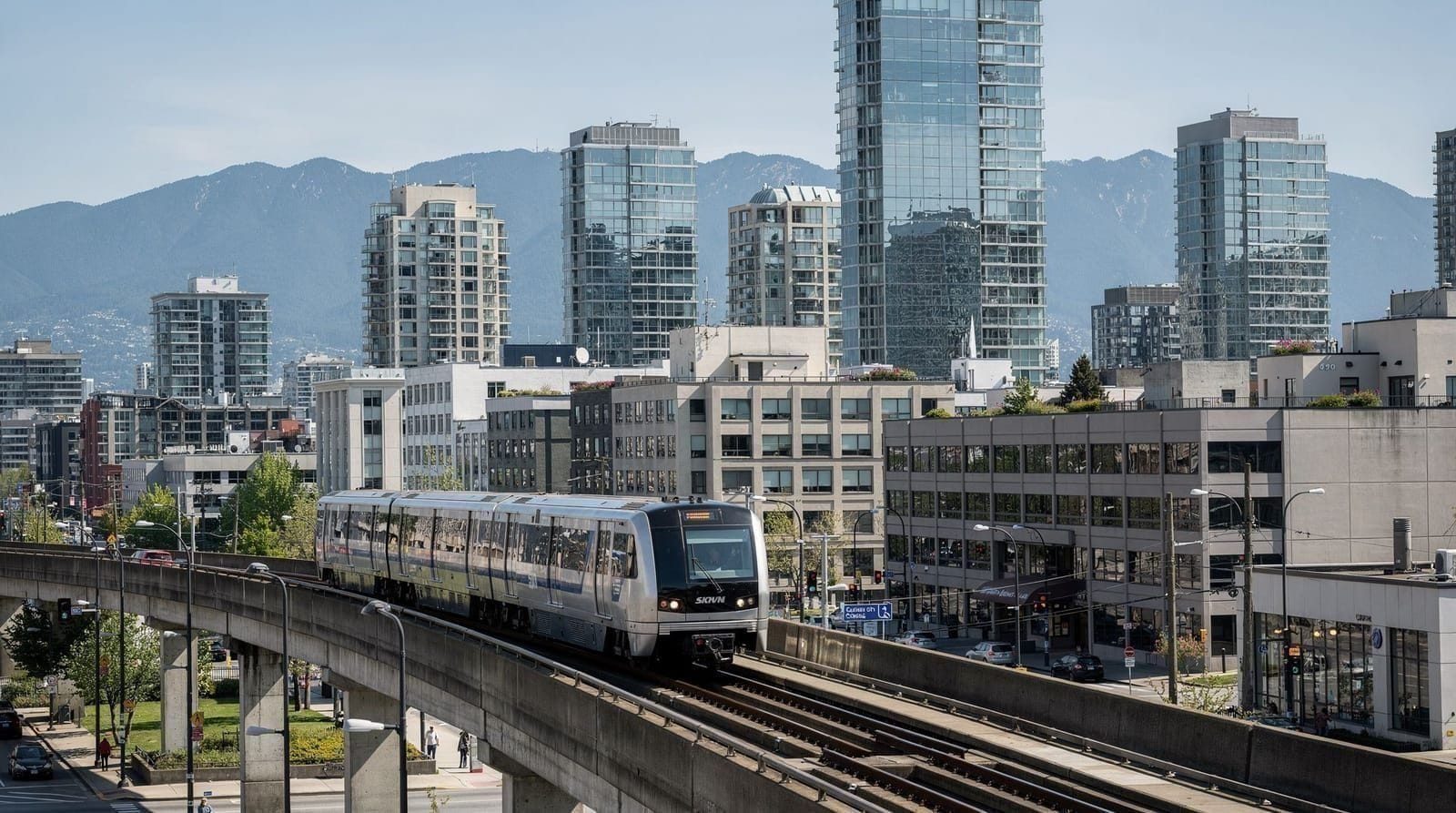
TransLink runs three SkyTrain lines (Canada, Expo, Millennium), the SeaBus harbour ferry, and an extensive bus network, all covered by one Compass Card and fare. A single fare covers 90 minutes of travel across all modes, with pricing based on how many zones you cross — CAD 2.85 for one zone, CAD 4.20 for two, and CAD 5.40 for three, as of mid-2026.
Vancouver’s public transit system is genuinely good enough that most visitors staying in or near downtown never need a car for city sightseeing, and understanding how the fare zones and the three SkyTrain lines fit together in the first ten minutes of a trip saves both money and confusion for the rest of it.
| Fare | CAD 2.85–5.40 depending on zones crossed |
| Transfer window | 90 minutes, all modes on one tap |
| Card | Compass Card (CAD 6 deposit) or contactless bank card |
| Day pass | Worth it past 3–4 trips in a day |
| Coverage | Metro Vancouver only — not Whistler or Victoria |
What TransLink actually covers
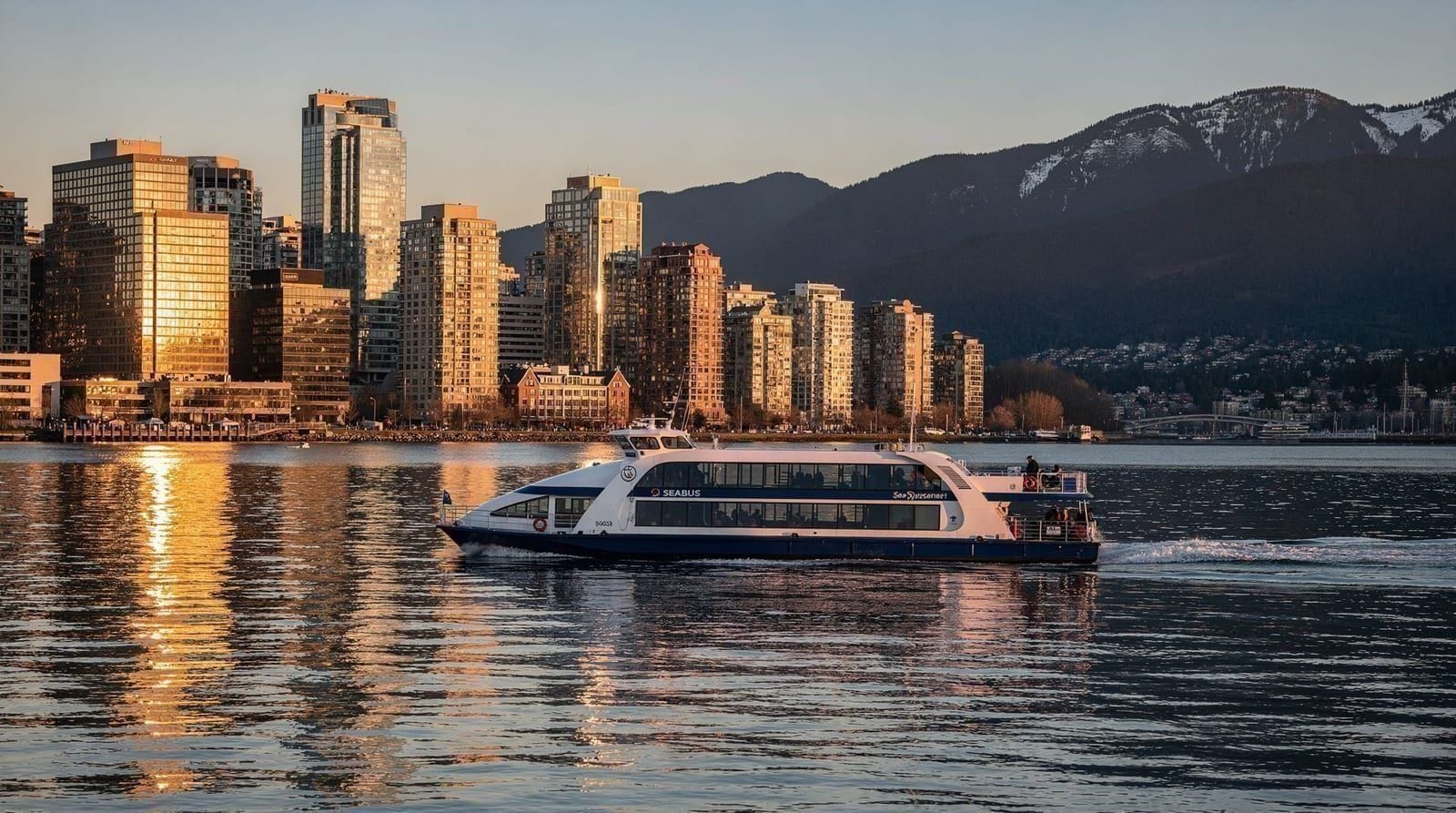
TransLink is the umbrella authority for Metro Vancouver’s public transportation, and it runs four distinct services under one fare system: three SkyTrain lines (Canada, Expo, Millennium), the SeaBus harbour ferry between downtown and the North Shore, an extensive bus network covering neighbourhoods the trains don’t reach, and West Coast Express, a commuter rail line running out to the Fraser Valley that’s rarely relevant to short-term visitors.
All four accept the same Compass Card and the same zone-based fare, and a single fare covers transfers between any combination of them within a 90-minute window — board a bus, transfer to the SkyTrain, transfer again to the SeaBus, and it’s all one fare as long as the whole trip stays inside 90 minutes.
The three SkyTrain lines
The Canada Line is the one most visitors use first, since it connects YVR Airport and Richmond directly to downtown, terminating at Waterfront Station. It’s covered in detail in the YVR to downtown guide, including the airport-specific AddFare that applies only when boarding at the airport stations.
The Expo Line is the oldest and busiest line, running from Waterfront Station through downtown, past Science World and Main Street-Science World station, out through East Vancouver to Metrotown (Vancouver’s largest mall, useful for shopping trips), New Westminster, and terminating in Surrey. Visitors staying in East Vancouver neighbourhoods like Commercial Drive or Mount Pleasant, or heading to Metrotown, use this line most.
The Millennium Line loops through Burnaby and Coquitlam, connecting to both the Expo and Canada Lines at various interchange stations but not running directly into downtown on its own route. It’s less relevant for typical sightseeing but useful for reaching Burnaby’s Metrotown area or connecting toward the Fraser Valley via bus.
For a typical downtown-based visitor doing city sightseeing, day trips to Grouse Mountain or Capilano via bus connections, and maybe a trip to Metrotown for shopping, the Canada Line and Expo Line cover almost everything needed; the Millennium Line rarely enters the picture unless staying outside the core.
Fares and zones, in plain terms
TransLink fares as of July 2026 run CAD 2.85 for a one-zone trip, CAD 4.20 for two zones, and CAD 5.40 for three zones. Zones are geographic bands rather than distance measured in kilometres — most trips entirely within the city of Vancouver, including downtown to the North Shore via SeaBus, fall into one or two zones. Trips out to Surrey, Coquitlam, or the airport (with its separate AddFare) tend to cross into the two- or three-zone range.
The 90-minute transfer window is the detail that matters most in practice: buy one fare, and every bus, train, or SeaBus boarding within 90 minutes of that first tap counts as part of the same trip, with no additional charge as long as the zones don’t increase. This makes multi-stop days — say, SkyTrain to Waterfront, SeaBus to Lonsdale Quay, then a connecting bus up to Grouse Mountain — considerably cheaper than buying separate tickets for each leg would suggest.
Getting a Compass Card
Compass Cards are sold from vending machines at every SkyTrain station, at Waterfront Station’s customer service counter, and at various London Drugs locations around the city. The card itself carries a refundable CAD 6 deposit (returned at machines when the card is handed back at the end of a trip, provided there’s no remaining stored value below a certain threshold), and can be loaded with either stored cash value or a DayPass. Loading a card with several days’ worth of expected fares up front avoids repeated stops at vending machines.
Alternatively, tapping a contactless credit or debit card directly on TransLink’s fare gates and bus readers works on most of the network without needing a physical Compass Card at all — a genuinely convenient option for shorter stays where the CAD 6 deposit and card management aren’t worth the hassle. The fare charged is the same either way; the difference is purely about which piece of plastic gets tapped.
The DayPass
For visitors planning a heavy sightseeing day with more than three or four separate transit trips — city center in the morning, out to Metrotown for lunch, back downtown, then over to the North Shore in the evening — a DayPass covering unlimited travel across all zones for one calendar day usually works out cheaper than paying per trip. It’s sold at the same vending machines as regular Compass fares and loaded directly onto a Compass Card.
SeaBus: the harbour crossing
The SeaBus connects Waterfront Station downtown to Lonsdale Quay in North Vancouver in about 12 minutes, running on the same Compass fare and zone system as the rest of TransLink, with departures roughly every 15-30 minutes depending on time of day. It’s the standard route for reaching North Shore attractions like Grouse Mountain, Capilano Suspension Bridge, and Lynn Canyon without driving. The full details on scheduling, connecting buses on the North Shore side, and what to expect on the crossing are in the SeaBus guide.
Buses: filling in the gaps
Vancouver’s bus network covers ground the SkyTrain doesn’t reach, including most of Kitsilano, Point Grey, the West End beyond what’s walkable from downtown, and the connecting routes on the North Shore that link Lonsdale Quay to Grouse Mountain and Capilano. Buses accept Compass Cards and contactless cards the same way as SkyTrain, tapped on a reader near the front door. Route numbers and real-time arrival information are available through the TransLink app or Google Maps, both of which integrate Vancouver transit data reliably.
TransLink versus a rental car for city sightseeing
For anyone staying primarily in Vancouver’s core neighbourhoods — downtown, Gastown, Yaletown, the West End, Kitsilano — a rental car is close to a liability rather than an asset. Downtown parking runs CAD 3-6 per hour, street parking is scarce, and traffic on the Lions Gate Bridge or Georgia Viaduct during peak hours erases any time savings a car might offer over transit.
TransLink covers essentially all core sightseeing, and even day trips to the North Shore attractions are reachable by SeaBus plus bus. A car only starts making sense for trips beyond TransLink’s reach — Whistler, Squamish, the Sea-to-Sky Highway, or multi-stop days through the Fraser Valley — covered in the car rental guide.
TransLink versus the hop-on hop-off bus
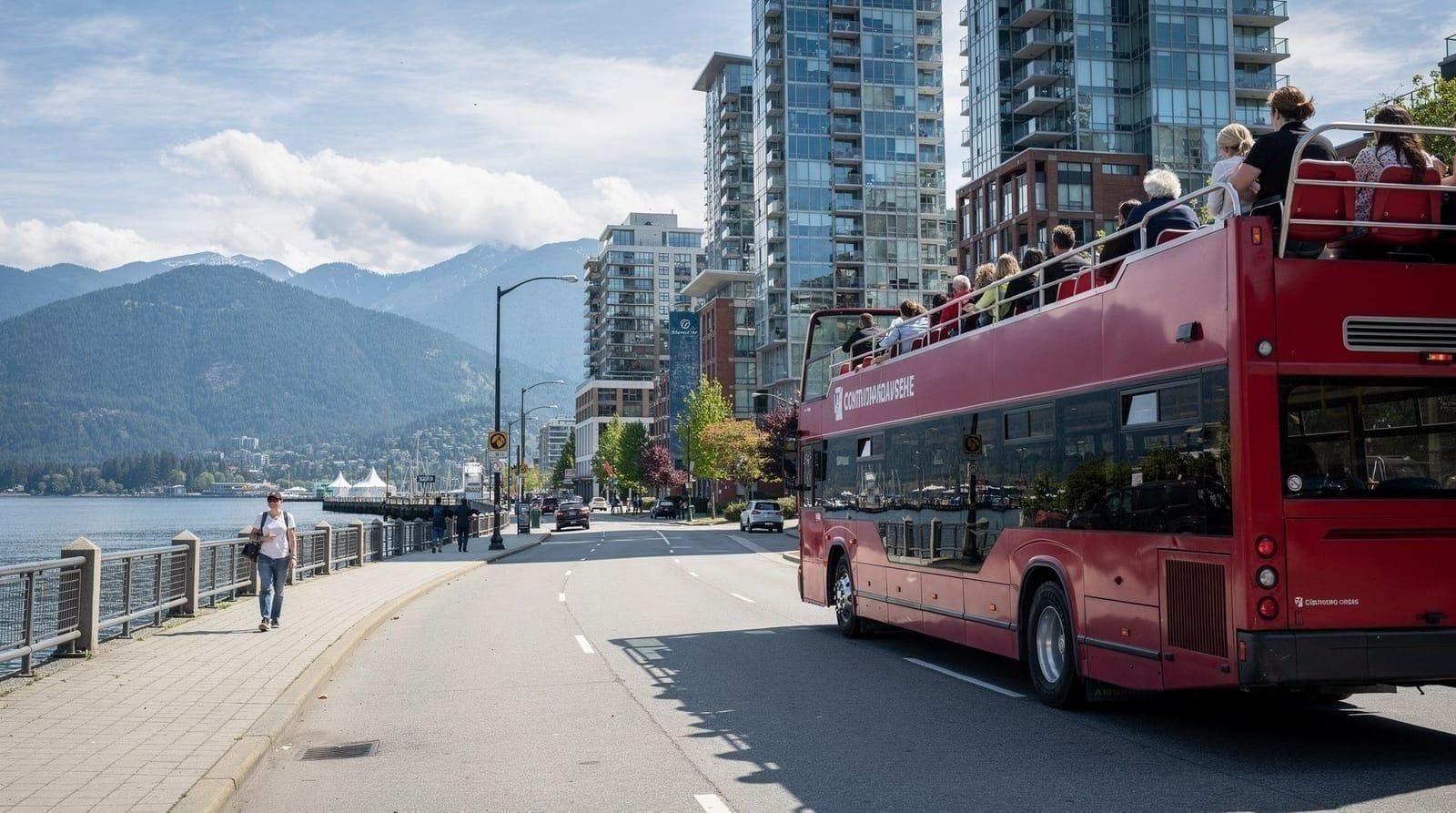
Vancouver also has a separate, unrelated hop-on hop-off tourist bus, running fixed sightseeing loops through downtown, Stanley Park, and Granville Island with narrated commentary, priced at roughly CAD 55-65 for a 24-hour pass — several times more than TransLink’s DayPass.
The tradeoff is real: TransLink is cheaper and covers more ground, but requires understanding routes and zones, while the hop-on hop-off bus removes all of that planning at a real cost premium. The full comparison is worth reading in the hop-on hop-off Vancouver guide — the short version is that TransLink suits multi-day visitors comfortable with a transit app, while the tourist bus suits a single orientation day for travelers who’d rather not think about routes at all.
Practical tips for first-time riders
Tap in and tap out consistently — SkyTrain gates require tapping both when entering and exiting certain stations (particularly Canada Line stations, which use exit-tap validation to calculate zone-based fares correctly), and forgetting to tap out can result in being charged the maximum zone fare by default. On buses, only tap once when boarding; there’s no tap-out required.
Download the TransLink app or simply use Google Maps for real-time departures — Vancouver’s transit data integrates well with both, and knowing a bus is 4 minutes away versus 14 minutes changes whether it’s worth waiting or walking. During peak commuting hours (roughly 7:30-9:30am and 3:30-6:30pm on weekdays), SkyTrain cars get genuinely crowded, particularly on the Expo Line through downtown — visitors with flexible schedules benefit from shifting sightseeing trips outside those windows, both for comfort and to avoid competing for platform space with commuters.
Where the zone boundaries actually fall
Zone boundaries trip up more visitors than any other part of the fare system, mostly because they’re not intuitive from a map alone. Most trips that stay entirely within the City of Vancouver — downtown to Kitsilano, downtown to Commercial Drive, downtown across the SeaBus to Lonsdale Quay — are one-zone fares. Crossing into Burnaby, Richmond, or the North Shore beyond the immediate SeaBus terminal generally pushes into a two-zone fare.
Trips reaching Surrey, Coquitlam, or the airport (which layers its own AddFare on top) typically land in the two- or three-zone range. The Compass system calculates the fare automatically based on tap-in and tap-out data, so there’s no need to memorize the zone map in detail — but knowing roughly which trips cost more helps with budgeting a multi-day transit pass versus paying per ride.
Fare payment enforcement
TransLink runs periodic fare inspections on both SkyTrain platforms and buses, where transit officers check that riders have tapped a valid fare. Riding without a valid tap can result in a fine well beyond the cost of a normal fare, and claiming unfamiliarity with the system as a tourist doesn’t exempt anyone from enforcement. The system runs on an honour-based tap model at most SkyTrain entrances (no full turnstile gates at every station, though gates do exist at busier stations like Waterfront and Vancouver City Centre), which makes it easy to forget to tap — but the inspection risk makes it worth building the habit early in a trip rather than treating it as optional.
Bikes on transit
Bicycles are allowed on SkyTrain outside of the most crowded peak-hour cars, with dedicated bike spaces marked on platforms and inside train cars. Folding bikes are permitted at any time without restriction. The SeaBus also accommodates bikes, and most buses carry front-mounted bike racks holding two bikes on a first-come basis. This matters for visitors planning to combine transit with cycling — for instance, taking the SeaBus to the North Shore and then biking rather than bussing up toward Lynn Canyon or Deep Cove.
Weekend, holiday, and late-night schedules
SkyTrain frequency drops on weekends compared to weekday rush-hour service, though it remains reasonably frequent (typically every 6-10 minutes on the Canada and Expo Lines during the day). Late-night service runs less often, generally every 15-20 minutes after around 11pm, with the last trains departing in the range of 1-1:30am depending on the line and direction — worth checking the exact last-train time before relying on SkyTrain to get back from a late dinner or evening event, since a missed last train means a taxi or rideshare instead. Statutory holidays typically run a Sunday-level schedule, which catches some visitors off guard when planning an early departure on a holiday morning.
Special situations: cruise days and festival crowds
On days when multiple cruise ships are in port at Canada Place (common on summer weekends during Alaska cruise season), the Canada Line and downtown SkyTrain stations see a noticeable crowd spike as passengers disembark and head into the city or toward the airport. Similarly, major festival days — Celebration of Light fireworks over English Bay, Pride Parade, the PNE fair in late summer — bring temporary crowding and occasionally modified bus routing around the event area. None of this makes the system unusable, but building in extra time on those specific dates, and expecting standing room rather than a seat on affected SkyTrain segments, avoids frustration.
Accessibility
Every SkyTrain station has elevator access, and all SkyTrain cars and SeaBus vessels are level-boarding, making the system genuinely usable for wheelchair users and travelers with strollers or heavy luggage. Buses are equipped with low floors and ramps. That said, elevators do occasionally go out of service, and TransLink posts real-time elevator status on its website and app — worth checking ahead for anyone relying on step-free access at a specific station.
A sample day using TransLink only
A practical example helps make the zone and transfer system concrete. Start downtown with a Canada Line ride to Granville Island area (a short walk or connecting bus from the nearest station, since the island itself isn’t directly served by SkyTrain), spend the morning at the public market, then take a bus back toward downtown and transfer — within the 90-minute window if timed well — onto the SeaBus to Lonsdale Quay for a North Shore afternoon at Grouse Mountain or Capilano via a connecting bus.
Depending on timing, that entire loop can be covered by two or three fare taps rather than four or five separate charges, simply by keeping each connection inside the transfer window. Evenings spent in Gastown or Yaletown are a short SkyTrain or walk from most downtown hotels, closing the loop without ever needing a car or taxi.
How TransLink compares to other cities’ systems
Visitors familiar with London’s Oyster card, New York’s MetroCard/OMNY, or Hong Kong’s Octopus system will find Compass Card conceptually similar — tap-based, reloadable, zone-aware. The most distinctive feature by comparison is the exit-tap requirement on SkyTrain (tapping out, not just in, at certain stations to calculate zone fares correctly), which trips up visitors from cities where only a single tap-in is needed. The 90-minute universal transfer window is also more generous than many peer systems, making Vancouver’s transit genuinely efficient for a multi-stop sightseeing day rather than something that penalizes hopping between modes.
Common mistakes to avoid
Buying single tickets for every trip instead of a Compass Card or DayPass is the most common overspend, particularly on sightseeing-heavy days where four or five separate trips would blow past DayPass pricing anyway. Assuming SkyTrain reaches everywhere is another — Whistler, Victoria, and most of the Sea-to-Sky corridor are entirely outside TransLink’s coverage area and require a car, bus tour, or BC Ferries connection. And forgetting that the Canada Line’s YVR AddFare only applies when leaving the airport, not returning to it, occasionally throws off return-trip budgeting for a fare that’s actually cheaper than the arrival leg.
Real-time apps worth using
Beyond the official TransLink app, Google Maps and Transit App both pull live TransLink arrival data reliably, showing not just scheduled times but actual vehicle positions and delay estimates. For a visitor without a local SIM card, most downtown areas and SkyTrain stations have reliable enough cell coverage that checking a route on the fly rarely fails, though loading offline maps of the general downtown and North Shore area as a backup is a reasonable precaution before a day of hopping between neighbourhoods.
The bottom line
TransLink’s Compass Card system, once understood, is one of the more visitor-friendly transit setups among major North American cities — one card, one zone-based fare, 90-minute transfers across SkyTrain, SeaBus, and buses, and station coverage that reaches nearly everywhere a typical Vancouver itinerary needs to go. The learning curve is minor: figure out zones and the tap-in/tap-out rule on the first ride, and the rest of a multi-day visit runs smoothly without ever needing a rental car for in-city travel.
Frequently asked questions — TransLink and SkyTrain guide for visitors
What is a Compass Card and do I need one?
A Compass Card is TransLink's reloadable fare card, available from vending machines at any SkyTrain station for a refundable CAD 6 deposit. It's not strictly required — contactless credit/debit cards tap directly on many gates — but a loaded Compass Card is generally the simplest option for a multi-day visit involving several trips a day.How much does a SkyTrain ticket cost in Vancouver?
Fares are zone-based rather than flat: CAD 2.85 for one zone, CAD 4.20 for two zones, CAD 5.40 for three zones, as of July 2026. A single fare is valid for 90 minutes and covers transfers between SkyTrain, SeaBus, and buses within that window, so a multi-leg trip often costs the same as a single ride.Which SkyTrain line goes where?
The Canada Line connects YVR Airport and Richmond to downtown via Waterfront Station. The Expo Line runs from Waterfront through downtown out to Surrey, passing Science World, Metrotown, and New Westminster. The Millennium Line loops through Burnaby and connects to the Expo Line without reaching downtown directly on its own.Is there a day pass for Vancouver transit?
Yes, TransLink offers a DayPass valid for unlimited travel across all zones and modes for one calendar day. It's worth buying if you expect to take more than three or four separate trips in a day, which is common on a sightseeing-heavy itinerary.Do kids ride free on TransLink?
Children aged 4 and under ride free with a fare-paying adult. Youth fares (roughly ages 5-18) are discounted compared to adult fares; a Compass Card with proof of age, or a youth-specific card, is needed to access the youth rate.What's the difference between TransLink and a hop-on hop-off bus?
TransLink is the city's real public transit network — cheaper and more extensive, but requires figuring out routes and zones yourself. A hop-on hop-off tour bus costs considerably more but runs a fixed sightseeing loop with narration and no route-planning required, which suits a first day of orientation better than a multi-day stay.Does my Compass Card work on the SeaBus?
Yes. The SeaBus between Waterfront Station and Lonsdale Quay is fully integrated into the TransLink fare and zone system, so the same Compass Card, fare, and 90-minute transfer window apply as on SkyTrain and buses.Does TransLink reach Whistler or Victoria?
No. SkyTrain, SeaBus and the regular bus network are entirely within Metro Vancouver. Whistler, Victoria and most of the Sea-to-Sky corridor require a car, a bus tour, or a BC Ferries connection instead.
Top experiences
Bookable activities with verified prices and instant confirmation on GetYourGuide.