Mount Seymour guide
Grouse Mountain Skyride Admission Ticket
Is Mount Seymour worth visiting?
Mount Seymour is the smallest and least commercial of North Vancouver's three ski and hike mountains, with no gondola or bookable ticket — visitors drive to a base parking lot. It's popular with locals for uncrowded hiking and beginner-friendly skiing rather than as an organized tourist attraction.
Mount Seymour Provincial Park sits at the eastern end of North Vancouver’s cluster of North Shore mountains, and it’s the one visitors are least likely to have heard of before arriving. That’s not an oversight in its marketing — Seymour simply doesn’t run the kind of visitor-facing attraction infrastructure that Grouse Mountain does, and it isn’t trying to. It’s a genuinely local mountain, used mostly by residents for hiking and low-key skiing rather than built around a tourist ticket.
| Where | North Vancouver, ~30–40min from downtown |
| Cost | Free park access; ski lift tickets separate |
| Best for | Uncrowded summer hiking, beginner skiing |
| Getting there | Car required, no meaningful transit |
| Best time | July–September for hiking; Dec–March for skiing |
What Mount Seymour is (and isn’t)
There’s no gondola or tram at Mount Seymour. Getting up the mountain means driving Mount Seymour Road, a winding route that climbs from the highway to a parking area near the ski lodge and trailheads. This is the single clearest difference from Grouse Mountain, which reaches its summit via a 12-minute aerial tram ride — at Seymour, the car (or a ride) does that work instead, and there’s no equivalent sightseeing ride to buy a ticket for.
That absence of infrastructure is also why Seymour has no direct bookable GetYourGuide product. There’s genuinely nothing packaged to sell here in the way Grouse’s Skyride-plus-bears-plus-show bundle exists — Seymour is a provincial park with a small ski operation attached, not a built attraction. Visitors researching Seymour online and expecting to find an admission ticket the way they would for Grouse or Capilano will come up empty, and that’s accurate to how the mountain actually operates, not a gap in available information.
Skiing at Mount Seymour
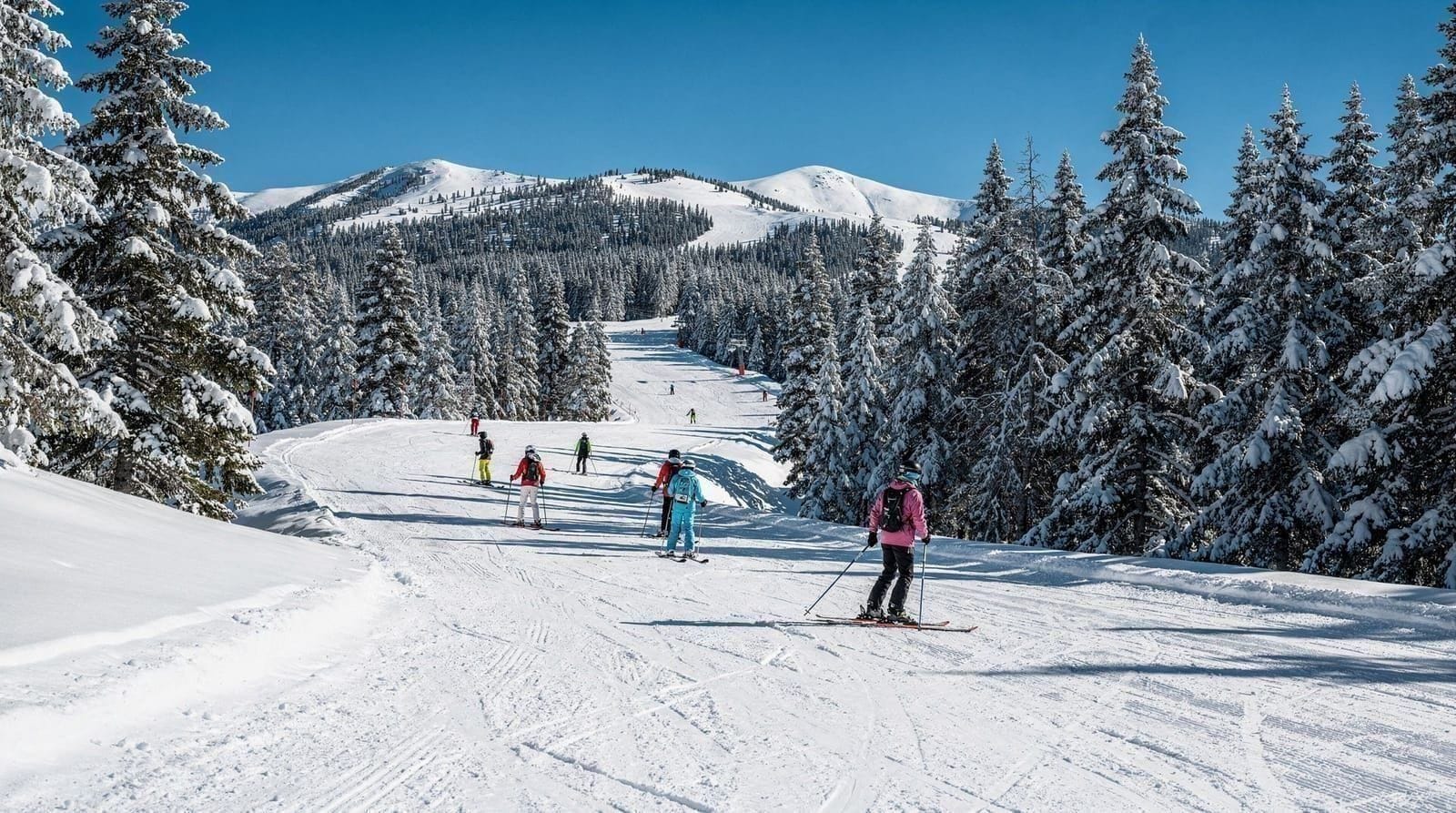
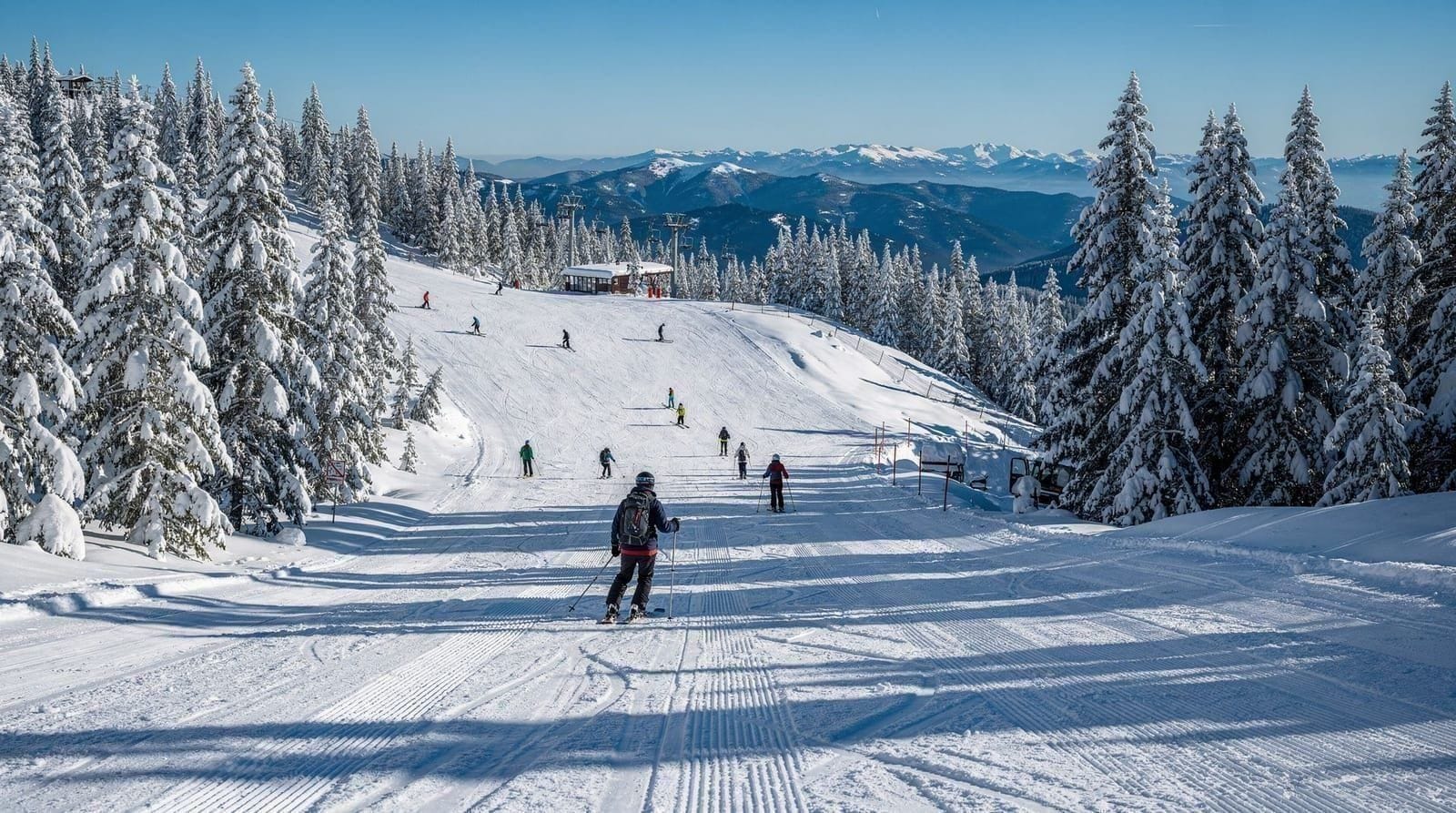
Mount Seymour Resort runs a modest ski and snowboard operation through the winter months, generally considered the most beginner-friendly of the North Shore’s three ski hills. The terrain is smaller in scale than both Grouse and Cypress, with a layout that suits first-time skiers, families, and casual weekend visitors rather than skiers chasing steep or technical runs. It’s a common choice for Vancouver locals introducing kids to skiing for the first time, partly because of the terrain and partly because lift tickets and the overall atmosphere tend to be less expensive and less crowded than the other two North Shore options.
Serious skiers looking for real vertical and technical terrain are generally better served elsewhere on the North Shore — Cypress Mountain has the more demanding runs of the three, and neither compares in scale to a destination resort like Whistler Blackcomb, roughly two hours further up the Sea-to-Sky Highway.
Summer hiking
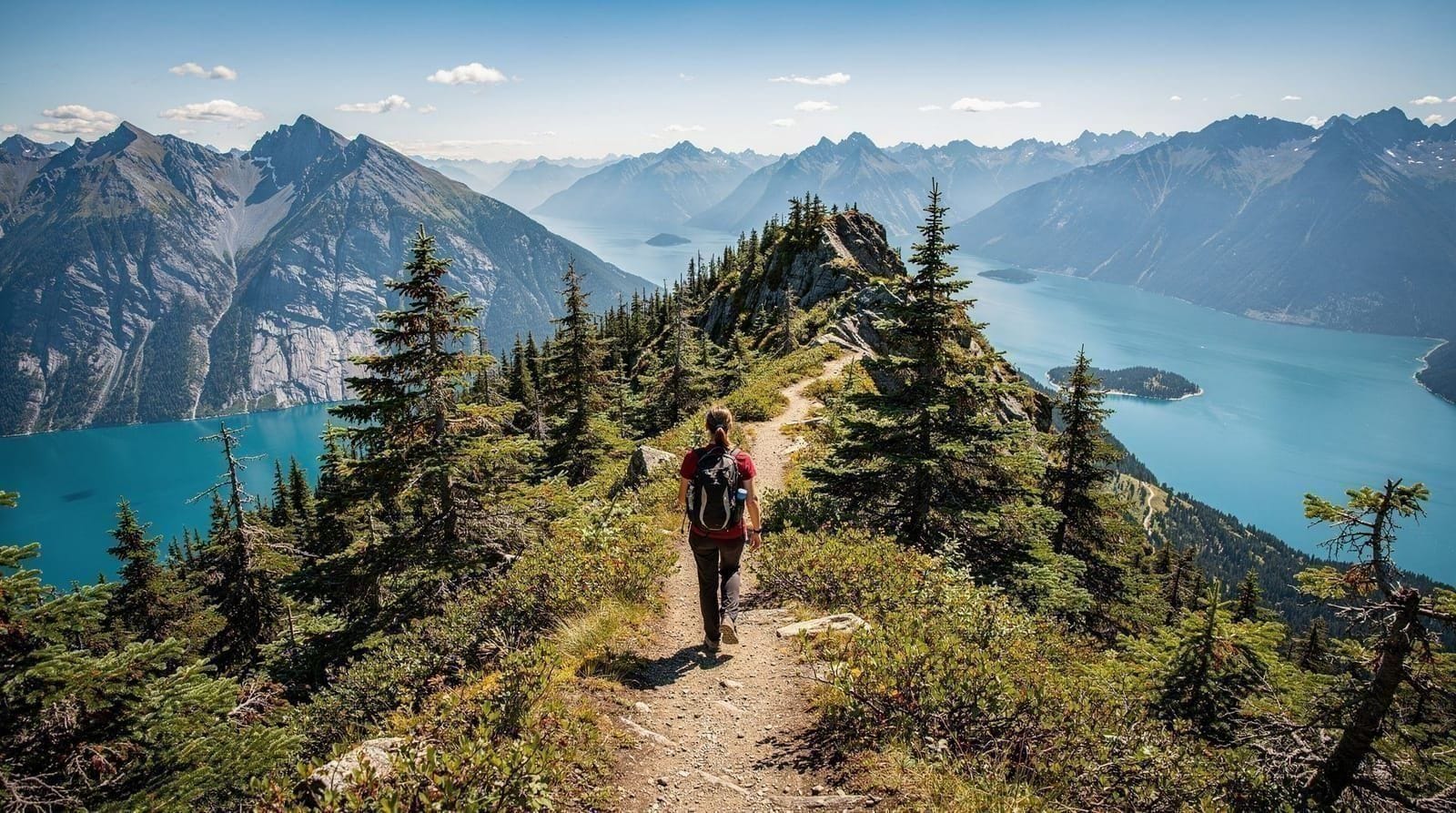
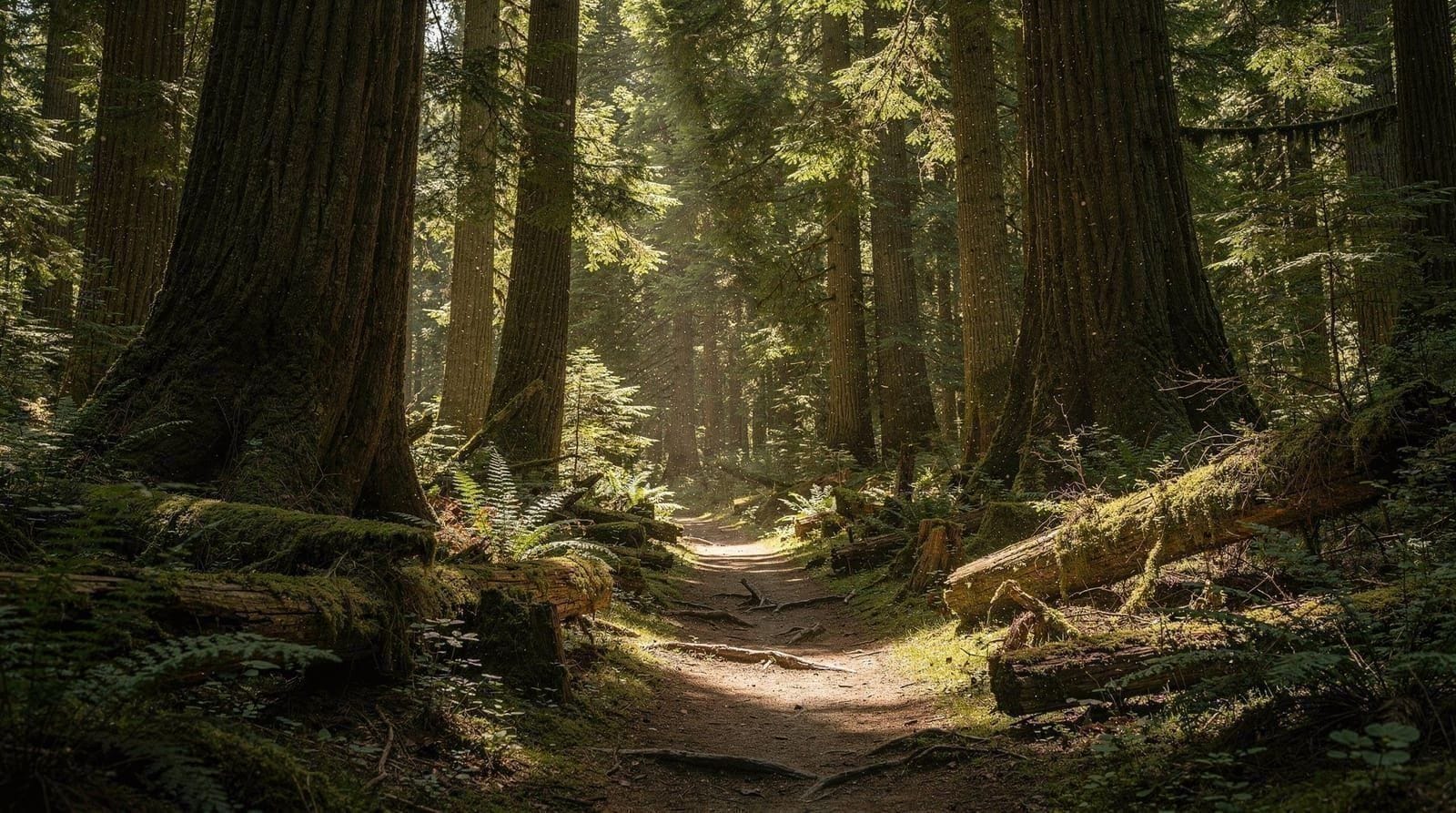
This is where Mount Seymour makes its strongest case. The park’s summer trail network offers legitimately good alpine hiking without the crowds that build up on more heavily trafficked North Shore trails. The Mount Seymour Trail itself climbs through subalpine terrain to a series of summit viewpoints, a moderate-to-strenuous hike rewarded with views across Indian Arm and the surrounding Coast Mountains.
Dog Mountain is a shorter, considerably easier option — a popular choice for visitors wanting a taste of alpine scenery without committing to a full summit hike, often done in under two hours round trip. Dinky Peak offers another route for hikers looking for a slightly longer outing with fewer people on the trail than the park’s more established routes.
What sets Seymour’s hiking apart isn’t necessarily the trails themselves — Grouse and Cypress both have worthwhile hiking too — but the crowd level. Because Seymour doesn’t draw the tourist volume that Grouse in particular does, its trails feel noticeably less busy even on a summer weekend, which is a real point in its favor for visitors who’ve found other North Shore trails too crowded for their taste.
Who actually visits Mount Seymour
Seymour’s visitor base skews heavily local rather than tourist. Vancouver residents use it for regular hiking, casual family ski days, and — because it requires no advance ticket purchase or tour booking — spontaneous trips that don’t need to be planned days in advance. Tourists staying downtown without a car are much less likely to make it out to Seymour than to Grouse, simply because the transit connections are weaker and there’s no organized tour infrastructure built around it the way there is for Grouse and Capilano.
That’s worth being upfront about for visitors deciding where to spend limited time: if the goal is an easy, bookable, well-signposted mountain experience, Seymour isn’t built for that role. If the goal is to see a genuinely local side of the North Shore’s mountains, away from tour buses, Seymour delivers on exactly that.
Being honest about what’s missing
There’s no ticketed attraction, no wildlife refuge, no lumberjack show, and no aerial tram at Mount Seymour — and it would be misleading to imply otherwise or to force a booking option where none exists. For visitors who specifically want a guided or ticketed North Shore mountain experience, particularly those without a car or a strong hiking background, the more realistic options are elsewhere on the North Shore.
A Grouse Mountain admission ticket covers a comparable aerial-tram-and-summit experience with organized attractions built in, and a Capilano Suspension Bridge ticket is a short drive from Seymour and offers the region’s other well-known ticketed nature experience — a forest canopy walk rather than a mountain summit, but a similarly accessible, no-planning-required outing.
Combining a self-driven Seymour hike with a ticketed stop at Grouse or Capilano on the same North Shore trip is a reasonable way to get both the local, uncrowded hiking experience and the more polished attraction side in a single day, provided there’s a car available.
Getting there and practical notes
Mount Seymour sits roughly 30-40 minutes from downtown Vancouver by car, slightly further than Grouse given its more easterly position on the North Shore. There’s no meaningful public transit route to the upper trailheads and ski area, so a car (or a ride from someone who has one) is effectively required — this is one of the bigger practical barriers for visitors without their own vehicle. Facilities at the base are modest: a day lodge serving the ski operation, parking, and trailhead access, without the broader visitor amenities found at Grouse’s summit chalet.
Trail conditions vary significantly by season — summer hiking is generally accessible from around July once snow clears from the higher trails, while the ski season typically runs from December through March depending on snowpack, similar to the other North Shore mountains. Anyone planning a summer hike should check current trail conditions before heading up, since snow can linger on higher sections of the Mount Seymour Trail later into the season than the lower trailheads suggest.
What a typical Seymour visit looks like
For a hiking-focused day, most visitors arrive by mid-morning, park at the base lot (which does fill on clear summer weekends, though nowhere near as reliably or as early as Grouse’s), and choose between the shorter Dog Mountain route for a two-to-three-hour outing or the longer Mount Seymour Trail for a half-day commitment. There’s no visitor center or staffed information booth comparable to what’s found at Grouse or Capilano — trail signage at the trailheads is the main source of on-site information, so checking route details and current conditions online before arriving is more important here than at the more heavily staffed North Shore attractions.
Winter visitors follow a similarly simple pattern: park at the day lodge, rent gear or bring your own, and ski a smaller, more intimate terrain layout than either Grouse or Cypress. Because the resort doesn’t draw the same volume of visitors, lift lines even on busy weekends tend to be shorter, and the overall pace of a Seymour ski day feels noticeably less rushed than a comparable day at a larger resort.
Provincial park status and conservation
Mount Seymour’s designation as a provincial park (Mount Seymour Provincial Park, distinct from the smaller ski resort operating within it) means a meaningful portion of the mountain is managed for conservation and low-impact recreation rather than commercial development. This is part of why there’s no gondola or expanded attraction infrastructure — provincial park status places real limits on the kind of development that’s been possible at Grouse, which sits on different land tenure. For visitors who value that distinction, Seymour’s undeveloped character isn’t an accident of underinvestment; it’s a direct consequence of how the land is protected and managed.
Comparing the trail difficulty honestly
Dog Mountain is genuinely approachable for most fitness levels — a well-marked, relatively short trail with modest elevation gain that rewards hikers with a legitimate alpine viewpoint for a fraction of the effort of the full Mount Seymour Trail. The Mount Seymour Trail itself, by contrast, is a real workout, with sustained elevation gain over exposed subalpine terrain that can feel considerably more demanding than its modest distance suggests, particularly for hikers unaccustomed to sustained climbing. Visitors unsure of their fitness level or short on time should start with Dog Mountain rather than committing to the full summit trail and discovering partway up that they’ve underestimated it.
Dinky Peak and lesser-known routes
Beyond the two most commonly cited trails, Seymour’s park boundary contains a handful of quieter routes that see even less traffic than Dog Mountain or the main summit trail. Dinky Peak, reached via a spur off the main trail network, is one of these — a legitimate summit with its own views, but rarely crowded even on days when the more popular routes see steady hiker traffic. These lesser-known trails are a reasonable option for hikers who’ve already done Seymour’s headline routes and specifically want to explore further without retracing familiar ground, though they generally require more trail-reading skill and self-sufficiency than the well-marked main routes, given lighter signage and less consistent trail maintenance.
Snowshoeing and winter non-ski activities
Seymour isn’t only a ski hill in winter — like Cypress, it maintains snowshoeing trails separate from its downhill ski runs, offering a lower-cost, lower-skill winter activity for visitors who want to be out in the snow without downhill ski or snowboard equipment. Given Seymour’s already low-key character, its snowshoeing trails tend to be genuinely quiet even by North Shore standards, appealing to visitors who find Cypress’s or Grouse’s winter crowds too much and want the most solitary version of a North Shore snow day.
Pairing Seymour with a nearby ticketed attraction
For visitors staying on the North Shore for a full day and wanting to combine Seymour’s quiet trails with something more structured, the geography works reasonably well. Deep Cove sits a short drive from Seymour’s base and offers an easy, low-commitment walk of its own, while a return toward central North Vancouver puts Capilano and Grouse within easy reach for an afternoon stop after a Seymour morning hike.
A visitor who spends the morning on the Mount Seymour Trail and the afternoon at Grouse, using a Grouse Mountain admission ticket, gets a genuinely varied North Shore day — quiet alpine hiking followed by wildlife and a tram ride — without excessive driving between stops, since both sit within North Vancouver’s broader mountain corridor.
Visitors who’d rather pair Seymour with a rainforest-style walk instead of another mountain summit should also consider the North Shore’s lower-elevation trail network, which offers an easier complement to a demanding morning hike.
Views from the top
Despite its lower profile compared to Grouse and Cypress, Mount Seymour’s summit viewpoints hold up well against either — on a clear day, hikers reaching the higher points along the Mount Seymour Trail get views across Indian Arm, toward the Fraser Valley, and out over the Strait of Georgia toward Vancouver Island, a genuinely broad panorama that rivals what’s visible from Grouse’s summit, without the crowd competing for the same viewpoint. Photographers specifically looking for an uncrowded shot of the North Shore’s alpine terrain, without other hikers or infrastructure in frame, will generally find Seymour easier to work with than either of the other two mountains.
Equipment and preparation notes
Because Seymour has no staffed rental infrastructure comparable to a resort-scale operation, hikers and skiers should come prepared with their own gear or arrange rentals in advance through North Vancouver-area shops rather than expecting to sort out equipment on arrival. For summer hikers, this mainly means proper footwear and layers rather than anything specialized, but for winter skiers, checking rental availability ahead of a visit avoids arriving to find limited on-site options compared to what a larger resort like Grouse or Whistler Blackcomb would offer.
Seymour compared to a full alpine day trip
For visitors who’ve already experienced Seymour and are looking for a bigger alpine challenge on a subsequent Vancouver-area trip, it’s worth noting that Seymour, while a genuine alpine environment, is considerably more modest in scale than destinations further up the Sea-to-Sky corridor. Hikers who found Seymour’s trails satisfying but want more elevation, more distance, or more dramatic scenery should look toward Whistler-area summer hiking or the more demanding alpine lake hikes accessible from the same corridor, which offer a meaningfully bigger undertaking than anything within Mount Seymour Provincial Park’s boundaries.
Final take
Mount Seymour rewards visitors who specifically want an unpolished, local mountain experience and have the means (a car, comfort with independent trail navigation) to make the most of it. It’s not the right choice for a first-time visitor with only a few hours and no car, and it’s honest to say so rather than oversell it as equivalent to Grouse’s more accessible, more curated offering. But for the right traveler — someone staying with locals, renting a car, or simply wanting a genuine break from Vancouver’s more tourist-oriented circuit — Seymour delivers something the other two North Shore mountains, for all their strengths, don’t quite match: a plain, quiet mountain without a ticket booth in sight.
Seymour and North Vancouver’s broader identity
Mount Seymour sits within North Vancouver, a municipality that itself blends dense residential neighborhoods with direct access to genuine wilderness in a way that’s fairly unusual for a city of its size. Seymour is, in many ways, the clearest expression of that identity — a mountain that most North Vancouver residents can reach in well under an hour from home, treated less as a special-occasion destination and more as an extension of the neighborhood’s outdoor recreation options. Visitors interested in understanding how locals actually use the North Shore’s mountains, rather than just visiting the polished tourist version of it, will get a more accurate picture from a Seymour visit than from Grouse alone.
What to expect if you visit on a weekday versus a weekend
Weekday visits to Seymour are noticeably quieter even by the mountain’s already low-key standards, since much of its local visitor base skews toward weekend outings around work and school schedules. A weekday summer hike can mean genuinely having long stretches of trail to yourself, a contrast worth seeking out specifically for visitors who’ve found other North Shore trails, including parts of Grouse and even some Cypress routes, too crowded for their taste on a typical weekend. Weekend visits bring more company but still nothing approaching Grouse’s crowd levels — Seymour simply doesn’t have the visitor volume to feel busy in the way a major tourist attraction does, even at its most popular times.
Combining Seymour with a broader North Vancouver stay
Visitors basing several days in North Vancouver rather than downtown Vancouver have an easier time fitting Seymour naturally into a broader stay, since it sits within the same general area as other North Vancouver attractions without requiring a dedicated cross-town trip. This makes Seymour a particularly good fit for longer Vancouver stays where a visitor has already covered the city’s headline attractions and is looking for a genuine local experience on a quieter day, rather than for a first-time visitor trying to see as much as possible in a short trip.
What to bring for a summer hike
Because Seymour’s trailheads have minimal staffed infrastructure, coming prepared matters more here than at Grouse or Capilano, where a summit chalet can bail out an underprepared visitor. Proper hiking shoes rather than sneakers, layers for temperature swings between the parking lot and exposed subalpine sections, more water than feels necessary, and a paper map or downloaded offline map are all worth having, since cell coverage is inconsistent once you’re away from the base parking area.
Snow can linger on the Mount Seymour Trail’s higher sections well into early summer even when the lower trailheads look fully clear, so checking current conditions before setting out avoids an unpleasant surprise partway up. For a broader roundup of how Seymour’s trails stack up against other North Shore options, the best hikes near Vancouver guide is a useful starting point.
Seymour versus Cypress for a first-time visit
Travelers deciding between Seymour and Cypress Mountain for a single North Shore mountain stop should weigh crowd tolerance against terrain ambition. Cypress offers more demanding hiking and skiing plus a stronger name recognition from its Olympic history, which also means more visitors competing for the same trails and parking.
Seymour trades that polish for genuine quiet, at the cost of less dramatic terrain for hikers or skiers who want a real workout. Neither is objectively better; the choice comes down to whether solitude or terrain ambition matters more for a given visit. Visitors who eventually want the full destination-scale mountain experience should look toward Whistler rather than expecting Seymour or Cypress to deliver it.
Frequently asked questions about Mount Seymour guide
Is there an entrance fee for Mount Seymour Provincial Park? No — access to the park and its hiking trails is free year-round. Only the ski resort operation within the park (lift tickets, rentals, lessons) charges a fee, and only during winter season.
Can you visit Mount Seymour without a car? Not easily. There’s no meaningful transit route to the upper trailheads or ski area, so a car, rideshare, or a ride from someone with one is effectively required — one of the clearest practical differences from Grouse and Capilano, both reachable by bus.
Top experiences
Bookable activities with verified prices and instant confirmation on GetYourGuide.