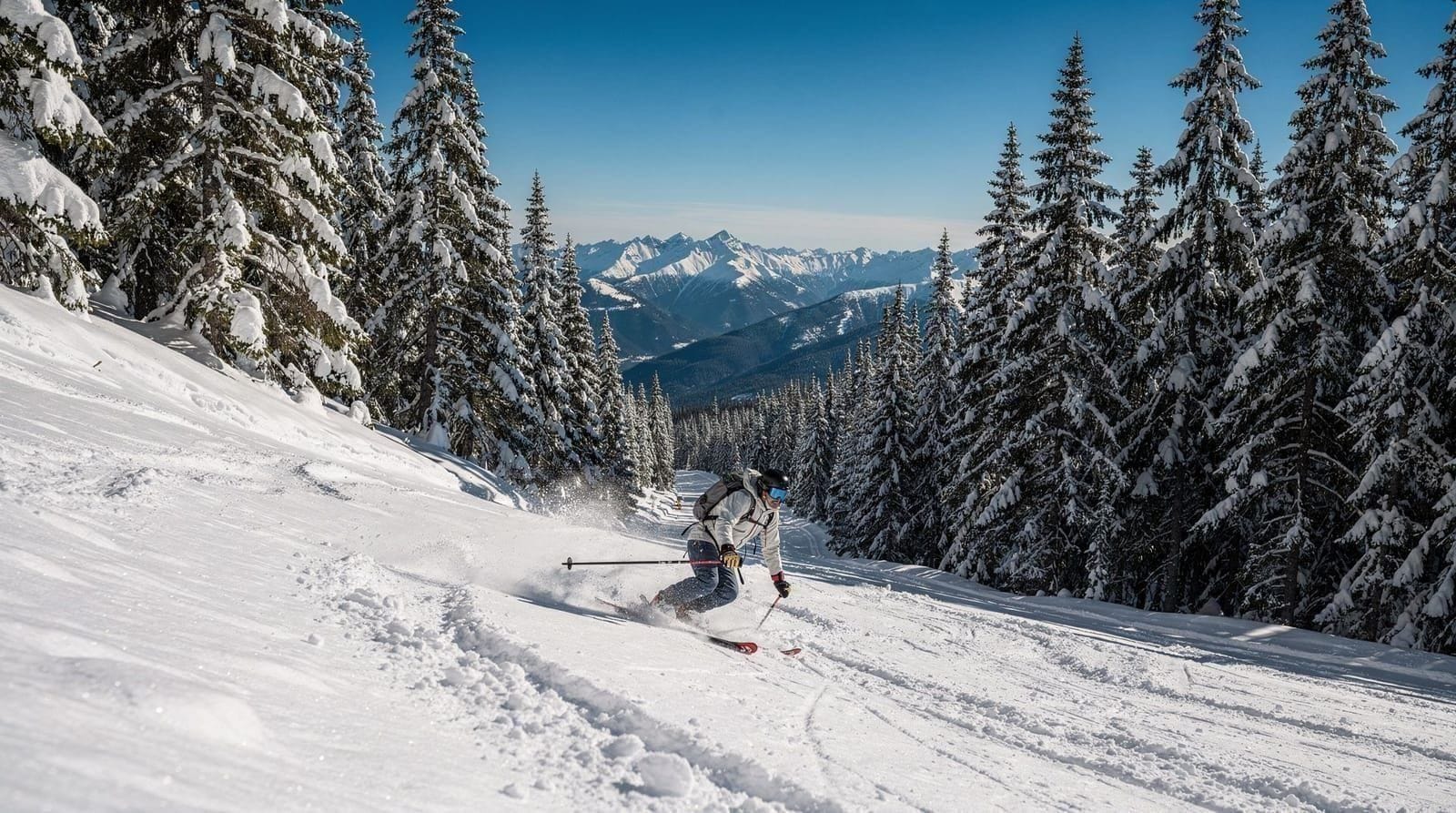
Whistler skiing — season, prices and what to expect
From Vancouver: Full-Day Whistler Tour
Duration: 10.5 hours
When can you ski at Whistler and how much does it cost?
Whistler Blackcomb's ski season runs roughly late November through mid-May, one of the longest in North America. A single-day lift ticket runs approximately CAD 130-220 depending on how far ahead you book and whether it's a peak or value day; multi-day and advance online tickets bring the per-day cost down significantly.
Whistler Blackcomb is the reason a lot of skiers plan a Vancouver trip in the first place, and it’s worth being upfront about scale before anything else: this is the largest ski resort in North America by skiable terrain, spread across two connected mountains linked by the Peak 2 Peak Gondola, roughly two hours north of the city. It’s not a casual add-on to a Vancouver itinerary — it’s a destination in its own right that happens to sit within day-trip range.
| Where | Whistler Blackcomb, ~2 hrs north of Vancouver |
| Cost | Around CAD 130-220 per day (advance vs. walk-up) |
| Season | Late November through mid-May |
| Getting there | Self-drive, shuttle, or guided tour via Hwy 99 |
| Best for beginners | Dedicated learning zones near both village bases |
The season, month by month
Whistler’s official season typically opens in late November and runs through mid-May, close to 200 operating days depending on snowfall. November openings depend heavily on early snow accumulation at altitude — some years the upper mountain is skiable by mid-November, others the full lift network doesn’t come online until early December.
December through March is peak season: the most reliable coverage, the coldest and driest snow, and by far the heaviest crowds, especially around Christmas/New Year and BC’s February school break. April brings spring skiing — warmer temperatures, softer snow by midday, and noticeably thinner lift lines, which a lot of experienced skiers actually prefer over the peak-season crush. May is the tail end, with only the highest terrain still open and a shorter operating window each day.
Coastal BC snow behaves differently from interior powder resorts like Whistler’s Rocky Mountain competitors — it tends to be heavier and wetter, which affects both how it skis and what gear works best (more on that below). Rain at village elevation during a warm spell isn’t unusual even mid-winter, while the upper mountain stays snow.
What a lift ticket actually costs
Pricing at Whistler works on a dynamic model, similar to airline tickets: walk-up single-day prices at the ticket window can run CAD 200-220 on the busiest peak days, while booking the same day online in advance typically brings that down to roughly CAD 130-170. Multi-day tickets lower the average per-day cost further, and prices vary meaningfully by day of week and season — a Tuesday in early December costs a fraction of what New Year’s Eve week does. Value/off-peak days, usually early and late season plus some midweek dates, are the cheapest way to ski Whistler without a season pass.
For skiers planning multiple trips to Whistler, or trips to other resorts in the same season, Whistler Blackcomb is part of Vail Resorts’ Epic Pass network, which bundles access to dozens of resorts worldwide under one seasonal fee. It only pencils out financially for frequent skiers — a single-trip visitor is almost always better off with a day ticket bought as far ahead as reasonably possible.
Getting there without your own car
Highway 99, the Sea-to-Sky Highway, connects Vancouver to Whistler in roughly two to two-and-a-half hours under normal conditions, longer in snow or on peak travel days (Friday afternoons and Sunday evenings in particular). Winter driving on this route requires proper winter tires — BC law mandates them on this highway from October 1 through April 30 — and conditions can shift quickly between sea-level rain in Vancouver and heavy snow partway up the corridor.
Travelers without a car, or who’d rather not deal with the drive in winter conditions, have solid options. A full-day Whistler tour from Vancouver handles the driving and typically includes stops along the Sea-to-Sky corridor, useful for a day that mixes some sightseeing with time on the mountain.
For skiers who want more control over timing — an early start to maximize first-tracks time, or a later return to catch après without rushing — a private transfer to Whistler with flexible stops is worth the premium over a shared shuttle. Scheduled shuttle bus services also run multiple times daily from downtown Vancouver and Vancouver International Airport for travelers on a tighter budget.
Terrain by ability level
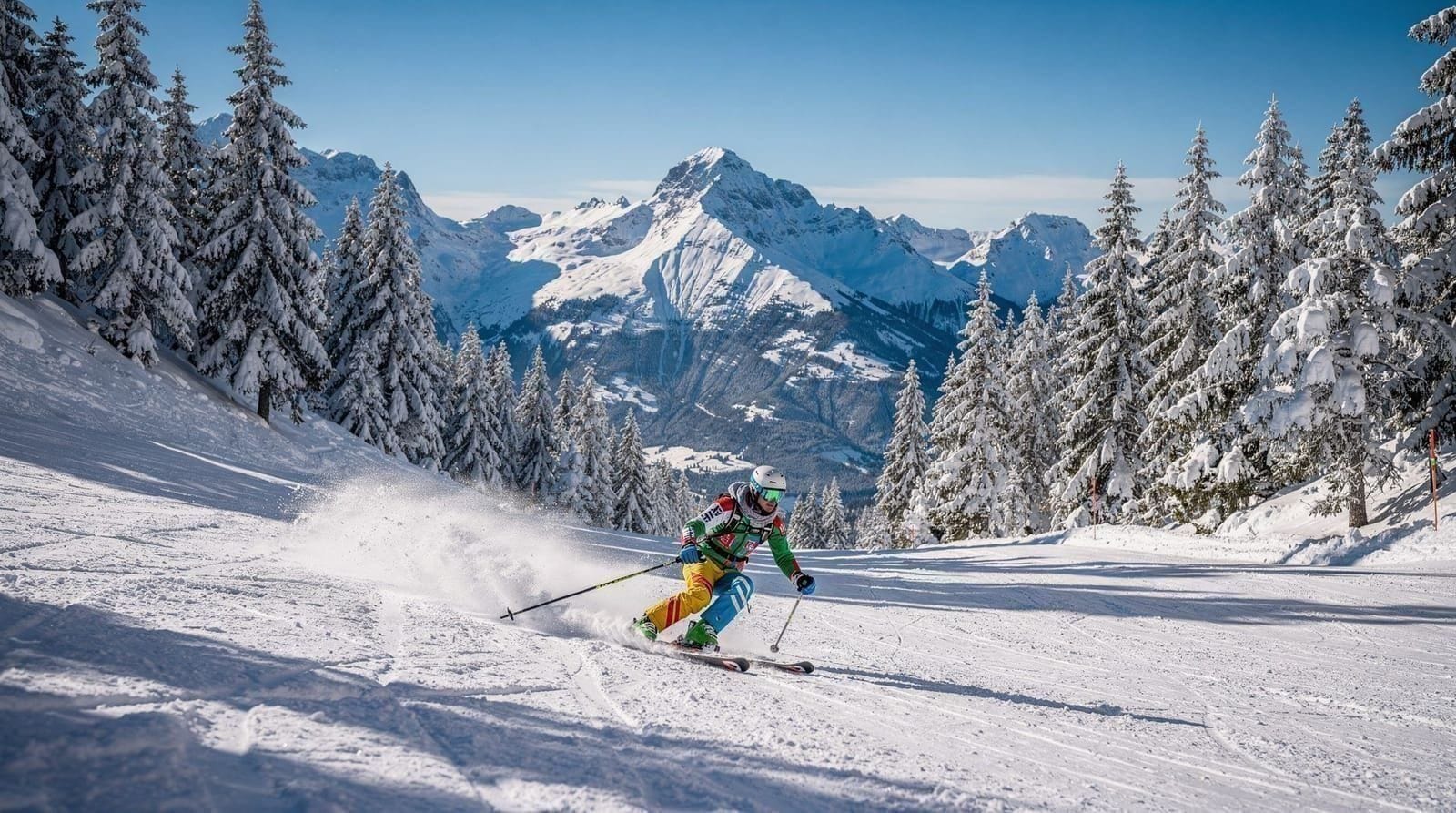
Whistler and Blackcomb together offer terrain across every ability level, but the resort’s global reputation rests on its advanced and expert terrain — alpine bowls, glacier skiing, and steep chutes that draw serious skiers from well outside Canada. Beginners shouldn’t be put off by that reputation: both mountains have dedicated learning zones near the village base with gentler lifts and well-established ski school programs, and it’s entirely possible to have a full, satisfying beginner day without touching the alpine terrain the marketing photos feature.
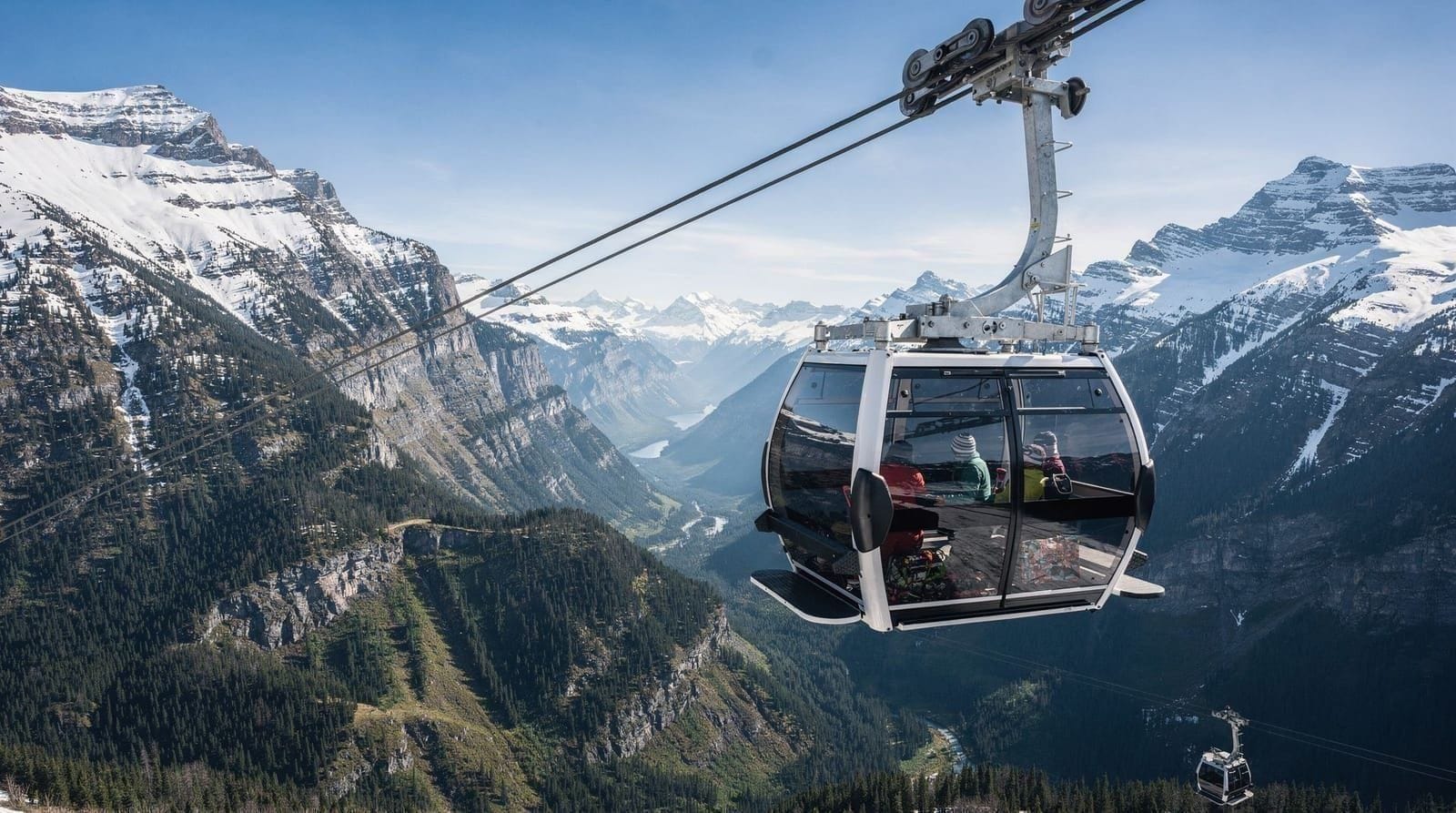
Intermediate skiers get the most terrain volume — long groomed runs down both mountains, connected by the Peak 2 Peak Gondola, a 4.4-kilometre span between the two peaks that lets skiers move between Whistler and Blackcomb without descending to the village first. For skiers looking to push beyond resort boundaries into backcountry terrain, an introduction to backcountry skiing and splitboarding pairs a certified guide with avalanche-safety basics — not something to attempt independently without training, given the real avalanche risk in BC’s backcountry.
Renting gear and what to pack
Full rental packages — skis or snowboard, boots, poles, and helmet — are widely available both at the base areas and throughout Whistler Village, and most visiting skiers rent rather than travel with their own equipment. During peak weeks (Christmas, February break, spring break), booking rentals ahead of arrival avoids the longest counter waits on the first morning of a trip.
Because coastal BC snow runs wetter than dry interior powder, genuinely waterproof outer layers matter more here than at a drier resort — a soaked jacket by early afternoon ruins a ski day fast. Insulated mid-layers, waterproof gloves, and eye protection (goggles for snow, sunglasses for bluebird days) round out the basics. Sun protection is easy to forget on an overcast coastal day but worth applying anyway, since UV exposure increases with altitude regardless of cloud cover at village level.
Whistler Village in winter
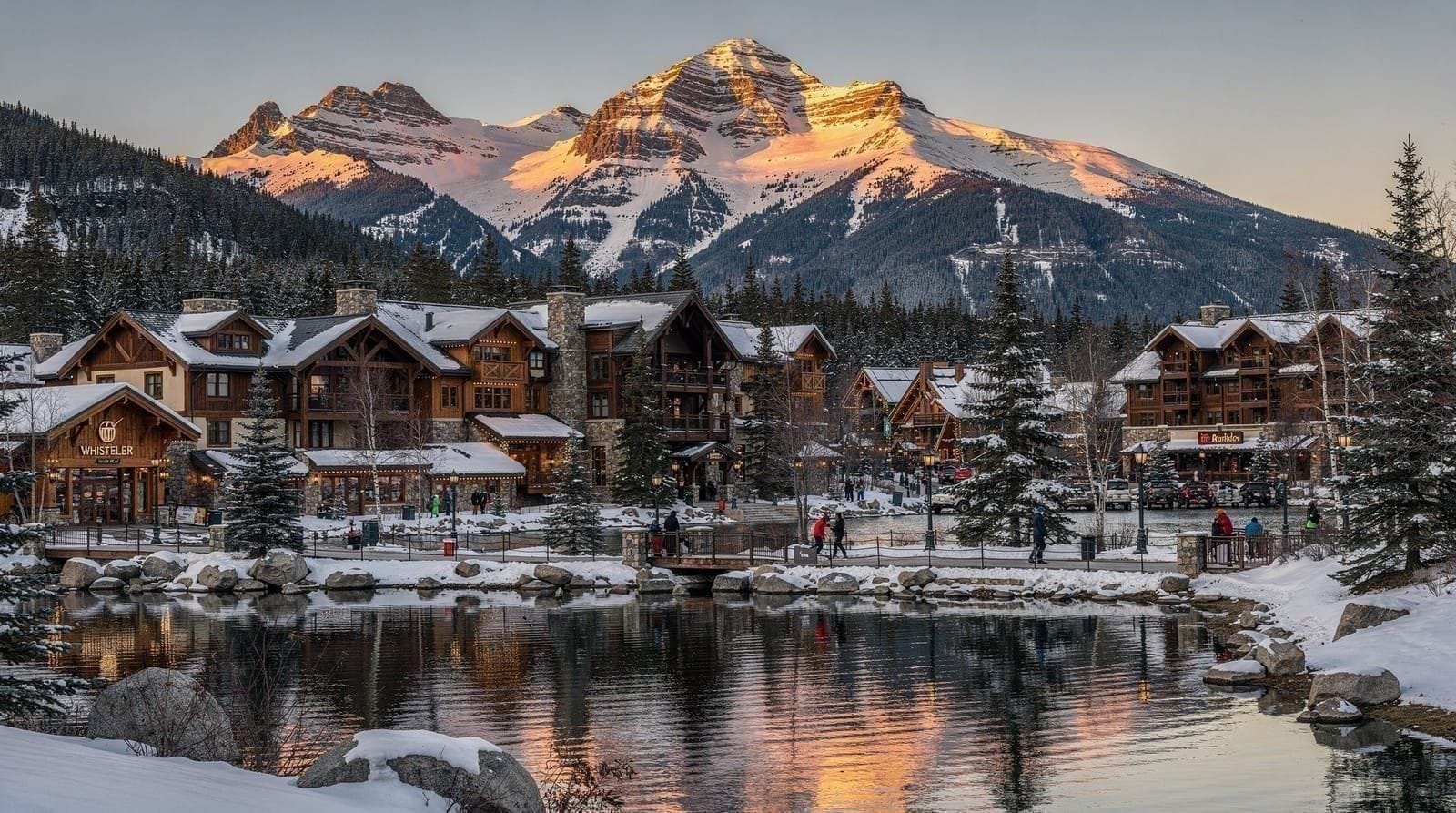
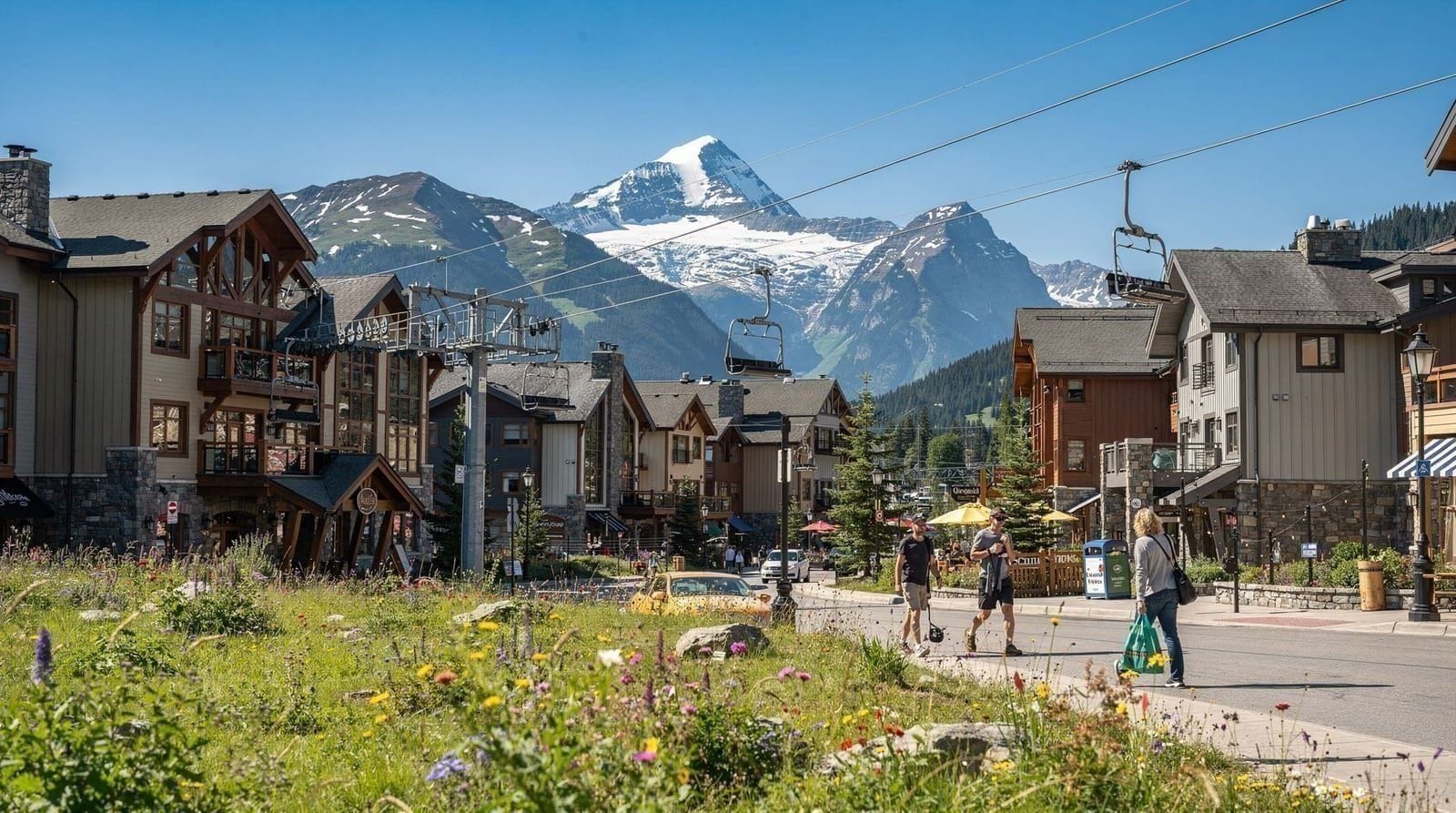
The base village is a pedestrian-only core built specifically around the resort, dense with ski-in/ski-out lodging, restaurants, gear shops, and a genuinely active après-ski scene once the lifts close. It’s compact enough that most visitors don’t need a car once they’ve arrived — everything from lodging to lift access sits within a short walk. For a scenic mid-mountain break between runs, the private Whistler and Peak 2 Peak Gondola tour is a useful option for non-skiing companions traveling with a ski group who still want to experience the alpine views.
Whistler versus Vancouver’s local ski hills
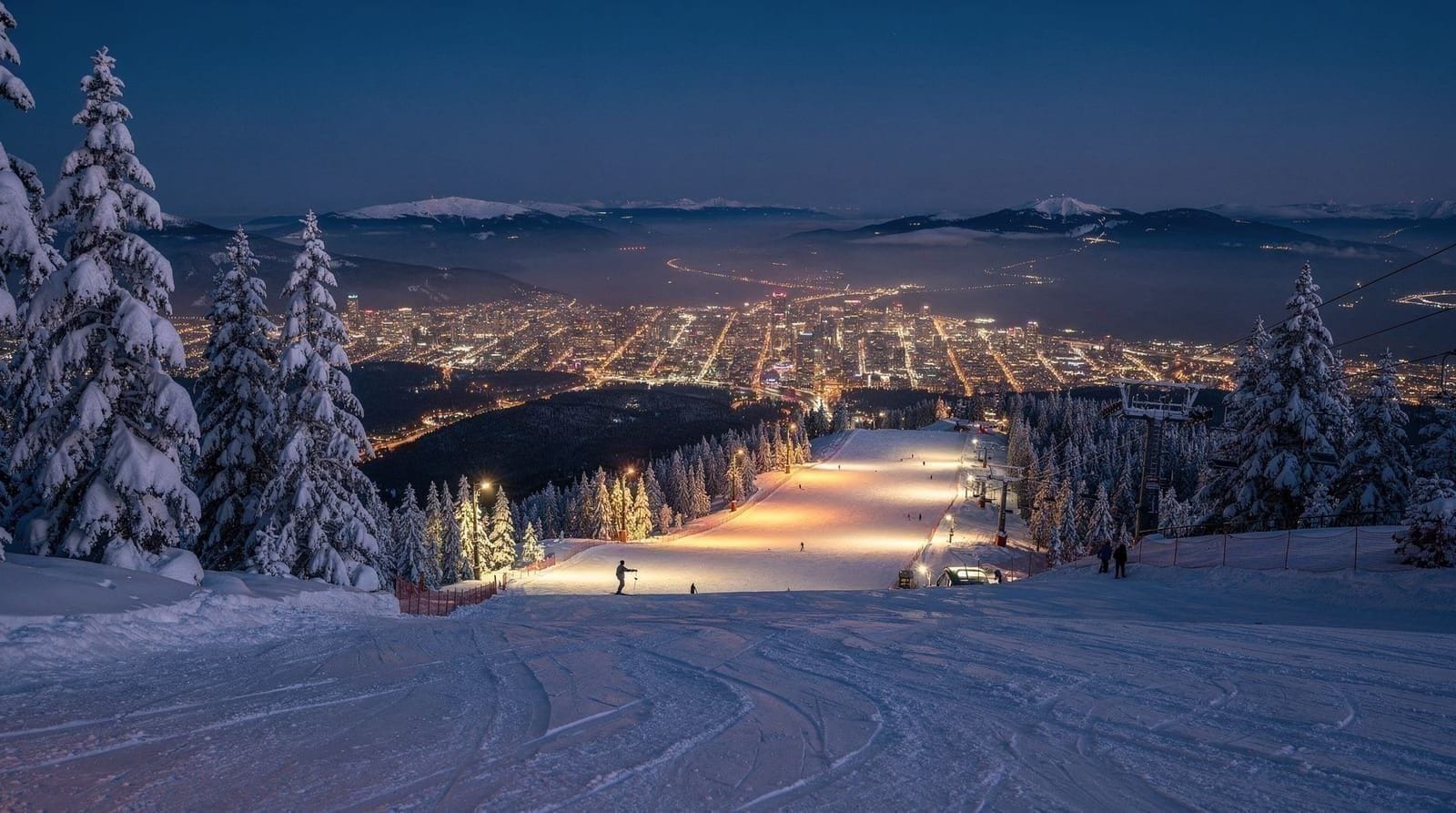
Whistler isn’t the only place to ski near Vancouver, and it’s worth being clear about the trade-off. Grouse Mountain, Cypress Mountain and Mount Seymour on the North Shore are all 20-40 minutes from downtown, with day lift tickets running roughly CAD 65-110 depending on the hill — meaningfully cheaper than Whistler and requiring no highway driving.
What they don’t have is Whistler’s scale, alpine elevation, or reliability of snow — the North Shore hills sit lower and closer to the coast, which means more weather variability and a shorter effective season most years. For a full side-by-side breakdown, see Whistler versus Grouse for skiing and the broader BC ski season overview.
The realistic way most Vancouver-based skiers think about it: the North Shore hills work for an after-work evening session or a half-day between other plans, while Whistler is the trip you actually plan a day — or a multi-night stay — around. Visitors staying more than two nights in Vancouver with a genuine interest in skiing are almost always better served allocating a full day (or an overnight) to Whistler rather than splitting ski time across smaller hills.
Snowboarding versus skiing at Whistler
Whistler treats snowboarding and skiing as genuinely equal citizens rather than one being a secondary afterthought, a legacy of the resort’s early and enthusiastic embrace of snowboarding culture through the 1990s and 2000s. Terrain parks, half-pipes and freestyle features are well maintained on both mountains, and rental packages, lessons and gear shops all serve snowboarders with the same depth as skiers. First-time snowboarders should expect a somewhat steeper initial learning curve than first-time skiers typically report, and a first lesson is worth prioritizing even more strongly for snowboarding than for skiing given how different the balance and turning mechanics are from anything most people have done before.
Non-skiing options if the weather turns
Coastal storms can shut down or seriously limit visibility on parts of the mountain, particularly the alpine zones, without much warning. On a genuinely poor-visibility day, the village itself — shops, spas, restaurants — offers a reasonable fallback, and the Peak 2 Peak Gondola sometimes remains a scenic ride even when ski conditions are marginal lower on the mountain. Checking the resort’s own snow report and lift status the morning of a trip, rather than relying on a general Vancouver forecast, is the more reliable way to judge whether a planned ski day is worth the drive.
Solo skiers and joining group lessons
Solo skiers and snowboarders are well served at Whistler, since group lessons naturally mix travelers who arrived separately, and the resort’s scale means there’s rarely a shortage of other visitors at a similar ability level to ski alongside informally between lift rides. Solo travelers on a day trip from Vancouver without a car should factor in that a private transfer to Whistler gives more control over timing than a shared shuttle, useful for maximizing time on snow without waiting on a group’s schedule.
Where skiing fits in a broader Vancouver trip
For visitors combining skiing with other Vancouver sightseeing, a 5-day Vancouver and Whistler itinerary is the most common structure — a few days in the city bookended by an overnight or two in Whistler for actual ski time, rather than trying to squeeze skiing into a single rushed day trip. Anyone planning a winter Vancouver visit specifically around snow sports should also check the best time to visit tool for current season status and snow conditions before locking in dates, since opening and closing dates shift year to year with snowfall.
Booking strategy: how to actually save money on lift tickets
Whistler’s dynamic pricing rewards planning more than almost any other cost in a Vancouver-area trip. Booking 30-plus days ahead typically locks in the lowest available rate for a given date, while booking inside a week of arrival often means paying close to walk-up pricing regardless of how far off-peak the day technically is.
Weekday tickets (Tuesday through Thursday in particular, outside holiday weeks) are consistently cheaper than weekend dates, and the very first and last weeks of the season — mid-to-late November and late April into May — carry the lowest prices of the entire year alongside genuinely decent skiing when snow cooperates. Multi-day tickets purchased together, even for non-consecutive days, generally beat the sum of separate single-day purchases, worth doing for any visitor planning more than one day on the mountain during a longer Vancouver stay.
Equipment maintenance and what rental packages actually include
A standard rental package covers skis or a snowboard, boots, poles (for skiers), and a helmet, with bindings adjusted to the renter’s weight and ability level at pickup — a process that typically takes 15-20 minutes at the counter during a quiet period, longer during peak weeks. It’s worth trying boots on and walking around briefly before leaving the rental shop, since an ill-fitting boot is one of the most common sources of an otherwise good ski day going wrong, and most shops will swap a poor-fitting boot on the spot rather than requiring a return trip later.
Ski schools and lessons
Whistler Blackcomb runs a large, well-established ski and snowboard school with programs split by age and ability — dedicated kids’ programs for young beginners, teen-focused group lessons, and adult private or group instruction. First-time skiers and snowboarders, regardless of age, are generally better served booking at least a half-day lesson rather than attempting to self-teach on unfamiliar terrain with rented gear; the beginner zones are specifically designed around the ski school’s teaching progression, and instructors know which lifts and runs suit a true first-timer versus someone with a session or two of prior experience.
Lesson packages typically bundle rental gear and sometimes a beginner-zone lift ticket into one price, worth comparing against booking each piece separately since the bundled rate is often the better value for a genuine first-timer.
Where to stay for a ski trip
Whistler Village itself offers the most convenience — ski-in/ski-out or near-ski-in properties putting guests within a short walk of the lifts, at a price premium that reflects that convenience. Creekside, a smaller satellite base area south of the main village, offers its own gondola access to Whistler Mountain with a noticeably quieter, less crowded base experience and generally somewhat lower accommodation rates, a reasonable option for visitors who don’t need to be in the thick of the main village’s restaurant and nightlife scene.
Upper Village, at the base of Blackcomb Mountain, splits the difference — walkable to the main village but with its own lift access and a slightly different atmosphere. Day-trippers from Vancouver don’t need to weigh this at all, but anyone staying overnight to make the most of a ski trip should factor base-area choice into both budget and how much walking they’re willing to do in ski boots.
Après-ski and dining
Whistler Village’s après-ski scene is a genuine part of the experience rather than an afterthought — bars and restaurants near the base areas fill quickly once lifts close for the day, particularly on weekends and holiday weeks, with some of the most popular spots developing lines within the first hour after last chair. Dining spans the full range from quick, casual options aimed at hungry skiers refueling between runs to higher-end restaurants better suited to a relaxed dinner after a full ski day. Village grocery and market options exist for visitors staying multiple nights who’d rather self-cater some meals, a real cost-saver given how expensive dining in a captive resort village can run, especially during peak weeks.
Multi-day passes and value skiing
Visitors planning three or more ski days within a single trip, even without qualifying as frequent enough skiers to justify a full Epic Pass, should compare multi-day ticket pricing carefully against buying single days as needed — the per-day rate drops meaningfully with each additional day added to a single purchase, and Whistler Blackcomb periodically runs specific multi-day promotional pricing worth watching for when planning a trip several months out.
For visitors who ski infrequently but do plan a return trip to Whistler or another Epic-affiliated resort within the same season, running the math on a season pass against several single-day ticket purchases is worth the ten minutes it takes, since the break-even point is often lower than people assume — sometimes as few as four or five ski days across a season.
Traveling with non-skiers
Not everyone in a ski group wants to ski, and Whistler handles mixed-interest groups reasonably well. Non-skiing companions can ride the Peak 2 Peak Gondola as a scenic experience on its own, browse Whistler Village’s shops and spas, or book a snowshoeing or sightseeing add-on that doesn’t require ski gear at all. Village-level activities — dining, shopping, spa treatments — run on a normal daily schedule independent of lift hours, so a non-skier isn’t stuck waiting around with nothing to do while the rest of the group is on the mountain.
Travel insurance and medical considerations
Skiing at a resort the scale of Whistler means genuine access to on-mountain first aid and ski patrol, but travelers should confirm their travel insurance policy actually covers winter sports injuries before relying on it — some standard policies exclude skiing and snowboarding entirely or require a specific add-on rider, and a mountain evacuation or hospital visit without adequate coverage can be a genuinely large unplanned expense. Checking this detail before departure, rather than after an injury occurs, is a simple step worth taking seriously given how physically demanding the sport can be even for experienced skiers.
Basic safety and injury considerations
Skiing carries real injury risk, and Whistler’s terrain, while well patrolled, includes genuinely challenging sections that catch out skiers who venture beyond their actual ability level. Staying within marked, ability-appropriate terrain, wearing a helmet (increasingly standard rather than optional among visiting skiers), and building in a lesson for anyone without recent skiing experience are the most effective ways to reduce risk. Ski patrol operates throughout the resort and responds to incidents on-mountain; travel insurance covering winter sports specifically is worth confirming before a ski trip, since standard travel insurance sometimes excludes skiing-related injuries or requires an add-on rider.
What a first-timer’s day actually looks like
For a visitor booking a single ski day with rentals and a lesson, the practical shape of the day runs something like: arriving 60-90 minutes before the lesson start time to collect rental gear and get properly fitted, a morning group or private lesson of 2-3 hours, a lunch break in the village, and an afternoon of practicing independently on beginner-zone terrain before returning gear at day’s end. Building in this buffer, rather than assuming rental pickup and lesson start can happen back-to-back with no slack, avoids a rushed and stressful start to what should be an enjoyable first day on snow.
Late-season and early-season considerations
Visitors booking at either edge of the season — late November/early December or April/May — should build in some flexibility, since terrain and lift operation both depend on snow conditions that can shift year to year. Early season sometimes means limited terrain open while snowpack builds at lower elevations; late season sometimes means lower-mountain runs closing first while upper-mountain terrain stays skiable into May. Checking current terrain and lift status close to a planned trip date, rather than assuming full-mountain operation at either edge of the season, avoids disappointment.
The honest bottom line
Whistler delivers on its reputation — this is genuinely one of the best ski resorts in North America, not just a well-marketed one — but it demands real commitment: a two-hour drive each way, lift prices that reward advance booking, and enough terrain that a single day only scratches the surface. Skiers with limited time or budget who mainly want “a day on snow near Vancouver” are often better served by Grouse or Cypress; skiers who want the actual Whistler experience should plan around it properly rather than treating it as an afterthought squeezed into a packed city itinerary.
Renting versus buying an Epic Pass for a single trip
For the overwhelming majority of Vancouver-based visitors — a single ski trip of one to a few days — a day ticket booked online well ahead of arrival remains the more sensible financial choice over an Epic Pass, whose value depends on multiple trips across a season. The break-even point for an Epic Pass generally falls somewhere around four to six ski days, which a single Vancouver visit rarely reaches unless it’s specifically built as a multi-day ski trip rather than a city stay with a ski day added on.
Traveling to Whistler with rental ski gear versus your own
Visitors flying into Vancouver with their own skis or snowboard face genuine airline baggage fees and the hassle of transporting gear through the city before reaching the mountain, which is why most visiting skiers choose to rent locally instead. Whistler’s rental selection is broad enough that serious skiers with specific preferences can usually find comparable performance gear to their own equipment, making the rental-versus-own decision mostly about convenience and cost rather than a meaningful compromise in ski quality for all but the most particular expert skiers.
Frequently asked questions — Whistler skiing
When does ski season start and end at Whistler?
The season typically opens in late November and runs through mid-May, though exact dates shift year to year depending on snowfall. December through March is peak season with the most reliable snow and the biggest crowds; April and May bring spring skiing conditions with thinner lines and lower prices.How much does a Whistler lift ticket cost?
Walk-up single-day tickets can run as high as CAD 200-220 on peak days, but booking online in advance typically brings that down to roughly CAD 130-170, and multi-day tickets lower the per-day cost further. Value and off-peak days are cheaper than Christmas week, February school break, and spring break weeks.Do I need my own gear to ski Whistler?
No — full rental packages (skis or snowboard, boots, poles, helmet) are available at the base and in Whistler Village, and most first-time visitors rent rather than travel with equipment. Booking rentals in advance during peak weeks avoids the longest counter lines.Is Whistler good for beginners?
Yes, though it's best known for advanced terrain. Both mountains have dedicated beginner zones with gentler lifts, and ski school programs are well established. Beginners should expect the mountain to feel large and can stick to marked green runs near the village base rather than exploring the full terrain on day one.Can you ski Whistler as a day trip from Vancouver?
Yes, though it makes for a long day — the drive is roughly two to two-and-a-half hours each way, so a day trip realistically leaves four to six hours of actual ski time. Guided day tours handle the winter driving and typically depart Vancouver early to maximize time on the mountain.What's the difference between Whistler and Vancouver's local ski hills?
Whistler is a full destination resort with far more terrain, higher alpine elevation, and more reliable snow, but it requires a two-hour-plus drive. Grouse, Cypress and Mount Seymour on the North Shore are 20-40 minutes from downtown, smaller and cheaper, and better suited to an evening or half-day ski session than a full alpine trip.Is there an Epic Pass or season pass option for Whistler?
Yes — Whistler Blackcomb is part of Vail Resorts' Epic Pass network, which gives holders access to Whistler plus dozens of other resorts worldwide for a flat seasonal fee. It only makes financial sense for skiers planning multiple trips or extended stays, not single day visits.What should I pack for a day of skiing at Whistler?
Waterproof outer layers (jacket and pants), insulated mid-layers, gloves, goggles or sunglasses, and sun protection even on overcast days, since UV exposure is stronger at altitude. Coastal BC snow tends to be wetter than interior powder, so genuinely waterproof gear matters more here than at drier resorts.
Top experiences
Bookable activities with verified prices and instant confirmation on GetYourGuide.