Peak 2 Peak Gondola guide
Private Tour to Whistler & Peak 2 Peak Gondola
- Private tour
What is the Peak 2 Peak Gondola?
The Peak 2 Peak Gondola is an aerial cable car connecting the alpine areas of Whistler Mountain and Blackcomb Mountain across a 4.4-kilometre span, one of the longest unsupported lift spans in the world. The crossing takes about 11 minutes and requires a valid lift ticket or sightseeing pass, and it runs in both winter and summer.
The Peak 2 Peak Gondola is the piece of infrastructure that turns Whistler and Blackcomb from two adjacent mountains into a single connected ski and sightseeing area. Before it opened in 2008, moving between the two peaks meant descending to the valley and riding back up the other side — a round trip that could eat well over an hour. The gondola cut that connection down to an 11-minute ride directly between the alpine zones of both mountains, and it remains one of the more genuinely impressive pieces of engineering in the resort.
| Ride time | About 11 minutes |
| Distance | 4.4 km between Whistler and Blackcomb |
| Cost | Included with lift ticket or sightseeing pass (around CAD 60–80/adult summer) |
| Season | Runs winter and summer |
| Ticket | No standalone ticket — needs a lift or sightseeing pass |
What makes it notable
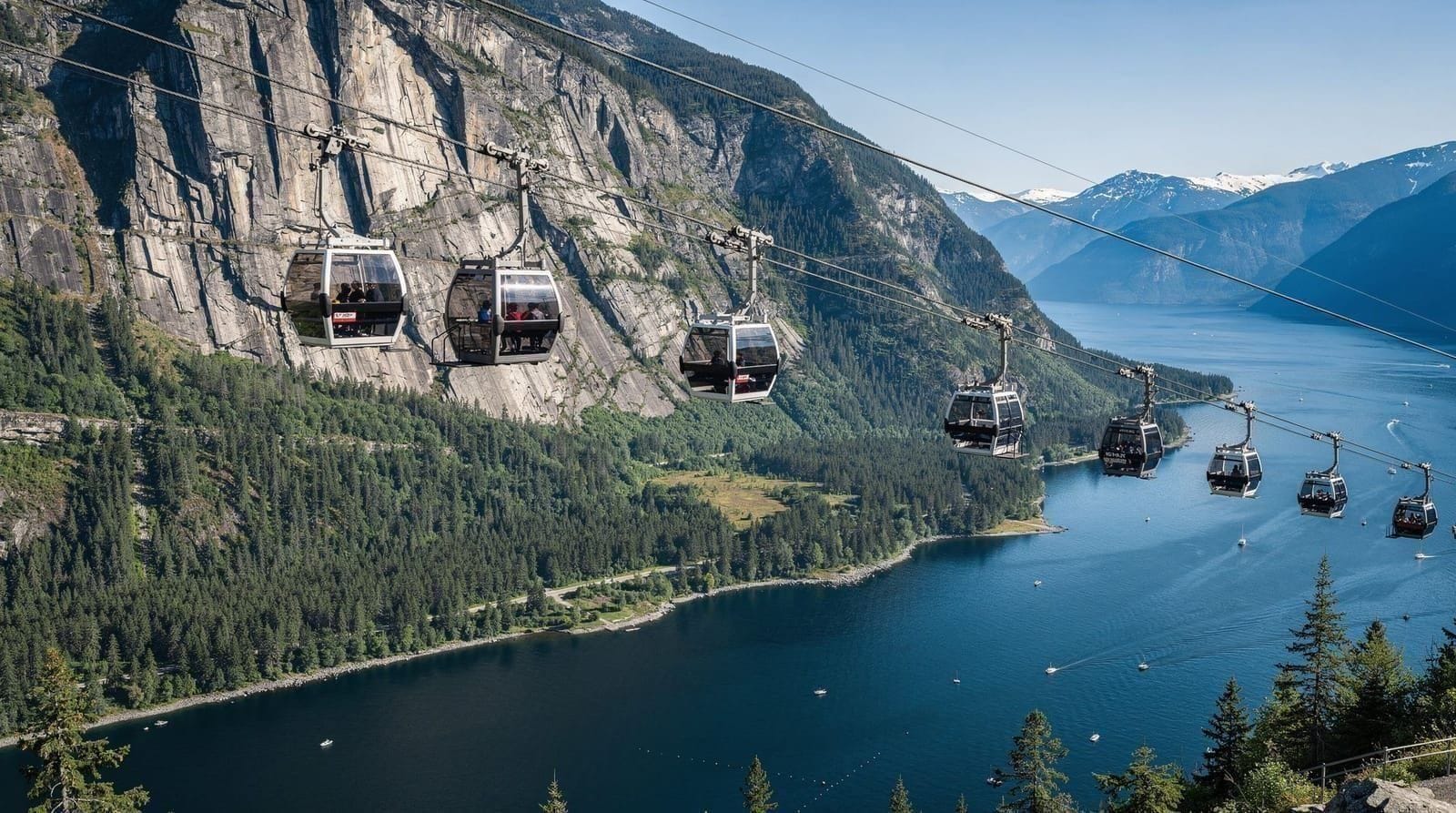
The Peak 2 Peak spans 4.4 kilometres between its two stations, and for a long stretch of that distance the cabins hang unsupported between just two towers — no intermediate pylons holding up the cable in between. That unsupported span held world records for both length and height above ground for years after it opened, and while other systems have since challenged parts of that record, it remains among the longest continuous lift spans anywhere. At its highest point, the cable runs roughly 436 metres above the valley floor between Whistler and Blackcomb, which is high enough that looking straight down feels genuinely dramatic even for visitors who don’t consider themselves nervous about heights.
A limited number of the cabins have glass floor panels built into them, offering a direct view straight down through the cabin floor to the valley below. These aren’t a separate paid experience — they’re mixed randomly into the regular fleet of cabins, so whether a given ride includes a glass floor comes down to chance rather than choice.
How the ride works
Riders board at either the Whistler side (from the top of the Whistler Village Gondola and connecting lifts) or the Blackcomb side (from the top of the Excalibur Gondola and connecting lifts), and the crossing itself takes about 11 minutes. Cabins run continuously during operating hours rather than on a scheduled departure, so there’s typically little to no wait beyond a short queue at busy times.
It’s worth being clear that the Peak 2 Peak isn’t a standalone attraction you can buy a ticket for on its own — it’s part of the broader Whistler Blackcomb lift network, and riding it requires a valid lift ticket (in winter, a ski or snowboard pass; in summer, a sightseeing or hiking pass that includes gondola access). Visitors who want to ride it purely for the views, without skiing or hiking, still need to buy whichever pass covers gondola access on the day they visit.
Winter vs. summer operation
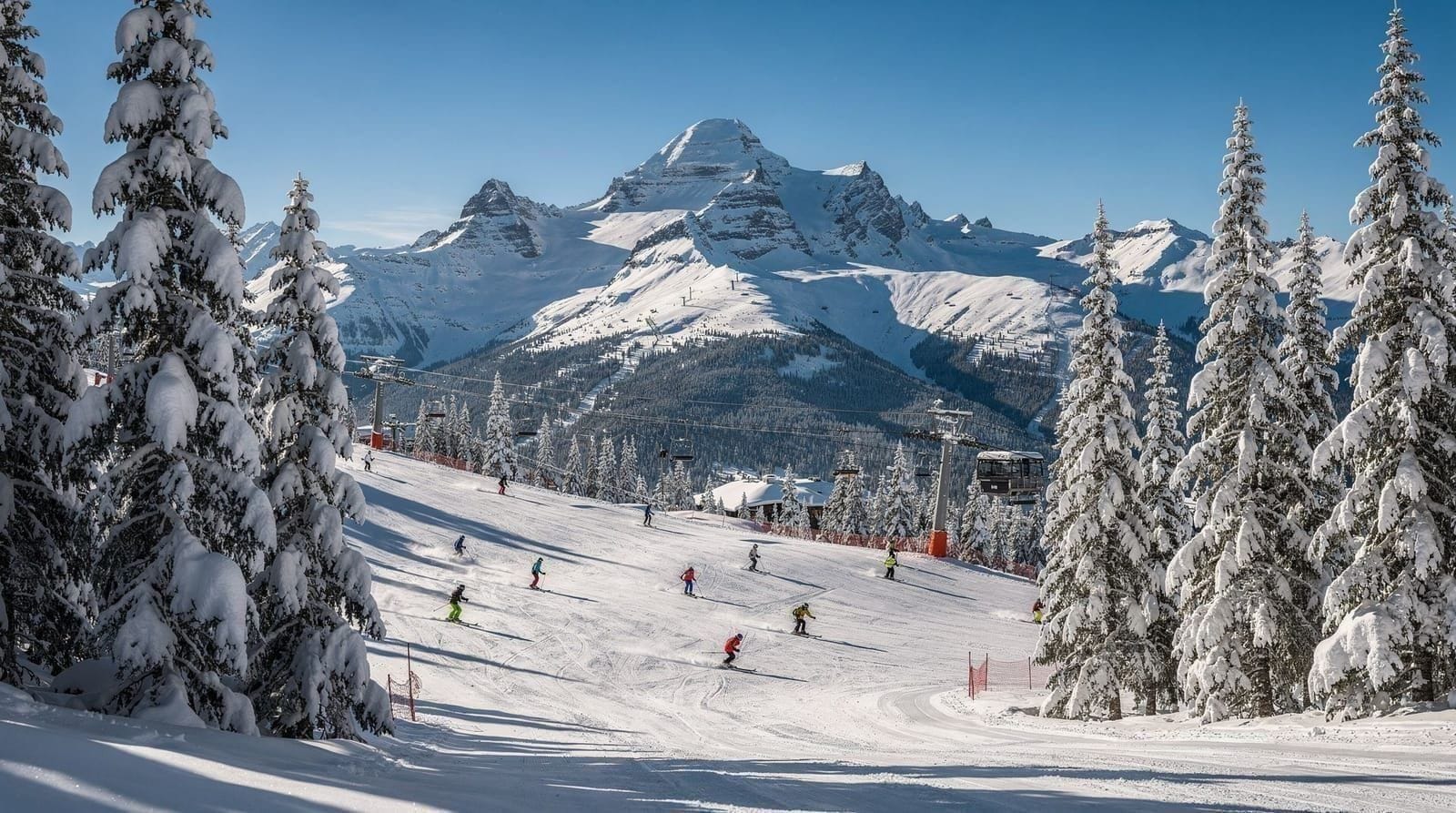
The gondola runs in both seasons, which sets it apart from a lot of Whistler’s other infrastructure that’s seasonal in one direction or the other. In winter, it’s primarily a way for skiers and snowboarders to move between Whistler and Blackcomb’s terrain without descending to the village, letting a single day pass cover runs on both mountains. In summer, it becomes more of a sightseeing ride in its own right, connecting hiking trailheads and viewpoints on each peak — useful for a visitor who wants to hike an alpine trail on the Whistler side in the morning and have lunch or explore Blackcomb’s terrain in the afternoon without a long detour through the village.
Best conditions for riding it
Clear, calm days give by far the best experience — the views stretch across the Coast Mountains, down into the valley, and toward Black Tusk and the Garibaldi Range on a good day. High wind is the main disruptor: the system is engineered with a substantial safety margin for BC’s mountain weather, but it does suspend operation in genuinely high winds rather than run outside safe conditions, so it’s worth checking Whistler Blackcomb’s lift status before planning a day specifically around the crossing. Morning rides tend to have calmer air and better light than mid-afternoon, when winds and cloud cover are more likely to build.
Building it into a Whistler day
The Peak 2 Peak works best as a connector rather than a destination in itself — a way to link two halves of a day rather than something to ride back and forth repeatedly. A common approach is to start on one mountain (Whistler side has the more famous alpine hiking, including the High Note Trail), cross via the Peak 2 Peak around midday, and spend the afternoon on the other mountain’s terrain or dining options. For visitors without a lift ticket already planned, a private tour to Whistler including the Peak 2 Peak Gondola bundles transport from Vancouver with gondola access, which removes the logistics of figuring out which pass covers what.
Visitors doing a single day trip from Vancouver more broadly should also weigh how much of that day they want to spend on the Peak 2 Peak specifically versus other parts of the resort — a full-day Whistler tour from Vancouver typically leaves enough time to ride the gondola alongside village time and at least a short walk or hike, rather than building the whole day around the crossing alone.
How it compares to other BC gondolas
The Peak 2 Peak is a different kind of ride than most of the other cable cars and gondolas around Vancouver. Grouse Mountain’s Skyride and the Sea to Sky Gondola in Squamish are both base-to-summit rides — they take you from a valley floor up to a single peak. The Peak 2 Peak is horizontal by comparison, connecting two peaks that are already at altitude, and it’s built for a different purpose: linking terrain rather than delivering a first ascent to a summit.
Visitors expecting a straight-up climb like Grouse’s Skyride should adjust expectations — the more relevant comparison for pure “climb to a viewpoint” purposes is Blackcomb Mountain’s own base lifts, with the Peak 2 Peak serving as the connective piece once you’re already up top on either side.
Practical notes
The gondola’s operating season roughly tracks Whistler Blackcomb’s broader lift schedule — check current hours before a visit, since maintenance closures and weather can affect specific days, particularly at the shoulder edges of each season. Photography works best with a clear view down the valley rather than straight ahead, since the most striking shots tend to be the ones capturing the scale of the span itself rather than the cabin interior. And for anyone genuinely uneasy about heights, it’s fair to know upfront that the ride includes a sustained stretch of open exposure well above the ground — most people find it manageable, but it isn’t the mildest sightseeing option in the area if heights are a real concern.
How it was built
Constructing an unsupported span of this length across a deep valley was a genuinely unusual engineering undertaking, and it required helicopters to place some of the initial cabling and tower components in terrain too steep and remote for conventional ground equipment.
The two peak stations anchor cables that had to account for significant temperature swings, wind loading, and the sheer weight of a continuously moving loop of cabins — engineering considerations that don’t come up in shorter, more conventional lift systems. The result is a system rated to operate in wind conditions that would shut down more exposed, less robustly engineered lifts, though as noted above, there’s still a wind threshold beyond which it suspends service for safety.
Cost and what’s included
Because the Peak 2 Peak requires the same lift ticket or sightseeing pass used for the rest of the Whistler Blackcomb lift network, there’s no separate line-item price to budget for beyond whatever pass a visitor is already purchasing for skiing, biking, or hiking that day. Summer sightseeing passes covering gondola access (including the Peak 2 Peak) typically run somewhere in the CAD 60-80 range per adult, though pricing shifts with season and how far in advance it’s booked. Winter lift tickets covering full mountain access, which include Peak 2 Peak riding rights as part of the broader network, are priced separately and vary by day and season, generally running well above the summer sightseeing rate given the scope of terrain included.
Comparing it to other long aerial gondolas worldwide
The Peak 2 Peak is frequently cited in “world’s longest gondola” discussions, and while some newer systems elsewhere have since built longer total gondola routes, the Peak 2 Peak’s specific claim — the longest unsupported span between two points, without intermediate towers — has proven harder to beat given how unusual the underlying valley geography and engineering requirements are.
For visitors who’ve ridden other well-known aerial systems (cable cars in the Alps, for instance, or other North American resort gondolas), the Peak 2 Peak stands out less for raw novelty of “riding a gondola” and more for the specific sensation of a long, sustained, unsupported crossing with no towers passing underneath partway through — a genuinely different feeling from a shorter lift with visible support towers throughout the ride.
A quick summary for trip planning
Visitors planning a single Whistler day around the Peak 2 Peak specifically should keep a few things in mind: it requires a lift or sightseeing ticket (there’s no separate admission), it runs in both winter and summer, the ride itself takes about 11 minutes, and wind can occasionally suspend service, so it’s worth having a backup plan for that day rather than building an entire itinerary around a single crossing. For most visitors, the practical approach is to treat the Peak 2 Peak as one highlight within a broader Whistler day — hiking, biking, dining, or skiing on either side — rather than as a reason to visit Whistler on its own.
What the ride actually looks like from inside
Cabins on the Peak 2 Peak are notably larger and steadier than a typical chairlift or smaller gondola cabin, holding roughly two dozen passengers depending on the specific cabin, with wraparound windows giving a near-continuous view throughout the crossing.
The middle portion of the ride, where the cabin is furthest from either tower and at its highest point above the valley, tends to be the most memorable stretch — this is where the scale of the unsupported span is most obvious, since there’s genuinely nothing visible supporting the cable for a significant distance in either direction. Riders describe the sensation as more of a steady glide than the up-and-down cadence of a chairlift passing over support towers, since there simply aren’t intermediate towers to pass over during the long middle stretch.
Photography tips specific to the crossing
Because the cabins have large windows on both sides, photographers have options for shooting down the valley, back toward the peak just departed, or ahead toward the approaching peak — the most dramatic compositions typically come from shooting perpendicular to the direction of travel, capturing the full depth of the valley below rather than straight ahead down the cable line.
Midday sun can create glare inside the cabin depending on position, so early morning or late afternoon rides, when the sun sits at a lower angle, often produce cleaner shots. Visitors specifically chasing the classic “cabin suspended over a vast valley” shot should try to position themselves at a window seat rather than the center of the cabin, and should be ready to shoot during the brief middle portion of the crossing rather than waiting until closer to either station.
Combining the Peak 2 Peak with a Sea-to-Sky day trip
For visitors who haven’t committed to a full Whistler day but want to see the Peak 2 Peak as part of a broader Sea-to-Sky corridor trip, a Sea to Sky Gondola and Whistler tour is a reasonable way to combine the Squamish gondola experience with enough time in Whistler to also ride the Peak 2 Peak, rather than choosing one or the other. This kind of combined-stop tour makes particular sense for visitors on a single day trip from Vancouver who want a broad sample of the corridor’s highlights rather than committing an entire day to just Whistler or just Squamish.
Accessibility considerations
The Peak 2 Peak’s cabins and boarding areas are generally accessible, with level boarding platforms at both peak stations designed to accommodate wheelchairs and mobility devices without requiring passengers to step up or navigate stairs during loading. This makes it one of the more genuinely accessible ways to experience high alpine terrain in the Whistler Blackcomb resort, since it doesn’t require any hiking or skiing ability to reach the vantage points it connects.
Visitors with mobility considerations planning a Whistler visit specifically around accessible sightseeing should still confirm current accessibility details directly with Whistler Blackcomb, since specific station layouts and any temporary closures can affect this, but as a general rule the gondola crossing itself is among the more inclusive high-alpine experiences available in the resort.
Common misconceptions worth clearing up
A few things trip up first-time visitors researching the Peak 2 Peak. First, it’s not a standalone attraction with its own ticket booth — visitors sometimes arrive expecting to buy a Peak 2 Peak-specific ticket only to find they need a broader lift or sightseeing pass instead. Second, it doesn’t run on a fixed schedule with specific departure times — cabins cycle continuously, so there’s no need to book a specific time slot the way some cable car systems elsewhere require. Third, riding it doesn’t require skiing or hiking ability of any kind; despite Whistler Blackcomb’s reputation as an active-sports destination, the gondola itself is purely a sightseeing ride once you’re on it, accessible to anyone able to board the cabin.
When to skip it
Not every Whistler visit needs to include the Peak 2 Peak. Visitors on a very tight single-day schedule who are prioritizing hiking distance or bike park runs over sightseeing may reasonably choose to skip the crossing and spend that time on trail instead, particularly since round-trip transit time between the two peak stations plus any queueing eats into a limited day.
Visitors visiting on a low-visibility day — heavy cloud, fog, or rain obscuring the valley view — may also find the crossing considerably less worthwhile, since the main appeal is the view itself; if the forecast shows the peaks socked in, it’s reasonable to plan the crossing for a different day of a multi-day Whistler trip, if the itinerary allows that flexibility, rather than riding it purely for the sake of having done it.
Riding it more than once
For visitors staying multiple days and holding a multi-day lift pass, there’s nothing stopping a second or third crossing on different days to catch different light, weather, or simply because the first ride was memorable enough to want to repeat. Some visitors deliberately plan an early-morning crossing for calmer air and softer light, then a second crossing later in the day when returning from the opposite peak’s terrain, effectively getting two different-feeling rides out of the same ticket.
Given that cabins arrive continuously without a scheduled departure, there’s no real downside to riding it more than once beyond the time it takes, which makes it a low-friction addition to repeat across a multi-day stay rather than a once-only bucket-list item.
Summary for a first-time rider
For a visitor riding the Peak 2 Peak for the first time, the practical checklist is short: confirm a lift or sightseeing pass is already in hand, check the wind and visibility forecast that morning, aim for a clear-weather window if the itinerary allows flexibility, and treat the crossing as one part of a broader day on the mountain rather than a destination in its own right. Approached that way, it’s a genuinely memorable 11 minutes — one of the more distinctive pieces of mountain infrastructure anywhere in North America, and a natural highlight of any Whistler visit that includes time on both Whistler and Blackcomb’s terrain.
For travelers timing a Whistler trip around summer alpine hiking rather than winter skiing, the Whistler summer guide covers how the Peak 2 Peak fits alongside trail options on both mountains.
Booking a lift ticket versus a bundled tour
Visitors already staying in Whistler with ski gear or a multi-day lift pass generally don’t need anything extra to ride the Peak 2 Peak — it’s included in whatever pass already covers the mountain that day. The calculation changes for day-trippers coming up from Vancouver without a pre-arranged pass: buying a standalone sightseeing pass on arrival works, but a bundled tour that includes transport, a pass covering gondola access, and sometimes a guide removes the logistics of figuring out ticket categories and pickup points on the day itself.
For a single day trip specifically built around riding the Peak 2 Peak and seeing Whistler village, a bundled tour is usually the simpler option; for a multi-day stay where skiing, hiking, or biking is the main draw and the Peak 2 Peak is one stop among several, buying a standard lift or sightseeing pass directly tends to work out more flexibly.
What a typical summer sightseeing day looks like
A common summer itinerary pairs an alpine hike on one side of the resort with the Peak 2 Peak crossing and a different activity on the other. A visitor might ride up the Whistler Village Gondola in the morning, walk part of the High Note Trail for its alpine lake views, cross via the Peak 2 Peak around midday, then spend the afternoon exploring Blackcomb’s own trails or simply enjoying lunch with a view before heading back down. This kind of day makes efficient use of a single sightseeing pass and avoids the common mistake of treating the Peak 2 Peak crossing itself as the entire day’s activity, when in practice it’s a highlight embedded within a broader alpine visit.
Weather planning across a multi-day Whistler stay
For visitors staying more than a single day, the practical approach is to keep the Peak 2 Peak flexible rather than fixed to one specific day of the trip. Checking the multi-day forecast on arrival and choosing the clearest-looking day for the crossing, rather than committing to a specific date in advance, meaningfully improves the odds of a view-filled ride rather than a socked-in one. Because cabins run continuously without a scheduled departure, there’s no downside to shifting plans a day or two once in Whistler if the forecast changes, unlike activities requiring an advance-booked time slot.
Frequently asked questions — Peak 2 Peak Gondola guide
How long is the Peak 2 Peak Gondola ride?
The crossing between Whistler Mountain and Blackcomb Mountain takes approximately 11 minutes, covering a 4.4-kilometre span between the two peak stations.Do I need a lift ticket to ride it?
Yes. The Peak 2 Peak isn't a standalone ticketed attraction — it's part of the Whistler Blackcomb lift network, so riding it requires a valid lift ticket or a summer sightseeing pass that includes gondola access.Is the Peak 2 Peak Gondola open in summer?
Yes, it operates in both the winter ski season and the summer season, running as long as the connecting Whistler and Blackcomb lift systems are open.How high up does the Peak 2 Peak Gondola go?
The cabins travel at a maximum height of around 436 metres above the valley floor between the two peaks, which is part of why it holds records for unsupported lift span height as well as distance.Is it scary or does it move a lot?
Some sway is normal on any long aerial cable span, especially in wind, but the system is engineered with a wide margin for BC's mountain weather and routinely suspends service in high wind rather than operate outside safe conditions. Most riders describe it as smooth rather than alarming.Are there glass-floor cabins?
Yes, a small number of the Peak 2 Peak cabins have glass floor panels, giving a direct view straight down to the valley below. They're mixed into the regular cabin rotation rather than a separate paid upgrade.
Top experiences
Bookable activities with verified prices and instant confirmation on GetYourGuide.