BC ski season near Vancouver — a complete overview
From Vancouver: Full-Day Whistler Tour
Duration: 10.5 hours
When is ski season near Vancouver and where should I go?
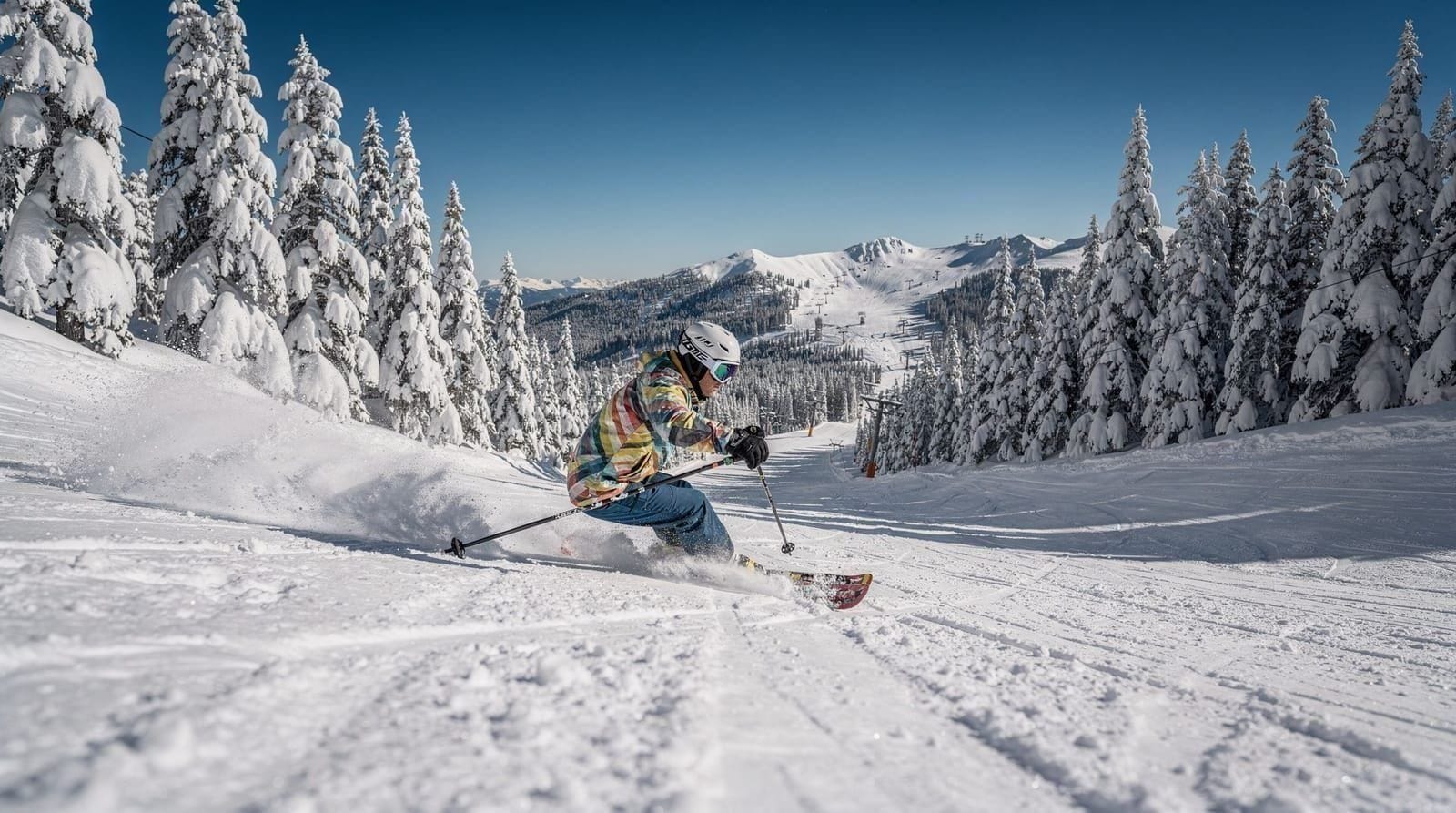
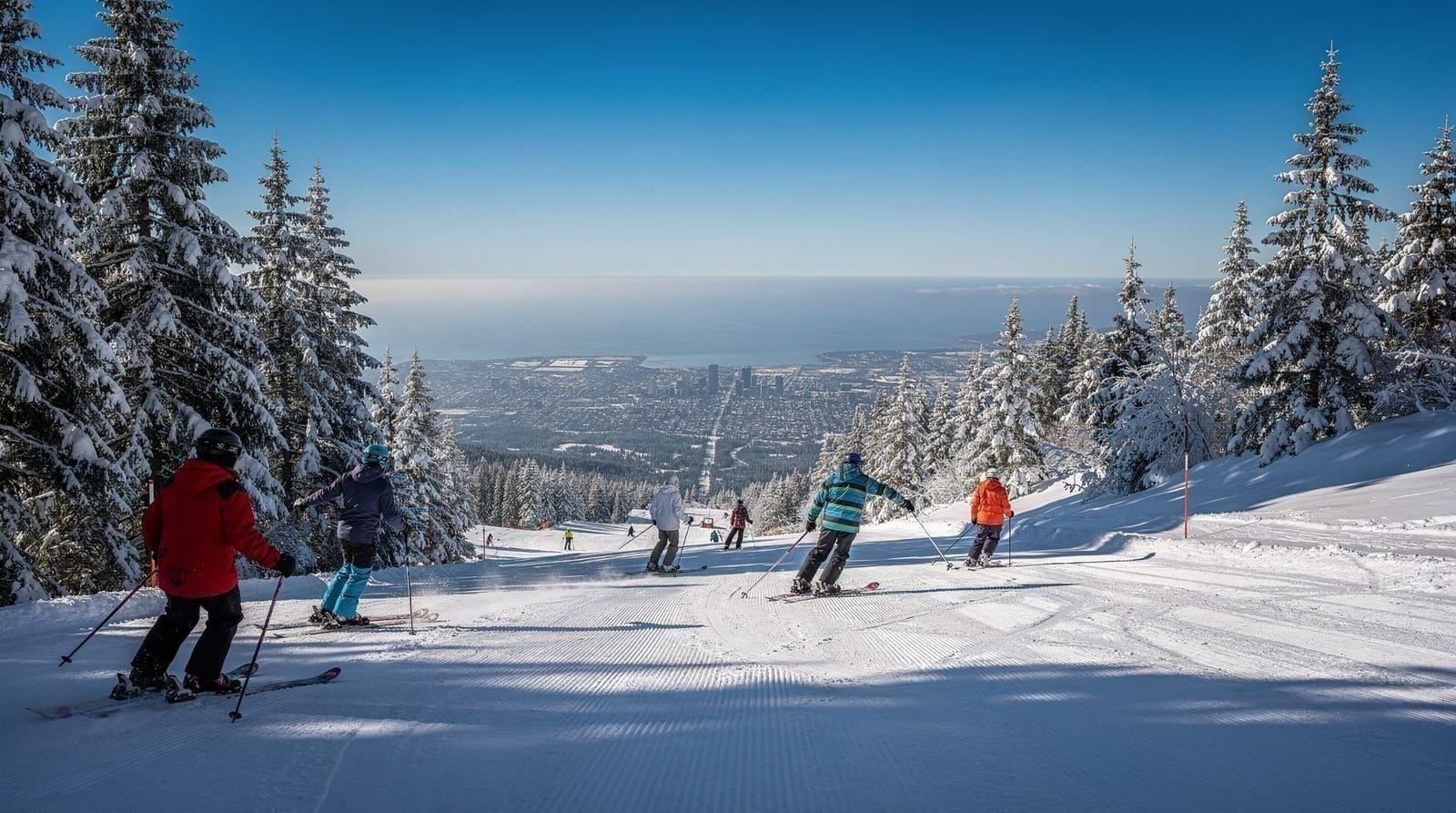
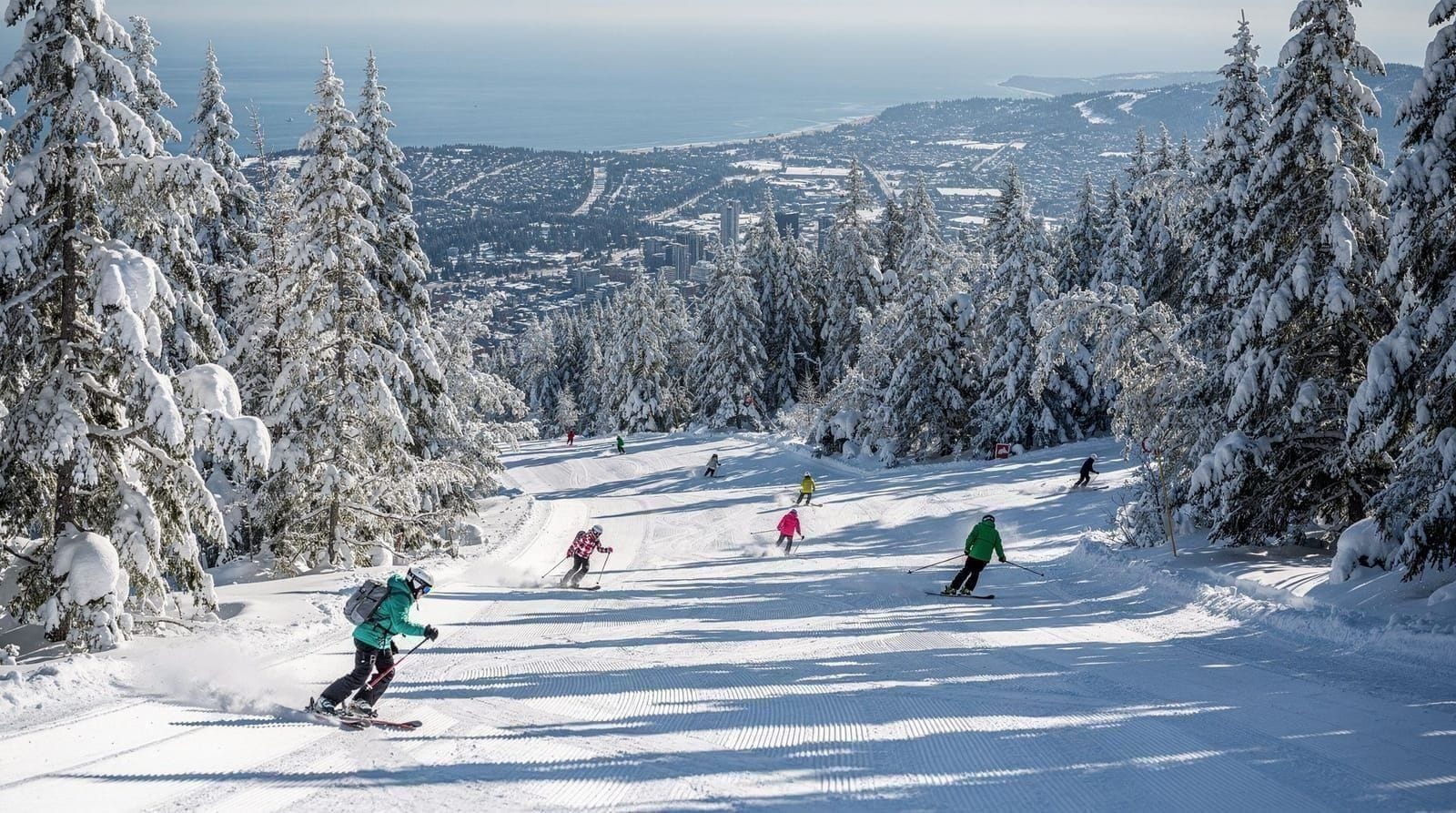
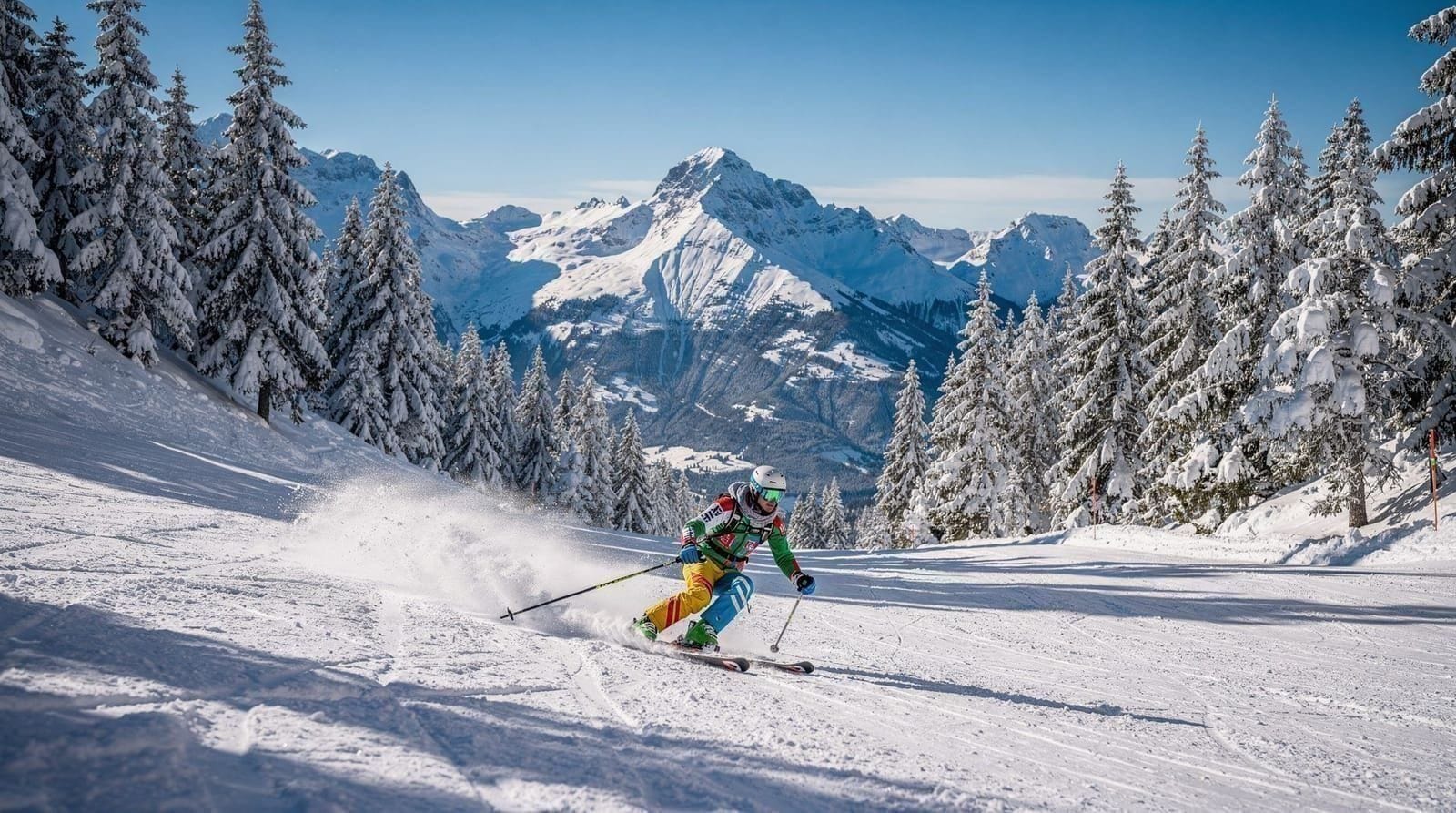
BC's ski season near Vancouver runs roughly late November through mid-May at Whistler Blackcomb, and roughly mid-December through March at the three North Shore hills — Grouse, Cypress and Mount Seymour. Whistler suits a genuine ski trip; the North Shore hills suit a quick evening or half-day session close to downtown.
Vancouver is one of the few major cities in the world where you can wake up in a rain-soaked downtown neighborhood and be on snow within half an hour, or on a genuine world-class ski mountain within two hours. That range of options — from a quick evening session to a full alpine resort — is unusual enough that it’s worth mapping out clearly before booking a winter trip, since “ski season near Vancouver” actually means several different things depending on which mountain you pick.
| Whistler season | Late November–mid May |
| North Shore season | Mid-December–March |
| Whistler distance | ~120 km / 2-2.5hr drive |
| North Shore distance | 20-40 min drive |
| Getting there | Guided tour, rental car, or SeaBus+bus for Grouse only |
| Winter tires | Legally required Oct 1–Apr 30 on Highway 99 |
Why this overview matters before booking
Visitors researching Vancouver skiing for the first time often encounter Whistler’s name first and assume it’s the only real option nearby, missing the North Shore hills entirely until well into trip planning — or the reverse, discovering Grouse first through general Vancouver sightseeing content and underestimating how different a genuine Whistler ski day is from a quick North Shore session. Understanding all four options together, before booking anything, avoids both mistakes.
The big picture: four mountains, two very different experiences
Winter visitors to Vancouver have essentially two categories of ski option. The first is Whistler Blackcomb, a genuine destination resort roughly two hours north via the Sea-to-Sky Highway, with the largest skiable terrain in North America and a season running late November through mid-May. The second is Vancouver’s North Shore trio — Grouse Mountain, Cypress Mountain and Mount Seymour — all 20-40 minutes from downtown, smaller and cheaper, with seasons running roughly mid-December through March depending on snowfall.
Season timing by mountain
Whistler’s higher alpine elevation gives it the longest and most reliable season of the group — openings in late November are common, and the resort routinely stays open into May with spring skiing conditions on the upper mountain. The North Shore hills sit at lower, more weather-exposed elevations, so their seasons compress at both ends: a warm, wet December can delay opening, and a mild March can shorten the tail end. None of the three North Shore hills reliably opens before mid-December or stays open reliably past March, though a strong snow year can stretch either end by a few weeks.
Season overview table
| Mountain | Typical season | Distance from downtown | Day lift ticket |
|---|---|---|---|
| Whistler Blackcomb | Late Nov–mid May | ~120 km / 2-2.5 hr drive | ~CAD 130-220 |
| Grouse Mountain | Mid-Dec–March | ~20-30 min drive | ~CAD 75-95 |
| Cypress Mountain | Mid-Dec–March | ~30 min drive | ~CAD 90-110 |
| Mount Seymour | Mid-Dec–March | ~30-40 min drive | ~CAD 65-85 |
Peak season versus shoulder season
December through March is peak season across every BC ski option — the most reliable snow, the biggest crowds, and the highest prices, particularly around Christmas/New Year and BC’s February school break week. At Whistler specifically, April brings genuine spring skiing: warmer temperatures, softer afternoon snow, and noticeably thinner lift lines, which experienced skiers often prefer to the peak-season crush even if conditions are slightly less consistent. Late November and early May are the true shoulder weeks — cheaper, quieter, but with real risk of limited terrain being open.
Prices across the region
Whistler’s dynamic pricing model means a single-day ticket can range from roughly CAD 130 (booked well ahead, off-peak) to over CAD 200 on a walk-up peak day, and Whistler Blackcomb’s participation in Vail Resorts’ Epic Pass network makes a season pass worthwhile for skiers planning several trips in one winter. The North Shore hills price more simply and consistently lower — Mount Seymour is the cheapest at roughly CAD 65-85, Grouse sits in the middle around CAD 75-95, and Cypress runs highest of the three at roughly CAD 90-110, reflecting its more demanding terrain rather than added visitor infrastructure.
Terrain difficulty across all four
Whistler covers the full spectrum but is best known for its advanced and expert terrain — alpine bowls, glacier skiing, and genuinely challenging descents that draw skiers from well outside Canada. Among the North Shore hills, Cypress is generally rated the most technically demanding, carrying real credibility from hosting freestyle skiing and snowboard events at the 2010 Winter Olympics. Grouse suits beginners and intermediates with a side benefit of night skiing under lights. Mount Seymour is the gentlest and most beginner-oriented of the four, with the lowest prices and a family-focused tubing park alongside its ski runs.
Getting to each mountain
A full-day Whistler tour from Vancouver handles the Sea-to-Sky drive for visitors who’d rather not navigate winter highway conditions themselves, and BC law requires winter tires on Highway 99 from October through April regardless of who’s driving.
The North Shore hills are reachable by car in 20-40 minutes without highway driving, and Grouse specifically is accessible by SeaBus plus a connecting bus for visitors without a vehicle — a Grouse Mountain Skyride admission ticket covers winter lift access on that route. Cypress and Seymour lack an equivalent transit connection, relying instead on driving or seasonal shuttle services that vary year to year.
Beyond downhill skiing: snowshoeing and backcountry options
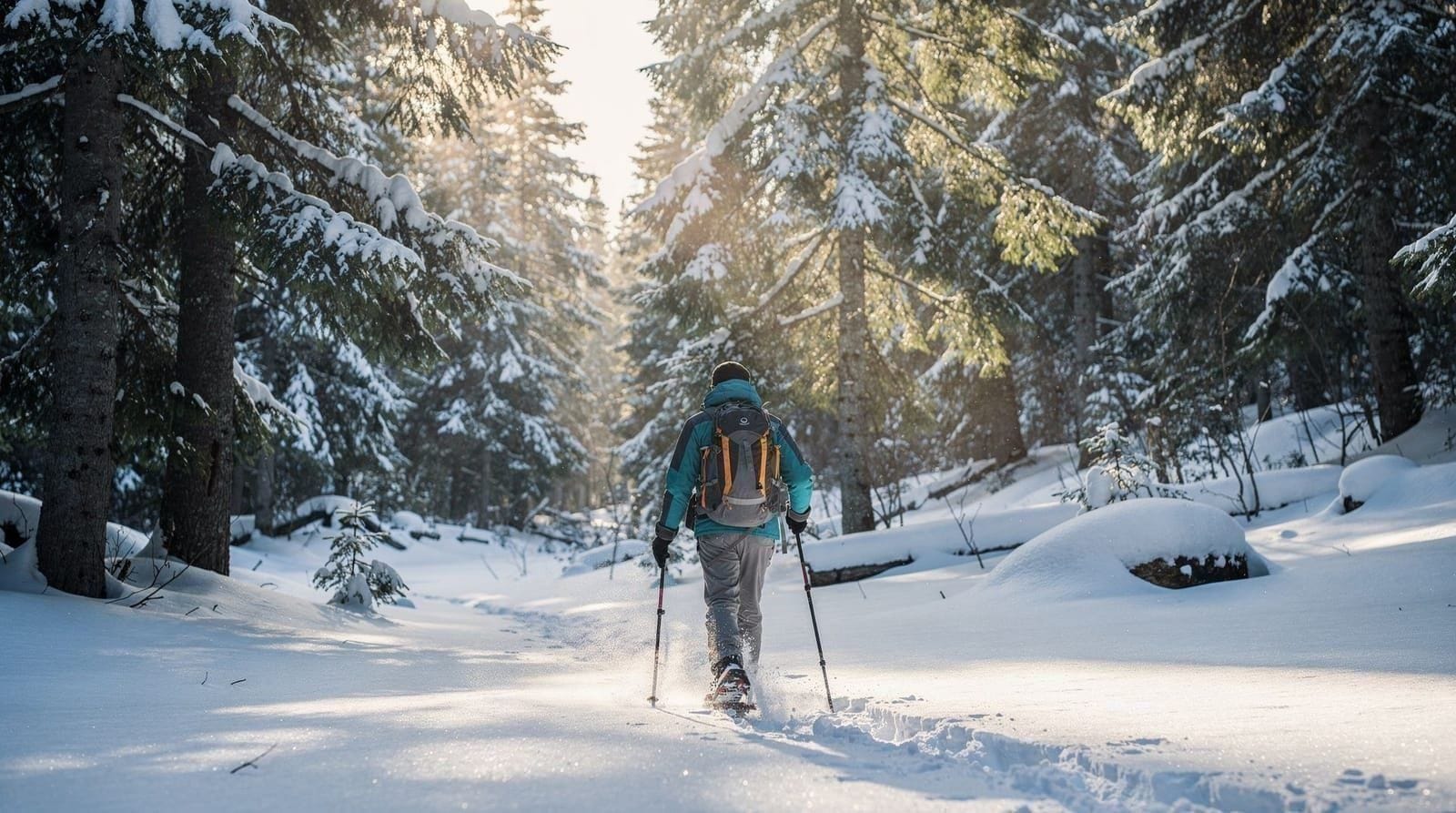
Not every winter visitor wants to ski or ride, and BC’s mountains near Vancouver offer real alternatives. Guided snowshoeing at the Sea to Sky Gondola requires no prior experience and covers genuinely scenic alpine terrain, detailed further in the snowshoeing near Vancouver guide.
For skiers wanting to go beyond resort boundaries, an introduction to backcountry skiing and splitboarding pairs a certified guide with avalanche-safety fundamentals — genuinely necessary given BC’s real backcountry avalanche risk, and not something to attempt independently without training.
Rentals and lessons across the region
Every mountain covered here — Whistler, Grouse, Cypress and Seymour — runs its own rental shop and ski/snowboard school, though the scale and clientele differ meaningfully. Whistler’s rental and lesson infrastructure is sized for a major international destination resort, with equipment tiers from basic to performance-level and lesson programs spanning true beginners through advanced coaching.
The North Shore hills run smaller, simpler operations better matched to a half-day or evening visit — Seymour’s programs lean hardest into true beginner instruction, Grouse sits in the middle, and Cypress’s rental and lesson clientele skews toward skiers already past the absolute-beginner stage. Booking rental gear and lessons ahead matters most at Whistler during peak weeks, where counter lines can genuinely eat into ski time on the first morning of a trip.
Backcountry and avalanche safety
BC’s mountains carry real avalanche risk once skiers or snowshoers step outside marked, resort-controlled terrain, and this isn’t a theoretical caveat — backcountry incidents happen most winters in the region’s mountains, including areas not far from Whistler and the North Shore. None of the terrain covered in this guide requires backcountry travel for a standard visit; resort-controlled runs at all four mountains are avalanche-managed by ski patrol.
Visitors specifically interested in backcountry skiing or splitboarding should go with a certified guide and proper avalanche safety training rather than venturing beyond resort boundaries independently — a guided introduction to backcountry skiing is the appropriate starting point, not a solo attempt based on online research.
A brief history of skiing near Vancouver
Skiing on the North Shore mountains predates Whistler’s development by decades — Grouse Mountain had a ski operation running as early as the 1920s, making it one of the older established ski areas in Western Canada, long before the Sea-to-Sky Highway made Whistler practically accessible. Whistler itself only began development as a ski resort in the 1960s, originally built partly around a failed Winter Olympics bid, before eventually hosting Alpine skiing events for the 2010 Winter Olympics held across Vancouver and Whistler jointly.
Cypress hosted its own share of those 2010 Games events, specifically freestyle skiing and snowboard disciplines. That history is part of why the North Shore hills, despite their modest size today, still carry genuine local ski culture and multi-generational family traditions rather than existing purely as tourist attractions.
Transportation logistics across the region
Getting to any of BC’s ski areas near Vancouver without a car requires different approaches. Whistler is served by scheduled shuttle buses and guided tours running multiple times daily from both downtown Vancouver and Vancouver International Airport, a well-established route given the resort’s international visitor base.
Grouse is reachable by SeaBus plus a short connecting bus ride, the only one of the North Shore hills with a genuine public transit connection. Cypress and Seymour both lack an equivalent transit route, relying on driving, rideshare, or seasonal shuttle services that vary by year — a real practical consideration for visitors without access to a car who are weighing the North Shore hills against Whistler or Grouse specifically for that reason.
How to choose which mountain for your trip
The realistic decision framework comes down to time and priorities. Visitors with a full day or an overnight who want a genuine ski experience should go to Whistler — nothing near Vancouver compares in scale or terrain quality. Visitors with limited time, a tighter budget, or beginners in the group are better served by the North Shore hills, and among those three, Grouse suits convenience and night skiing, Cypress suits skiers wanting more challenge, and Seymour suits families and true beginners. The direct Whistler versus Grouse comparison and the three-way North Shore breakdown both go deeper into these trade-offs.
Frequently overlooked details across the region
A handful of practical points apply across all four mountains covered here. Elevation changes conditions fast in coastal BC — a warm, wet forecast for downtown Vancouver doesn’t rule out good snow at Whistler’s upper elevations, and conversely a promising-sounding snow forecast doesn’t guarantee good conditions at the North Shore hills’ lower elevations, so checking each specific mountain’s own snow report is more reliable than extrapolating from a general regional forecast.
Winter tire requirements on BC highways (mandatory October through April on routes like Highway 99 to Whistler) apply regardless of destination, and rental cars from Vancouver-area agencies generally come equipped appropriately for the season, worth confirming at pickup rather than assuming.
And across every mountain in this guide, ticket and pass products are generally non-transferable between locations — a Whistler multi-day ticket doesn’t carry over to Grouse, Cypress or Seymour, and vice versa, so budgeting for skiing across more than one mountain means budgeting for genuinely separate purchases.
A realistic sample two-day ski itinerary
For visitors with two days to split between skiing options, a common and workable pattern is one day dedicated fully to Whistler — leaving early, using a full-day tour or private transfer, and committing the whole day to genuine alpine terrain — paired with a second, shorter evening session at Grouse or Cypress fit around other city sightseeing earlier that day. This combination samples both ends of what BC skiing near Vancouver offers without requiring two full destination-resort days, and it’s a pattern that works well within most 4-7 day Vancouver itineraries without dominating the whole trip.
Beyond the four mountains covered here
This guide focuses on the ski options within roughly a two-hour radius of Vancouver — Whistler and the three North Shore hills — since they cover the realistic range for a Vancouver-based trip. Skiers with more time and a genuine interest in exploring further afield should know that BC’s interior resorts (further east, generally requiring flights or considerably longer drives) offer a different snow profile entirely — drier, lighter powder compared to the coastal snow covered throughout this guide — but they fall outside the scope of a standard Vancouver-based itinerary and are better treated as a separate trip rather than an add-on.
Planning a trip around BC’s ski season
Because North Shore season dates shift year to year with snowfall, and even Whistler’s exact opening can vary by a couple of weeks, checking current conditions before locking in travel dates is worth the extra step — the best time to visit tool tracks seasonal snow status alongside Vancouver’s other seasonal patterns like whale watching and cherry blossoms. For visitors building a full itinerary around skiing, a 5-day Vancouver and Whistler itinerary is the most common structure, pairing city time with dedicated Whistler days rather than trying to squeeze meaningful ski time into a single rushed day trip.
Multi-mountain pass options
Beyond Whistler’s Epic Pass affiliation, some multi-mountain and regional pass products bundle access across several BC resorts, including options that can combine Whistler days with visits to interior resorts further from Vancouver. These generally make sense only for skiers planning a broader BC or western Canada ski trip beyond just the Vancouver-area mountains covered in this guide, and the specific value depends heavily on how many total ski days a visitor plans across a season — worth researching directly against current pricing if a multi-resort trip is part of the plan, rather than assuming any particular pass is automatically the best value.
How weather variability affects planning
Coastal BC’s ski season is inherently more weather-variable year to year than continental or higher-elevation resorts, since the entire region sits close enough to the Pacific that a warm storm system can bring rain instead of snow even in the heart of winter, particularly at the North Shore hills’ lower elevations. This variability is worth building into expectations rather than treating any given season’s dates as fixed — a visitor planning a ski trip several months out should budget some flexibility around exact dates and have a backup plan (an extra city day, a different activity) in case conditions on a specific planned day turn out to be marginal.
Packing for a BC ski trip covering multiple mountains
Visitors planning to sample more than one of BC’s ski options in a single trip — a Grouse evening session plus a Whistler day, for instance — should pack with the more demanding destination in mind, since Whistler’s higher alpine terrain and longer days genuinely call for more robust gear than a short Grouse evening does. Waterproof outer layers, warm gloves, a helmet, and eye protection cover the essentials across every mountain in this guide; the main variable between destinations is how much additional cold-weather backup (extra base layers, hand warmers) is worth carrying for a longer, higher-elevation Whistler day versus a shorter North Shore session.
Rain in the city, snow in the mountains
One quirk worth understanding before a winter Vancouver trip: downtown weather and mountain weather are genuinely different systems. It’s entirely normal for Vancouver to sit under grey, rainy skies at sea level while Whistler, Grouse, Cypress and Seymour are all getting fresh snow at altitude the same day — the North Shore mountains, visible from downtown on a clear day, mark roughly where rain turns to snow in winter. Checking a mountain-specific forecast and snow report, rather than the general Vancouver weather app, is the more reliable way to judge whether a planned ski day is actually worth it.
Night skiing on the North Shore
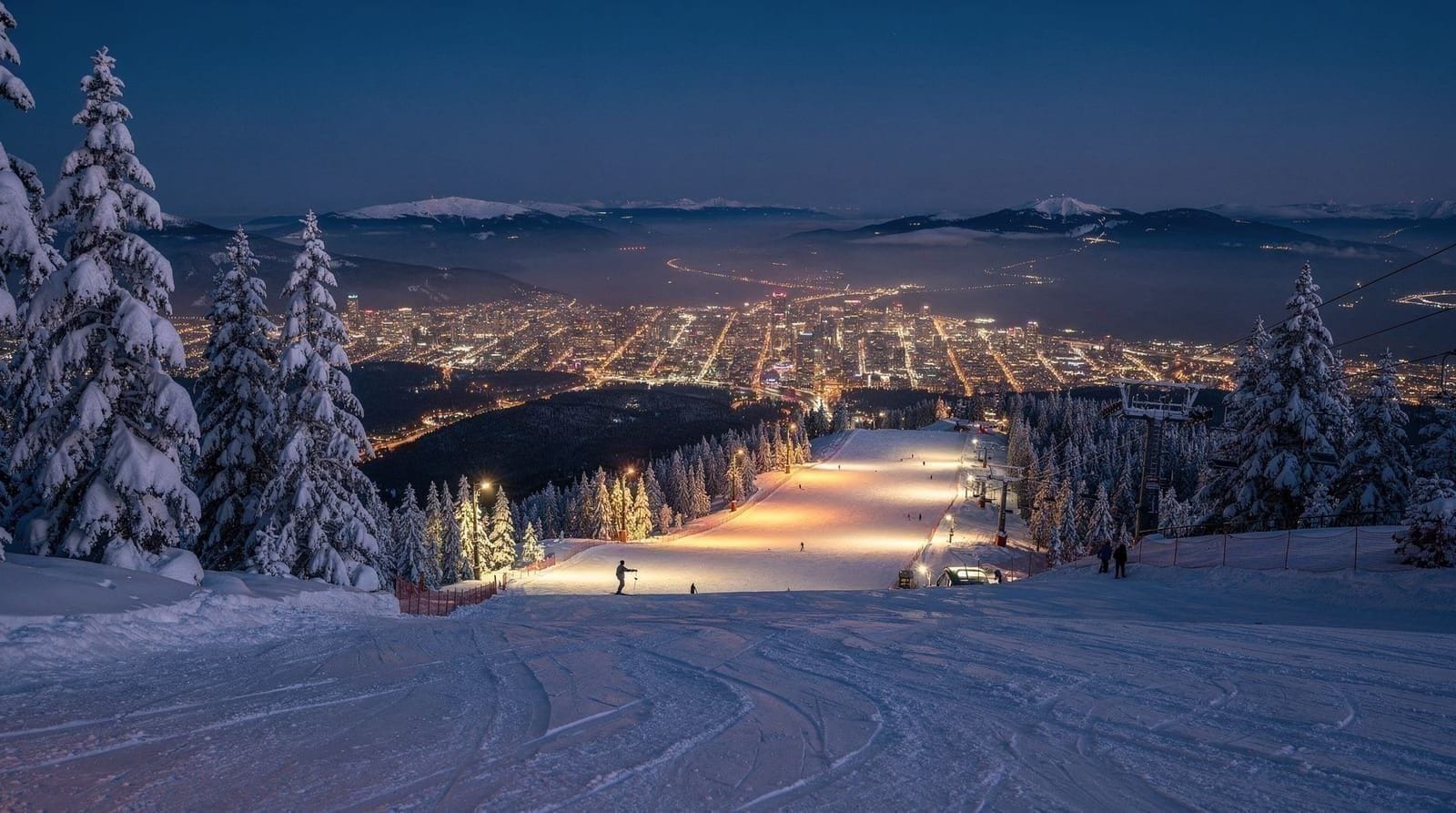
One genuine North Shore advantage over Whistler is night skiing under lights, offered at both Grouse and Cypress and a real novelty for visitors used to resorts that close at dusk. It suits travelers who’ve spent a full day sightseeing downtown and want a shorter evening session rather than committing an entire day to skiing — a two-to-three-hour evening session at Grouse, reachable by SeaBus and connecting bus, fits neatly into an otherwise city-focused itinerary without requiring an early start or a full day given over to the mountain.
Non-skiers and mixed-ability groups
Groups with a mix of skiers and non-skiers are generally better served by the North Shore hills than by Whistler for a single shared day, since Grouse and Cypress both offer non-ski activities (Grouse’s wildlife refuge and dining, Cypress’s snowshoeing trails) within easy reach of the ski area for companions who’d rather not ski. Whistler can work for mixed groups too, but the village’s scale means non-skiing companions need a clearer plan for the day — village shopping, a spa visit, or the Peak 2 Peak Gondola for sightseeing without skiing — rather than assuming there’s an obvious default activity the way there is at the smaller North Shore hills.
Top experiences
Bookable activities with verified prices and instant confirmation on GetYourGuide.