Whistler vs Grouse for skiing — which one for your trip
From Vancouver: Full-Day Whistler Tour
Duration: 10.5 hours
Should I ski Whistler or Grouse Mountain?
Whistler is the better choice if you're planning a genuine ski trip and can dedicate a full day or an overnight to it — it has vastly more terrain, higher alpine elevation, and more reliable snow. Grouse is the better choice for a quick evening or half-day ski session close to downtown Vancouver, without the two-hour Sea-to-Sky drive.
Every winter visitor to Vancouver with even a passing interest in skiing eventually asks some version of the same question: is it worth the drive to Whistler, or can Grouse Mountain deliver a satisfying ski day close to the city? The honest answer is that they’re not really competing for the same trip — Whistler is a destination resort and Grouse is a convenient local hill — but the comparison is still useful for anyone trying to decide how to spend limited time.
| Best for | Whistler: a full ski day or overnight; Grouse: an evening or half-day session |
| Distance from downtown | Whistler around 2-2.5hr drive; Grouse around 20-30min drive or 45-60min transit |
| Day lift ticket | Whistler around CAD 130-220; Grouse around CAD 75-95 |
| Season | Whistler late Nov-mid May; Grouse mid-Dec-March, weather dependent |
| Booking lead time | Whistler rewards booking weeks ahead; Grouse a day or two out is usually enough |
Why this comparison comes up so often
Nearly every winter visitor to Vancouver who’s read even briefly about the region encounters both names within the first few searches, which is exactly why the comparison gets asked about constantly — Whistler for its global reputation, Grouse for its proximity and frequent mention in general Vancouver sightseeing guides. Treating them as competing for the same trip, rather than recognizing they solve different problems, is the most common source of confusion in trip planning around BC skiing.
The short version
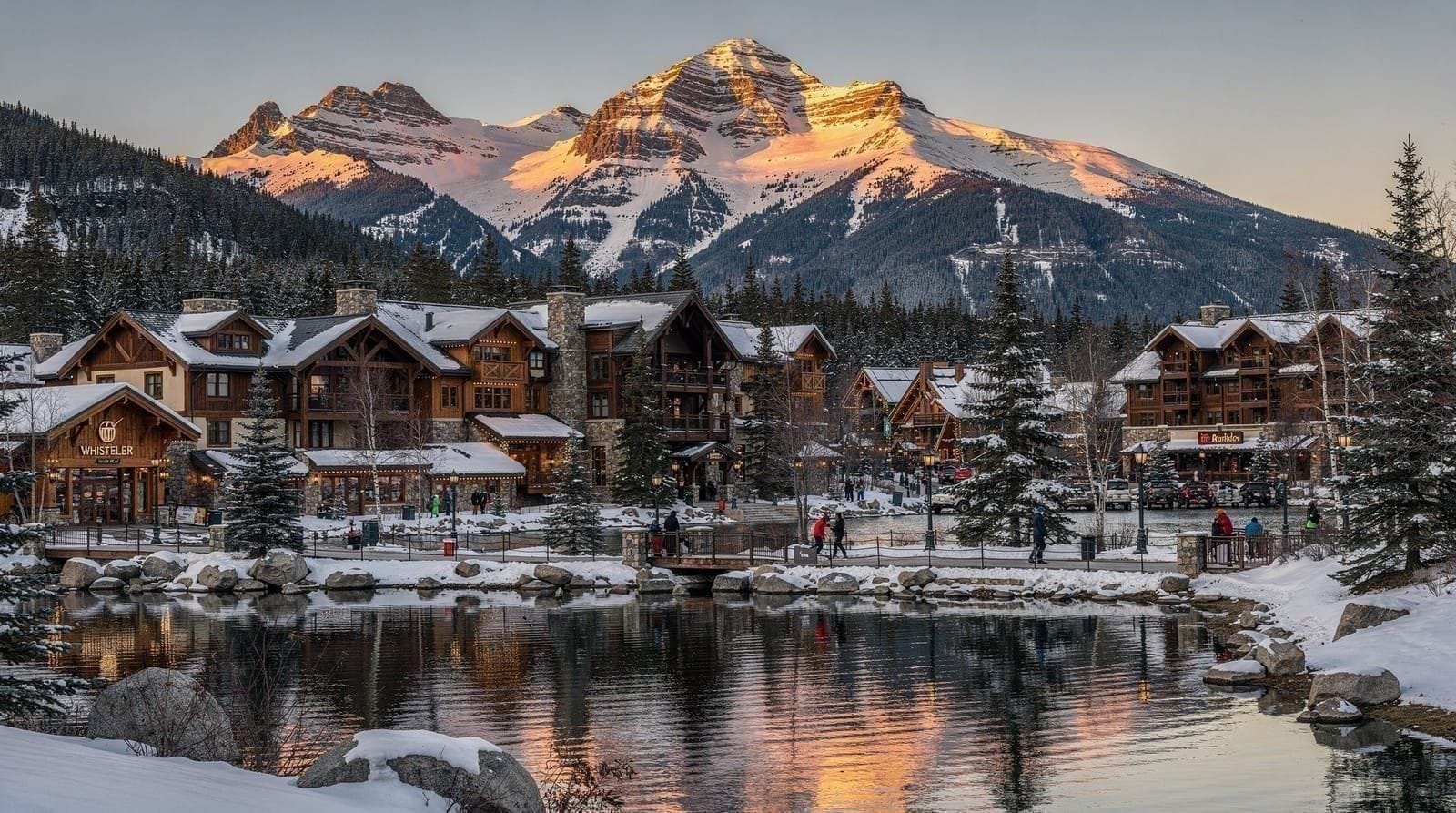
Whistler Blackcomb is the largest ski resort in North America by skiable terrain, roughly two hours north of Vancouver via the Sea-to-Sky Highway, with a season running late November through mid-May. Grouse Mountain is a compact ski and snowboard hill on Vancouver’s North Shore, 20-30 minutes from downtown, open roughly mid-December through March with a fraction of Whistler’s terrain but the advantage of proximity and night skiing.
Side-by-side comparison
| Whistler Blackcomb | Grouse Mountain | |
|---|---|---|
| Distance from downtown | ~120 km, 2-2.5 hr drive | ~20-30 min drive, or ~45-60 min transit |
| Terrain size | Largest in North America | Small, compact |
| Season | Late Nov–mid May | Mid-Dec–March (weather-dependent) |
| Day lift ticket | ~CAD 130-220 depending on booking | ~CAD 75-95 |
| Terrain difficulty | All levels, strong on advanced/expert | Mostly beginner/intermediate |
| Night skiing | Limited | Yes, into the evening |
| Bookable transport | Full-day tours, private transfers | Skyride Express, combined day tours |
| Best for | Genuine ski trips, multi-day stays | Evening sessions, first-timers, tight schedules |
Terrain and difficulty
There’s no real comparison on terrain volume — Whistler’s alpine bowls, glacier skiing, and connected mountain system dwarf anything Grouse offers, and Whistler’s global reputation for advanced and expert terrain is well earned. Grouse’s terrain suits beginners and intermediates well, with enough variety for a satisfying half-day, but experienced skiers looking to actually be challenged will find it limiting after a couple of runs. For a genuine ski vacation with terrain to explore across multiple days, Whistler is the only realistic choice between the two.
Price
Whistler’s dynamic pricing means a single-day lift ticket can run anywhere from roughly CAD 130 (booked well in advance, off-peak) to over CAD 200 on a walk-up peak day. Grouse’s pricing is simpler and consistently lower, typically CAD 75-95 for a full day. Multi-day Whistler tickets bring the per-day cost down for longer stays, but for a single short session, Grouse is unambiguously the cheaper option.
Travel time — the real differentiator
This is where the decision usually gets made in practice. Getting to Whistler and back eats most of a day even before accounting for ski time — a full-day Whistler tour from Vancouver realistically leaves four to six hours of actual skiing once transport and stops are factored in.
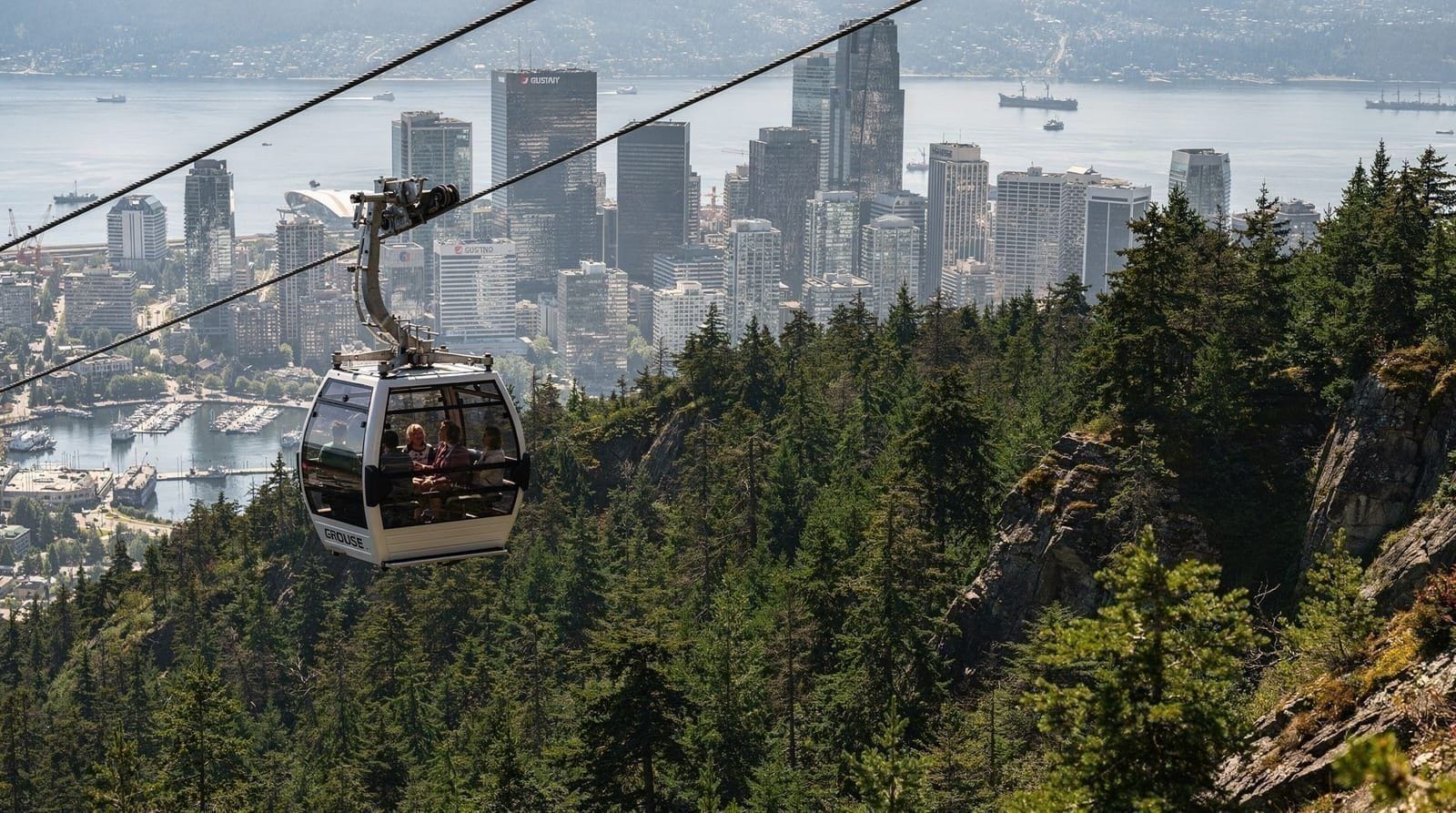
Grouse, by contrast, is close enough that a visitor can ski an evening session after a full day of city sightseeing; a Grouse Mountain Skyride admission ticket covers winter lift access without any highway driving at all. Visitors with only one or two nights in Vancouver, and no plan to extend into a Whistler overnight, are often better served skiing Grouse than attempting a rushed Whistler day trip.
Night skiing
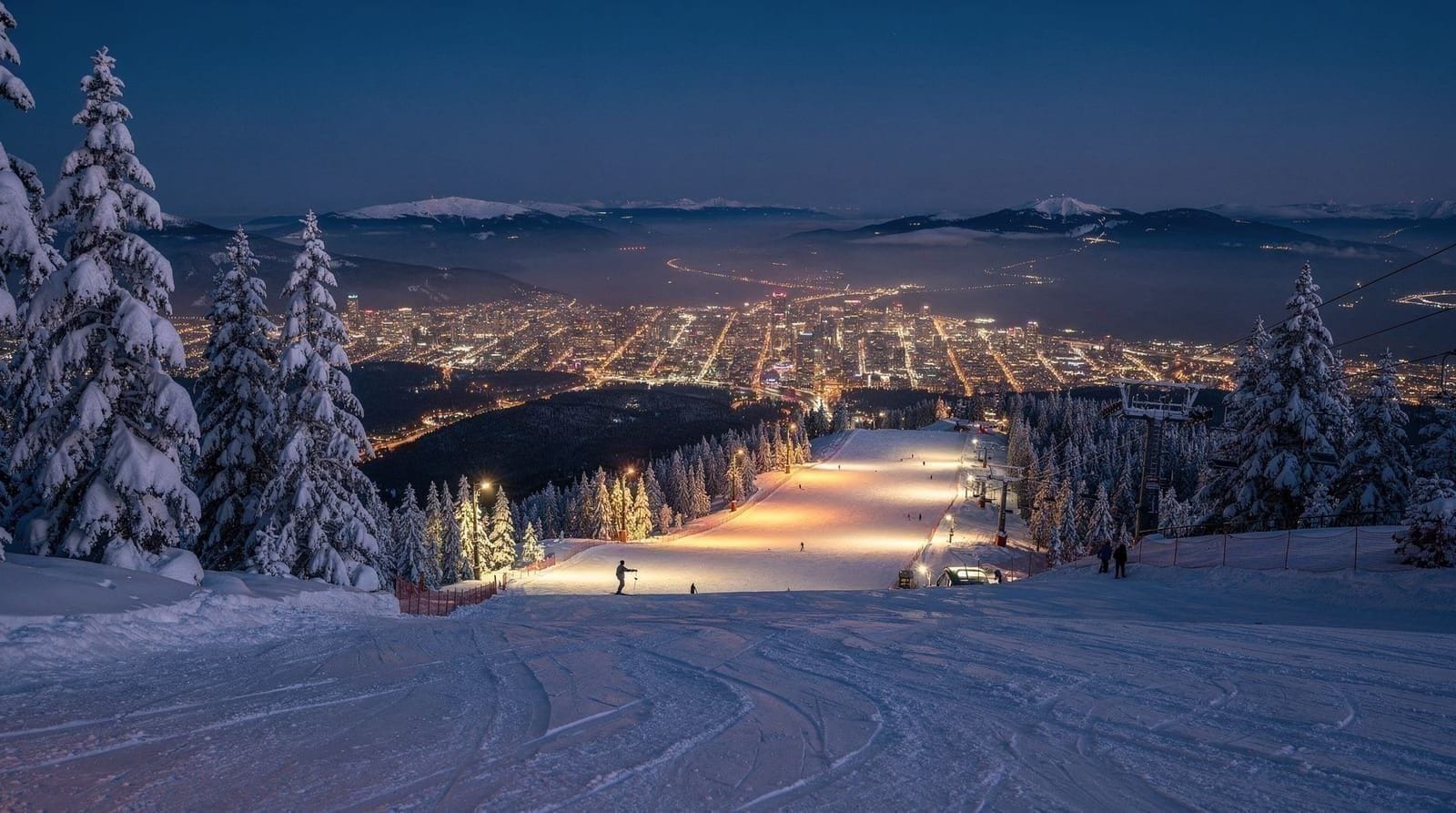
Grouse runs lights-on night skiing into the evening on most operating days, a feature Whistler doesn’t offer at anywhere near the same scale given its size and the practicalities of lighting that much terrain. For a Vancouver-based visitor or a local resident wanting a quick after-work ski session, this is a genuine, meaningful Grouse advantage that has nothing to do with terrain quality.
Snow reliability
Whistler’s higher alpine elevation gives it more consistent, reliable snow through the season, while Grouse’s lower coastal elevation makes it more vulnerable to warm, wet stretches that can thin snow cover or shorten the season from either end. A visitor planning a ski trip around specific dates has meaningfully better odds of good conditions at Whistler, particularly in the shoulder weeks of the season (late November/early December, and April).
Getting there without a car
Both mountains are accessible without driving, though the experience differs. Whistler requires either a scheduled shuttle, a guided tour, or a private transfer — genuinely feasible but a real commitment given the distance. A private Whistler and Peak 2 Peak Gondola tour is a reasonable option for visitors wanting flexibility without driving themselves. Grouse is reachable by SeaBus and a connecting bus in roughly 45-60 minutes total, making it the more practical no-car option for a spontaneous or last-minute ski session.
Après-ski and atmosphere
Whistler Village’s après-ski culture is a genuine part of the destination’s identity — bars and restaurants fill within minutes of lifts closing, and the pedestrian village is built specifically to support a full evening of dining and socializing after a day on snow.
Grouse has nothing equivalent; its summit dining venues serve a practical purpose (a meal between runs or after a night-skiing session) rather than functioning as a social scene in their own right, and most visitors head back down the mountain relatively promptly once they’re done skiing rather than lingering. For travelers who value the social, destination-resort atmosphere as much as the skiing itself, this is a meaningful point in Whistler’s favor that goes beyond terrain comparisons.
Equipment rental comparison
Both mountains offer full rental packages, but the experience differs with scale. Whistler’s rental operations are sized for a major destination resort, with a wide range of equipment tiers from basic to performance-level gear, and correspondingly can see longer lines during the first morning of peak weeks unless booked ahead. Grouse’s rental counter is smaller and simpler, generally quicker to get through outside weekend peak hours, though with a narrower range of equipment options — fine for a casual or beginner session, less ideal for an experienced skier wanting higher-performance gear.
Weather and conditions comparison
Whistler’s higher alpine elevation gives it more consistent, colder, and generally better-quality snow through the season, particularly in the upper mountain terrain. Grouse’s lower coastal elevation makes it considerably more exposed to warm, wet weather that can turn snow to slush or even rain mid-storm, especially during shoulder periods at the start and end of its season. A skier checking conditions the morning of a planned trip should weight this difference accordingly — a marginal-conditions day at Grouse is a much more common occurrence than at Whistler.
Which is better for a specific kind of traveler
Cruise passengers and visitors with only a single free afternoon should default to Grouse, given the total time Whistler’s drive consumes. Destination skiers who’ve built a Vancouver trip specifically around skiing should treat Whistler as non-negotiable and budget the time and cost accordingly.
Families with young, first-time skiers are often better served starting at Grouse, or even Mount Seymour, given the lower stakes and lower cost of a shorter, cheaper session before committing to a full Whistler day once kids have some basic skill and confidence. Solo travelers or couples on a longer, ski-focused trip should lean toward Whistler for the terrain variety, saving Grouse for a possible add-on evening session if time allows later in the trip.
For skiers who want more challenge than Grouse but can’t get to Whistler
Skiers who find Grouse’s terrain too limited but can’t fit in a full Whistler day have a middle option worth knowing about: Cypress Mountain, the North Shore’s most technically demanding local hill, or an introduction to backcountry skiing and splitboarding for guided access to genuinely advanced terrain without a full resort day. Neither fully replaces Whistler’s scale, but both offer more challenge than Grouse within a similar proximity trade-off.
Booking lead time for each
Whistler rewards advance booking more than Grouse does, given its dynamic pricing model — booking a month or more ahead can meaningfully lower the ticket cost, while a last-minute Whistler trip often means paying close to the highest walk-up rate. Grouse’s simpler, flatter pricing means there’s less financial upside to booking far ahead, though booking even a day or two out still helps avoid base-station lines on busy evenings and weekends. Visitors planning a spontaneous, last-minute ski session are generally better served by Grouse for exactly this reason — the cost penalty for late planning is far smaller.
A realistic time-and-cost breakdown
To make the trade-off concrete: a Grouse evening session realistically costs a visitor about three to four hours door-to-door (transit or driving, plus roughly two to three hours of actual ski time) and somewhere around CAD 90-120 once transport is included. A Whistler day trip realistically costs ten to twelve hours door-to-door, including four to six hours of actual ski time, and somewhere around CAD 250-350 once transport, lift ticket, rentals and food are all factored in.
Neither number is “better” in the abstract — the Grouse session delivers more ski time per dollar and per hour spent, while the Whistler day delivers a fundamentally larger and more varied mountain experience that Grouse’s time-and-cost efficiency can’t match on substance.
What frequent Vancouver skiers actually do
Locals who ski regularly through the season rarely treat this as an either/or choice at all — a common pattern is a Grouse or Cypress season pass for frequent, low-commitment evening sessions through the winter, combined with a handful of dedicated Whistler trips (sometimes overnight) for the days when genuine terrain variety and scale matter more than convenience. Visiting skiers with more than a few days in Vancouver can reasonably borrow this same pattern rather than picking one mountain exclusively for the whole trip.
What about Cypress and Seymour in this comparison?
This guide focuses on Whistler versus Grouse specifically since they represent the two clearest ends of the spectrum — Whistler for scale, Grouse for convenience and its bookable sightseeing-and-ski combination. Cypress and Mount Seymour sit in similar territory to Grouse on the convenience side of this trade-off, with Cypress offering more technical terrain than Grouse and Seymour offering lower prices and gentler beginner terrain. Visitors who’ve read this comparison and land on “something like Grouse, but not exactly” should check both alternatives against their specific priorities before defaulting to Grouse by name recognition alone.
Ski lessons and beginners compared
Both mountains run structured lesson programs, but the practical experience differs. Whistler’s ski and snowboard school is sized for a destination resort, with dedicated beginner zones, gentle magic-carpet lifts away from through-traffic, and multi-day progression packages that suit a family building skill across a longer stay.
Grouse’s lesson program is smaller and simpler — a single beginner area serves everyone, which means it can feel crowded on a busy weekend evening, but the shorter, gentler terrain and the lack of a two-hour drive make it a lower-stakes place to find out whether a first-timer actually enjoys skiing before committing a full Whistler day (and its cost) to the experiment. Many families use a Grouse lesson as the trial run and only book Whistler once the kids are keen.
What if the weather turns on the day you’d planned to ski Whistler?
This is a real risk worth planning around, not a hypothetical. A rain-to-the-base warm spell or a whiteout on the Sea-to-Sky Highway can turn a booked Whistler day into a washout, and because the drive itself eats hours, a bad-weather Whistler day is a bigger loss than a bad-weather Grouse evening. Travelers with a fixed Whistler day booked should check conditions the morning of and be willing to swap to a Grouse or Cypress session if the forecast looks marginal — better a shorter, closer ski day than a long drive into poor visibility. Visitors without a fixed date at all should build flexibility into the itinerary rather than locking in a single Whistler day early in the trip, precisely because BC coastal weather can shift fast.
The honest verdict
Cost of a full ski trip versus a single session
The comparison shifts depending on trip length. For a single ski session, Grouse is unambiguously cheaper — a day lift ticket plus transit costs a fraction of a Whistler day once travel time and ticket price are both factored in. For a multi-day ski trip, the math changes: Whistler’s per-day cost drops with multi-day tickets, and the resort’s much larger terrain means a multi-day visitor isn’t skiing the same handful of runs repeatedly the way a multi-visit Grouse skier eventually would be.
Visitors planning three or more ski days on a single trip should lean toward concentrating that time at Whistler rather than splitting it across multiple Grouse sessions, simply because Whistler’s terrain supports that many days of genuine variety in a way Grouse’s compact mountain doesn’t.
Injury risk and terrain forgiveness
Grouse’s smaller, gentler terrain is generally more forgiving for less experienced skiers, with shorter runs and lower average speeds reducing both the likelihood and severity of falls compared to Whistler’s longer, steeper, more varied terrain. That’s not a reason to treat Grouse as risk-free — any ski hill carries injury risk — but it’s a genuine factor for families or nervous first-timers weighing which mountain to start on before working up to Whistler’s larger scale.
Non-ski activities at each
Whistler’s summer identity — mountain biking, hiking, the Peak 2 Peak Gondola — gives it a genuine second season that Grouse doesn’t match at the same scale, covered fully in the Whistler summer guide. Grouse’s own non-ski attractions (the grizzly refuge, lumberjack show, alpine coaster) run primarily in the sightseeing season rather than alongside winter skiing, since the wildlife viewing pauses for hibernation and the coaster’s appeal is more of a warm-weather draw. For travelers weighing which mountain offers more to do beyond just skiing, the honest answer depends on which season the rest of that appeal falls in — Whistler in summer, Grouse in its non-winter sightseeing months.
Frequently overlooked details in this comparison
A couple of practical points get lost in a purely feature-based comparison. First, Whistler’s dynamic pricing means the actual cost gap between it and Grouse narrows considerably for visitors who book well ahead and choose off-peak days — the two mountains aren’t always as far apart on price as their headline ranges suggest.
Second, Grouse’s smaller scale means a repeat visitor exhausts its terrain variety far faster than a Whistler visitor would — a second or third Grouse session covers largely the same runs already skied, while Whistler’s scale supports many return visits without repetition. Both points matter most for visitors planning more than a single ski day on their Vancouver trip, where the cumulative value of each option shifts compared to a single isolated session.
Parking and driving yourself
Self-driving is an option at both mountains, but the trade-offs differ. Grouse has paid parking at the base that fills on busy evenings and weekends, though turnover is usually quick enough that a short wait clears within 15-20 minutes; the Sea-to-Sky Highway to Whistler is a well-maintained four-lane route but can require winter tires or chains during storms, and parking in Whistler Village itself ranges from free outlying lots with a shuttle to paid lots closer to the lifts.
Visitors uncomfortable driving in winter mountain conditions, or without a rental car at all, are generally better served by a booked tour or transfer for Whistler specifically, given the stakes of driving the Sea-to-Sky in poor weather versus the shorter, lower-consequence drive to Grouse.
If you already hold a multi-resort season pass
This changes the math for some visitors more than anything else on this page. Whistler Blackcomb is part of the Ikon Pass network, so a traveler who already holds an Ikon Pass from a home resort may have a set number of Whistler days already included or discounted, which can make Whistler the obviously cheaper option regardless of the drive — the marginal cost of a Whistler day drops to transport only rather than transport plus a full lift ticket.
Grouse Mountain is not part of either major multi-resort pass network, so pass-holders pay full price there regardless. Anyone arriving with an existing Ikon Pass should check remaining day allocations before assuming Grouse is the budget-friendly choice by default; for pass-holders specifically, the usual price advantage can flip entirely in Whistler’s favor.
Combining both in one trip
For visitors staying long enough, it’s entirely possible to do both: an evening session at Grouse early in the trip, followed later by a full Whistler day once other city sightseeing is out of the way. This spreads the ski budget across two genuinely different experiences rather than forcing a single either/or choice, and it’s a common pattern among visitors on a 5-day Vancouver and Whistler itinerary who want a taste of both without dedicating the entire trip to skiing.
Top experiences
Bookable activities with verified prices and instant confirmation on GetYourGuide.