Victoria day trip from Vancouver — ferry times, costs, and what to see
From Vancouver: Full-Day Victoria Tour with Ferry Ticket
Can you do Victoria as a day trip from Vancouver?
Yes, but it's a full day rather than a quick outing — the BC Ferries crossing alone runs about 1 hour 35 minutes each way, and with the drive to and from the terminals, a realistic round trip is 8 to 10 hours with roughly 4 to 5 hours in Victoria itself. A guided tour or a seaplane cuts travel time but adds cost.
Victoria is close enough to Vancouver to feel like an obvious day trip, and far enough away — separated by open water rather than a bridge or tunnel — that the logistics deserve real planning rather than a casual “we’ll just head over” attitude. The crossing itself takes longer than most visitors expect, which shapes everything else about how the day should be structured. As British Columbia’s provincial capital and Vancouver Island’s largest city, Victoria has a genuinely different character from Vancouver — smaller scale, more overt British colonial-era architecture around the harbour, and a slower pace that a lot of day-trippers only get a partial taste of before the return ferry is due.
| Where | Vancouver Island, via BC Ferries or seaplane |
| Cost | Around CAD 100-230 per person depending on method |
| Time needed | 8-10 hours round trip, 4-5 hours in Victoria |
| Getting there | BC Ferries (Tsawwassen-Swartz Bay), seaplane, or guided tour |
| Best time | May-September for the fullest ferry schedule and weather |
The crossing: your main planning constraint
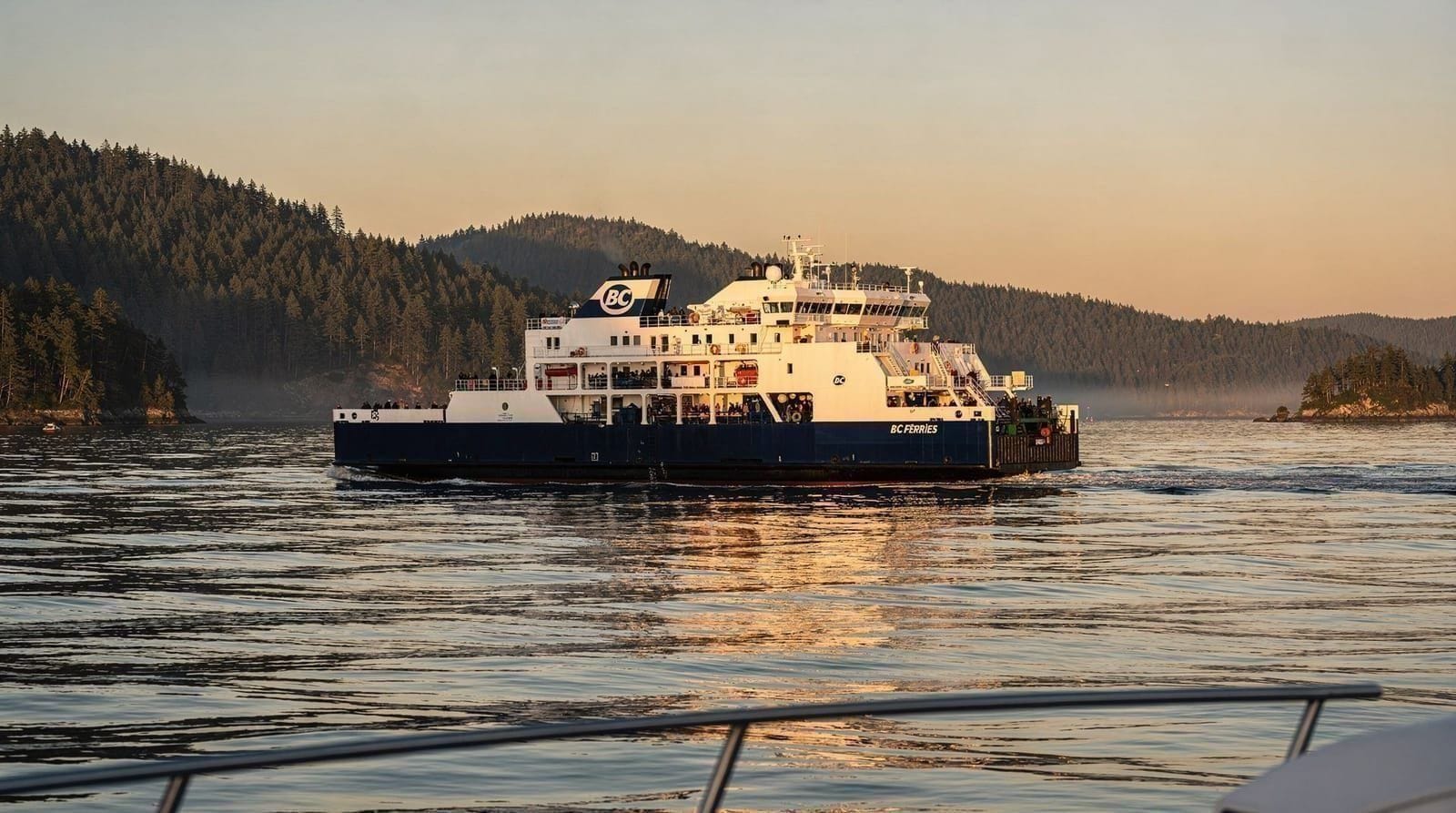
Victoria sits on Vancouver Island, and the standard route from Vancouver runs via BC Ferries between the Tsawwassen terminal (about 30 to 40 minutes south of downtown Vancouver) and Swartz Bay (about 25 to 30 minutes north of downtown Victoria). The sailing itself takes roughly 1 hour 35 minutes and passes through the Southern Gulf Islands — a scenic stretch where seals, bald eagles, and occasionally orcas are visible from the deck, particularly in the warmer months.
Add it up and the ferry portion of the day, terminal to terminal including a reasonable check-in buffer, runs close to 2.5 hours each way — before any time in Victoria itself. That’s the number that should anchor your day-trip planning: a genuine round trip with several hours in the city is a 9-to-10-hour day, not the 5-or-6-hour outing a straight-line map might suggest.
Driving yourself vs. the ferry as a foot passenger
Two distinct approaches work for this trip, and they suit different travelers. Driving your own or a rental vehicle onto the ferry gives you a car in Victoria, useful for reaching Butchart Gardens independently or exploring beyond the downtown core, but it means paying a vehicle fare (commonly CAD 60 to 75 one-way, plus separate passenger fares of roughly CAD 16 to 20 per adult) and, in peak season, either booking a reservation in advance or risking a long wait if a sailing is full.
Walking on as a foot passenger is simpler and cheaper — no vehicle fare, no reservation needed in most cases, and downtown Victoria’s Inner Harbour is walkable and well served by local transit and taxis from the ferry terminal via a connecting bus. The trade-off is reduced flexibility once in Victoria, since Butchart Gardens and some other attractions sit outside easy walking distance from downtown.
Booking a guided day tour instead
A guided full-day Victoria tour removes both the driving and the ferry logistics: pickup from a downtown Vancouver hotel, a reserved vehicle spot on the ferry, and typically a structured itinerary covering the Inner Harbour, the British Columbia Parliament Buildings, and often Butchart Gardens in the same day. Booking a full-day Victoria tour with ferry ticket included is a reasonable choice for solo travelers, anyone uncomfortable navigating an unfamiliar ferry terminal, or visitors who’d rather not spend part of their one day in Victoria hunting for parking.
For travelers who specifically want both Victoria’s downtown and Butchart Gardens covered without planning the logistics themselves, a combined Victoria and Butchart Gardens day tour is the most efficient single option, and it’s worth comparing directly against the dedicated Butchart Gardens day trip guide if the gardens are the higher priority of the two.
The seaplane alternative
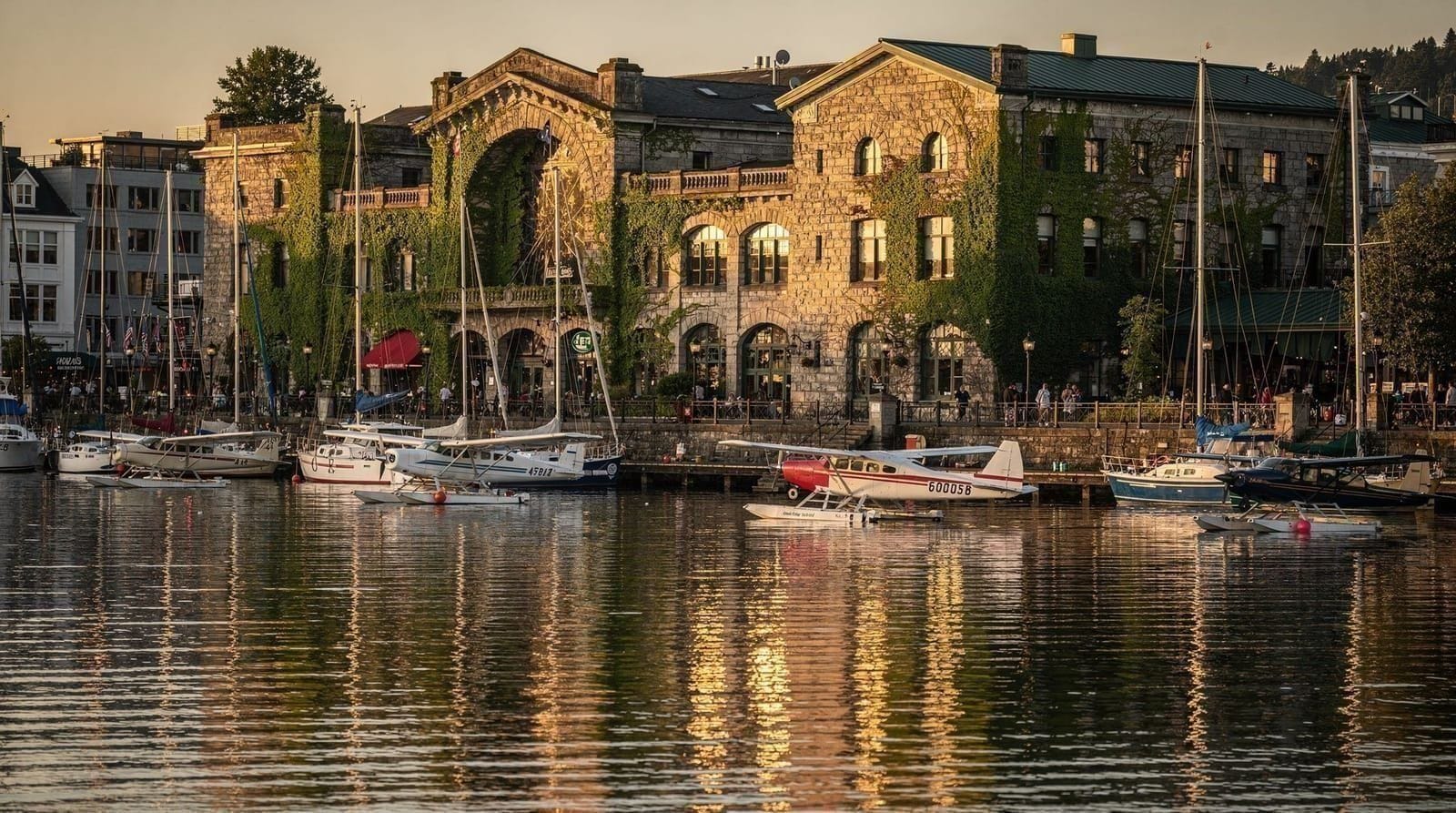
Harbour Air and similar operators run scheduled floatplane service directly between downtown Vancouver’s Coal Harbour and Victoria’s Inner Harbour, cutting the one-way travel time to roughly 35 to 45 minutes — a fraction of the ferry’s 2.5-hour terminal-to-terminal reality. It costs substantially more than the ferry and doesn’t carry a vehicle, but for travelers on a tight schedule who want a genuine near-full-day in Victoria rather than a rushed half-day, a seaplane day trip to Victoria with Butchart Gardens effectively doubles the useful time on the ground compared to a ferry-based trip.
What to do with 4 to 5 hours in Victoria
Once you’ve arrived, downtown Victoria rewards a walking-focused visit more than a checklist of paid attractions. The Inner Harbour is the natural anchor — flanked by the Parliament Buildings and the Fairmont Empress hotel, with street performers and harbour ferries (the small “pickle boats”) criss-crossing the water through the warmer months. Government Street runs from the harbour through the shopping district, and Chinatown, one of the oldest in North America, sits a short walk north.
Given the time pressure of a single-day visit, most travelers do better picking one or two anchor activities rather than trying to cover the whole city. A walk through the Inner Harbour and downtown core, paired with either Butchart Gardens (if you have a car or a tour built around it) or a shorter museum stop, fills a 4-to-5-hour window comfortably without feeling rushed. Trying to add whale watching, Butchart Gardens, and an extended downtown walk into the same single-ferry day trip is usually too much — that combination works much better across an overnight stay.
What it costs
| Item | Approximate cost (CAD) |
|---|---|
| BC Ferries passenger fare, adult, one-way | $16–20 |
| BC Ferries vehicle fare, one-way | $60–75 |
| Guided full-day tour, per person | $160–230 |
| Seaplane, one-way per person | $180–250 |
| Lunch in Victoria | $20–35 per person |
| Butchart Gardens admission (if added) | $22–45 depending on season |
A foot-passenger ferry trip for two, with lunch, comes in comfortably under CAD 100 per person. Driving a car onto the ferry roughly doubles that for a couple, since the vehicle fare is a flat cost regardless of passenger count — which is where a shared vehicle with three or four people becomes noticeably better value per person than a solo drive-on trip.
A few adjustments trim the cost meaningfully without cutting the trip short. Traveling as foot passengers and using BC Transit rather than a taxi from Swartz Bay saves roughly CAD 40 to 50 per person compared to driving a car onto the ferry solo. Packing a lunch or eating outside the immediate Inner Harbour tourist strip — a few blocks inland on Fort Street or in Chinatown — typically costs 20 to 30% less than the harbourfront restaurants aimed squarely at day-trippers. And booking any guided tour or the seaplane at least a few weeks ahead, rather than the week of travel, generally secures noticeably better rates than last-minute peak-season pricing.
Best time of year to go
May through September is the most dependable window: ferry sailings run close to hourly in peak summer, weather is typically dry and mild, and every attraction in Victoria operates on full hours. Shoulder months (April, October) still work well and come with noticeably thinner crowds on the ferry and in the Inner Harbour. Winter is workable for the city itself — Victoria has a mild coastal winter climate and the downtown core stays fully open — but ferry sailings run less frequently, Butchart Gardens operates on reduced hours outside its holiday illumination season, and shorter daylight compresses the usable time in the city further.
Should you stay overnight instead
A single day trip to Victoria works, but it’s an efficient rather than a leisurely way to see the city — most of the “extra” activities that make Victoria worth a dedicated visit (whale watching, a full Butchart Gardens visit without rushing, exploring beyond the downtown core) get squeezed by the ferry schedule. The 5-day Vancouver and Victoria itinerary builds in enough time to treat the island properly, and travelers who can spare even one night will get meaningfully more out of Victoria than the day-trip version allows, without needing to compress a full city and garden visit into a single ferry window.
What first-timers get wrong about the ferry experience itself
Beyond scheduling, a few practical details about the BC Ferries crossing surprise first-time visitors. The ships are large enough to feel more like a mini-cruise than a simple water taxi — most vessels have a cafeteria, a gift shop, and outdoor deck seating, and the crossing through the Southern Gulf Islands is genuinely scenic rather than open-ocean monotony.
Boarding as a foot passenger means walking on well before vehicles load, and disembarking works the same way in reverse, so foot passengers are usually off and moving toward transit or a taxi noticeably faster than vehicle passengers navigating the car deck. Vehicle passengers must return to their cars partway through the crossing when instructed by announcement, since walking around the vehicle deck isn’t permitted while underway.
The V2V passenger ferry option
Alongside BC Ferries’ Tsawwassen–Swartz Bay route, a separate downtown-to-downtown passenger catamaran service (branded V2V Vacations) runs directly between Vancouver’s Coal Harbour and Victoria’s Inner Harbour without requiring a drive to either terminal. The crossing takes roughly 3.5 hours — longer than the BC Ferries route itself, but it eliminates the drive time on both ends and drops passengers directly in the Inner Harbour rather than 25 minutes outside the city. It runs a limited seasonal schedule (typically spring through fall) and costs more per person than the standard BC Ferries fare, which makes it best suited to travelers without a car who value the door-to-door convenience over the lowest possible price.
Alternative departure terminals worth knowing about
Tsawwassen-Swartz Bay is the standard route, but it isn’t the only BC Ferries connection to Vancouver Island. The Horseshoe Bay-Departure Bay route into Nanaimo is roughly comparable in crossing time and can be a slightly shorter drive for visitors staying in North or West Vancouver rather than downtown, though it lands further from Victoria itself and adds an extra hour or so of driving on the island side to reach the city. For a standard downtown-to-downtown Victoria day trip, Tsawwassen-Swartz Bay remains the more direct and commonly used option, but it’s worth checking both routes’ departure times against your actual accommodation location rather than defaulting to Tsawwassen automatically.
Booking the ferry: peak-season specifics
During July, August, and long weekends, BC Ferries’ vehicle reservation system genuinely matters rather than being a nice-to-have. Reservations open weeks in advance and popular morning sailings on summer Fridays and Saturdays can book out entirely, leaving walk-up vehicles queuing for a later crossing with no guarantee of space that day. Foot passengers face far less risk, since passenger-only capacity is rarely the bottleneck, but anyone bringing a car should treat a reservation as effectively mandatory rather than optional for peak-season travel. Reservation fees are modest, typically a small surcharge added to the standard vehicle fare, and are refundable or changeable up to a cutoff before departure if plans shift.
Combining the trip with whale watching
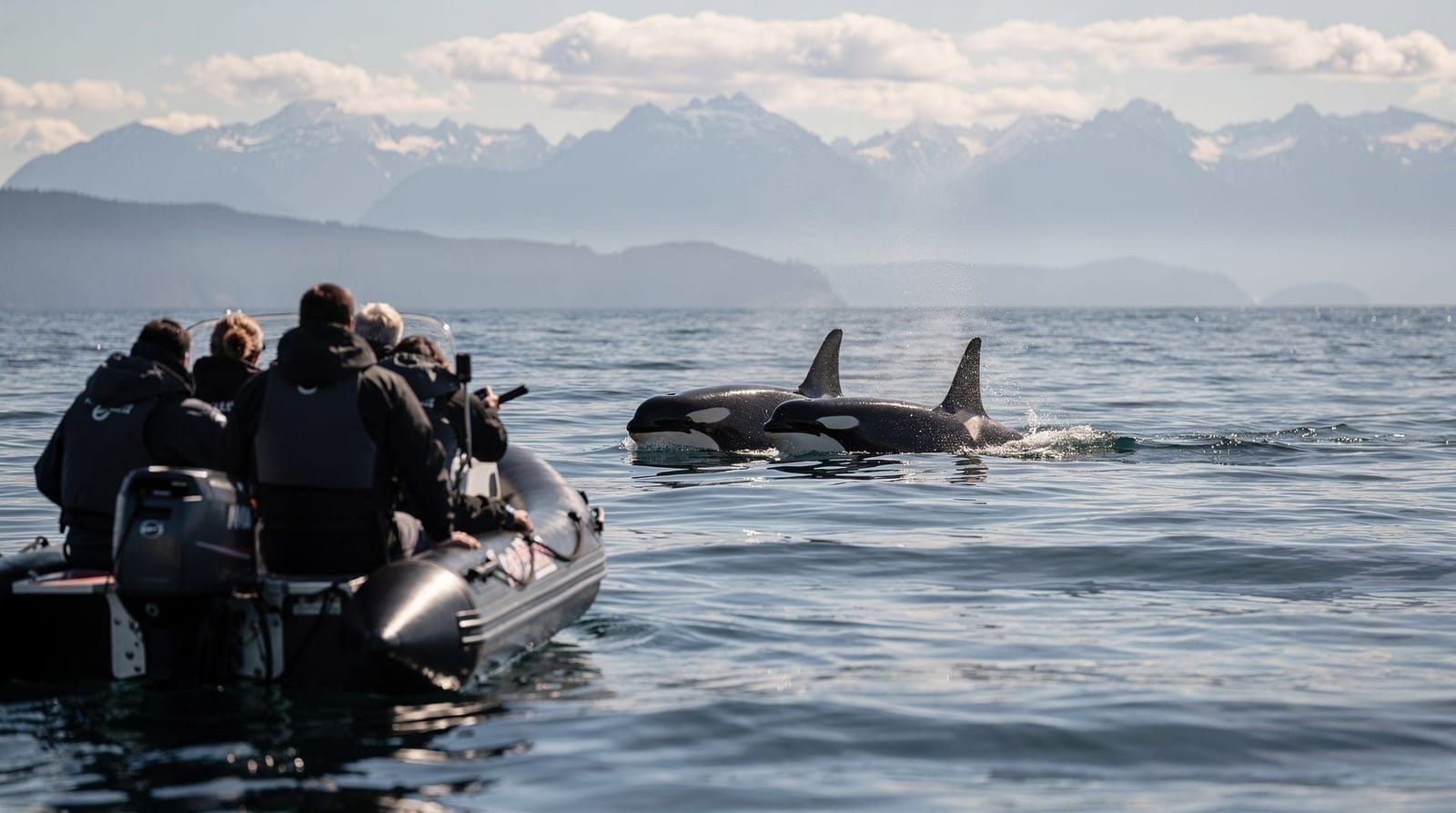
Victoria is one of the strongest whale-watching bases in the region, and a number of operators run 3-hour tours directly from the Inner Harbour, timed to fit around the ferry schedule for day-trippers. Realistically, adding a whale-watching tour to a single-ferry day trip is tight — between the crossing, the tour itself, and getting back to the terminal for a reasonable return sailing, it leaves little room for anything else in Victoria that day. Travelers who want both whale watching and time in the city are better served by an overnight stay or a tour that’s specifically built around the combination, since trying to fit a 3-hour boat tour into an already time-constrained ferry day usually means sacrificing the downtown walk entirely.
Traveling with kids
Victoria day trips work well for families, with a few adjustments to expectations. The ferry crossing itself tends to be a highlight for younger children — outdoor decks, the chance to spot wildlife, and enough space to move around after a car ride to the terminal. Once in Victoria, the Inner Harbour’s street performers and the pickle-boat harbour ferries are reliably entertaining for kids without requiring a paid attraction.
Families planning to add Butchart Gardens should budget extra time, since young children move through the gardens’ paths more slowly than the 45-minute walk-through a fit adult might manage, and the gardens’ size means a rushed visit undercuts much of the appeal for kids who want to actually explore rather than march past the flower beds.
Solo travelers doing the day trip
Solo travelers generally do best as foot passengers, since it removes the vehicle-fare cost that makes driving alone the least economical way to make the crossing. Downtown Victoria’s Inner Harbour and Government Street are easy to explore solo without feeling conspicuous, and a guided full-day tour is also a reasonable choice for solo travelers who’d rather have company and a structured itinerary than navigate the ferry and Butchart Gardens logistics entirely independently.
What repeat visitors get wrong
The most common mistake on a Victoria day trip is underestimating the ferry terminal buffer, particularly with a vehicle in peak summer — arriving at Tsawwassen 20 minutes before a sailing during a July weekend is a real risk of missing that departure and waiting up to two hours for the next one.
The second most common mistake is over-scheduling the Victoria side of the day: treating downtown Victoria, Butchart Gardens, and a whale-watching tour as all achievable in one day trip consistently leads to a rushed, unsatisfying version of all three rather than a genuinely good version of one or two. The honest planning approach is to pick a clear priority for the day and build a buffer into the ferry timing rather than cutting it close in either direction.
Packing and practical notes
Victoria’s climate runs slightly milder and drier than Vancouver’s on average, but the ferry crossing itself is exposed to wind even on a warm day, so a light jacket is worth having regardless of season. Comfortable walking shoes matter more here than in most Vancouver day-trip destinations, since both downtown Victoria and Butchart Gardens involve substantial walking on foot, with limited practical benefit from a car once you’re within either area. Cash isn’t strictly necessary — Victoria’s tourism infrastructure is as card-friendly as Vancouver’s — but a small amount is useful for the harbour ferries and some smaller vendors around the Inner Harbour market stalls.
Getting around once you’re in Victoria
Downtown Victoria is compact enough to cover almost entirely on foot — the Inner Harbour, Government Street, Chinatown, and the main museum district all sit within a 15-to-20-minute walking radius of each other. For anyone arriving as a foot passenger, BC Transit buses connect Swartz Bay terminal to downtown in about 30 to 40 minutes and are the most economical option for the last leg of the trip.
Taxis and rideshare are also available at the terminal, running roughly CAD 45 to 60 for the same trip with less waiting. Travelers who drove their own vehicle onto the ferry have the most flexibility, particularly for reaching Butchart Gardens, but should expect downtown parking to run similar rates to central Vancouver — CAD 3 to 6 per hour in paid lots.
Victoria day trip vs. other Vancouver day trips
Among the region’s major day trips, Victoria sits in the middle in terms of time commitment — longer than a Squamish day trip or a stop at Bowen Island, roughly comparable in total time to a Whistler day trip, though the nature of the travel differs substantially: a ferry crossing with a fixed schedule versus a highway drive with more flexible timing.
Victoria’s advantage is the destination itself — a genuinely distinct city with its own downtown, harbour, and island character, rather than a single attraction or a mountain village. Visitors weighing Victoria against Butchart Gardens specifically should note that the two are frequently combined on the same day since Butchart Gardens sits only 20 to 25 minutes from downtown Victoria, but doing both properly, rather than as a rushed pairing, generally benefits from the extra flexibility of a private vehicle or a tour built specifically around the combination.
Cruise passengers and short stopovers
Victoria also functions as a cruise port for some Alaska-bound itineraries, and travelers arriving that way face a different set of constraints than a standard Vancouver-based day trip — typically a much shorter window measured in hours rather than a full day, dictated entirely by the ship’s departure time. For cruise passengers with only 3 to 4 hours in port, downtown Victoria’s Inner Harbour and the immediately surrounding streets are realistically the only feasible option; Butchart Gardens and any activity requiring transport beyond downtown should generally be skipped unless the ship’s call is unusually long.
Weather considerations specific to the crossing
Because part of the journey happens on open water, weather affects a Victoria day trip differently than a purely road-based trip like Whistler or Squamish. Wind and rougher seas can occasionally affect sailing comfort, particularly in the Georgia Strait crossing outside the sheltered Gulf Islands stretch, though outright cancellations are rare and mainly tied to severe winter storms rather than routine rain.
Fog is the more common seasonal disruption, occurring most often in late fall and winter mornings, and can push back sailing times by 30 minutes to an hour on the rare occasions it settles in heavily enough to affect visibility. Checking BC Ferries’ current conditions page the morning of travel is a reasonable habit for any trip planned outside the reliable June-to-September window.
The honest verdict
A Victoria day trip is genuinely worth doing if your Vancouver stay doesn’t allow for an overnight elsewhere, and the ferry crossing itself is scenic enough to be part of the appeal rather than pure downtime. Where it falls short is trying to do too much: the ferry schedule imposes hard limits on the day, and visitors who try to combine downtown Victoria, Butchart Gardens, and any other activity in one day trip usually end up rushing all three. Picking a clear priority — city or gardens, rarely both at a relaxed pace — and choosing the travel method (ferry, guided tour, or seaplane) that matches your budget and schedule is the difference between a satisfying day trip and an exhausting one.
Money-saving adjustments worth considering
A few small choices meaningfully change the day’s total cost without cutting the experience short. Booking BC Ferries reservations and any guided tour several weeks ahead rather than the week of travel typically secures better rates than last-minute peak-season pricing.
Traveling as foot passengers and connecting via BC Transit rather than a taxi from Swartz Bay saves a real amount per person compared to driving a car onto the ferry solo, particularly for a solo traveler or couple who don’t need the flexibility a car provides. Packing a lunch or picnicking at Butchart Gardens rather than eating at the harbourfront restaurants aimed at day-trippers is another straightforward way to trim the day’s food budget without meaningfully changing the experience.
Combining with a Vancouver Island extension
Travelers with more flexibility sometimes use the Victoria crossing as the first leg of a longer Vancouver Island trip rather than a same-day round trip — continuing on toward Nanaimo or Tofino rather than returning to Vancouver that evening. This isn’t a true day trip anymore, but it’s worth knowing the option exists for visitors weighing whether a rushed single day is really the best use of the ferry crossing, especially given how much of the crossing’s cost and hassle is identical whether you stay four hours or four days. The Vancouver Island 7-day itinerary lays out what that longer version looks like in practice.
Frequently asked questions — Victoria day trip from Vancouver
How long is the ferry from Vancouver to Victoria?
The BC Ferries crossing between Tsawwassen and Swartz Bay takes about 1 hour 35 minutes. Add roughly 30 to 40 minutes driving from downtown Vancouver to the Tsawwassen terminal, plus a recommended 30 to 60 minute check-in buffer for vehicles in peak season, and another 25 to 30 minutes driving from Swartz Bay into downtown Victoria.Do I need to book the ferry in advance?
Foot passengers generally don't need reservations and simply walk on, though it's worth arriving 20 to 30 minutes early during summer weekends. Vehicle reservations are strongly recommended in July and August and on long weekends, since walk-up vehicle space isn't guaranteed and sailings can fill, leaving you waiting for the next available crossing.Is it cheaper to drive or take a tour to Victoria?
Driving yourself is usually cheaper for two or more people once you factor in a shared vehicle ferry fare (commonly CAD 60–75 one-way for a standard vehicle plus driver, before passenger fares), but a guided tour that includes ferry passage, transport within Victoria, and often Butchart Gardens can work out competitively for solo travelers or anyone who doesn't want to manage the crossing and parking themselves.Can you see Victoria and Butchart Gardens in the same day trip?
Yes, and most full-day tours from Vancouver combine both by default. Doing it independently is tighter but doable — Butchart Gardens sits about 20 to 25 minutes from downtown Victoria, so a half-day in the gardens and a shorter walk through the Inner Harbour is a realistic combination within one long day.Is the Vancouver to Victoria seaplane worth it?
For travelers short on time, yes — Harbour Air's floatplane service runs downtown-to-downtown in about 35 to 45 minutes, versus 3 to 4 hours door-to-door by ferry, freeing up several extra hours in Victoria. It costs significantly more than the ferry and vehicle capacity doesn't apply, so it suits travelers without a car or those prioritizing time over budget.What's the best time of year for a Victoria day trip?
May through September offers the most reliable weather and the fullest ferry schedule, with sailings roughly every hour in peak summer. Winter sailings run less frequently and Victoria's outdoor attractions, including Butchart Gardens, operate on reduced hours, though the Inner Harbour and downtown core remain fully open year-round.
Top experiences
Bookable activities with verified prices and instant confirmation on GetYourGuide.