Vancouver and Victoria in 5 days: an island-hopping itinerary
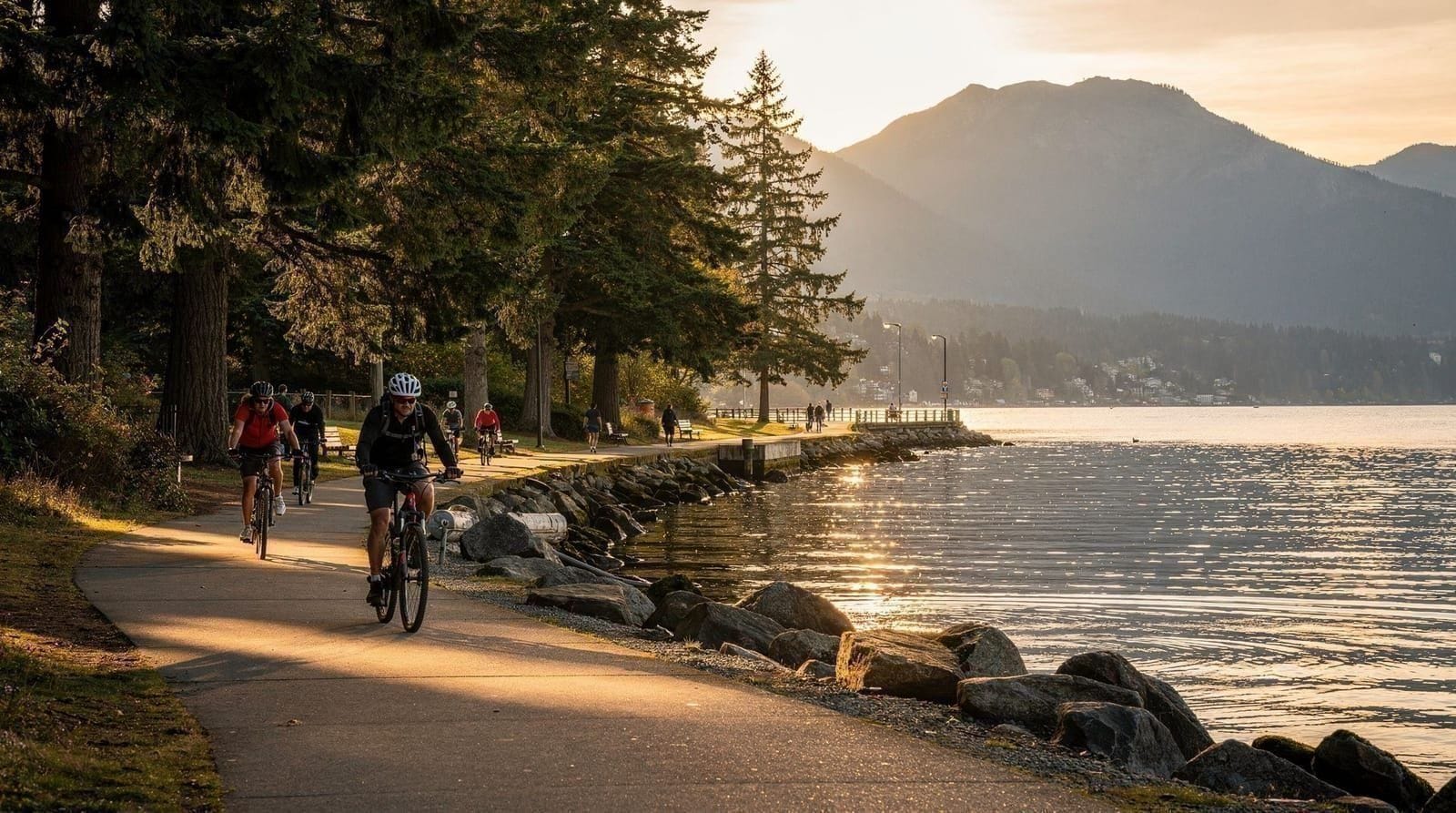
Vancouver: Stanley Park Bicycle Tour
Duration: 3 hours
Victoria gets sold constantly as a day trip from Vancouver, and a lot of visitors do it that way — up early, ferry over, a few hours in the city and Butchart Gardens, ferry back exhausted. It works, technically. But Victoria is a genuine small city with its own history and pace, not a theme park stop, and it holds up much better to two full nights than to a single compressed day. This itinerary treats it that way.
The basic shape of the trip
Two days in Vancouver, then three days across the water in Victoria, including Butchart Gardens and a whale watching excursion. No car is required for any part of this — Vancouver’s transit covers the city well, and Victoria itself is small enough to walk, with organized tours handling the out-of-town stops.
If you’re coming from outside Canada, check whether you need an eTA (electronic Travel Authorization) before you fly — most visa-exempt visitors arriving by air, including from the EU, UK, and Australia, need one, while US visitors travel on a passport without an eTA. This doesn’t affect the Vancouver–Victoria leg itself, since it’s a domestic crossing, but it’s worth sorting before departure regardless. Our getting around Vancouver guide covers the transit fare cards and the SkyTrain-to-airport connection if you’re landing at YVR.
Day-by-day at a glance
| Day | Base | Focus |
|---|---|---|
| 1 | Vancouver | Gastown, Stanley Park bike or walk |
| 2 | Vancouver | North Shore detour or more downtown neighborhoods |
| 3 | Victoria | Ferry or seaplane crossing, Inner Harbour evening |
| 4 | Victoria | Butchart Gardens, downtown Victoria |
| 5 | Victoria → Vancouver | Whale watching, afternoon crossing back |
Day 1: Downtown Vancouver
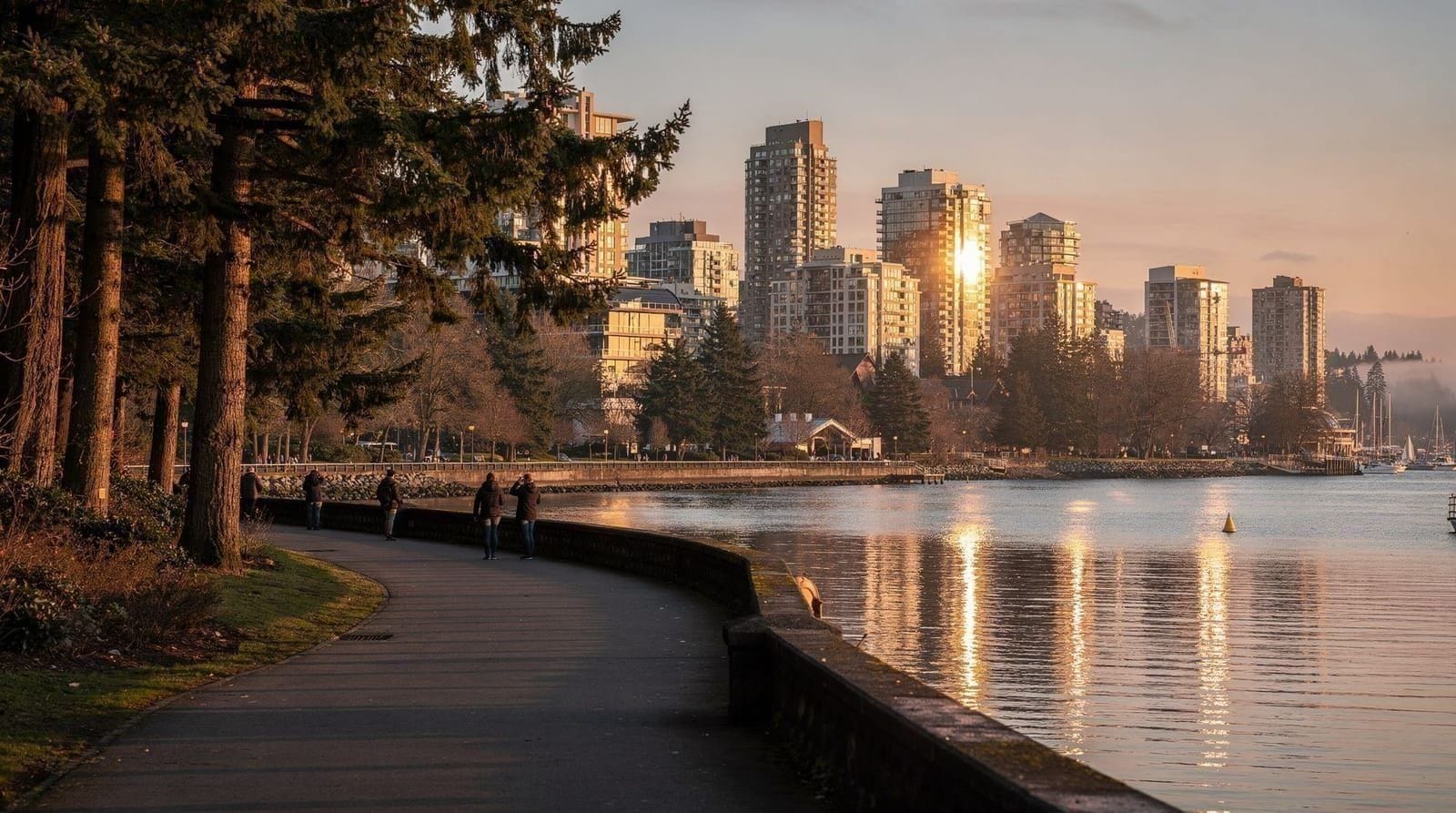
Start with the city. Gastown, Vancouver’s oldest neighborhood, is a reasonable first stop for coffee and orientation, with its cluster of independent shops and the steam clock most visitors photograph on the way past. From there, Stanley Park is the obvious afternoon anchor — 405 hectares of largely old-growth forest ringed by a 10-kilometre seawall, more than double the size of Central Park. A guided Stanley Park bicycle tour is an efficient way to cover the seawall and get some historical context on the totem poles and park landmarks without needing to plan a route yourself.
For a broader city overview that also covers the North Shore, a combined city, lookout, and Capilano Suspension Bridge ticket bundles several of Vancouver’s best-known sights into one outing if you’d rather see more ground on day one and use day two for something slower. Otherwise, Granville Island — a former industrial peninsula now home to a public market, artisan studios, and a working boatyard — makes for a good, low-key second stop in the afternoon.
Day 2: More city time, or a North Shore detour
With a full second day before the ferry crossing, either go deeper into downtown neighborhoods — Yaletown for its converted warehouse district and restaurants, or Chinatown for the Dr. Sun Yat-Sen Classical Chinese Garden — or take a half-day trip across the water to the North Shore mountains, since you won’t have a car once you reach Victoria and this is the easiest window for it. Grouse Mountain and Capilano Suspension Bridge, reached via the SeaBus and a short bus connection, are the standard North Shore pairing if you want a taste of the mountains before switching gears entirely to island time.
Have dinner somewhere memorable your last night in the city — Yaletown and the West End both have concentrations of well-regarded mid-range restaurants within easy walking distance of most downtown hotels. If you’re deciding how to split your time between the two cities generally, our Vancouver versus Victoria comparison is a useful reference for what each city actually does better.
Day 3: The crossing to Victoria
You have a few real options for getting across the Strait of Georgia, and they’re worth comparing rather than defaulting to whichever comes up first in a search — our BC Ferries guide covers routes, fares, and reservation timing in more depth if you want the full picture before choosing.
BC Ferries runs the main vehicle and passenger route from Tsawwassen, about 45 minutes south of downtown Vancouver, to Swartz Bay near Victoria — a roughly 1 hour 35 minute crossing with departures every one to two hours through the day in peak season. Since this itinerary assumes no car, you’d take a bus or shuttle to the Tsawwassen terminal and walk on as a foot passenger, then connect to downtown Victoria (about 30 minutes) via bus or shuttle on the other side. It’s the cheapest option by a wide margin but involves the most connections.
Alternatively, passenger-only ferries and seaplanes run directly between downtown Vancouver and downtown Victoria’s Inner Harbour, cutting out the terminal transfers entirely — the seaplane crossing takes about 35 minutes and lands you within walking distance of the Fairmont Empress and most downtown Victoria hotels, though it costs considerably more than the BC Ferries route. Helicopter service is also available on the same route for a similar time savings at a similar premium. For a first trip without a car, the direct passenger options are worth the extra cost if your budget allows — they remove the two ground transfers on either end of the BC Ferries crossing, which is where a day can start feeling long.
However you cross, arrive in Victoria in time to check into your hotel and get an orientation walk in. The Fairmont Empress is the city’s landmark historic hotel, directly on the Inner Harbour; Hotel Zed Victoria offers a more playful, budget-conscious mid-range option a short walk from downtown; and the Oswego Hotel is a reasonable boutique choice between the two on price. Spend the evening walking the Inner Harbour, where the Parliament Buildings are lit up after dark, and have dinner downtown — Red Fish Blue Fish, a dockside seafood stand near the harbour, and Il Terrazzo, tucked into a courtyard off Waddington Alley, are both well-established options.
Day 4: Butchart Gardens and Victoria’s downtown
Butchart Gardens, about 20 minutes north of downtown Victoria, is a genuinely well-maintained 22-hectare garden built inside a former limestone quarry, first planted in 1904 and still run by descendants of the original family. A combined Victoria city tour and Butchart Gardens ticket handles transport out to the gardens along with a guided overview of downtown Victoria, which is the simplest option if you don’t want to sort out bus connections yourself.
Timing matters here more than at most attractions. The gardens are at their fullest bloom from June through August, though the rose garden and Japanese garden both hold interest into September, and in December the gardens run an elaborate holiday lighting display that’s popular enough to warrant advance tickets. Visiting outside these windows (particularly deep winter, aside from the lights event) means a noticeably quieter but less colorful garden — worth knowing if flowers are the whole point of your visit.
Spend the rest of the day back in downtown Victoria. The city’s British colonial-era architecture is genuine, not a themed reconstruction — Victoria was British Columbia’s original capital and colonial administrative center before Vancouver existed as a city, and the legislature buildings and the Royal BC Museum both reflect that history directly. Chinatown here, a few blocks from the harbour, is the oldest in Canada, predating Vancouver’s by decades.
Day 5: Whale watching, then back to Vancouver
Victoria is one of the strongest whale watching bases on the BC coast, largely because the resident and transient orca pods that move through the Salish Sea pass close to southern Vancouver Island for much of the year. A catamaran whale watching tour from Victoria runs roughly three hours and covers a wide search area with a naturalist guide narrating sightings.
Season matters considerably: orcas are most reliably seen June through September, while humpback whale sightings, now common in these waters after a decades-long absence, run stronger from July through October. Outside roughly April to October, tours either stop running or shift focus toward other marine wildlife like seals and eagles, so if whale watching is a priority, keep your visit within that window. Our whale watching in Victoria guide and orca versus humpback season guide go into more detail on what to expect by month.
Time your return crossing for the afternoon to get back to Vancouver with the evening free, or with enough buffer before a flight the next morning. However you crossed on the way out, the same logic applies in reverse — the direct seaplane or passenger ferry saves time and hassle over the Tsawwassen–Swartz Bay route with its ground connections on both ends.
Budget for this trip
Figure roughly CAD 180–250 per person per day in Vancouver and a similar range in Victoria, which is generally comparable in cost to Vancouver rather than notably cheaper. Add the cost of your chosen crossing — a BC Ferries foot-passenger fare runs modestly (tens of dollars each way), while seaplane or passenger ferry fares run considerably higher, generally in the CAD 150–250 range one-way per person. Over five days for two people, all-in mid-range costs land around CAD 2,200–3,000 excluding flights into Vancouver.
This trip works comfortably in any season, which is one of its advantages over a mountain-focused itinerary. Summer (June–August) is the busiest and most expensive stretch, with the gardens in full bloom and whale watching at its most reliable. Shoulder season (April–May and September–October) trims crowds and prices while keeping most activities running normally.
Winter strips out whale watching almost entirely and turns Butchart Gardens into a quieter, greener visit outside the December lighting event, but downtown Victoria itself — the architecture, the museums, the harbour walks — holds up fine year-round, which is more than can be said for a lot of BC’s outdoor-heavy itineraries. See our summer versus winter Vancouver guide for how that seasonal split plays out on the Vancouver side of the trip too.
Arriving, money, and staying oriented
If you’re flying into YVR, a private airport transfer to downtown Vancouver is worth considering for the first night, especially after a long-haul flight, though the SkyTrain’s Canada Line also runs directly from the terminal to downtown in about 25 minutes for a fraction of the cost. Canada uses the Canadian dollar (CAD); most Vancouver and Victoria businesses take tap-to-pay without issue, and cash is rarely necessary beyond the odd small vendor at Granville Island or a farmers’ market stall.
Cell coverage is reliable throughout both cities, including on the ferry crossing for most of the route, so navigation and last-minute bookings aren’t a concern. Tipping runs 15–20% at sit-down restaurants, similar to the rest of Canada. Both cities are generally safe for visitors; the usual downtown-core caution around late-night areas applies, and our Vancouver scams to avoid guide covers the handful of tourist-targeted issues worth knowing about before you go, though Victoria sees very little of this by comparison.
What to pack
Vancouver and Victoria share a mild, wet coastal climate, so a packable rain layer matters more than heavy cold-weather gear in any season except deep winter. Comfortable walking shoes are essential — both cities reward walking, and Stanley Park’s seawall and Victoria’s Inner Harbour paths cover real distance. For the ferry or seaplane crossing, a light jacket helps even in summer, since the water crossing is noticeably cooler and breezier than either city on land.
If you’re doing the whale watching tour on day 5, most operators provide flotation suits, but bring layers underneath regardless of season, since the open water is cold even on a warm day. See our is Vancouver expensive guide for a fuller cost breakdown if the budget figures above prompt more questions.
Frequently asked questions about this itinerary
Do I need a car to do this itinerary?
No. This itinerary is built specifically around not needing one — Vancouver’s transit handles the city portion, foot-passenger ferry or seaplane service handles the crossing, and Victoria’s downtown core plus guided tours out to Butchart Gardens and whale watching cover everything else. A car would add flexibility but isn’t necessary.
Ferry or seaplane to Victoria?
BC Ferries via Tsawwassen is by far the cheapest option and runs frequently, but as a foot passenger it involves a bus or shuttle to the terminal, the 1 hour 35 minute crossing, and another bus or shuttle into downtown Victoria on arrival — realistically a half-day commitment each way. Seaplanes and passenger ferries between the two downtowns cost more but cut the total travel time roughly in half by removing both ground transfers. If your schedule is tight or you’re prioritizing convenience over cost, pay for the direct option.
Is 2 nights enough in Victoria?
It’s workable, but three nights (as laid out here) gives you a full day for Butchart Gardens, a separate morning for whale watching, and unhurried time to just walk the city, which is where a lot of Victoria’s appeal actually lives — the downtown architecture, the harbour, Chinatown. Two nights compresses this into essentially one full day plus two partial ones, which is doable but tighter than ideal.
When’s the best time to see Butchart Gardens?
June through August for peak bloom across most garden areas, though the gardens are attractive from spring through fall generally. December brings a separate, well-regarded holiday lighting display that draws its own crowds and is worth booking ahead for if that’s your visit window. Deep winter outside the holiday event is the quietest and least colorful time to go.
Is a Victoria day trip better than staying overnight?
For most travelers, no — a single-day trip from Vancouver means an early departure, a full day of moving between the ferry terminal, downtown Victoria, and Butchart Gardens, and a late return, with very little slack for anything to run long. It’s a reasonable option if you genuinely only have one spare day, but if you can manage two or three nights, you’ll see meaningfully more of the city and won’t spend the whole visit watching the clock for your return crossing. See our guide on when to skip a Victoria day trip for a fuller breakdown of the tradeoff.
What about visiting Tofino or other parts of Vancouver Island on this trip?
This itinerary sticks to Victoria and Butchart Gardens, which is a manageable scope for five days without a car. If you want to add Tofino’s coastline and rainforest, that’s a substantially bigger undertaking requiring a rental car and several more days — see the Vancouver Island in 7 days itinerary for a version that covers both.
Is Victoria walkable, or do I need transit for everything?
Downtown Victoria itself is genuinely walkable — the Inner Harbour, Chinatown, and the legislature buildings are all within about 15 minutes of each other on foot. You’ll only need a bus or an organized tour for the out-of-town stops: Butchart Gardens and the whale watching departure points. Within Vancouver, the SkyTrain and bus network (see our getting around Vancouver guide) covers everything in this itinerary without a car.
Can I see orcas on the ferry crossing itself?
Occasionally, but don’t plan around it — the BC Ferries route and the direct Vancouver–Victoria crossings do pass through waters orcas use, and ferry crews sometimes make announcements when a pod is spotted, but sightings from a moving ferry are opportunistic rather than reliable. If whale watching matters to you, book the dedicated tour on day 5 rather than hoping for a lucky crossing.