Nanaimo
Nanaimo is Vancouver Island's main ferry gateway, a 1.5-hour BC Ferries crossing from Vancouver, known for the Nanaimo bar dessert and a walkable
Quick facts
- Distance from downtown
- BC Ferries from Horseshoe Bay or Tsawwassen, 1h35–2hr crossing
- Getting there
- BC Ferries (two routes) or a short flight/seaplane
- Best time to visit
- June–September for harbourfront and outdoor activities
- Famous for
- The Nanaimo bar (dessert bar invented here)
- Time needed
- Half day, or a stopover en route to Tofino
Nanaimo doesn’t get the attention Victoria or Tofino do, and for most Vancouver-based visitors, that’s roughly accurate to how they’ll experience it: as a ferry gateway rather than a final destination, the point where BC Ferries drops passengers on Vancouver Island en route to somewhere else. That said, it’s a genuinely pleasant stop in its own right, with a walkable harbourfront and old town worth an hour or two even for travelers just passing through, and it’s British Columbia’s second-largest city on Vancouver Island after Victoria, with a genuine year-round population and economy beyond tourism.
| Getting there | BC Ferries from Horseshoe Bay or Tsawwassen, 1h35-2hr |
| Time needed | Half day, or a stopover en route to Tofino |
| Famous for | The Nanaimo bar (invented here) |
| Best time | June-September for harbourfront and outdoor activities |
| Pairs well with | Tofino (3-hr drive) or Victoria |
The harbourfront and old town
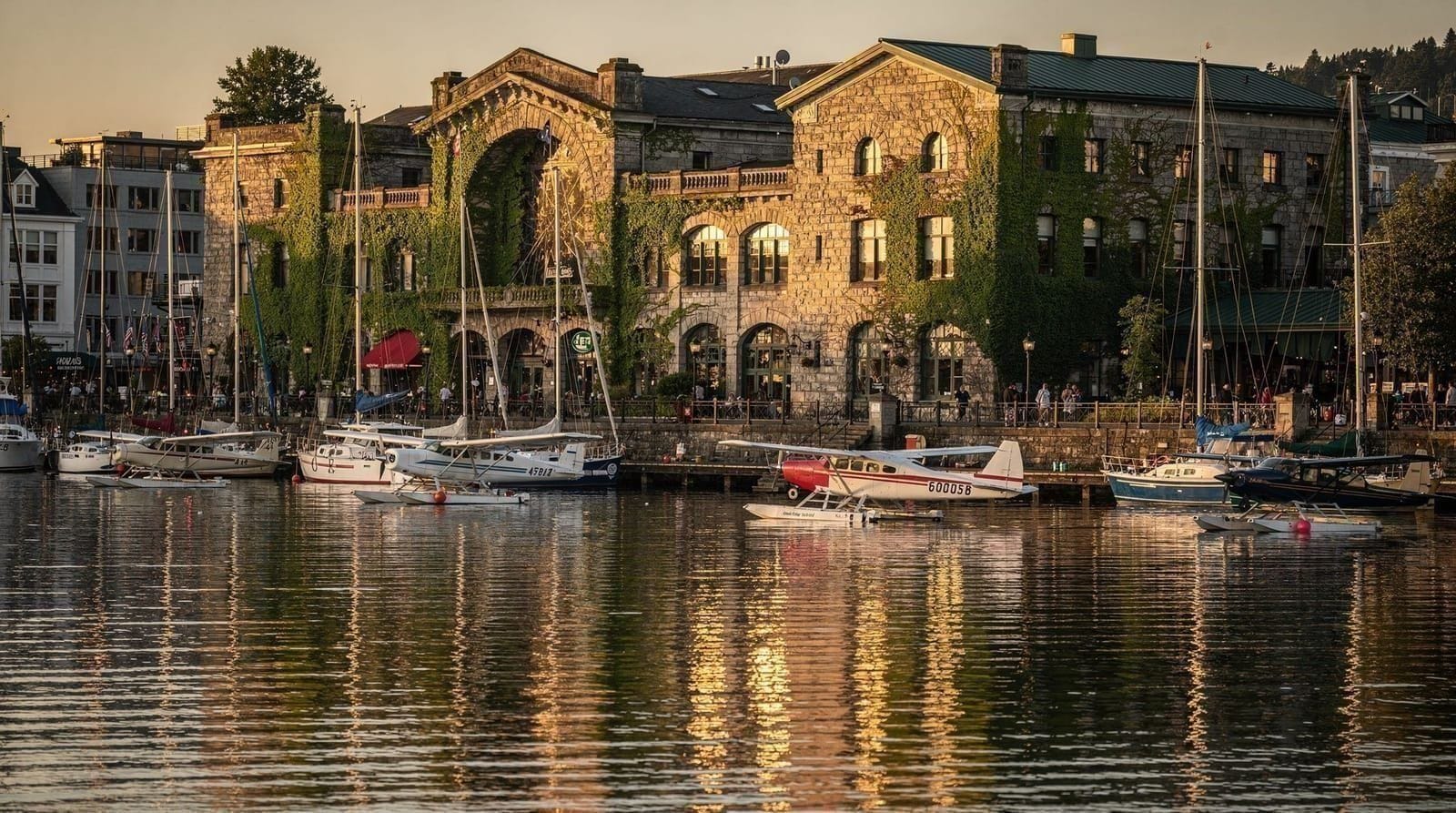
Nanaimo’s waterfront centers on a pedestrian promenade along the harbour, with views across to Newcastle Island — a car-free provincial park reachable by a short passenger ferry, with easy walking trails and a sandy swimming beach that’s popular with locals in summer. The adjacent old town has a handful of heritage buildings from Nanaimo’s coal-mining past (like Victoria, it was built on resource extraction before tourism), now home to independent shops and cafes rather than the coal wharves that once dominated the waterfront.
Wayfinding signage along the promenade explains much of this history for visitors who want context without seeking out a dedicated museum, though the Nanaimo Museum a short walk away offers a considerably more thorough account for anyone with extra time to spare beyond the harbourfront itself. The Bastion, a wooden blockhouse built by the Hudson’s Bay Company in 1853, still stands near the harbour as one of the oldest surviving buildings of its kind on the BC coast — a smaller-scale echo of the fur-trade history preserved more fully at Fort Langley on the mainland.
The Nanaimo waterfront walkway and surrounding parks
Beyond the immediate harbourfront, Nanaimo’s Harbourfront Walkway extends several kilometres along the water, connecting a string of smaller parks and viewpoints that most passing visitors never see because they don’t stray far from the ferry terminal or the old town core. Piper’s Lagoon Park, a short drive north of downtown, adds a rockier, more exposed stretch of coastline with tide pools and views across the Strait of Georgia toward the mainland — a worthwhile stop for visitors with a car and an extra hour who want a quieter alternative to the busier harbourfront.
Nanaimo is also known locally for the Bathtub Race, a genuinely eccentric annual event dating back to 1967 in which competitors race modified bathtubs across the Strait of Georgia to Vancouver — a piece of civic quirkiness that’s become part of the city’s identity, worth knowing about if a visit happens to line up with the race weekend, typically held in late July, when the harbourfront fills with spectators for the send-off and the whole waterfront takes on a genuine festival atmosphere for the day, drawing a mix of serious competitors and curious onlookers alike.
The Nanaimo bar
Nanaimo’s best-known export isn’t a place at all — it’s a dessert. The Nanaimo bar, a no-bake layered square of chocolate, custard, and coconut-graham crumb, was invented in the city sometime in the mid-20th century (the exact origin story is disputed, but the name and the city’s ownership of it are not) and has since become a fixture of Canadian bakeries nationwide. Several cafes and bakeries in town lean into the connection, and trying one from a Nanaimo bakery rather than a supermarket version is a small but genuine bit of local culture worth the five minutes.
The city leans into the connection civically too — a Nanaimo Bar Trail map exists pointing visitors to bakeries and cafes across town selling their own take on the recipe, and an annual event built around the dessert draws a modest but genuine following. It’s a low-stakes, inexpensive bit of local color that fits naturally into even a short ferry-transit stop, unlike attractions that demand a real time commitment, and it costs only the price of a single treat rather than an admission fee.
Newcastle Island
The passenger ferry to Newcastle Island Marine Provincial Park runs regularly from the harbourfront in summer, a short five-minute crossing to a car-free island with about 22 kilometres of walking and cycling trails, a sandy swimming beach, and the remnants of a former shipyard and coal mine.
It’s a genuinely pleasant half-day addition for anyone with time to spare beyond the harbourfront and old town, and a good option for families traveling with kids who want somewhere to run around between ferry connections. Camping is also available on the island for visitors wanting to extend a Nanaimo stopover into an overnight without booking a hotel, a genuinely inexpensive option relative to accommodation in town, though reservations are recommended during the busiest summer weekends.
Nanaimo as a ferry gateway
Two BC Ferries routes connect Nanaimo to the mainland: one from Horseshoe Bay in West Vancouver (Departure Bay terminal, roughly 1h35 crossing), and one from Tsawwassen (Duke Point terminal, roughly 2 hours, mainly used by vehicle traffic heading further up-island). For visitors continuing on to Tofino, Nanaimo is the practical starting point for the roughly 3-hour drive across the island on Highway 4 — arriving via the Horseshoe Bay–Departure Bay route puts you closer to the highway junction than the alternative crossing to Swartz Bay near Victoria does.
This makes Nanaimo a genuinely useful stopover for a multi-day Vancouver Island itinerary that includes both Victoria in the south and Tofino on the west coast, rather than a destination that demands its own dedicated trip. The Vancouver Island 7 days itinerary uses this exact routing, treating Nanaimo as a waypoint between the two.
Getting there
The Horseshoe Bay–Departure Bay ferry is the fastest connection from the Vancouver area, roughly 1 hour 35 minutes, with sailings running frequently in summer and on a reduced schedule off-season. A shorter float-plane or fixed-wing flight option also connects downtown Vancouver’s harbour to Nanaimo in well under an hour, at a premium price, worth considering for visitors short on time or specifically wanting to skip the ferry terminal experience. The BC Ferries guide covers booking, vehicle reservations, and current fares across all the province’s mainland-to-island routes, including this one and the Tsawwassen-Swartz Bay crossing used for Victoria.
Vehicle reservations are worth making in advance for the Horseshoe Bay–Departure Bay route during summer weekends, since sailings can fill and leave drivers waiting for the next available departure, sometimes hours later. Walk-on passengers without a vehicle rarely face this issue, since foot passenger capacity is considerably higher relative to demand than vehicle deck space. The Duke Point route from Tsawwassen sees comparatively lighter demand, making it a reasonable backup for drivers unable to secure a Departure Bay reservation, though it adds roughly 25 minutes of crossing time compared to the Horseshoe Bay option.
When to visit
Summer (June through September) brings the best weather for the harbourfront promenade and a trip across to Newcastle Island’s beach, plus the most frequent ferry schedules. Nanaimo functions reasonably well as a year-round stop given its mild coastal climate, but outdoor activities specifically (Newcastle Island, harbourfront patios) are noticeably better in the warmer months.
Ferry sailing frequency is the single biggest seasonal factor for most visitors, since a Nanaimo stop is usually dictated by a ferry schedule rather than chosen independently. Summer sailings run close to hourly on the busiest routes, while winter schedules can drop to every two hours or less, meaningfully affecting how much time is realistic to spend in town between crossings if Nanaimo isn’t the final destination.
Nanaimo vs. a direct route: is the stop worth it?
For visitors flying into Vancouver and driving straight to Tofino via Nanaimo, the honest question is whether to budget extra time in town or treat it purely as a ferry disembarkation point. Given the ferry crossing itself already takes 1h35-2hr, adding even a single hour for the harbourfront promenade and a Nanaimo bar costs relatively little against the overall trip, and it breaks up what’s otherwise a long single push toward Tofino. Visitors on a tight schedule with an early ferry and a long drive still ahead can reasonably skip the stop entirely without missing anything essential — Nanaimo’s appeal is a pleasant bonus, not a must-see.
Nanaimo vs. Victoria as a Vancouver Island first stop
| Nanaimo | Victoria | |
|---|---|---|
| Ferry crossing | 1h35-2hr from Horseshoe Bay/Tsawwassen | 1h35 from Tsawwassen (Swartz Bay) |
| Character | Working city, ferry gateway | Provincial capital, more polished |
| Time needed | Half day | Full day or more |
| Best for | A stopover en route further up-island | A dedicated day trip or overnight |
Practical tips
If Nanaimo is purely a transit stop on the way to another Vancouver Island destination, budgeting an hour or two for the harbourfront and a Nanaimo bar before continuing your drive is a reasonable way to break up the trip without adding a full extra day. For travelers building a longer Vancouver Island itinerary, see the Victoria and Tofino pages for the fuller picture of what’s worth the extra driving time beyond Nanaimo itself, and check current BC Ferries schedules before finalizing a route, since sailing frequency drops meaningfully outside peak summer months.
Parking near the ferry terminal and downtown harbourfront is generally straightforward outside peak summer weekends, with metered street parking and a handful of pay lots close to the main promenade — a genuine contrast to the more constrained parking situations at Capilano or the North Shore’s other paid attractions back on the mainland.
Frequently asked questions about Nanaimo
Is Nanaimo worth stopping in, or should I drive straight to Tofino?
If your schedule allows even an extra hour, yes — the harbourfront promenade and a Nanaimo bar are a low-effort, low-cost way to break up the drive. If your ferry lands late with a long drive still ahead, skipping the stop entirely won’t cost you anything essential.
Which ferry route to Nanaimo is better?
Horseshoe Bay to Departure Bay is faster (about 1h35) and puts you closer to the Highway 4 junction toward Tofino. Tsawwassen to Duke Point takes about 2 hours and sees lighter demand, making it a reasonable backup if a Departure Bay reservation isn’t available.
Can I do Nanaimo as a day trip from Vancouver?
Yes, though most of the day goes to the ferry crossings themselves (roughly 3-4 hours round trip), leaving a few hours in town. It works better as a stopover on a longer Vancouver Island itinerary than as a dedicated day trip.