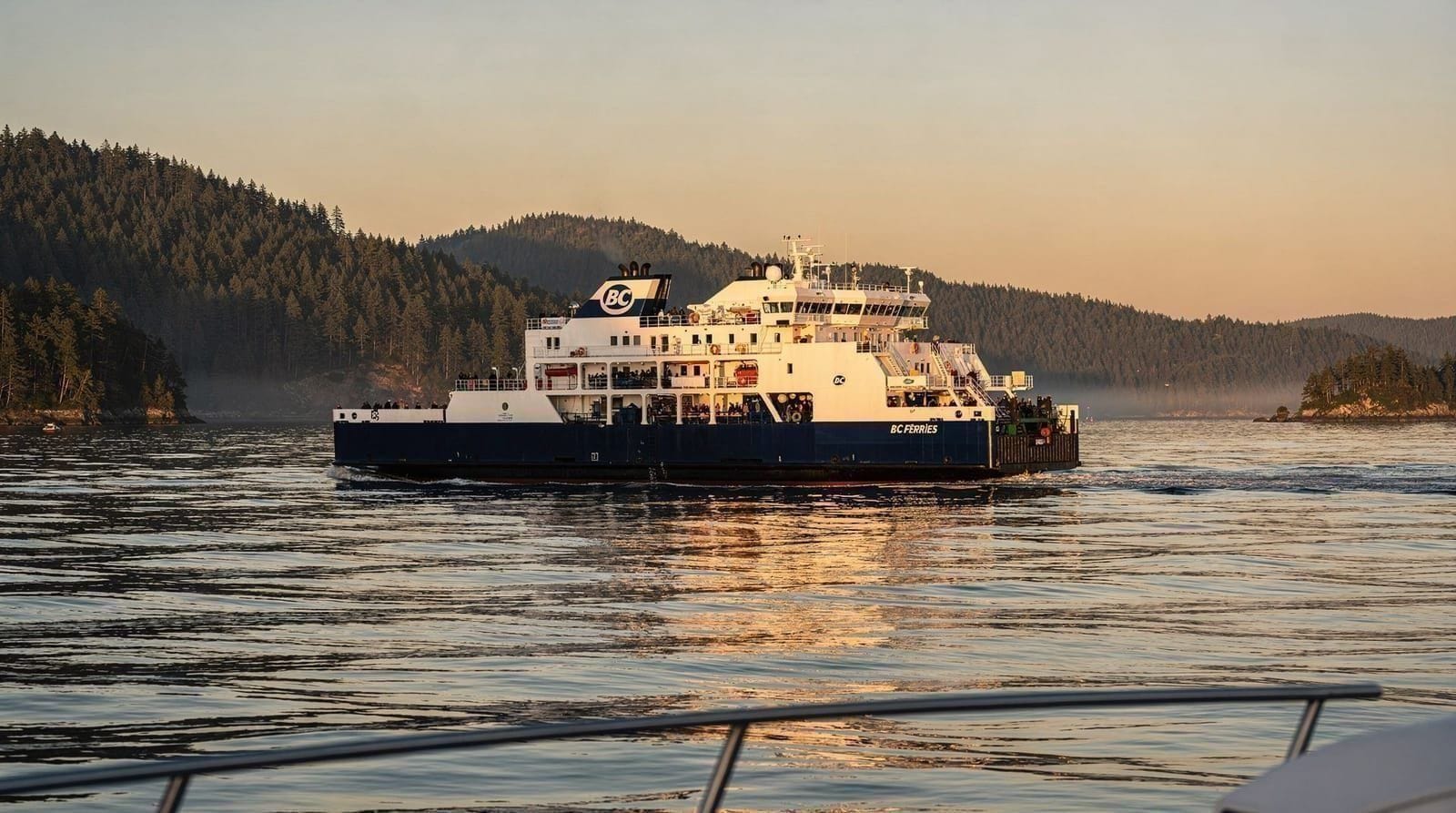
BC Ferries guide — getting to Vancouver Island
From Vancouver: Full-Day Victoria Tour with Ferry Ticket
How do I get from Vancouver to Vancouver Island by ferry?
BC Ferries runs the main route from Tsawwassen (south of Vancouver) to Swartz Bay (near Victoria), a scenic 1 hour 35 minute sailing through the Gulf Islands. Passenger fares run roughly CAD 16-20, with vehicles charged separately at CAD 50-65 depending on size and season. The Tsawwassen terminal is about 40 minutes from downtown Vancouver by car or connecting bus, not reachable directly by SkyTrain.
Getting from Vancouver to Vancouver Island means crossing the Strait of Georgia, and for the vast majority of visitors that means BC Ferries — a genuinely scenic, if slow, sailing through the Gulf Islands that’s as much a part of the Victoria day trip as the destination itself. Unlike a short harbour hop, this is a proper ocean crossing on a large vessel, and understanding how the terminals, fares, and reservation system work in advance makes the difference between a smooth day and standing in a vehicle queue wondering whether the next sailing has room.
| Route | Tsawwassen to Swartz Bay |
| Crossing time | About 1h35 |
| Foot passenger fare | Around CAD 16-20 |
| Vehicle fare | Around CAD 50-65, plus passenger fares |
| Reservation | Optional for foot passengers; recommended for vehicles June-Sept |
The main route: Tsawwassen to Swartz Bay
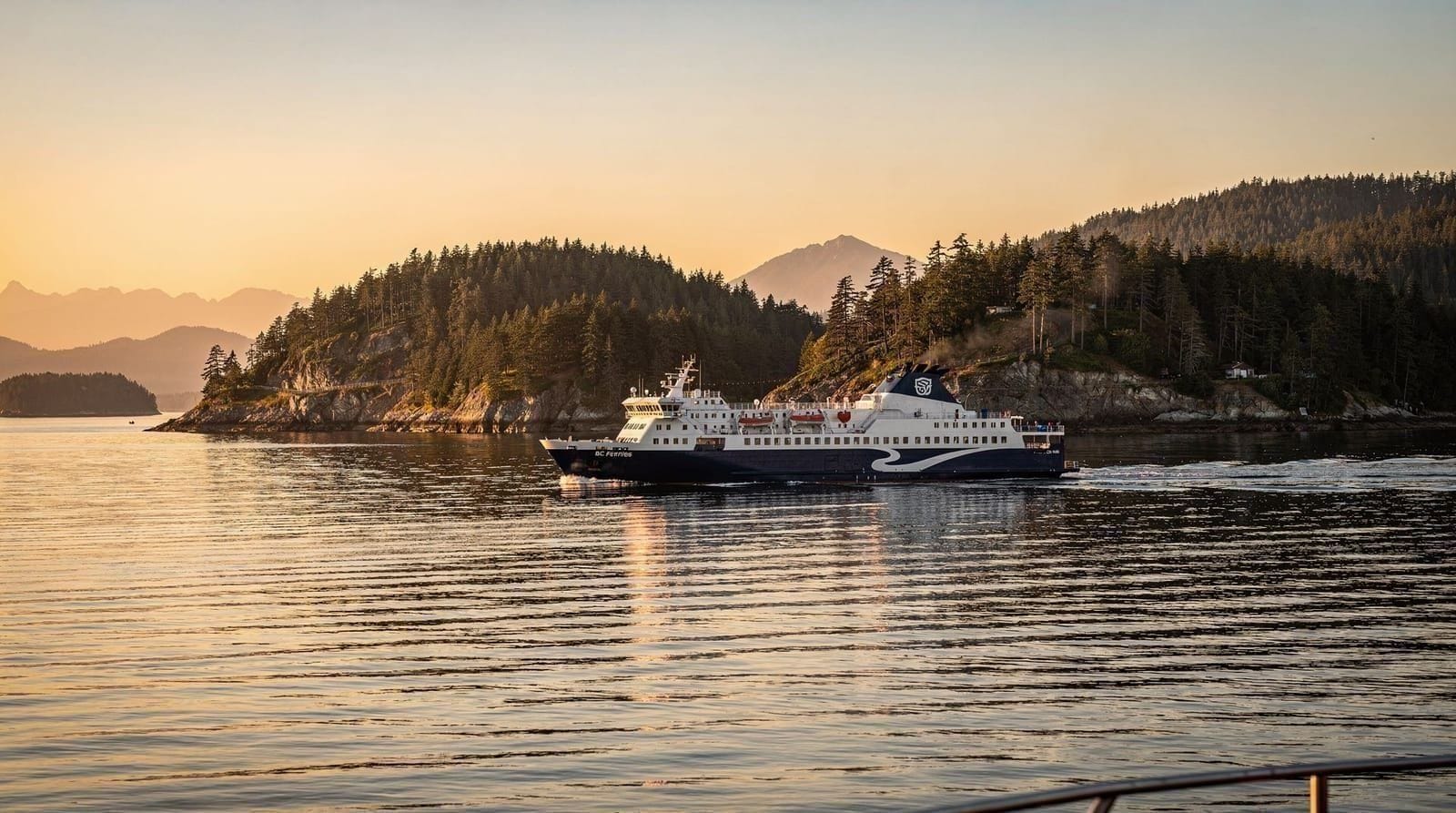
The route relevant to nearly every Vancouver-based visitor is Tsawwassen to Swartz Bay, connecting the mainland just south of the city to Vancouver Island a short drive north of Victoria. The crossing itself takes about 1 hour 35 minutes and threads through the southern Gulf Islands, a stretch of water dotted with small forested islands, passing close enough to spot seals hauled out on rocks, bald eagles overhead, and occasionally orcas or porpoises, though wildlife sightings are never guaranteed on any given crossing.
Sailings run roughly hourly during summer and on a reduced schedule in winter, with the exact frequency published on the BC Ferries website and subject to seasonal adjustment. This is the route used by nearly every Victoria day trip and by the Victoria and Butchart Gardens tour circuit.
Other BC Ferries routes from the mainland
Two other routes exist from the Vancouver area, both departing from Horseshoe Bay in West Vancouver rather than Tsawwassen. Horseshoe Bay to Departure Bay connects to Nanaimo on Vancouver Island’s east coast, a useful alternative for visitors heading to central or northern Vancouver Island destinations without routing through Victoria first. Horseshoe Bay to Langdale serves the Sunshine Coast, a different destination entirely from Vancouver Island and less relevant to a typical first-time itinerary. For the standard Victoria and Butchart Gardens day trip, Tsawwassen-Swartz Bay remains the route to use.
Fares: passengers and vehicles
BC Ferries prices passengers and vehicles separately. A foot passenger fare on the Tsawwassen-Swartz Bay route runs roughly CAD 16-20 depending on season, with discounted rates for children and seniors. Bringing a vehicle adds a separate fare, typically in the range of CAD 50-65 for a standard-sized car depending on length and time of year, on top of the passenger fare for everyone riding in it. A family of four driving over pays for four passenger fares plus one vehicle fare — worth calculating in advance, since it adds up quickly compared with a foot-passenger trip using transit and a tour bus on the island side.
Current fares shift periodically, so checking the BC Ferries website directly before finalizing a budget is worth the two minutes it takes, rather than relying on any fixed number.
Do you need a reservation?
Foot passengers generally don’t need to reserve — walk-on travelers are given priority boarding and can typically get on the next sailing even when the vehicle deck is full. Vehicles are a different situation entirely. During peak summer weekends, holiday long weekends, and the height of July and August, popular sailing times sell out for vehicles, and arriving without a reservation risks being bumped to a later crossing, sometimes by several hours during the busiest periods. Reserving a vehicle spot in advance costs a small additional fee but removes that risk, and it’s genuinely worth doing for anyone driving over between June and September.
Getting to the Tsawwassen terminal
Tsawwassen sits about 40 minutes from downtown Vancouver by car, primarily via Highway 99 south. For foot passengers without a rental car, TransLink bus 620 runs directly from Bridgeport Canada Line station to the ferry terminal — take the Canada Line from downtown to Bridgeport, then transfer to the 620, budgeting roughly 40-50 minutes for that combined leg on top of the ferry crossing itself. This route is covered by the standard TransLink Compass fare and zone system, so no separate ticket is needed for the bus portion.
Arriving at the terminal at least 30-45 minutes before a vehicle sailing (longer during peak season) is standard practice — BC Ferries loads vehicles in a specific sequence and being late risks missing the booked sailing entirely. Foot passengers have more flexibility and can typically arrive closer to departure time, though checking in at the terminal building rather than walking straight to the dock is still required.
What the crossing itself is like
Ferries on this route are large, multi-deck vessels with indoor seating, a cafeteria, a gift shop, and outdoor deck space on multiple levels. The most rewarding way to spend the 1 hour 35 minutes is on the outer deck, weather permitting, watching the Gulf Islands pass by rather than staying inside the whole crossing — the scenery is genuinely one of the better ferry routes in North America, particularly on a clear day with the Coast Mountains visible behind the mainland. Bringing a layer even in summer is worth it, since the open deck gets breezy regardless of season.
Onboard amenities
The larger vessels on the Tsawwassen-Swartz Bay route are built for a comfortable 90-minute sailing rather than a quick harbour hop. Most have a cafeteria-style restaurant serving hot meals, a coffee bar, a gift shop stocked with local BC products, a kids’ play area, and both indoor lounge seating and multiple outdoor deck levels. Wi-Fi is available on most sailings, though speeds can be inconsistent mid-crossing. Pets are allowed on car decks and in designated kennel areas but generally aren’t permitted in passenger lounges, so anyone traveling with a dog should plan on checking on them periodically rather than keeping them in the main seating areas the whole trip.
Active Pass and the Gulf Islands scenery
The most photographed stretch of the crossing is the passage through Active Pass, a narrow channel between Galiano and Mayne Islands where the ferry passes close enough to shore to see individual houses, docks, and forested bluffs on both sides. It’s also one of the more reliable spots for eagle sightings, since the pass is a regular hunting corridor for bald eagles working the tide lines. Photographers and anyone hoping for a wildlife sighting should head to the outer deck a few minutes before the ferry enters the pass, roughly midway through the crossing, rather than waiting until the final approach to Swartz Bay.
Using BC Ferries for a longer Vancouver Island trip
Travelers planning more than a single day on the island — a loop through Victoria, Nanaimo, and out to Tofino — often find it more efficient to sail into one terminal and return via another, rather than backtracking through the same route twice.
Flying into Tsawwassen-Swartz Bay for the Victoria portion and returning via Departure Bay-Horseshoe Bay after looping up through central Vancouver Island avoids doubling back on the same roads. This kind of multi-day loop generally requires a rental car, since Vancouver Island’s public transit outside Victoria itself is limited, and it’s covered in more depth in the Vancouver Island 7-day itinerary.
Ferry versus flying: seaplane and floatplane options
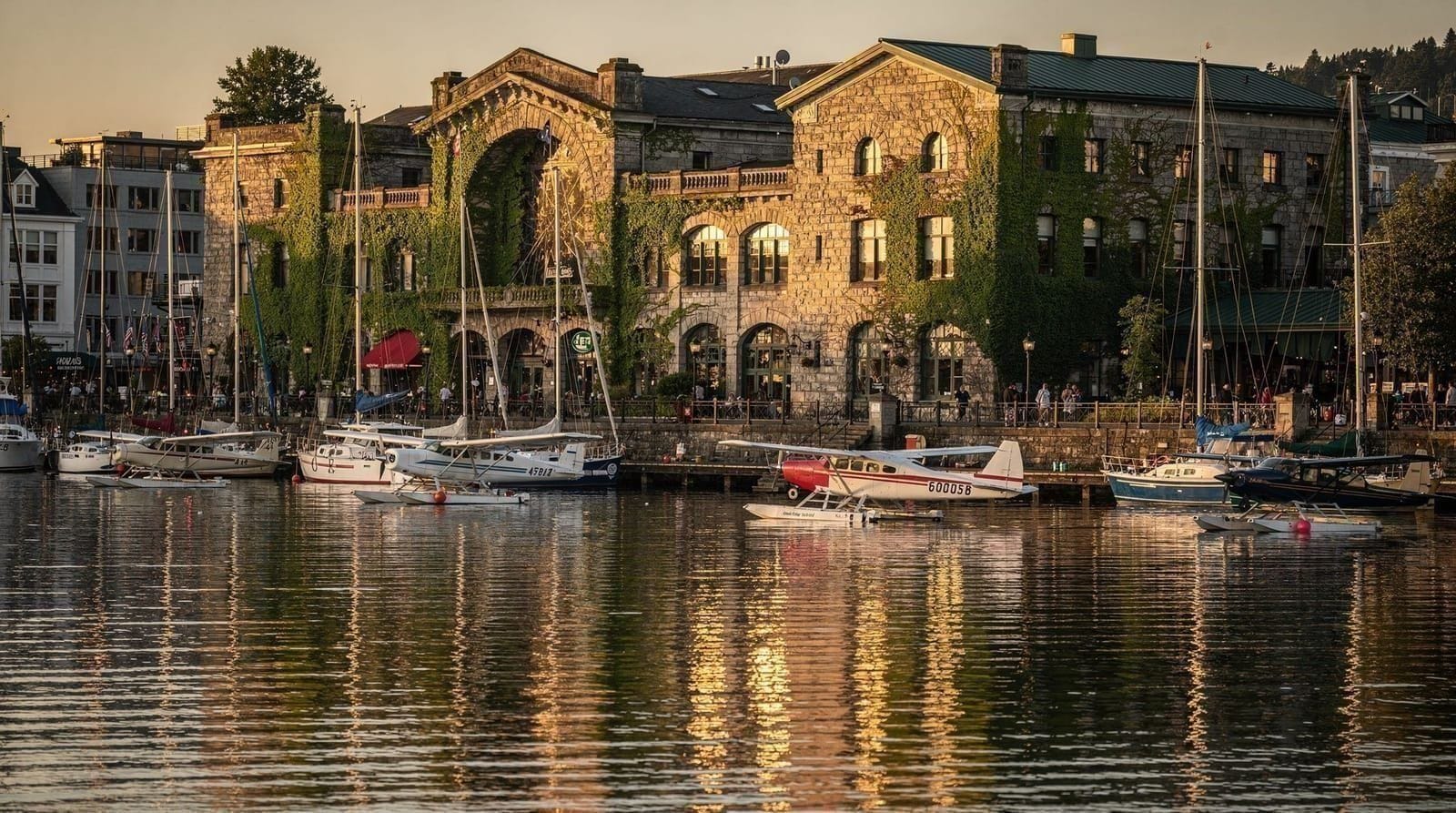
For travelers prioritizing speed over cost or scenery, floatplane services connect downtown Vancouver’s harbour directly to downtown Victoria’s Inner Harbour in around 35 minutes of flight time — a fraction of the ferry’s roughly 3-hour door-to-door journey once terminal transfers on both ends are counted. The tradeoff is price: seaplane fares run considerably higher than the ferry’s combined passenger and transit costs, and there’s no option to bring a car. For a same-day round trip focused purely on seeing Victoria and Butchart Gardens without a rental car, the time saved can be worth the premium, particularly for travelers with limited days in the region overall.
Booking a guided day trip that includes the ferry
For visitors who’d rather not manage terminal logistics, reservations, and onward transportation around Victoria themselves, a guided full-day Victoria tour with ferry ticket included handles the entire loop — pickup in Vancouver, the Tsawwassen-Swartz Bay crossing, time in Victoria, and return, all on one booking with no need to figure out bus 620 or reserve a vehicle spot.
For travelers also wanting Butchart Gardens included in the same day, a combined Victoria and Butchart Gardens day tour bundles both stops with the ferry crossing built into the itinerary, which removes a genuine amount of planning complexity for a single-day visit.
Bringing a rental car on the ferry
Anyone with a rental car planning to drive it onto BC Ferries should confirm with the rental company that ferry travel is permitted under the rental agreement — most standard rentals allow it without issue, but it’s worth a quick check before assuming. Vehicle fares apply regardless of whether the car is owned or rented, and the same reservation advice applies: book ahead for summer weekend sailings.
Timing a Victoria day trip around the ferry schedule
A round-trip Victoria day trip from Vancouver realistically consumes 10-13 hours once terminal transfers, the crossing itself in both directions, and time actually spent in Victoria and at Butchart Gardens are added up. Missing an early sailing pushes the whole day later and can mean returning well after dark, particularly in winter when daylight is limited.
Anyone planning a self-guided day trip rather than a booked tour should plan to catch one of the first sailings of the day, generally departing Tsawwassen by 8-9am, to leave a reasonable window in Victoria before the return crossing. The full breakdown of whether a single day is even the right approach — versus staying overnight or skipping the day trip format entirely — is covered in when to skip the Victoria day trip.
A practical checklist before departure
A few details are worth confirming before heading to the terminal. Check the current sailing schedule directly on the BC Ferries website rather than relying on a fixed departure time, since schedules shift between summer and winter seasons and around statutory holidays. Confirm whether a vehicle reservation is needed for the specific date and time — required during peak summer weekends, optional but still advisable on shoulder-season days, and rarely necessary in the depths of winter when demand is low.
Bring a form of payment for onboard food, since prices are set for a captive audience and running short of cash or card access mid-crossing is an easy problem to avoid with a bit of planning. And if driving, fill up on gas before Tsawwassen rather than assuming fuel will be readily available and reasonably priced immediately on the Vancouver Island side.
Comparing the ferry to a private transfer or car rental drop-off
Some visitors ask whether it’s possible to drop off a rental car on the mainland and pick up a different one on Vancouver Island rather than bringing a vehicle across on the ferry as a foot passenger. This is generally more expensive than simply paying the vehicle fare to bring a single rental across, given one-way rental drop fees, and it adds logistical complexity for a trip where BC Ferries already handles vehicle transport reliably. For a standard Victoria day trip, bringing one rental car across as a vehicle passenger, or skipping the car entirely as a foot passenger using transit and a guided tour on the island side, are both simpler than a two-rental approach.
Weather and seasonal disruptions
BC Ferries sailings occasionally face delays or cancellations due to weather, mechanical issues, or unusually high demand pushing vehicles onto later sailings. Winter storms are the most common cause of disruption, though outright cancellations are relatively rare on this well-traveled route. Building a buffer of an hour or two into a day trip itinerary, rather than scheduling activities in Victoria down to the minute, absorbs minor delays without derailing the whole day.
Traveling with kids on the ferry
Families crossing with young children generally find the sailing manageable — the kids’ play area on most vessels, wide-open deck space for burning off energy, and the sheer novelty of a large ship crossing open water tend to keep children entertained for the 1 hour 35 minute duration in a way a car ride of similar length wouldn’t.
Strollers can be wheeled directly onto the vessel and parked in designated areas near seating, and elevators connect the vehicle deck to passenger levels for anyone who’d rather not manage stairs with a stroller or car seat. Changing facilities are available in most washrooms. For families driving over, boarding a vehicle sailing means staying with the car during loading and the first few minutes, then heading up to the passenger decks once parking is complete and the crew gives the go-ahead.
A newer, quieter fleet
BC Ferries has been gradually introducing hybrid-electric vessels on several routes as older ships are retired, part of a broader push to reduce emissions across the fleet. The practical effect for passengers is a somewhat quieter ride with reduced engine vibration on newer vessels compared to older diesel ships, though which specific vessel serves a given sailing varies by schedule and isn’t something travelers can reliably choose in advance.
Money-saving tips
A few adjustments meaningfully reduce the cost of a ferry-based day trip. Traveling as a foot passenger rather than bringing a vehicle cuts costs substantially for solo travelers or pairs, since the vehicle fare often exceeds the combined passenger fares once split across even two people — the math shifts back in favor of driving once a group reaches three or four, where the per-person vehicle cost drops below the foot-passenger equivalent. Sailing on a weekday rather than a summer weekend avoids both the peak-season fare adjustments some routes carry and the reservation fee that comes with securing a guaranteed vehicle spot on high-demand sailings.
And booking a combined tour package that bundles the ferry fare into a fixed tour price, rather than paying for the crossing and onward transportation separately, sometimes works out cheaper than piecing together transit, ferry, and a taxi or rental car on the island side — worth comparing both approaches before committing to one for a specific date.
Traveling with a bicycle instead of a car
Bicycles are one of the more overlooked ways to reach Victoria without the cost or hassle of a vehicle reservation. BC Ferries loads bikes in their own lane ahead of general vehicle traffic, at a fare well below the standard car rate, and Victoria’s compact downtown and waterfront are genuinely rideable once off the ferry. This combination — foot-passenger fare plus a modest bike surcharge — is often the cheapest way to bring your own wheels across, and it sidesteps the summer vehicle-reservation crunch entirely, since bikes board with foot passengers rather than competing for vehicle deck space.
What to do if your sailing is cancelled or delayed
Weather or mechanical delays happen occasionally on this route, and knowing the practical response in advance saves stress on the day. BC Ferries’ website and app post real-time sailing status, and checking it before leaving for the terminal — rather than after arriving — avoids showing up to a cancelled or significantly delayed departure.
If a sailing is cancelled outright, passengers are automatically rolled to the next available sailing at no extra cost, though this can mean a wait of an hour or more during a busy summer day. Travelers on a tight schedule, particularly those booked on a guided day tour with a fixed Victoria itinerary, should build a buffer into their planned return time rather than cutting it close to a same-day flight or a fixed evening commitment back in Vancouver.
Accessibility on the crossing
BC Ferries’ main vessels on the Tsawwassen-Swartz Bay route are built with elevator access connecting the vehicle deck to passenger levels, accessible washrooms, and staff on hand to assist with boarding for travelers with mobility needs. Requesting assistance at the terminal check-in counter rather than at the boarding ramp itself gives staff time to prepare, and it’s worth arriving with a bit of extra buffer for this reason alone, separate from the general early-arrival advice for vehicle sailings.
One more thing: ticket flexibility
Standard BC Ferries fares are generally flexible for foot passengers, who can simply catch a later sailing if plans change without any penalty. Vehicle reservations are less forgiving — changing or cancelling a reserved vehicle sailing typically involves a fee or a cutoff window before departure, so it’s worth locking in a vehicle reservation only once the day’s plan is reasonably firm, rather than reserving speculatively for a schedule that might still shift.
Comparing the two guided-tour options directly
For travelers deciding between the two bookable options mentioned above, the choice comes down to how much of the day is dedicated to Victoria itself. The full-day Victoria tour with ferry ticket spends more of the day in Victoria proper — the Inner Harbour, downtown, and free time to explore — with the ferry crossing bundled in but not the central focus.
The Victoria and Butchart Gardens combined tour splits the day between the city and the gardens, meaning less free time in downtown Victoria in exchange for seeing both. Travelers who’ve already decided Butchart Gardens is a must-see should default to the combined tour rather than trying to add gardens separately after a Victoria-only tour, since fitting both into a single self-guided day without a car is logistically tight.
The bottom line
BC Ferries is the practical, cost-effective way to reach Vancouver Island from Vancouver, and the Gulf Islands crossing is scenic enough to be a genuine part of the trip rather than just a means to an end. Foot passengers can show up with minimal planning; anyone bringing a vehicle during summer should reserve ahead. For travelers who’d rather skip the logistics of terminal transfers and reservations entirely, a guided day tour bundling the ferry crossing with time in Victoria and Butchart Gardens removes most of the friction, at the cost of following someone else’s schedule rather than a fully independent one.
Frequently asked questions — BC Ferries guide
How long is the ferry from Vancouver to Victoria?
The Tsawwassen to Swartz Bay crossing takes about 1 hour 35 minutes. Add travel time to and from the terminals on each end — roughly 40 minutes from downtown Vancouver to Tsawwassen, and 35-40 minutes from Swartz Bay into downtown Victoria — and the full door-to-door journey runs closer to 3 hours each way.Do I need to book BC Ferries in advance?
Walk-on foot passengers rarely need reservations and are given priority boarding even on full sailings. Vehicles are a different story — during summer weekends and holidays, popular sailings sell out, and arriving without a reservation risks waiting for a later ferry, so booking a vehicle reservation ahead is strongly recommended June through September.How much does it cost to bring a car on BC Ferries to Victoria?
Vehicle fares on the Tsawwassen-Swartz Bay route typically run roughly CAD 50-65 for a standard-sized car, on top of the separate passenger fare for each person in the vehicle, with pricing varying by vehicle length and season. Checking current fares directly on the BC Ferries website before a trip is worth doing since pricing is adjusted periodically.Can I get to the Tsawwassen ferry terminal by public transit?
Yes. TransLink bus 620 runs from Bridgeport Canada Line station directly to the Tsawwassen terminal, a useful option for foot passengers without a car. There's no direct SkyTrain connection, so plan for a Canada Line ride to Bridgeport followed by the bus, adding roughly 40-50 minutes each way beyond the ferry crossing itself.Is it faster to fly or take the ferry to Victoria?
Seaplane and floatplane services connect downtown Vancouver to downtown Victoria in about 35 minutes flight time, considerably faster than the ferry's roughly 3-hour door-to-door journey, but at a noticeably higher price. The ferry remains the practical choice for anyone bringing a car or traveling on a tighter budget.What's the best way to see whales or wildlife on the ferry crossing?
Sit on the outer deck on the western side of the vessel during the Gulf Islands portion of the crossing. Seals and bald eagles are common sightings, and orcas are occasionally spotted, though never guaranteed — the ferry isn't a wildlife tour, and anyone specifically hoping to see whales is better served by a dedicated whale-watching trip out of Victoria.Can I bring a bicycle on BC Ferries?
Yes — bicycles board easily on the Tsawwassen-Swartz Bay route, generally ahead of vehicle traffic in their own loading lane, and at a modest fare well below the standard vehicle rate. This makes a foot-passenger-plus-bike combination a practical option for visitors planning to cycle around Victoria's compact downtown rather than rent a car.Is the Tsawwassen-Swartz Bay ferry wheelchair accessible?
Yes, BC Ferries' main vessels on this route have elevator access between the vehicle deck and passenger levels, accessible washrooms, and staff available to assist with boarding. Travelers with mobility needs should still arrive with a bit of extra buffer time and can request assistance at the terminal check-in counter.
Top experiences
Bookable activities with verified prices and instant confirmation on GetYourGuide.