Capilano vs Lynn Canyon — which suspension bridge is worth it
Vancouver: Capilano Suspension Bridge Park Ticket
- Free cancellation
Should I visit Capilano Suspension Bridge or Lynn Canyon?
Capilano is the better choice if you want a polished, curated attraction with a larger bridge, a treetop canopy walk, and don't mind paying roughly CAD 65 to 70. Lynn Canyon is the better choice if you want a genuine free rainforest walk with a swimming hole and don't need the extra infrastructure.
| Capilano cost | Around CAD 65–70 adult admission |
| Lynn Canyon cost | Free |
| Time needed | 2–3 hours at Capilano; 1.5–2 hours at Lynn Canyon |
| Getting there | Both about 10 min apart in North Vancouver by car |
| Best for one-time visitors | Capilano |
| Best for repeat/budget visitors | Lynn Canyon |
Every Vancouver visitor researching North Shore suspension bridges eventually runs into the same fact: there are two of them, a few kilometres apart, and one is free. That discovery tends to trigger a reflexive assumption that the free one is simply the smart-traveler alternative to a tourist trap. That’s not quite right, and it’s not quite wrong either — the two parks are built for different purposes, and picking the “better” one depends heavily on what a given visitor actually wants out of the stop.
What each place actually is
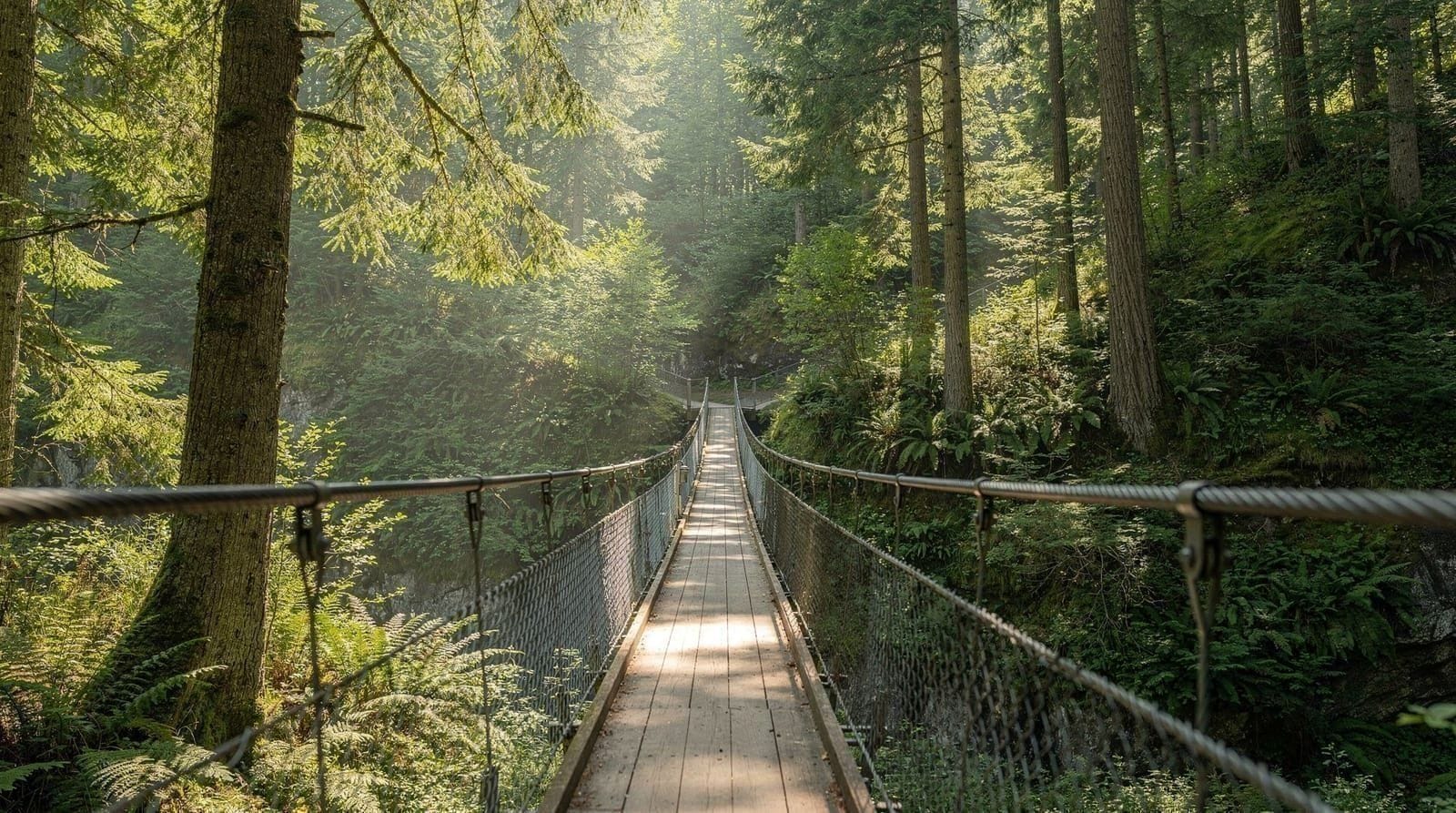
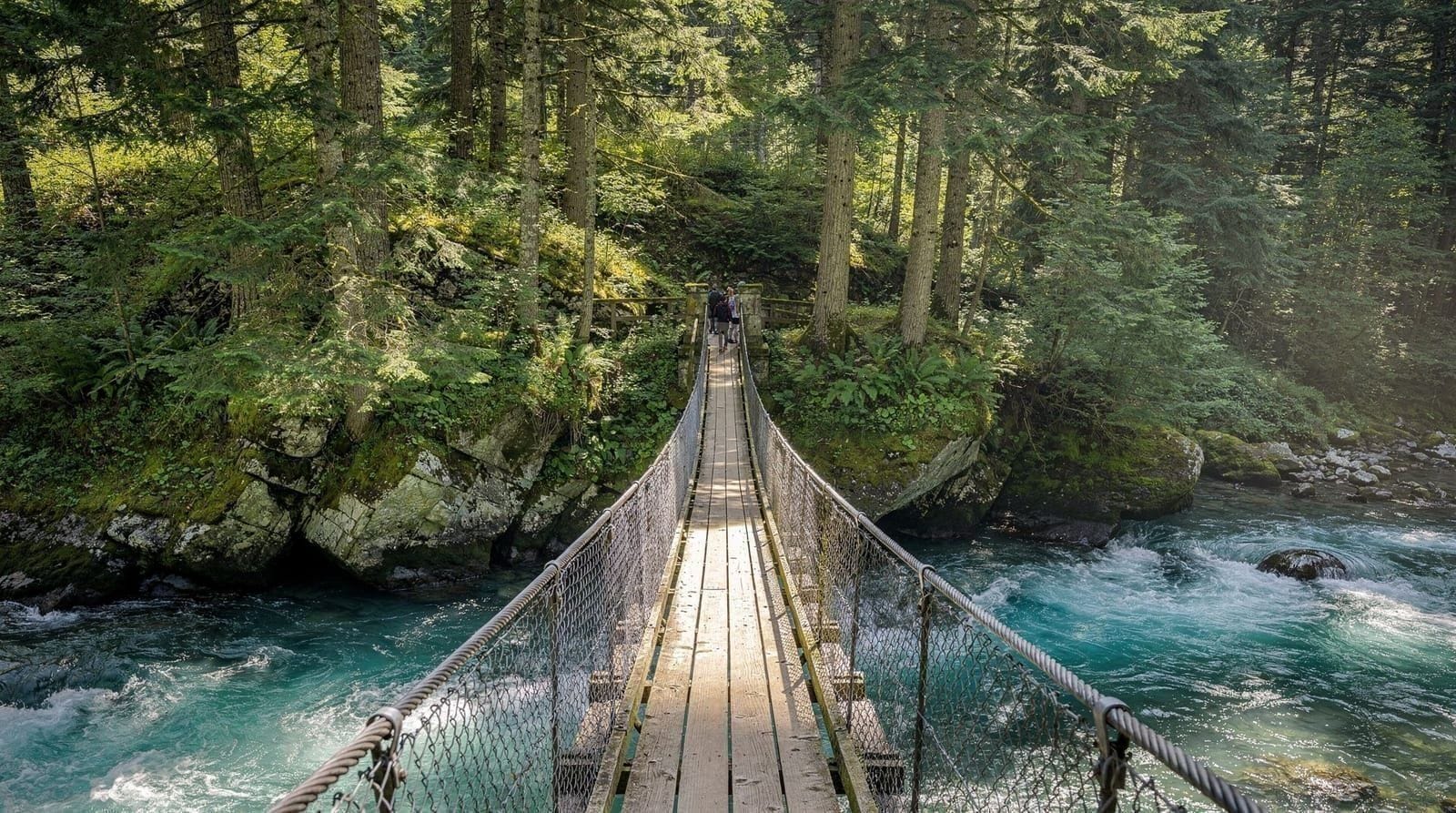
Capilano Suspension Bridge Park is a privately operated attraction built around a 137-metre suspension bridge crossing the Capilano River canyon, expanded over the decades to include a treetop canopy walk (Treetops Adventure), a cliffside walkway bolted to a rock face (Cliffwalk), totem pole displays, and a retail and dining complex at the entrance. It’s designed, priced, and marketed as a destination attraction, the North Shore equivalent of a paid city sight rather than a park.
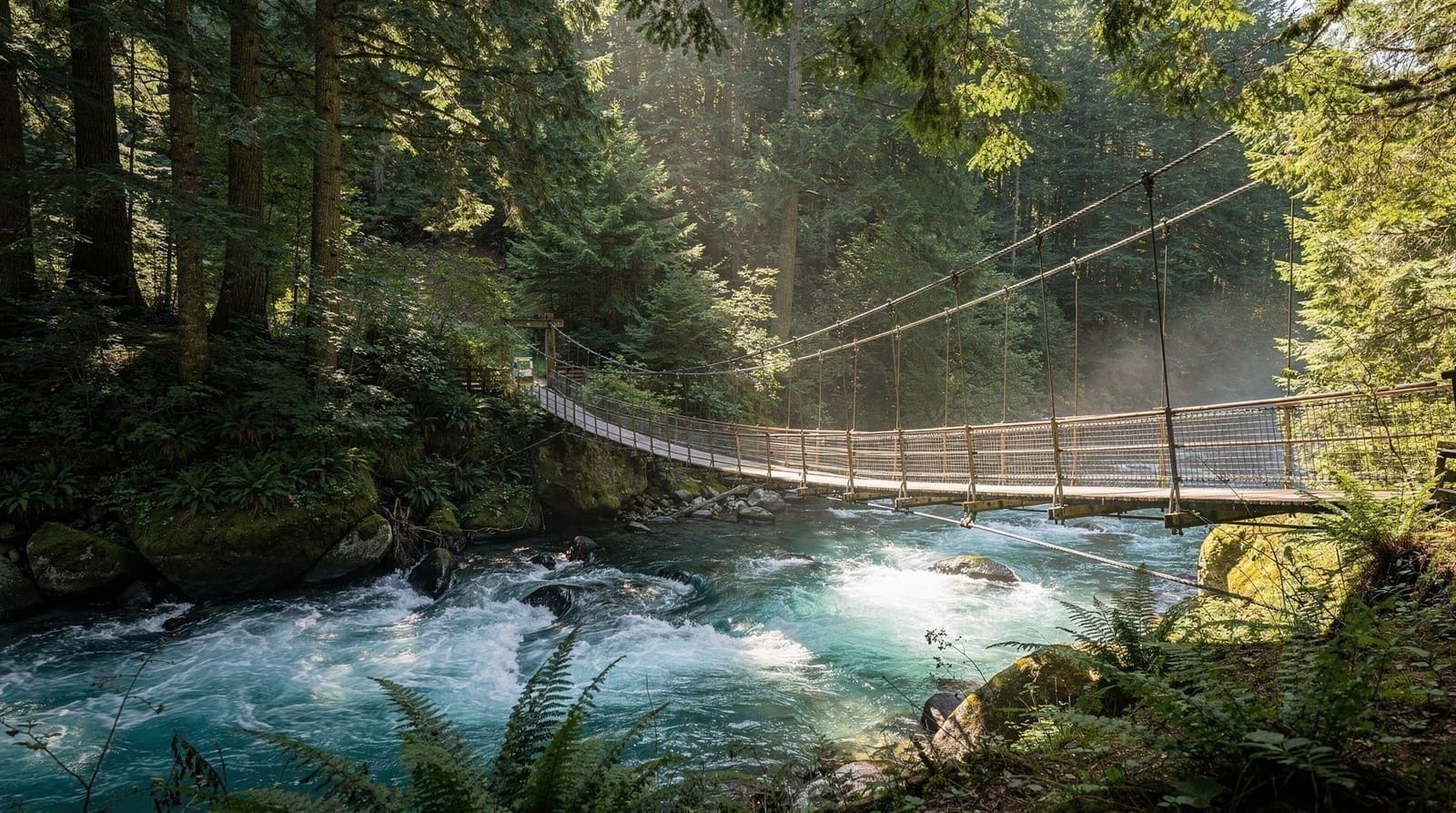
Lynn Canyon Park is a municipal park with a smaller, older suspension bridge, no admission fee, and none of Capilano’s built additions. It exists primarily as a rainforest park with hiking trails and a swimming area; the bridge is one feature among several rather than the organizing concept of the whole site. The full Lynn Canyon guide covers the trail network in more detail, including the Twin Falls Loop and the 30 Foot Pool swimming hole.
Side-by-side comparison
| Capilano Suspension Bridge Park | Lynn Canyon Park | |
|---|---|---|
| Price | Roughly CAD 65–70 (about USD 48–52) adult admission | Free |
| Bridge length | 137 metres, high canyon crossing | Shorter, roughly 50 metres |
| Crowd levels | Heavy, especially midday and cruise-ship days | Moderate, busiest on summer weekends |
| Activities | Suspension bridge, Treetops canopy walk, Cliffwalk, totem poles, retail village | Suspension bridge, Twin Falls Loop trail, 30 Foot Pool swimming hole, Ecology Centre |
| Parking | Paid on-site lot, usually available | Free but limited, fills on sunny weekends |
| Time needed | 2–3 hours | 1.5–2 hours |
| Facilities | Restaurants, gift shop, restrooms throughout | Restrooms near entrance only, no food service |
| Best for | First-time visitors wanting a complete, curated experience in one stop | Locals, repeat visitors, budget travelers, anyone wanting a genuine forest walk |
Price and what it buys
Capilano’s admission — currently in the range of CAD 65 to 70 for an adult ticket — buys access to the full complex: the main bridge, Treetops Adventure (a series of smaller suspension bridges strung between old-growth trees), and Cliffwalk (a narrow walkway cantilevered off a granite cliff face above the canyon).
Booking a Capilano Suspension Bridge ticket in advance is worth doing regardless of season, since walk-up lines at the entrance build steadily through the day, particularly when cruise ships are in port. For visitors short on time, a half-day Capilano tour bundles transport from downtown with admission, useful for anyone without a car.
Lynn Canyon costs nothing to enter. There’s no equivalent to Treetops or Cliffwalk — the experience is the bridge crossing itself plus whatever trail distance a visitor chooses to walk. For a budget-conscious traveler or a local wanting a repeatable outing, that’s a real advantage, not just a consolation prize.
Crowds and pacing
Both parks get busy, but differently. Capilano’s crowding is structural — a fixed number of entry points and a linear route through the attractions means popular days feel congested by design, especially between late morning and mid-afternoon when tour buses and cruise groups arrive in waves. Lynn Canyon’s crowding is more seasonal and localized: the swimming holes and the bridge itself draw crowds on hot summer weekends, but the broader trail network disperses people more than Capilano’s contained walkway system does. Early morning is the single best time to visit either park with fewer people, though Capilano’s paid-admission model means it opens at a fixed hour, while Lynn Canyon has no gate to wait for.
Bridge experience itself
Capilano’s bridge is genuinely more dramatic as an engineering feat — longer, higher above the canyon floor, and built to hold a large volume of foot traffic without excessive sway. Lynn Canyon’s bridge is shorter and sits lower, a more modest crossing that doesn’t aim for the same visceral height effect. Neither bridge requires any real hiking fitness to cross; the difference is closer to visiting a monument versus visiting a trailhead.
What Capilano offers that Lynn Canyon doesn’t
The Treetops Adventure and Cliffwalk are Capilano’s real differentiators, and they’re the strongest argument for paying admission rather than opting for the free alternative. Treetops moves visitors through a series of platforms and bridges strung between mature Douglas firs, a genuinely different vantage point than walking on the ground.
Cliffwalk extends a narrow glass-and-metal walkway along an exposed rock face above the canyon, with sections that overhang the drop below — not for anyone with serious vertigo, but a distinctive experience unmatched at Lynn Canyon or most other North Shore attractions. The totem pole displays and on-site historical exhibits also give Capilano a curated, educational layer that Lynn Canyon, as an unstaffed municipal park, doesn’t attempt to replicate.
What Lynn Canyon offers that Capilano doesn’t
Lynn Canyon’s advantages are less about spectacle and more about authenticity and access. The 30 Foot Pool swimming hole gives visitors a way to actually get in the water on a hot day, something no part of Capilano offers. The park connects directly into the Baden-Powell Trail network, so hikers can extend well past the main loop if they want more distance. And because there’s no admission gate, repeat or spontaneous visits carry no cost — a real advantage for anyone staying in North Vancouver for more than a day or two. There’s also simply less structure — no gift shop funnel at the exit, no scripted route through the site — which some visitors find genuinely more relaxing than Capilano’s more managed flow.
History of both parks
Capilano Suspension Bridge dates to 1889, when it was first strung across the canyon by a Scottish civil engineer as a way to access land he’d purchased nearby — it’s been a paid attraction, in one form or another, for well over a century, passing through multiple private owners who progressively added the Treetops Adventure, Cliffwalk, and the retail complex that exists today.
Lynn Canyon Park has a comparably long history, established in 1912 as a municipally donated park rather than a private venture, and it has stayed under public ownership and free admission for its entire existence. That difference in ownership model explains much of what separates the two experiences today — Capilano has had a century of commercial investment aimed at adding paid attractions, while Lynn Canyon has had a century of being maintained as public parkland with no comparable incentive to expand.
Weather and seasonal differences
Both parks are open year-round, but they handle winter differently. Capilano runs seasonal lighting displays and events through the winter months that draw a different, sometimes larger crowd than its summer daytime visitors, meaning “off-season” doesn’t necessarily mean quiet at Capilano the way it does at most outdoor attractions. Lynn Canyon has no comparable programming — winter visits are simply quieter, colder, and wetter, with the swimming holes unused and the forest at its mistiest. Anyone visiting either park in winter should expect wet, occasionally icy trail and bridge surfaces at both, since this is a rainforest climate rather than a snowy one at these elevations.
Getting there and parking
Both parks sit in North Vancouver within about a 10-minute drive of each other, and neither is directly on a rapid transit line — both require a bus connection from the SeaBus terminal for visitors without a car, or a taxi/rideshare for the final stretch. Capilano has a larger, paid parking lot built to handle its higher visitor volume, which fills less often than Lynn Canyon’s smaller free lot despite Capilano’s larger crowds overall, simply because there’s more capacity. Deep Cove and Quarry Rock are a further drive east along the North Shore and not a practical same-morning pairing with either bridge park, though all three fit into a longer North Shore day for visitors with a car and no fixed schedule.
Families with young kids
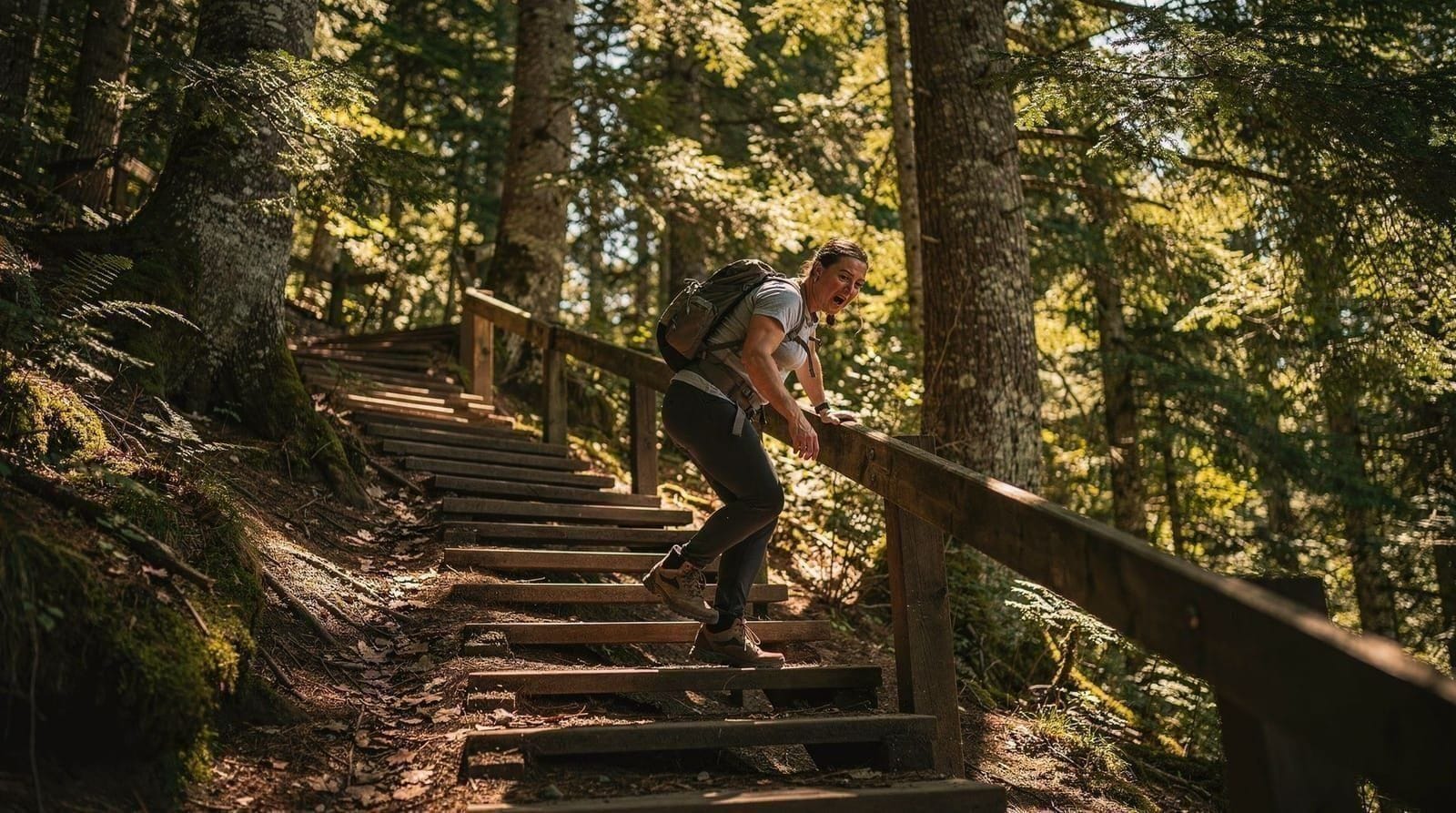
For families traveling with small children, the comparison tilts slightly toward Capilano, mainly because its infrastructure — restrooms throughout the site, food options if a child gets hungry mid-visit, and a shorter, gentler main bridge crossing before the more adventurous Cliffwalk — reduces the logistical friction of a half-day out with kids. Lynn Canyon works fine for families too, and the swimming hole is often the highlight for children old enough to be comfortable in cold creek water, but there’s less backup infrastructure if something goes wrong, and the trail’s stairs and uneven sections require more supervision than Capilano’s boardwalk-style paths.
What to expect on your first crossing
For visitors who’ve never crossed a suspension bridge of this kind before, both crossings involve some genuine sway and bounce underfoot, more noticeable with more people on the bridge at once. Capilano’s longer span sways in a slower, more rolling way given its length and higher tension cabling; Lynn Canyon’s shorter bridge feels stiffer but can bounce more abruptly with foot traffic given its shorter length. Neither requires any particular skill or fitness to cross, and both are used daily by visitors of every age without incident, but anyone with a strong fear of heights should expect the crossing itself to be the most physically uncomfortable few minutes of either visit, regardless of which park it happens at.
Value for money, honestly assessed
Judging Capilano purely on a cost-per-hour basis makes it look worse than it is, since a large part of what’s being paid for is polish, safety infrastructure, and variety rather than raw time spent on site. Judging Lynn Canyon purely on “you get what you pay for” logic undersells it just as much, since a free municipal park delivering a genuinely enjoyable few hours is a better outcome for a budget-conscious traveler than a mediocre paid attraction would be.
The fairest framing is that Capilano is good value for what it explicitly promises — a curated, varied canyon experience with distinctive features — while Lynn Canyon is exceptional value simply because the baseline cost is zero and the experience still holds up against much of what nearby paid attractions offer.
What online reviews tend to get wrong
A common pattern in online reviews of both parks is visitors rating Capilano poorly for being “overpriced” or Lynn Canyon poorly for being “not as good as Capilano,” and both critiques usually reflect a mismatch between expectations and what each park is actually offering rather than a genuine flaw. Someone expecting Lynn Canyon to match Capilano’s scale and polish will be disappointed, because that was never the point of a free municipal park.
Someone expecting Capilano to feel like an untouched wilderness experience will likewise be let down, because it’s explicitly built as a managed, commercial attraction. Reading reviews with that context in mind — and checking whether a negative review reflects a real problem with the site itself or simply a mismatched expectation — makes both sets of feedback considerably more useful.
If neither quite fits
Visitors who read through both options and find neither appealing — Capilano too commercial, Lynn Canyon too plain — do have other North Shore choices worth knowing about. Quarry Rock near Deep Cove trades the suspension bridge entirely for a viewpoint hike, which suits visitors more interested in a payoff view than a bridge crossing. The broader rainforest walks guide covers several quieter forest trails across North Vancouver and Deep Cove for anyone who’s decided that neither bridge, free or paid, is really what they’re after.
What repeat visitors actually do
Talk to anyone who’s lived in Vancouver for more than a year or two and a pattern emerges: most locals have been to Capilano once, usually with out-of-town visitors footing the mental bill for the admission price, and go to Lynn Canyon repeatedly, often multiple times in a single summer. That’s not a knock on Capilano’s quality so much as a reflection of what a free, nearby park invites compared to a ticketed attraction — repetition.
Visitors planning a longer Vancouver stay, rather than a single day trip, might reasonably flip the usual advice: do Lynn Canyon first as an easy, cost-free orientation to North Shore rainforest, then decide whether Capilano’s paid additions are worth the money once there’s a clearer sense of what the free version already delivers.
The honest verdict
For a first-time visitor to Vancouver with a single North Shore afternoon and a reasonable budget, Capilano is probably the better use of that time — it’s more varied, more photogenic in ways that translate well for a short visit, and the Treetops and Cliffwalk additions genuinely add experiences Lynn Canyon can’t match. But it’s fair to call Capilano’s pricing steep for what’s fundamentally a bridge and a boardwalk, and travelers who’ve already budgeted for the Grouse Grind or another North Shore attraction on the same trip may reasonably decide one paid North Shore attraction is enough.
Lynn Canyon is the smarter choice for budget travelers, for anyone staying in Vancouver more than a few days who wants a repeatable outdoor outing, for families who’d rather let kids swim than walk a curated boardwalk, and for anyone who’s already visited Capilano on a previous trip and wants the North Shore rainforest experience without paying twice. It’s also simply the better choice for anyone who finds Capilano’s retail-village entrance and organized crowd flow off-putting and wants something closer to an actual local park.
Neither is a wrong choice, and a reasonable number of visitors end up doing both on the same North Shore day, since they’re only about 10 minutes apart by car. If forced to pick one, the honest answer depends less on which bridge is “better” and more on whether the extra CAD 65 to 70 buys enough additional experience — Treetops, Cliffwalk, the polish — to matter for that particular trip.
If deciding based on a broader North Shore day
Visitors weighing Capilano and Lynn Canyon against the North Shore’s other options, including Grouse Mountain and the three-mountain comparison in Grouse vs Cypress vs Seymour, should treat the bridge decision as one piece of a larger day rather than the whole trip.
A common, workable combination is Lynn Canyon in the morning before crowds build, followed by Capilano or Grouse in the afternoon — spreading cost and crowd exposure across the day rather than concentrating both in one paid attraction. Visitors wanting a wider view of North Shore hiking beyond either bridge can also check the best hikes near Vancouver roundup, which places both parks in context alongside the Grouse Grind, Quarry Rock, and the region’s other trail options.
Top experiences
Bookable activities with verified prices and instant confirmation on GetYourGuide.