Lynn Canyon
Lynn Canyon Park has a free suspension bridge, waterfalls, and swimming holes in North Vancouver rainforest, a common free alternative to paid Capilano.
Vancouver: Capilano Suspension Bridge Park Ticket
- Free cancellation
Quick facts
- Distance from downtown
- 25–30 min by car or SeaBus + bus 228
- Admission
- Free (donation-based ecology centre)
- Best time to visit
- June–September for swimming, year-round for hiking
- Bridge
- Free suspension bridge, smaller than Capilano's
- Time needed
- 1.5–3 hours
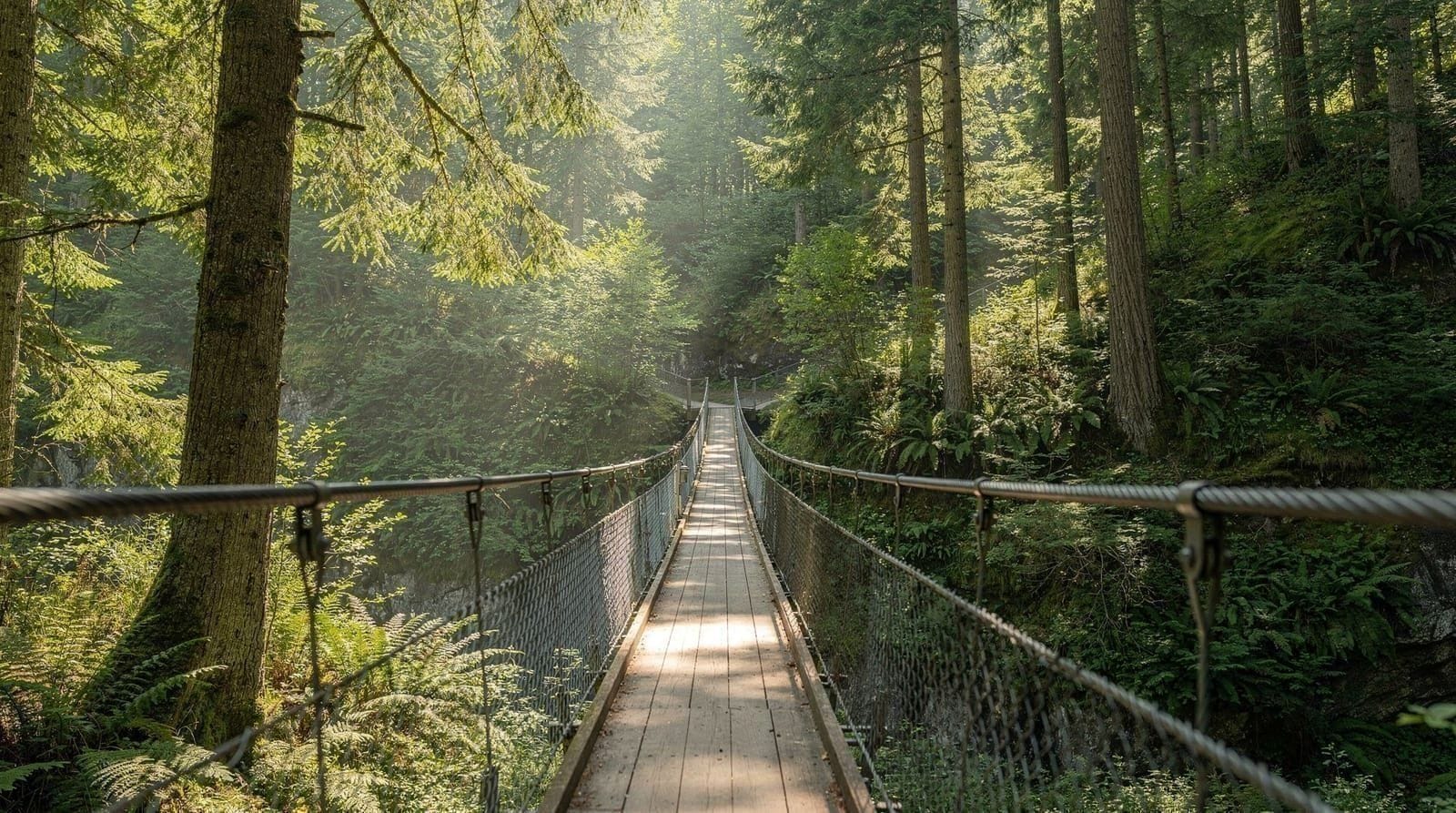
Lynn Canyon Park is the free version of the North Shore’s suspension-bridge experience, and it’s genuinely popular for exactly that reason. A short forest walk from the parking lot leads to a suspension bridge strung 50 metres above Lynn Creek — smaller and less dramatic than Capilano’s 70-metre span a few kilometres away, but with no admission fee, no timed entry, and considerably fewer tour buses. It’s run by the District of North Vancouver as a public park rather than a private commercial attraction, which is the root reason it’s free while its more famous neighbor charges admission.
| Admission | Free (donation-based ecology centre) |
| Distance | 25-30 min by car, or SeaBus + bus 228 |
| Bridge | 50m span, smaller than Capilano’s 70m |
| Best time | June-September for swimming, year-round for hiking |
| Time needed | 1.5-3 hours |
What’s in the park
Beyond the bridge itself, Lynn Canyon’s trail network covers second-growth temperate rainforest with a handful of interconnected loops. The Twin Falls Loop (about 30 minutes) is the most popular short walk, passing two waterfalls and crossing the canyon at a second, smaller crossing point.
The Thirty Foot Pool, a natural swimming hole further along the creek, draws crowds on hot summer days — worth knowing that this is genuinely a wild, undeveloped swimming spot, not a supervised pool: currents, submerged rocks, and cold water have caused serious injuries and drownings in past years, and jumping from the surrounding rocks is specifically discouraged by park signage. A small ecology centre near the entrance runs on donations and has basic exhibits on the local rainforest ecosystem, worth five minutes if you’re interested in what you’re walking through.
For hikers who want more distance than the short loops offer, Lynn Canyon connects to the Baden-Powell Trail, which runs much further along the North Shore mountains toward both Deep Cove and Cypress, and to the Lynn Headwaters Regional Park immediately to the north, a considerably larger and less-visited wilderness area with longer, more remote trails for hikers wanting genuine backcountry rather than a short park loop. The best hikes in Vancouver guide covers route options at both ends of that difficulty spectrum.
Second-growth vs. old-growth forest
Worth knowing for anyone interested in the forest itself rather than just the bridge: Lynn Canyon’s trees are almost entirely second-growth, meaning the original old-growth forest here was logged decades ago and what visitors see today has regrown since. It’s still a genuine rainforest ecosystem — ferns, moss-covered nurse logs, and a dense canopy — but it’s a different character from the remaining old-growth stands protected at Lighthouse Park in West Vancouver, where some Douglas firs are 500 to 800 years old. Neither is more “authentic” than the other, but the distinction matters if old-growth specifically is the draw.
Capilano vs. Lynn Canyon — the honest comparison
This is the question most visitors researching Lynn Canyon are actually asking, so it’s worth answering directly. Capilano’s bridge is longer, higher, and comes with additional attractions — the Treetops canopy walk and the cliffside Cliffwalk — that don’t exist at Lynn Canyon at any price. If a suspension bridge crossing over a forested canyon is specifically what you’re after, and budget or crowds matter more than the extra features, Lynn Canyon delivers a comparable core experience for free. If you want the fuller package with photo-worthy extras and don’t mind paying Capilano’s admission, that’s the better fit.
Plenty of visitors do both on the same North Shore trip, since they’re only about 15 minutes apart by car — Lynn Canyon first as a free warm-up, Capilano second for the fuller experience, or the reverse if budget is the deciding factor and one bridge crossing feels like enough. The Capilano vs. Lynn Canyon guide and the is Capilano worth it honest-planner piece both go deeper into this exact trade-off, including current pricing.
A free North Shore day
Lynn Canyon pairs naturally with Deep Cove, about 15 minutes away by car, for a North Shore day built entirely around free or low-cost outdoor spots rather than ticketed attractions — a route the Vancouver on a budget guide covers in more detail, alongside other no-cost options across the city like the Stanley Park Seawall. For a fuller list of hikes at a similar difficulty level, see best hikes in Vancouver.
This kind of pairing matters more than it might seem for budget-conscious travelers specifically, since a day built around Lynn Canyon and Deep Cove costs essentially nothing beyond transportation and a coffee stop — a genuine contrast to a North Shore day built around Capilano and Grouse Mountain admissions, which can easily run over CAD 100 per person once both are factored in. For a family of four, that difference adds up to real money over the course of a longer trip, especially if the North Shore is just one stop among several across a multi-day Vancouver itinerary.
Getting there
Lynn Canyon is reachable by SeaBus to Lonsdale Quay, then bus 228 or 227 toward Lynn Valley, followed by a short walk to the park entrance — the full trip runs 45–60 minutes from downtown depending on connections. Driving takes 25–30 minutes via the Ironworkers Memorial Bridge, and the on-site parking lot is small and fills quickly on sunny weekends; a secondary lot and street parking nearby fill soon after. Unlike Capilano, there’s no shuttle service or tour bus infrastructure built around Lynn Canyon, which is part of why it stays quieter even during peak summer.
When to visit
Summer (June through September) is the busiest and most useful season, since it’s the only time the swimming holes are genuinely appealing (the water stays cold even in August, fed by mountain runoff, but it’s tolerable on a hot day). The trails themselves are open and walkable year-round, though heavy rain — common from October through April — turns the wooden boardwalks and rock sections slick, and the park occasionally closes specific trails after storms until hazards like fallen trees are cleared. Weekday mornings offer the quietest experience in any season; the Thirty Foot Pool area in particular gets crowded by early afternoon on summer weekends.
Fall brings its own appeal for photographers specifically — the second-growth maples along the canyon rim turn color by mid-October, and the creek typically runs higher and more dramatic after the season’s first rains than it does during the drier summer months. Winter is the quietest season by far, with the park sometimes closing individual trail sections after storms; it’s not the season to visit for swimming or a leisurely walk, but it can suit hikers who prefer solitude over comfort and don’t mind wet boots.
Families and Lynn Canyon
Lynn Canyon works well for families with older children who can manage root-covered trail sections and stairs, though it’s less stroller-friendly than the paved paths at Stanley Park or Ambleside Beach in West Vancouver. The suspension bridge itself is a genuine highlight for kids, and the free admission removes the pressure some parents feel to “get their money’s worth” out of a paid attraction like Capilano when children lose interest after twenty minutes. The Vancouver with kids guide places Lynn Canyon alongside other family-friendly outdoor options across the city and North Shore.
Lynn Canyon at a glance vs. Capilano
| Lynn Canyon | Capilano | |
|---|---|---|
| Admission | Free | Paid, around CAD 60+ |
| Bridge length | 50m | 137m |
| Extras | None beyond the bridge and trails | Treetops Adventure, Cliffwalk |
| Crowds | Lighter, no tour buses | Heavier, cruise-ship traffic |
| Best for | Budget travelers, a quieter walk | The fuller photo-op package |
The ecology centre and what it covers
The small ecology centre near the park entrance is easy to skip, but it’s worth the five minutes even for visitors mainly there for the bridge. Donation-funded exhibits cover the rainforest ecosystem, the creek’s salmon run, and the park’s second-growth logging history, giving useful context for the walk that follows. Staff and volunteers are often on hand to answer questions about current trail or swimming conditions, which is a more reliable source than guessing from signage alone, especially after heavy rain when conditions change quickly.
Practical tips
Wear real footwear, not sandals — the trails involve roots, wet rock, and stairs, and the wooden bridge deck can be slippery in rain. There are no food vendors inside the park itself, though Lynn Valley village a short drive or bus ride away has cafes and a supermarket. If you’re planning a swim, check current water conditions and any posted advisories before getting in, since currents shift with rainfall upstream.
For a fuller North Shore day, Lynn Canyon combines naturally with Deep Cove (about 15 minutes away) for an entirely free-to-low-cost outdoor day, or with Grouse Mountain and Capilano if you want to compare the free and paid versions of the North Shore’s forest-and-canyon experience back to back. See the North Vancouver page for the wider context on getting around the area.
Cell service is generally reliable throughout the park given its proximity to a residential area, unlike more remote North Shore trails, which makes it a reasonably low-risk choice for solo hikers new to BC’s rainforest terrain. That said, the same wet-rock and root-trail hazards that apply to any North Shore hike apply here — sturdy footwear and awareness of the trail surface matter more than the park’s easy accessibility might suggest. It’s a genuinely good introduction to BC hiking for visitors who’ve never encountered rainforest trail conditions before.
Frequently asked questions about Lynn Canyon
Is Lynn Canyon worth it if I’ve already been to Capilano?
Yes, if budget or crowds matter to you — Lynn Canyon delivers a comparable suspension-bridge crossing for free, minus Capilano’s Treetops and Cliffwalk extras. Many visitors do both on the same North Shore day.
Is it safe to swim at the Thirty Foot Pool?
It’s a genuinely wild, undeveloped swimming hole with currents, submerged rocks, and cold water that have caused serious injuries in past years. Check current conditions and posted advisories, and don’t jump from the surrounding rocks.
How much time should I budget for Lynn Canyon?
1.5 to 3 hours covers the bridge, the Twin Falls Loop, and the ecology centre at a relaxed pace. Add more time if you’re planning to swim or connect to the longer Baden-Powell or Lynn Headwaters trails.