Is Capilano Suspension Bridge worth it? An honest verdict
Vancouver: Capilano Suspension Bridge Park Ticket
- Free cancellation
Is Capilano Suspension Bridge worth the money?
For most first-time Vancouver visitors with a North Shore afternoon to spare, yes — the combination of the main bridge, Treetops Adventure canopy walk, and Cliffwalk delivers a genuinely varied experience that justifies the roughly CAD 65-70 admission. It's a weaker value for repeat visitors, budget travelers, or anyone who's already booked another paid North Shore attraction the same day.
Capilano Suspension Bridge Park is the single most asked-about “is it worth it” attraction in Vancouver, and the honest answer isn’t a flat yes or no — it depends heavily on who’s asking, how many days they have, and whether they’ve already budgeted for another North Shore attraction the same day. The park shows up on nearly every list of Vancouver’s top attractions, which builds an expectation that it’s an unmissable, must-do stop; the reality is more nuanced, and worth walking through honestly before deciding whether it belongs on a specific itinerary.
| Where | North Shore, West Vancouver, about 20 min from downtown |
| Cost | Around CAD 65-70/adult, less for youth and seniors |
| Time needed | 2-3 hours for the full site |
| Getting there | Free shuttle from downtown, transit + free shuttle, or car |
| Best time | Weekday mornings or shoulder season for shorter lines |
| Free alternative | Lynn Canyon Park, about 10 minutes away |
What CAD 65-70 actually buys
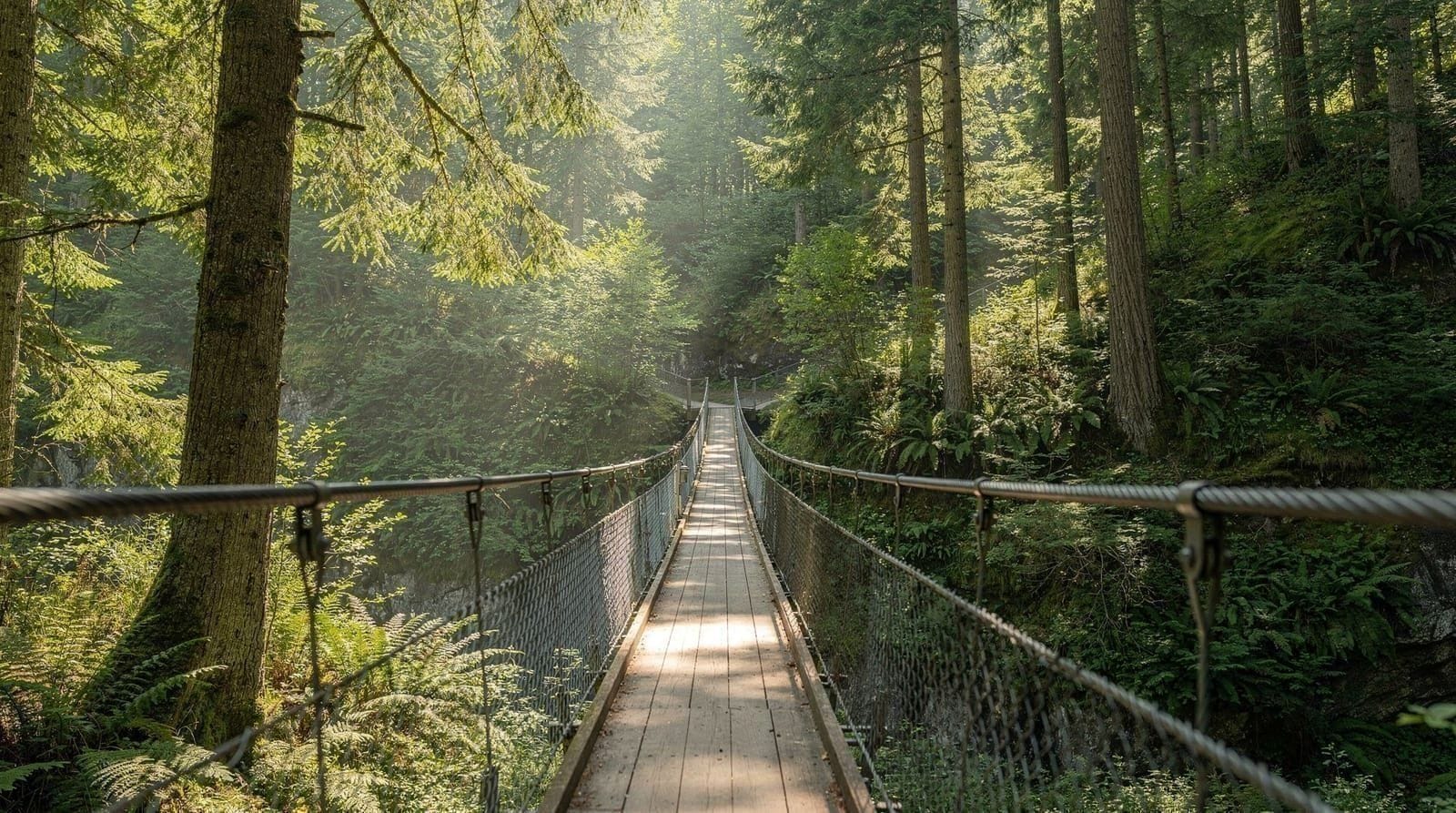
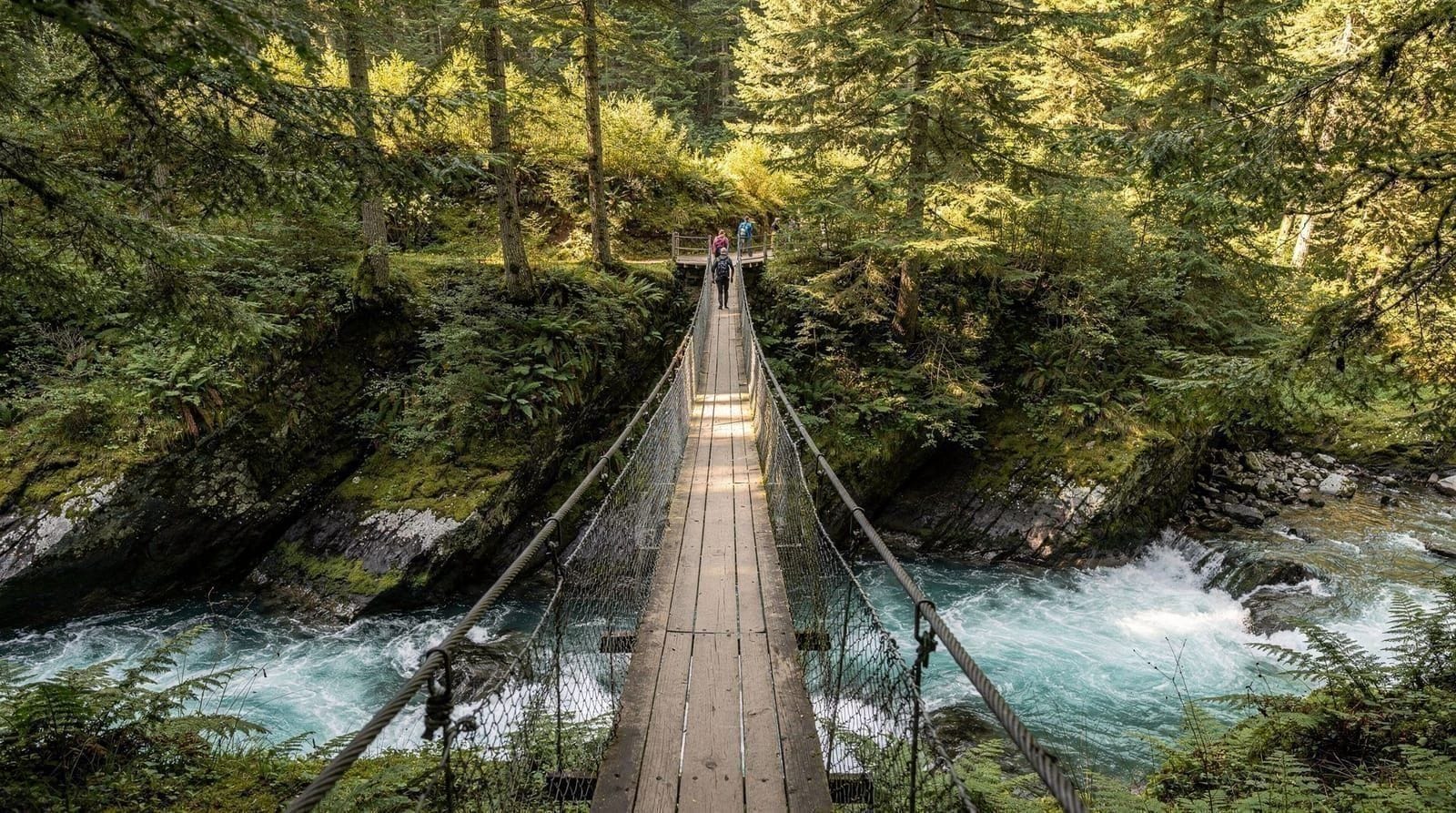
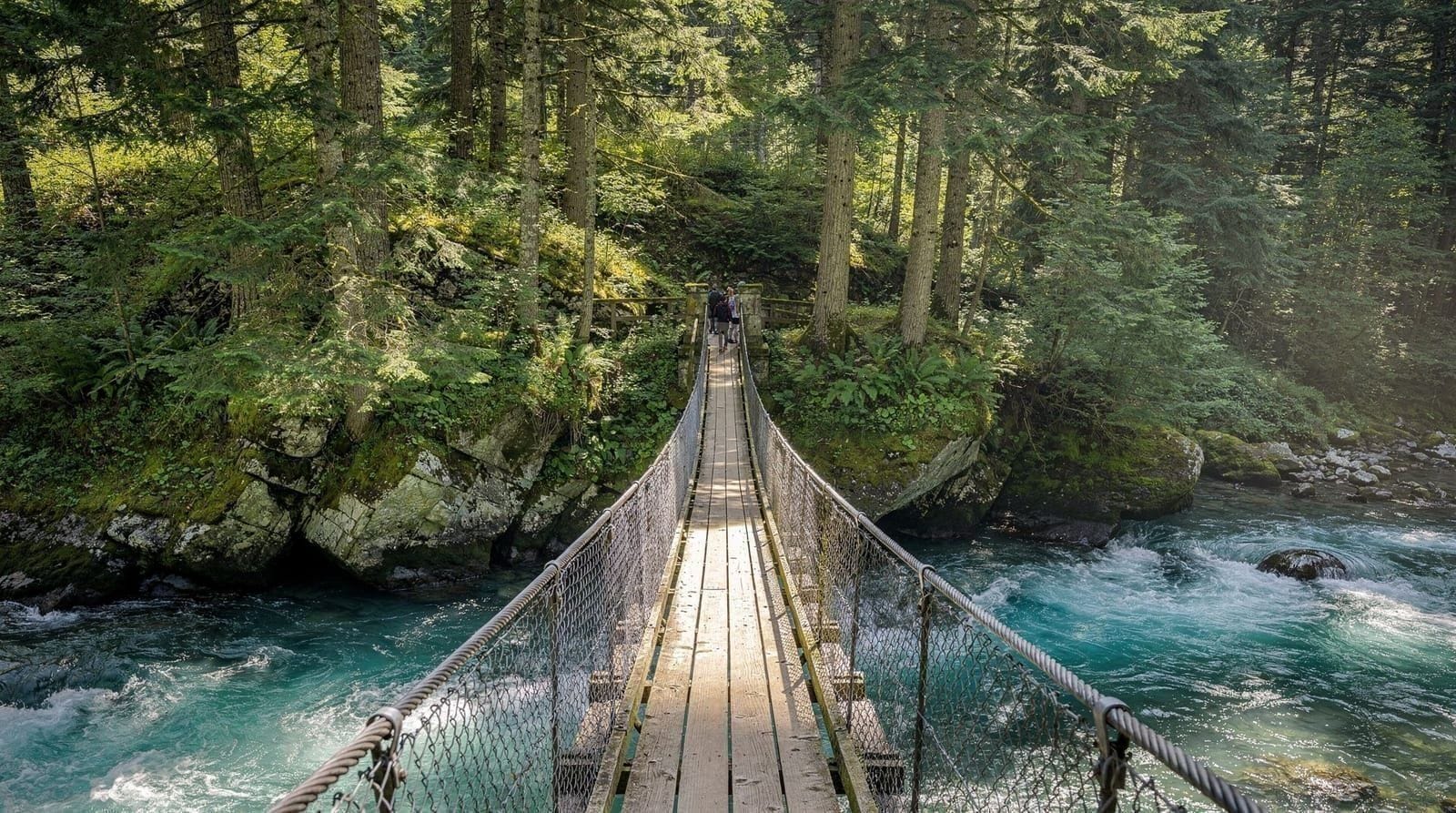
Admission to Capilano, covered in full detail in the Capilano Suspension Bridge guide, covers three distinct experiences under one ticket: the 137-metre main suspension bridge crossing the canyon, Treetops Adventure (a series of smaller suspension bridges strung between mature Douglas firs, moving visitors through the forest canopy rather than along the ground), and Cliffwalk (a narrow glass-and-metal walkway cantilevered off a granite cliff face above the canyon, with sections that overhang the drop below).
On top of those three, there are totem pole displays, a small history exhibit, and a retail and dining village at the entrance. This isn’t a single bridge crossing sold at a premium — it’s a genuinely varied half-day of activity, which is the core of the value argument.
Where the price genuinely earns its keep
Treetops and Cliffwalk are the real differentiators, and they’re what separate Capilano from a free alternative like Lynn Canyon. Treetops offers a vantage point most visitors have never experienced — walking through a forest canopy rather than beneath it — and Cliffwalk’s exposed sections deliver a level of height-based intensity that’s rare among family-accessible attractions. For a first-time visitor with no equivalent experience elsewhere on their itinerary, these two additions alone go a long way toward justifying the admission price, independent of the bridge itself.
Where the price feels steep
The counterargument is straightforward: at its core, this is a bridge and a boardwalk system, and CAD 65-70 is a real amount of money for that category of attraction, especially compared with world standards for similar experiences. Families visiting with several children see the cost multiply quickly, since child and youth pricing reduces but doesn’t eliminate the per-person cost. And visitors who’ve already paid for Grouse Mountain or the Sea to Sky Gondola elsewhere on the same trip may reasonably feel that a second premium-priced nature attraction, on the same general theme of “walkway with a view,” is diminishing returns.
The free alternative: Lynn Canyon
Lynn Canyon Park, about 10 minutes away by car, offers its own free suspension bridge, a genuine old-growth rainforest walk, and the 30 Foot Pool swimming hole — a real, if smaller-scale, version of the same basic experience at zero cost. It doesn’t have anything equivalent to Treetops or Cliffwalk, and the bridge itself is shorter and lower than Capilano’s, so it’s not a like-for-like substitute.
But for budget travelers, repeat visitors, or anyone who wants a genuine forest walk without the retail-village atmosphere, it’s a legitimate and often better-suited choice. The full side-by-side breakdown is in Capilano versus Lynn Canyon, and the standalone Lynn Canyon guide covers its trail network in more depth.
Who Capilano suits best
First-time Vancouver visitors with a single North Shore afternoon, families wanting a varied, well-signed attraction with facilities (food, washrooms, a gift shop) built in, and travelers who specifically want the Treetops and Cliffwalk experiences are the strongest fit for Capilano’s price point. It’s also a reasonable choice for cruise passengers with limited time who want a complete, self-contained North Shore experience without needing to piece together multiple stops.
What Capilano is not trying to be
It’s worth being clear about what Capilano isn’t — it’s not a wilderness hiking experience, and visitors expecting a rugged backcountry feel will find the curated, boardwalk-and-railing infrastructure closer to a well-designed theme attraction than a nature reserve. That’s neither a flaw nor a hidden downside; it’s simply the nature of a privately operated, heavily engineered site built for high visitor volume and consistent safety standards. Travelers wanting a more rugged, unstructured nature experience are better served by one of the North Shore’s actual hiking trails, several of which are covered in the best hikes in Vancouver guide.
Who’s better served skipping it
Budget travelers prioritizing free or low-cost activities, repeat visitors who’ve already done Capilano on a prior trip, anyone who’s already committed to Grouse Mountain or the Sea to Sky Gondola the same trip, and travelers staying in Vancouver long enough to want a repeatable, no-cost outdoor outing are all reasonably served better by Lynn Canyon or another North Shore alternative instead.
How crowding affects the actual experience
Beyond the line at the gate, crowding affects the on-site experience itself in a way that’s worth factoring into the value calculation. Cliffwalk and Treetops are both narrow, single-file walkways in sections, and on a packed midday during peak season, the pace of movement is dictated by the slowest visitors ahead rather than your own preference, which can turn what should be a contemplative canyon or canopy view into more of a shuffling queue. Arriving at opening time, or visiting on a shoulder-season weekday, delivers a meaningfully different — and for most visitors, better — version of the same admission price than a midday summer visit during peak cruise season.
Booking ahead: does it change the value equation?
Booking a Capilano Suspension Bridge ticket in advance doesn’t reduce the admission price, but it does remove the walk-up line, which on a busy cruise-ship day or summer weekend can add 30-45 minutes before even reaching the ticket counter.
For visitors without a rental car, a half-day Capilano tour bundles transport from downtown with admission, which meaningfully changes the value calculation for anyone who’d otherwise need to figure out SeaBus and bus connections separately — the transport convenience is arguably worth as much as the admission itself for a car-free visitor. Booking early in the day also plays into the broader avoiding crowds strategy that applies across most of Vancouver’s paid attractions.
A brief history and why it’s privately run
Capilano has operated as a private attraction since the original bridge was built in 1889, decades before most of Vancouver’s public parks were established in their current form, which explains why it’s priced and run like a destination attraction rather than a municipal park the way Lynn Canyon is.
The site has been expanded and rebuilt multiple times over more than a century, with Treetops Adventure added in 2004 and Cliffwalk in 2011 — both relatively recent additions that account for a meaningful share of what today’s admission price actually covers. Understanding that history helps explain the value gap with Lynn Canyon: one is a purpose-built, continuously reinvested-in attraction business, the other is a municipal park maintained at a much lower operating budget with no admission revenue to fund additional infrastructure.
What repeat visitors and locals actually say
Vancouver locals who’ve visited Capilano more than once tend to describe a consistent pattern: the first visit feels genuinely worth the price because of the novelty of Treetops and Cliffwalk, while a second visit within a few years feels considerably less essential, since the core experience doesn’t change year to year. This lines up with the honest recommendation above — it’s much more a “once per visitor” attraction than a repeatable one, which matters for anyone living in or near Vancouver rather than visiting once from out of town.
Weather and how much it affects the experience
Capilano’s outdoor walkways, including Cliffwalk and Treetops, remain open in light rain, which is common in Vancouver outside the summer months — the bridges and platforms have railings and non-slip surfaces designed for wet weather. That said, a rainy visit is a meaningfully different experience from a clear, sunny one: canyon views from Cliffwalk are far less dramatic under grey cloud cover, and the forest canopy views from Treetops lose some of their appeal without dappled sunlight coming through the trees. Visitors with flexible dates should prioritize a forecasted dry or partly sunny day if the schedule allows, since the same admission price delivers a noticeably better experience in good weather.
Cost per hour, a useful lens
Framing the admission price as a cost-per-hour figure helps some visitors decide. At roughly CAD 65-70 for what most people spend as a genuine two-to-three-hour visit (once photos, waiting for turns on narrower sections of Cliffwalk, and time at the retail village are factored in), that works out to roughly CAD 22-35 per hour of engaged activity — comparable to or cheaper than many other premium single-day attractions in North America, and considerably cheaper than, say, a single restaurant meal with drinks in downtown Vancouver. This framing doesn’t make the sticker price feel smaller, but it does put it in a more useful context than judging the number in isolation.
Family-specific considerations
Families with young children should know that while Treetops and Cliffwalk are both designed with safety railings and barriers suitable for kids, some sections — particularly Cliffwalk’s more exposed cantilevered segments — can genuinely unsettle a child (or an adult) with height anxiety. Staff are generally accommodating about alternate routes around the more intense sections for anyone who wants to skip them, so it’s rarely an all-or-nothing situation. Stroller access is limited on Treetops and Cliffwalk specifically, given the walkway and stair sections involved, though the main bridge and canyon-floor trails are stroller-friendly.
Photography and the Instagram factor
Capilano’s Cliffwalk and Treetops both offer strong, distinctive photo opportunities that Lynn Canyon genuinely can’t replicate — the cliffside walkway in particular photographs dramatically with the canyon drop visible below. For visitors specifically prioritizing photography or documenting a trip for social media, this is a real point in Capilano’s favor that’s worth weighing alongside the practical value arguments above, since the photo opportunities themselves have a kind of value that’s hard to price but genuinely real for many travelers.
Comparing Capilano to Grouse Mountain
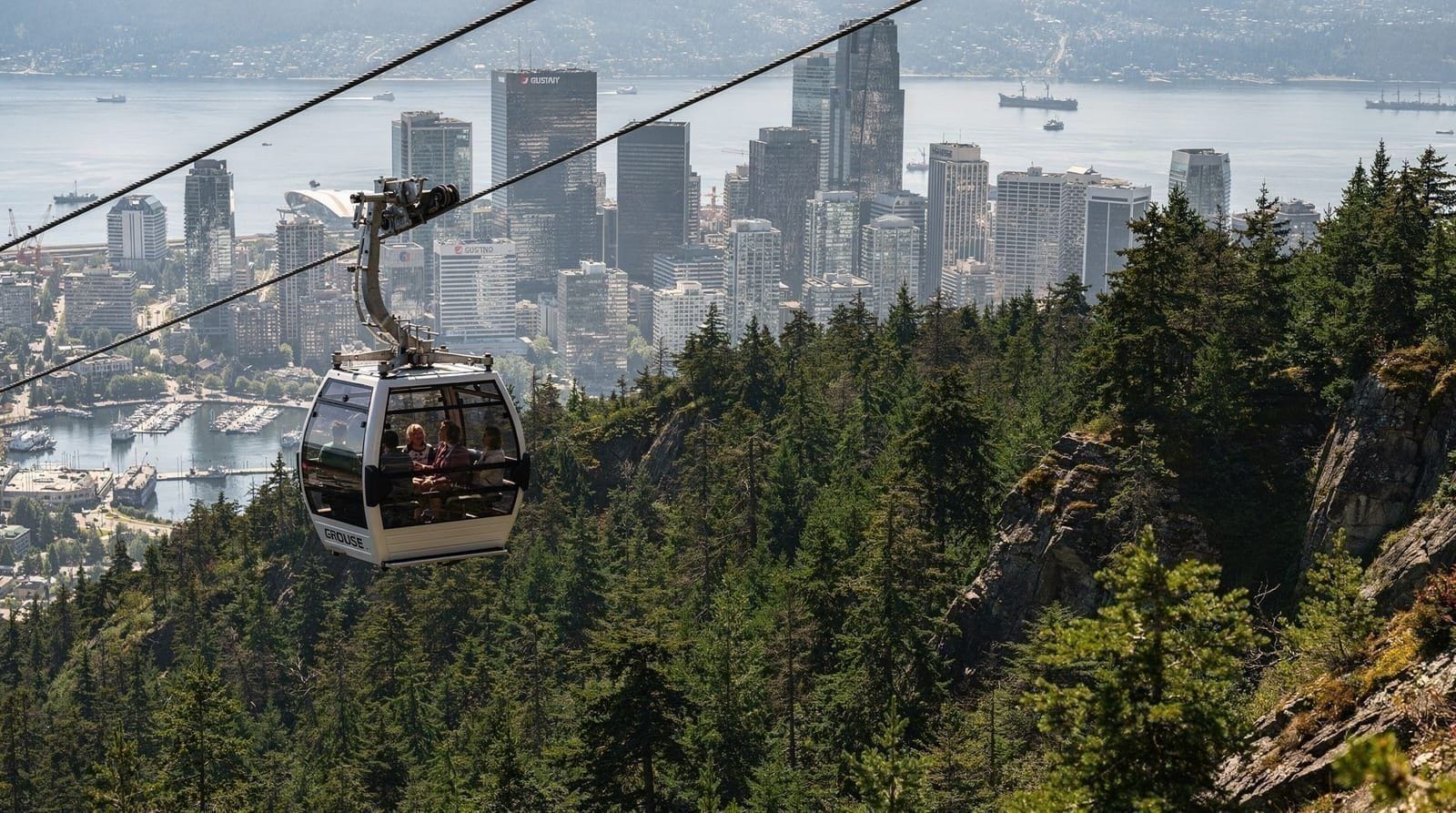
Both are premium-priced North Shore attractions, but they’re not really substitutes for each other — Grouse Mountain centers on a gondola ride to alpine terrain, grizzly bear viewing, and mountain-top activities, while Capilano centers on the canyon-crossing and forest-canopy experience. Visitors trying to decide between the two, or wondering whether to do both on the same trip, should read the dedicated Grouse versus Capilano comparison rather than assuming either one substitutes for the other.
The seasonal factor
Capilano operates a seasonal lighting and decoration program in winter (Canyon Lights), which changes the value proposition somewhat for a December visit — the same admission includes an evening lights display not present the rest of the year, making winter evening visits a genuinely different experience from a summer daytime one. Crowds also shift seasonally: summer and cruise season (May through September) bring the heaviest daytime crowds, while shoulder seasons see noticeably shorter lines for the same admission price.
Combining Capilano with Grouse Mountain on the same day
Some visitors, particularly those with only one North Shore day and a strong appetite for paid attractions, combine Capilano and Grouse Mountain into a single day, sometimes via a bundled combo ticket that discounts the total slightly below booking each separately. This roughly doubles the day’s total attraction spend but does deliver two genuinely distinct experiences — canyon and forest canopy at Capilano, alpine gondola and grizzly bear viewing at Grouse — rather than two versions of the same thing.
Whether this combination makes sense depends heavily on budget: for a family of four, a combined Capilano-and-Grouse day can run several hundred Canadian dollars in admissions alone before food or transport, a genuine consideration worth planning for rather than discovering at the gate.
Discount strategies worth knowing
A handful of approaches reduce the effective cost. Visiting during shoulder season (spring or fall) rather than peak summer sometimes coincides with promotional pricing, though this isn’t guaranteed and varies year to year. Booking combo tickets that bundle Capilano with a Grouse Mountain visit, a city tour, or transport can reduce the total per-person cost compared with booking each piece separately, provided all the bundled components are actually wanted rather than padding the package. And checking whether a specific date includes any seasonal programming (like Canyon Lights in December) that adds value without changing the admission price is worth doing before assuming winter visits are a lesser experience.
What visitors most often regret
The two most common regrets reported by past visitors are, first, rushing the visit to under 90 minutes and feeling like the admission wasn’t fully used, and second, visiting on a heavily overcast or rainy day without checking the forecast first and feeling the views underdelivered relative to the price. Both are avoidable with basic planning — blocking out a genuine two-to-three-hour window and picking a clearer day when the itinerary allows flexibility.
A quick verdict by traveler type
First-time visitor with one North Shore day: worth it, book ahead. Repeat visitor who’s done it before: skip, try Lynn Canyon or a different North Shore stop instead. Tight budget or backpacker: skip, Lynn Canyon covers the core experience for free. Family with young kids wanting a complete, facility-rich day out: worth it, though budget for the total family cost upfront. Photography-focused traveler: worth it, Cliffwalk specifically delivers shots Lynn Canyon can’t match. Visitor who’s already booked Grouse Mountain or the Sea to Sky Gondola the same trip: consider skipping or treat as a deliberate splurge rather than a default inclusion.
A practical way to decide
A useful test: if Treetops Adventure and Cliffwalk specifically sound appealing — walking through a forest canopy, crossing an exposed cliffside walkway — the admission is worth it, since those two additions are what Lynn Canyon can’t replicate at any price. If the appeal is mainly “a suspension bridge in a forest,” and budget or repeat-visit status is a factor, Lynn Canyon delivers the core of that experience for free, and the CAD 65-70 saved is better spent elsewhere on the trip — a proper sit-down dinner, an additional GetYourGuide activity, or simply kept in the budget.
How Capilano compares internationally
Visitors who’ve been to Costa Rica’s Monteverde canopy walkways, New Zealand’s Redwoods Treewalk, or similar canopy-and-suspension-bridge attractions elsewhere in the world will find Capilano holds up reasonably well on quality and design, though it’s priced at the higher end of that global category rather than the budget end. What sets it apart from many international equivalents is the accessibility — a genuine forest and canyon experience reachable within 30 minutes of a major downtown core by public transit, rather than requiring a multi-hour trip into a remote region. That convenience is part of what visitors are paying for, alongside the physical experience itself.
Combining Capilano with a wider North Shore day
Visitors with a full day rather than a single afternoon can build a longer North Shore loop around Capilano without much extra planning. Starting at Capilano first thing in the morning, before the walk-up line builds, then continuing to Grouse Mountain for the afternoon covers both of the North Shore’s marquee paid attractions in a single day, though it’s a genuinely full day rather than a relaxed one — budget five to six hours total once travel between the two sites and time at each is factored in.
Travelers who’d rather pair Capilano with something free can finish at Cypress Lookout for sunset, or spend the afternoon in Kitsilano back across the water instead of adding a second paid stop.
The bottom line
Capilano Suspension Bridge Park isn’t one of the tourist traps worth genuinely worrying about — it’s a legitimately well-built, well-maintained attraction that delivers real value for the right visitor. The honest verdict is that it’s worth it for most first-time visitors with a North Shore afternoon and a reasonable budget, and a weaker value for repeat visitors, tight budgets, or anyone who’s already paying for a similar North Shore experience the same trip. Either way, booking ahead is worth doing regardless of the decision, since it removes the one real friction point — the walk-up line — without changing the price either way.
Frequently asked questions — Is Capilano Suspension Bridge worth it? An honest verdict
How much does Capilano Suspension Bridge cost?
Adult admission runs roughly CAD 65-70 as of 2026, with discounts for youth, seniors, and families. Prices are set by the private operator and adjusted periodically, so checking current pricing before a visit is worth doing.What do you actually get for the admission price?
Access to the 137-metre main suspension bridge, the Treetops Adventure canopy walk through old-growth trees, Cliffwalk (a cantilevered walkway along a rock face), totem pole displays, and a retail and dining village at the entrance. It's a full afternoon's worth of activity for most visitors, not just a single bridge crossing.Is Lynn Canyon just as good and free?
Lynn Canyon is free and offers a genuine rainforest walk with its own suspension bridge and a swimming hole, but it doesn't have anything equivalent to Treetops or Cliffwalk. It's a legitimate alternative for budget travelers or repeat visitors, not a direct substitute for what Capilano specifically offers.Is Capilano worth it for a second visit?
Less so. Once the Treetops and Cliffwalk novelty has been experienced, a repeat visit delivers meaningfully less new value for the same price, and most repeat visitors are better served by Lynn Canyon or a different North Shore activity entirely.How long should I budget for a Capilano visit?
Two to three hours covers the main bridge, Treetops, and Cliffwalk at a comfortable pace, plus some time at the retail village. Rushing through in under 90 minutes is possible but undercuts the value of the admission price.Does booking online save money at Capilano?
It doesn't typically reduce the ticket price itself, but booking a ticket in advance secures entry at a specific time and avoids the walk-up line at the gate, which builds steadily through the day, particularly on cruise-ship days and summer weekends.
Top experiences
Bookable activities with verified prices and instant confirmation on GetYourGuide.