Granville Island food guide
Vancouver: Granville Island Small Group Food Walking Tour
Duration: 2 hours
What's the best way to eat at Granville Island?
Arrive at the Public Market before 10:30am to beat the lunch crowds, graze several vendor stalls rather than one sit-down meal, and pair it with a Granville Island Brewing tasting flight (around CAD 7) next door. A guided food walking tour is worth it mainly if you want curated picks and skip-the-line access rather than to browse yourself, since the market is small and easy to navigate independently.
Granville Island’s food scene is unusual for a Vancouver neighborhood in that almost all of it sits inside or immediately around one building — the Public Market — rather than scattered across several blocks, which changes both how you plan a visit and how much value a guided tour adds compared to somewhere like Gastown.
| Where | Public Market, under the Granville Street Bridge |
| Grazing budget | Around CAD 30-50/person, 3-4 vendor stalls |
| Guided tour | Around CAD 110-150/person, 2.5-3 hrs, 6-8 tastings |
| Best time | Weekdays before 10:30am, or after 2pm |
| Getting there | Aquabus/False Creek Ferries (~CAD 4-5) or the 50 bus |
The Public Market itself
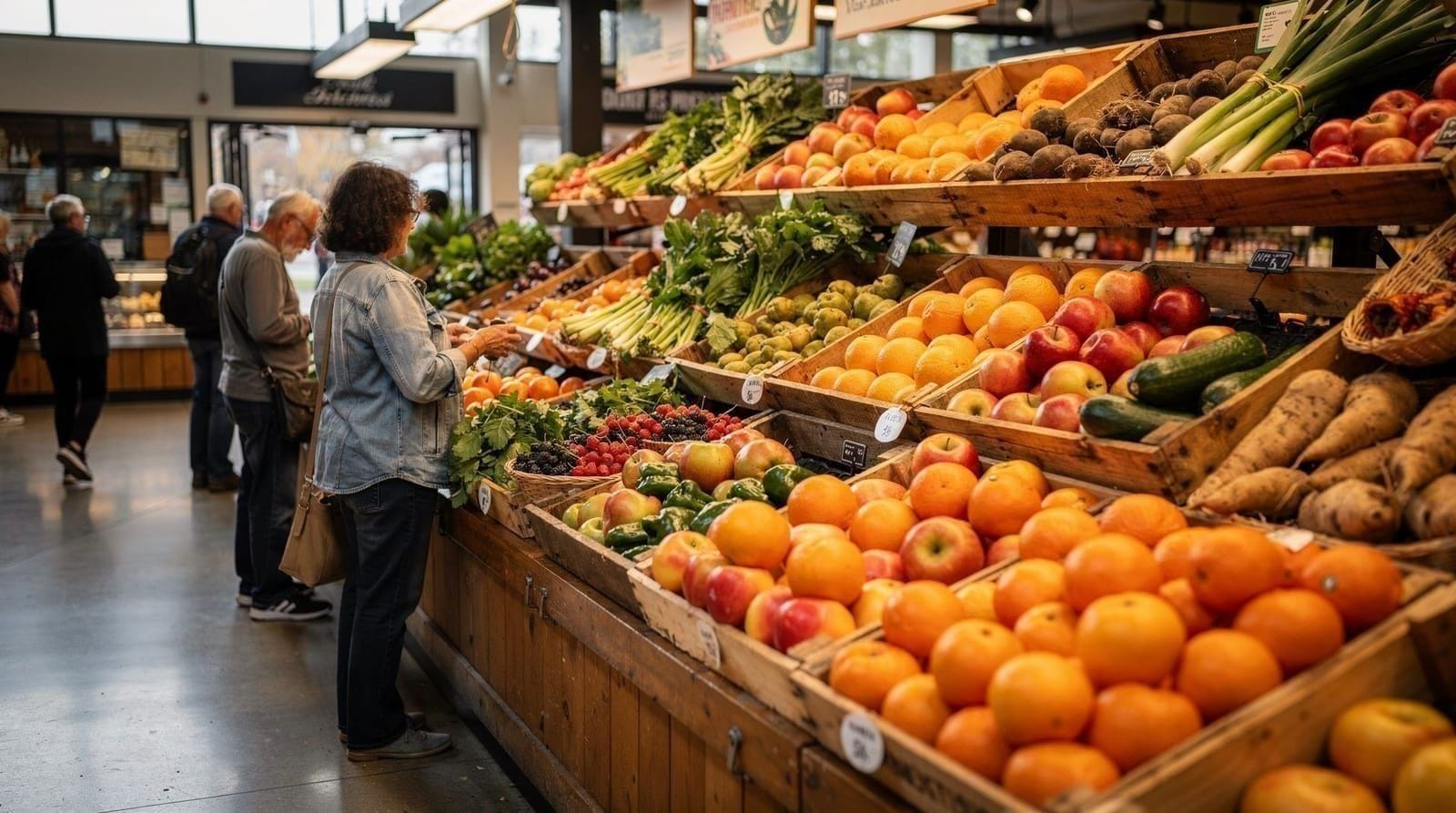
The Granville Island Public Market opened in 1979 inside a converted industrial shed, part of a broader redevelopment that turned a former sawmill and industrial site under the Granville Street Bridge into the arts-and-market district it is today. Inside, more than 50 vendors sell everything from fresh produce and BC seafood to baked goods, chocolates, cheese and prepared foods, arranged in a single open hall that’s easy to loop through in 20-30 minutes at a browsing pace, longer if you’re stopping to eat along the way.
Two of the market’s longest-running and best-known vendors are Lee’s Donuts, a small counter turning out classic hand-cut donuts since the 1980s, and Oyama Sausage Co., known for cured meats, charcuterie boards and sandwiches. Beyond those two, the market’s real strength is breadth — a full lap past the seafood counters, produce stalls, bakeries and prepared-food vendors gives a genuine sense of BC’s ingredients before you commit to eating anywhere.
Granville Island Brewing: the historic anchor
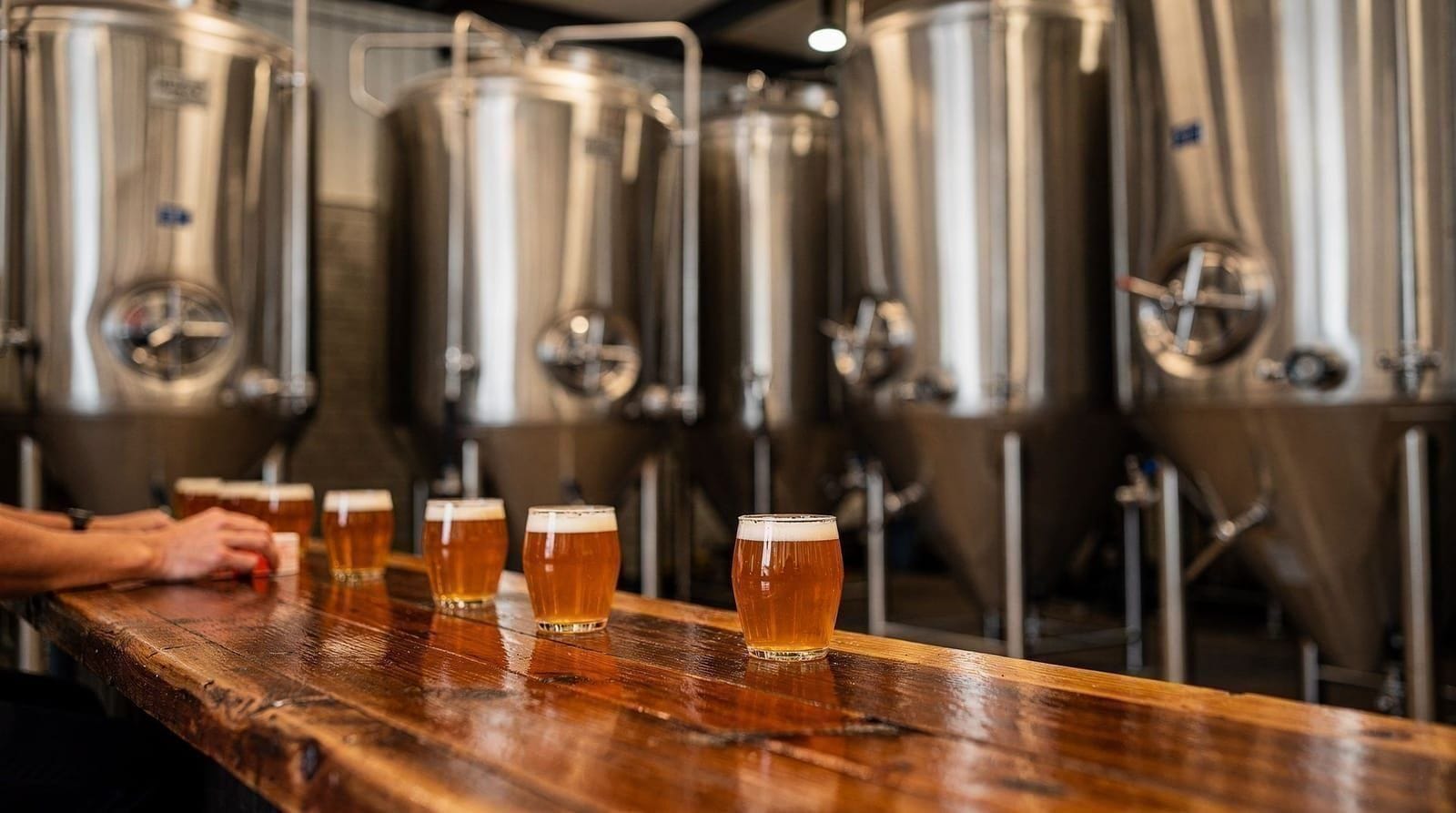
A short walk from the market sits Granville Island Brewing, which opened in 1984 as Canada’s first microbrewery and remains one of the more approachable brewery visits in the city — short guided tours run multiple times daily for under CAD 10, and a tasting flight of four to five samples runs around CAD 7. It’s a low-commitment add-on to a market visit rather than a destination in its own right, best timed for after you’ve eaten rather than on an empty stomach given the flight format. The wider context of Vancouver’s brewery scene, including how Granville Island fits alongside Mount Pleasant’s newer cluster, is covered in the craft beer and breweries guide.
Reading the market like a local
First-time visitors often make the mistake of eating at the first stall that smells good, filling up before reaching the market’s better vendors further along. A more effective approach: walk the full interior loop once, noting the two or three lines that are genuinely long (a reliable signal of quality, since Vancouverites don’t queue for mediocre food) alongside stalls that catch your eye, then circle back with a plan. The market’s layout puts produce and fresh seafood toward the water-facing side, with prepared foods, baked goods and the food court-style seating more central — useful to know if you’re trying to build a meal from several vendors rather than one.
Weekday mornings, particularly Tuesday through Thursday before 11am, are when local shoppers (rather than tourists) do the bulk of their buying, which is worth experiencing if you want a sense of the market as a working neighborhood institution rather than purely a visitor attraction. It’s also the calmest window to actually talk to vendors, several of whom are happy to explain where an ingredient comes from or how a product is made if the market isn’t slammed.
What the guided food walking tour actually adds
A Granville Island food walking tour runs roughly 2.5-3 hours and typically includes 6-8 tastings split between market vendors and a brewery stop, priced around CAD 110-150 per person. The core value proposition is skip-the-line access at the market’s busiest counters (Lee’s Donuts in particular can build a genuine queue on summer weekends) plus a curated route that avoids wasted time wandering past stalls that don’t interest you.
For a first visit or a short stopover where efficiency matters, that’s worth something. An elite version adds a smaller group size and sometimes an extra stop or upgraded tasting portions, for a higher price — similar logic to the elite upgrades on Vancouver’s other food tours, worth it mainly for travelers who dislike larger tour groups.
A narrower market tour with tastings focuses specifically inside the Public Market itself rather than extending to the brewery or nearby restaurants, running shorter and generally cheaper — a reasonable middle option if the brewery doesn’t interest you but you still want a guided introduction to the market’s vendors.
Who the guided tour is genuinely worth it for
The clearest case for booking a guided Granville Island tour is a short stopover — a cruise passenger with four hours in port, or a traveler with a single afternoon before flying out — where the guide’s curated route and skip-the-line access at Lee’s Donuts and the busiest seafood counters meaningfully compresses a good experience into limited time.
It’s also worth it for anyone who finds an open market with 50 unlabeled options mildly overwhelming and would rather have decisions made for them, plus travelers who value the historical and cultural context a guide provides about the market’s 1979 redevelopment and the artisans who’ve operated stalls for decades. Families with young kids sometimes find the structure helpful too, since a fixed route with built-in stops avoids the aimless wandering that can wear a child out faster than a planned visit.
The case against booking: anyone on a multi-day Vancouver trip who can simply return to the market on a quieter day, budget travelers for whom CAD 110-150 is a meaningful chunk of a day’s food budget, and confident independent travelers who enjoy browsing without a schedule. The market’s manageable size is really the deciding factor — this isn’t a sprawling neighborhood where getting lost costs you time, it’s one building you can fully explore in half an hour.
Doing it yourself: a realistic plan
Because the market is a single contained building, self-guiding here is lower-effort than in a spread-out neighborhood. Arrive before 10:30am on weekends to beat the worst of the crowds — by early afternoon on a summer Saturday, the market’s aisles can genuinely bottleneck near the busiest stalls. Walk a full loop first without buying anything, noting two or three stalls that interest you, then double back to eat.
Budget CAD 30-50 per person for a satisfying grazing session across three or four vendors, plus another CAD 15-20 if adding a brewery tasting flight. This route costs meaningfully less than the guided tour while giving you full control over what you eat and how long you linger at each stop — the market’s small size means the guide’s main advantages (line-skipping, curation) matter less here than on a walking tour spread across several city blocks.
Making the most of the brewery visit
Granville Island Brewing’s short tours run on a fixed schedule several times a day and typically last 20-30 minutes, covering the brewing process and the building’s history as Canada’s first modern microbrewery. The tasting flight that usually follows is the better value on its own if you’re short on time — four to five small pours for around CAD 7 gives a real sense of the range without committing to the full tour schedule. Because the brewery sits a short walk from the Public Market rather than inside it, it’s easy to treat as an optional add-on rather than a mandatory stop, useful if traveling with anyone who doesn’t drink or if you’re visiting with young kids, since the brewery itself is less kid-oriented than the market.
Cash, cards and practical logistics
Most vendors now accept cards and tap payment, though a handful of the smaller stalls still prefer cash for purchases under about CAD 10 — worth having some cash on hand to avoid an awkward moment at checkout. Seating inside the market is limited and contested at peak lunch hours (noon to 1:30pm on weekends especially); if you’re planning to eat what you buy on-site rather than taking it to go, arriving before noon or after 2pm makes finding a table considerably easier. Public restrooms are available inside the market building, and the island as a whole is stroller and wheelchair accessible, with ramped entrances and wide aisles, unlike some of Gastown’s older, narrower storefronts.
Getting to Granville Island
Granville Island isn’t served by SkyTrain, which surprises some first-time visitors — the most common approaches are the Aquabus or False Creek Ferries mini-ferries, small passenger boats that run frequently from docks near Yaletown, Hornby Street, and Science World, taking a few minutes each way for roughly CAD 4-5.
These little ferries are genuinely part of the experience rather than just transport, with views back toward downtown’s glass towers across False Creek. The 50 bus also connects from downtown Granville Street. Driving is possible, but the island’s parking is limited (three-hour free parking in marked lots, tighter on weekends) and fills up by late morning in summer — most visitors are better off leaving the car and taking a ferry.
Dietary needs at the market
Granville Island’s Public Market is one of the easier Vancouver food destinations for dietary restrictions, largely because the sheer number of independent vendors means there’s almost always an alternative if one stall doesn’t work for you. Vegetarian and vegan options are plentiful among the produce, bakery and prepared-food stalls; gluten-free options exist but require checking with individual vendors, since cross-contamination in shared prep areas is common at a market this size.
Seafood allergies are the one category worth extra caution — several stalls handle shellfish and finfish in open-air setups, so anyone with a serious shellfish allergy should ask before ordering anything from the market’s food-court-style seating, where trays from different vendors sometimes end up on adjacent tables.
Beyond the market: restaurants on the island
Granville Island has several sit-down restaurants beyond the market hall itself, generally with waterfront or marina views, running CAD 25-45 per person for a full meal — pricier than grazing the market but a reasonable option for a proper lunch or dinner, particularly on a patio in summer. These restaurants see less of the market’s peak-hour congestion, making them a good pressure valve if the market itself feels too crowded to enjoy.
What locals actually do here
Ask a Vancouver local about Granville Island and the answer rarely centers on the guided tour — most treat the market as a Saturday-morning grocery run combined with a coffee and a wander, arriving early, buying produce and a baked good, and leaving before the tourist crowds build past midday. That local rhythm is worth borrowing even as a visitor: an early arrival, a loose plan rather than a fixed itinerary, and treating the market as something to graze through rather than conquer in one sitting tends to produce a better visit than trying to hit every notable vendor in a single pass.
The island beyond food
Granville Island is worth knowing as more than a food stop — it’s also home to artisan studios, a well-regarded farmers’-market-adjacent kids’ market, a couple of small theaters, and a marina lined with houseboats, all within the same compact footprint as the Public Market. If food is your main draw but you have extra time, a 20-30 minute walk around the island’s studio buildings after eating rounds out the visit without requiring much extra planning. This is also part of why the guided food tours here tend to run shorter than Gastown’s — the operators know most visitors want to save time to explore the rest of the island independently rather than spend the whole visit on a structured food route.
Seasonal notes and crowds
Granville Island is busiest June through August, particularly on weekends, when both the market and the mini-ferries see their heaviest traffic. Weekday visits, especially Tuesday through Thursday mornings, are considerably calmer. Winter sees the market still fully operating (it’s an indoor, year-round destination, unlike some of Vancouver’s outdoor attractions), with noticeably thinner crowds — a legitimate reason to prioritize Granville Island over an outdoor destination on a rainy December day.
Granville Island versus Gastown for food
Choosing between Granville Island and Gastown for a Vancouver food outing largely comes down to format preference, as covered in more detail in the best food tours in Vancouver roundup.
Granville Island offers lower total walking distance, an indoor rain-proof format (useful outside the June-September dry season), and a market-browsing experience rather than a restaurant-hopping one; Gastown offers more historic streetscape, a wider spread of standalone restaurants, and an easier late-evening food-and-drink scene once the market has closed for the day (the Public Market typically closes by early evening, while Gastown’s restaurants and bars keep going well past dark). Travelers doing both over a multi-day trip get a genuinely different experience from each rather than a repeat of the same format.
Combining Granville Island with the rest of your day
Granville Island pairs naturally with an afternoon in nearby Kitsilano via a short ferry hop, or with a morning in Yaletown before crossing False Creek. For a 2-day Vancouver itinerary, a Granville Island morning followed by a Kitsilano Beach afternoon makes an easy, low-transit-time day. It’s a less natural pairing with Gastown or Chinatown, which sit on the opposite side of downtown — trying to combine both in one day usually means more transit time than the food itself justifies.
What to skip if you’re short on time
If a visit has to be compressed to under an hour, prioritize a single lap of the market for a sense of the vendors, one or two food stops based on the longest lines, and skip the brewery tour rather than the market itself — the tasting flight alone (around CAD 7, no tour required) delivers most of the brewery’s value in a fraction of the time. The artisan studios and Kids Market are the easiest things to cut entirely on a rushed visit, since neither is essential to the food side of the island.
Bottom line
Granville Island rewards a relaxed, low-planning approach more than most Vancouver food destinations, since the market’s compact size means you’re unlikely to get lost or miss the good stuff even without a guide. The guided tour earns its price mainly on time-constrained visits or for travelers who prefer curated decisions over open browsing; everyone else can reasonably expect to have a good meal here just by showing up hungry, walking the loop, and following the longest lines.
Frequently asked questions — Granville Island food guide
How much does food cost at Granville Island Public Market?
Individual vendor items typically run CAD 5-15 (a donut, a sausage sandwich, a small seafood plate), while a full sit-down meal at one of the market-adjacent restaurants runs CAD 25-45 per person. Grazing three or four vendor stalls usually costs less than one restaurant meal while covering more variety.Is the Granville Island food tour worth it?
It depends on your priorities. The guided walk skips lines at popular stalls, curates a route through the market's best vendors, and adds context about the market's history — genuinely useful on a first visit or a short stopover. Repeat visitors or anyone comfortable browsing on their own can cover similar ground for less by simply wandering.How do you get to Granville Island without a car?
The Aquabus and False Creek Ferries mini-ferries run frequently from docks near Yaletown, Hornby Street and Science World, taking a few minutes and costing roughly CAD 4-5 one-way. The 50 bus also runs from downtown. Driving is possible but parking is limited and fills up fast on weekends.Is Granville Island Brewing worth visiting?
Yes for beer-interested travelers — it's Canada's first microbrewery, operating since 1984, with short tours running multiple times daily for under CAD 10 and tasting flights around CAD 7. It sits a short walk from the Public Market, making it an easy add-on rather than a separate outing.What are the must-try vendors at the Public Market?
Lee's Donuts for a classic hand-cut donut, Oyama Sausage Co. for cured meats and sandwiches, and the market's seafood and produce stalls for a sense of BC's coastal ingredients. Beyond named vendors, the market's general strength is variety — walk the full loop before committing to a stop.How long should I plan for a Granville Island food visit?
Two to three hours covers the Public Market at a relaxed pace plus a short brewery visit. Add more time if combining it with the island's art studios, theaters or a walk along the False Creek waterfront.
Top experiences
Bookable activities with verified prices and instant confirmation on GetYourGuide.