Queen Elizabeth Park
Vancouver: Botanical Gardens Tour and Museum of Anthropology
What is there to see at Queen Elizabeth Park and is it free?
Queen Elizabeth Park is a free public park on one of Vancouver's highest points, built around a former quarry turned sunken garden, with formal rose gardens, a citywide viewpoint, and the domed Bloedel Conservatory, which charges a separate small admission fee. Most visitors spend 1-2 hours walking the gardens and viewpoint.
Queen Elizabeth Park sits on Little Mountain, at 152 metres one of Vancouver’s highest natural points, and it’s built around an unusual origin story — the park’s sunken quarry gardens occupy a former rock quarry, landscaped after excavation stopped rather than left as scar tissue. It’s a genuinely underrated stop compared to the city’s bigger-name parks, mostly because it’s further from downtown and gets a fraction of Stanley Park’s visitor traffic.
| Where | Little Mountain, South Vancouver |
| Cost | Free (Bloedel Conservatory charges separate admission) |
| Time needed | 1–2 hours, plus 30–45 min for the conservatory |
| Getting there | 15–20 min drive or bus from downtown; no direct SkyTrain |
| Best time | May–August for gardens; conservatory is weather-independent |
Why the elevation matters
Little Mountain’s modest 152-metre elevation might not sound dramatic compared to the North Shore peaks visible from its summit, but within Vancouver’s relatively flat urban core, it’s enough to deliver a genuine city panorama unavailable from most other points in town. That combination — real elevation without leaving city limits or requiring a mountain excursion — is a large part of what makes the park worth the detour for visitors who want a skyline view without a North Shore day trip.
From rock quarry to garden
Little Mountain was quarried for its basalt rock through the early 1900s, supplying road-building material for Vancouver’s expanding street network, before the city acquired the site and began converting it into parkland starting in the 1930s. The park was officially named for Queen Elizabeth (the future Queen Mother) ahead of a royal visit in 1939, and the quarry gardens themselves — the most distinctive single feature on the grounds — were developed gradually through the mid-20th century, transforming the excavated pits into the terraced, landscaped gardens visible today. It’s a genuinely unusual origin story among Vancouver’s major parks, most of which preserve pre-existing forest rather than reclaiming industrial land.
The quarry gardens
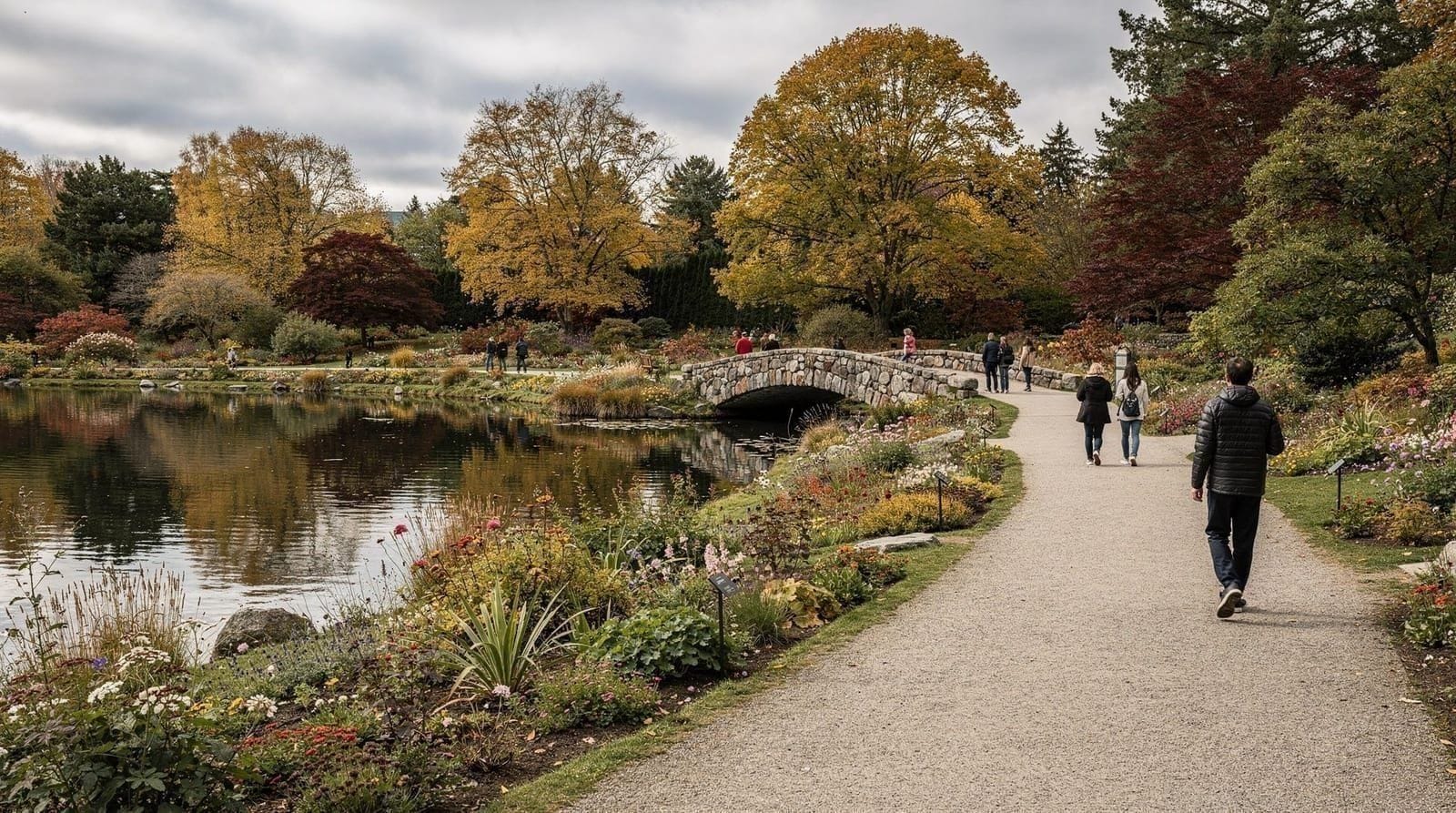
The park’s centerpiece is the sunken quarry garden, a landscaped former excavation pit now filled with terraced plantings, small ponds and pathways winding below street level — a distinctive layout that doesn’t read as an obvious former industrial site once you’re inside it. Alongside the quarry, formal rose gardens and an arboretum with a wide range of tree species fill out the rest of the grounds, all free to walk through at any hour the park is open.
The arboretum in more detail
Beyond the quarry garden’s showpiece landscaping, the arboretum spreads across a broader section of the park with a genuinely diverse tree collection representing species from across the Pacific Northwest and beyond, planted and expanded gradually since the park’s development began. It’s a quieter, less manicured section than the quarry garden, appealing to visitors who prefer a more naturalistic walk over the quarry’s formal terraced design. Interpretive signage throughout identifies notable specimens, useful for anyone with a casual interest in trees and horticulture beyond the headline rose garden and quarry features.
The viewpoint
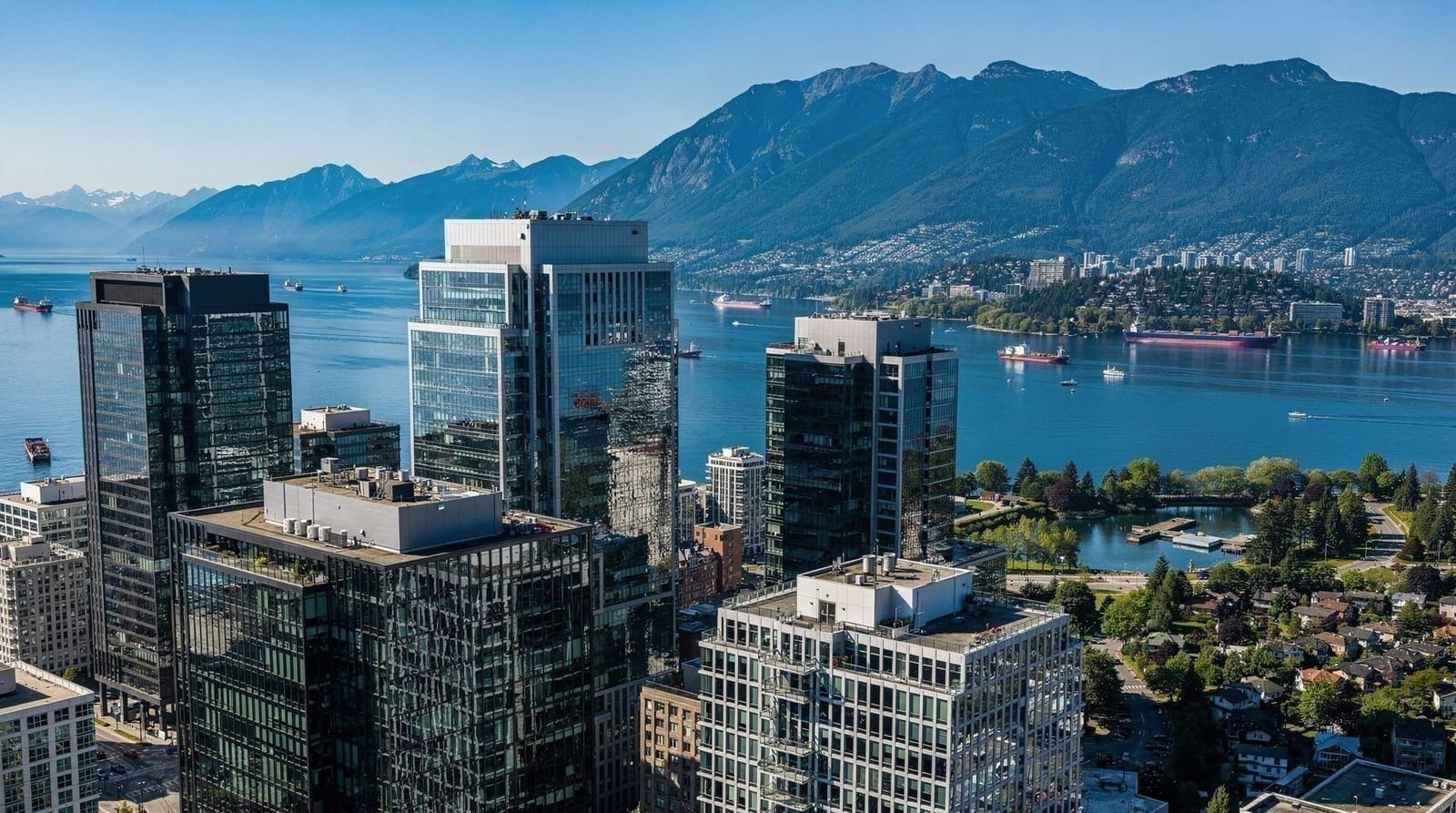
From the park’s summit, a free public viewpoint delivers one of the better city panoramas available without a paid ticket — downtown’s skyline to the north, the North Shore mountains behind it, and on clear days, sightlines stretching toward the Fraser Valley to the east. It’s a genuinely useful stop for visitors who want a Vancouver skyline photo without paying for the Vancouver Lookout or a North Shore mountain trip, though the elevation and framing are different enough that it’s not a direct substitute for either.
The rose garden up close
The formal rose garden, laid out in geometric beds distinct from the quarry’s more naturalistic terracing, hits peak bloom in June and continues flowering into early fall, making it one of the longer-lasting seasonal highlights in the park relative to the shorter, more concentrated bloom windows elsewhere in the city (Vancouver’s famous street cherry blossoms, by comparison, last only a couple of weeks). It’s a popular, low-key spot for a slower walk, with benches positioned throughout for anyone wanting to sit and take in the scent and color rather than just walk past.
The Bloedel Conservatory
At the summit, the Bloedel Conservatory — a geodesic glass dome, similar in structural style to Science World’s — houses a climate-controlled tropical rainforest environment complete with free-flying tropical birds, alongside separate desert and subtropical plant zones. Unlike the rest of the park, the conservatory charges a modest admission fee, and it’s a solid option for a rainy or cold day, since it’s fully enclosed and heated regardless of the weather outside. Budget 30-45 minutes to walk through all three climate zones at a relaxed pace.
What to bring
A light layer is worth carrying even on a warm day, since the summit’s elevation and exposure mean it can feel noticeably breezier than street level in surrounding neighborhoods. Comfortable walking shoes matter more here than the flat description might suggest, since the quarry garden’s terraced paths include real elevation changes and occasional stairs. For the Bloedel Conservatory specifically, be prepared for a humid, warm interior climate regardless of the weather outside — layers that can be removed easily make the transition between the cool exterior and the tropical interior more comfortable.
Comparing it to VanDusen Garden
Queen Elizabeth Park and VanDusen Garden sit a short drive apart in South Vancouver, and visitors sometimes assume they’re interchangeable — they’re not quite. Queen Elizabeth Park is free, smaller, and built around the quarry-and-viewpoint combination described above; VanDusen is a considerably larger paid botanical garden with a far broader plant collection and a maze, but no equivalent hilltop city view. Visitors with a strong general interest in gardens and a bit more time are usually better served doing both on the same South Vancouver excursion, since neither takes more than a couple of hours and they’re only a short drive apart.
A Vancouver botanical gardens and Museum of Anthropology tour is worth checking if you’d rather have transport and route planning handled for a broader garden-focused day, since it typically centers on VanDusen but removes the logistics of getting between South Vancouver’s spread-out garden sites independently, and it pairs the gardens with a stop at the Museum of Anthropology at UBC.
Common mistakes visitors make
The most frequent misstep is skipping Queen Elizabeth Park entirely because it’s less famous than Stanley Park, when in reality it offers a genuinely distinct experience — a hilltop view and quarry garden that Stanley Park doesn’t replicate — worth the modest extra transit effort for visitors with more than a couple of days in the city.
A second mistake is visiting without checking whether the Bloedel Conservatory is open, since its hours can differ from the surrounding park’s; confirming current conservatory hours before making the trip specifically for it avoids disappointment. Third, some visitors underestimate the transit gap here — arriving expecting a direct SkyTrain connection the way most downtown attractions have, when in fact a bus transfer or drive is required.
Photography and the viewpoint in detail
The summit viewpoint’s best light generally comes in late afternoon, when the sun angles across the city rather than sitting directly overhead, adding depth and shadow to the skyline view that a flat midday shot lacks. On genuinely clear days — less common in Vancouver’s wetter months — the sightline extends far enough to pick out Mount Baker in Washington State on the horizon, a detail worth watching for on a good-weather visit. The quarry gardens themselves offer a completely different kind of photo opportunity, with the terraced planting and small ponds providing intimate, close-up compositions that contrast with the wide-open summit view just a short walk away.
A note on nearby dining variety
The Cambie corridor near the park’s base reflects the broader diversity of South Vancouver’s residential neighborhoods, with a genuine mix of cuisines available within a short drive or bus ride — a different character from the more uniformly tourist-oriented dining options found near downtown Vancouver attractions. It’s worth treating a Queen Elizabeth Park visit as a chance to eat somewhere a bit further off the standard tourist trail.
Getting there
There’s no SkyTrain station directly at the park’s summit, which is the main reason it sees fewer visitors than downtown-adjacent attractions — the most practical options are a direct bus from downtown, a roughly 15-20 minute drive, or a rideshare. It’s a genuinely awkward transit connection compared to most of Vancouver’s other major sights, worth factoring into timing if you’re relying on public transit for a full day of sightseeing that also includes downtown stops.
Accessibility notes
The park’s main paved paths, including the route to the summit viewpoint and much of the quarry garden’s upper walkways, are accessible, though the quarry garden’s lower terraced sections include stairs and slopes that may be more difficult for wheelchairs or anyone with mobility limitations. The Bloedel Conservatory itself is a single-level, fully accessible space. Accessible parking is available near the summit, close to the conservatory and viewpoint, offering a practical option for visitors who’d rather not navigate the park’s elevation changes on foot from a lower entrance.
A realistic time budget with VanDusen
For visitors combining Queen Elizabeth Park with VanDusen Garden in the same outing — a common and sensible pairing given their proximity — a realistic time budget runs 3-4 hours total: roughly 1.5-2 hours at Queen Elizabeth Park (including the Bloedel Conservatory if visiting) and 1.5-2.5 hours at VanDusen, plus transit time between the two, typically a short drive or rideshare given the lack of a direct walking or transit connection. Doing both in one day works well for garden enthusiasts, though either can comfortably stand alone as a shorter half-day activity for visitors with less time.
Seasonal highlights beyond spring
While spring brings the strongest bloom in the rose garden and arboretum, Queen Elizabeth Park has something to offer across all seasons given its combination of a free hilltop viewpoint (weather-independent) and the climate-controlled Bloedel Conservatory. Summer sees the fullest foliage and the most pleasant conditions for a longer outdoor walk. Fall brings turning leaves through the arboretum’s diverse tree collection, offering a genuinely different look than the summer green. Winter, while quieter for the outdoor gardens, keeps the conservatory’s tropical environment fully functional regardless of the cold and rain outside — a reliable warm-weather escape in the middle of Vancouver’s wettest season.
When to visit
Late spring through summer brings the rose garden and arboretum into full bloom, making May through August the strongest window for the outdoor gardens specifically. The Bloedel Conservatory’s appeal is largely weather-independent given its enclosed setting, making it a reasonable stop on a grey or rainy day when the outdoor sections of the park hold less appeal. Weekday visits are consistently quieter than weekends, though Queen Elizabeth Park rarely reaches the crowd levels seen at Stanley Park or Granville Island even on a busy Saturday.
Weddings and event bookings
The quarry gardens and their pavilions are a popular wedding photography and ceremony location for locals, given the landscaped backdrop and elevated setting — worth knowing about since a visit on a summer weekend might coincide with an active wedding party using part of the grounds. It’s generally not a problem for casual visitors, since the park is large enough to accommodate both, but it’s a reason some of the most photogenic quarry-garden corners might be temporarily occupied during a Saturday visit in peak wedding season (roughly May through September).
What locals think of Queen Elizabeth Park
Vancouverites who live in the surrounding neighborhoods use Queen Elizabeth Park much like a regular local park — for dog walks, jogging, and weekend family outings — rather than treating it as a special-occasion destination the way a first-time visitor might. It’s also a popular spot for wedding photography specifically because of the quarry garden’s landscaped backdrop, and many locals have attended at least one wedding or been part of a photo session there over the years. Compared to Stanley Park, locals often describe Queen Elizabeth Park as the quieter, more contemplative option — a place for a slower visit rather than the more activity-focused seawall loop.
Nearby dining and neighborhood character
The area surrounding Queen Elizabeth Park, near the intersection of Cambie Street and West 33rd Avenue, sits within Vancouver’s broader Cambie corridor, home to a mix of casual restaurants and cafés serving the surrounding residential neighborhoods rather than a dense tourist-oriented dining strip. It’s a reasonable spot to grab a meal before or after a park visit, though it doesn’t offer the same concentration of destination restaurants found in Gastown or Granville Island — most visitors treat food here as a practical stop rather than a dining destination in its own right.
Sports facilities within the park
Beyond the gardens, Queen Elizabeth Park includes public tennis courts, a pitch and putt golf course, and other recreational facilities used primarily by locals rather than visitors — worth knowing about if traveling with sports equipment or simply curious about what fills the park’s less garden-focused sections. These facilities operate on their own schedules and fee structures separate from the free garden areas.
Where it fits in a wider Vancouver trip
Queen Elizabeth Park works best as a half-day addition for visitors with more than two or three days in Vancouver, often paired with VanDusen Garden as a South Vancouver garden-focused morning or afternoon. It’s a reasonable substitute or addition for visitors who’ve already covered Stanley Park and want a second, quieter green space with a genuinely different character, and it fits naturally into longer 3-day Vancouver itineraries once the core downtown sights are covered.
Frequently asked questions about visiting Queen Elizabeth Park
Is Queen Elizabeth Park worth visiting if I’ve already done Stanley Park?
Yes, they offer different experiences — Stanley Park is a large-scale waterfront forest and seawall, while Queen Elizabeth Park is a compact hilltop garden with a distinctive quarry landscape and a free city viewpoint.
Do I need to pay to enter Queen Elizabeth Park?
No, the park itself is free. Only the Bloedel Conservatory dome at the summit charges a separate admission fee.
How long should I plan for a visit?
1-2 hours covers the quarry gardens, rose garden and viewpoint at a relaxed pace; add 30-45 minutes if visiting the Bloedel Conservatory as well.
Does Queen Elizabeth Park have restaurants inside it?
There is a restaurant on-site near the summit with views over the gardens, priced toward the higher end typical of an attraction restaurant; most visitors instead eat before or after in the surrounding Cambie Street neighborhood.
Is Queen Elizabeth Park a good spot for a picnic?
Yes, the arboretum and open lawn areas away from the quarry garden’s formal plantings offer plenty of picnic-friendly space, and it’s generally quieter than trying to find a spot at Stanley Park on a busy summer day.
Can you drive to the top of Queen Elizabeth Park?
Yes, there’s a parking area near the summit close to the Bloedel Conservatory and viewpoint, making it accessible for visitors who’d rather not walk uphill from the park’s lower entrances.
Building Queen Elizabeth Park into a South Vancouver day
Beyond the natural pairing with VanDusen Garden, Queen Elizabeth Park works well as one stop within a broader South Vancouver morning or afternoon that also takes in the Cambie corridor’s restaurant variety. Visitors with a rental car can reasonably string together the park, VanDusen, and a meal along Cambie Street within a half-day window, given how close together these sit relative to most of Vancouver’s other spread-out attractions. For visitors without a car, the bus connection to the park is straightforward enough that a single South Vancouver outing remains realistic, though it takes noticeably longer than driving between stops.
What makes the quarry garden photograph so differently from the summit
The quarry garden and the summit viewpoint offer genuinely different photographic subjects within the same park, and visitors focused only on the skyline view sometimes miss how distinct the lower garden’s compositions are. The terraced planting, small ponds, and enclosed feel of the sunken quarry produce intimate, close-focus shots with a very different mood from the wide, open summit panorama — worth budgeting time for both rather than treating the quarry garden as a quick walk-through en route to the viewpoint. Visitors with a specific photography goal in mind should plan for both distinct vantage points rather than assuming one covers the park’s visual range.
Visiting with older relatives or limited mobility
The park’s main paved paths, including the route to the summit and much of the quarry garden’s upper walkways, make Queen Elizabeth Park a genuinely workable stop for visitors traveling with older relatives or anyone who prefers not to tackle uneven terrain. The Bloedel Conservatory’s single-level, fully accessible layout adds a comfortable, weather-protected stop within the same visit, and the summit parking area removes the need to walk uphill from a lower entrance for anyone who’d rather drive most of the way.
This combination — accessible paths, a nearby accessible attraction, and summit parking — makes the park a more comfortable choice for mixed-mobility groups than several of Vancouver’s other major green spaces, which often involve more uneven terrain or longer unavoidable walks.
A quieter alternative for a second Vancouver visit
Repeat visitors to Vancouver who’ve already done the standard first-trip itinerary — Stanley Park, Granville Island, Gastown — often find Queen Elizabeth Park a genuinely refreshing addition precisely because it isn’t on most first-timers’ shortlists. It delivers a real city view, a distinctive garden landscape, and a noticeably calmer atmosphere than the more heavily trafficked sights, making it a strong candidate for anyone returning to the city who wants to see something beyond the standard highlights without venturing far outside the city itself.