Harrison Hot Springs day trip from Vancouver — lake, mineral pools, and mountains
Is Harrison Hot Springs worth a day trip from Vancouver?
Yes, for travelers who want a quieter, lake-and-mountain resort town without a ferry crossing or a busy highway drive. It's about 1 hour 15 minutes to 1 hour 30 minutes from Vancouver by car, and while the public hot springs pools are modest in scale, the lakefront village, mountain scenery, and slower pace make it a worthwhile half-day or full-day escape, especially as an overnight extension.
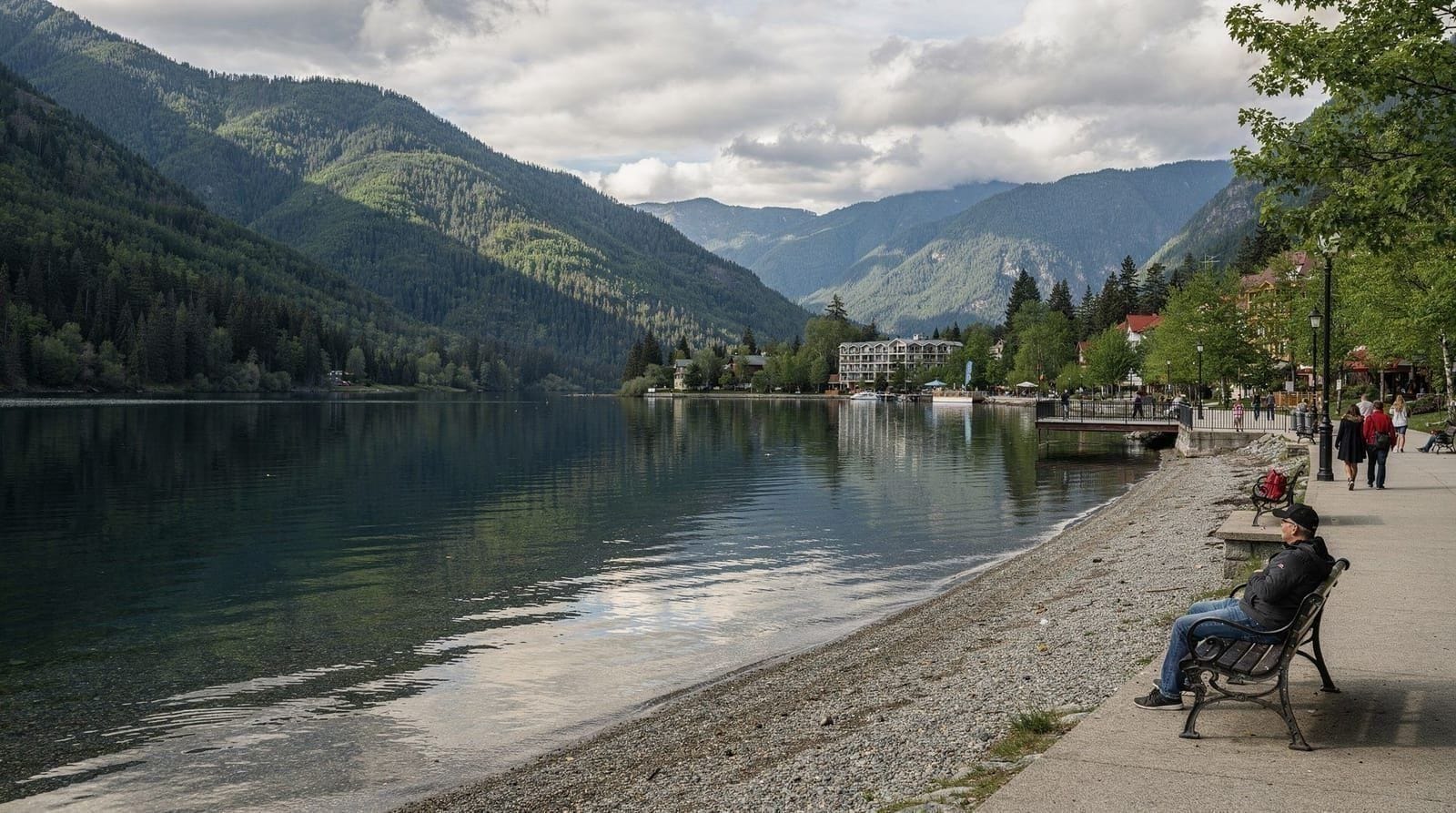
Harrison Hot Springs sits at the southern end of Harrison Lake, about 90 minutes east of Vancouver, and it’s one of the region’s longer-standing resort towns — a small, lakefront village built around mineral hot springs that have drawn visitors since the late 1800s. It’s a quieter, more low-key alternative to the region’s bigger mountain and coastal day trips, and one that rewards a relaxed pace over a packed itinerary.
| Where | Southern end of Harrison Lake, Fraser Valley |
| Cost | Around CAD 65-100/person incl. fuel, pass, and lunch |
| Time needed | Half a day minimum, better as an overnight |
| Getting there | Car only, ~1h15-1h30 via Highway 1 and Highway 9 |
| Best time | Summer for the lake and festival; winter for the springs |
Getting there
Harrison Hot Springs is reached via Highway 1 east from Vancouver, then Highway 9 north from the Agassiz turnoff, a drive of roughly 1 hour 15 minutes to 1 hour 30 minutes depending on traffic through the Fraser Valley. It’s a straightforward highway drive without a ferry crossing or the elevation changes of the Sea-to-Sky corridor, making it one of the more predictable regional day trips in terms of travel time. There’s no direct public transit route, so a car — your own, rented, or a friend’s — is effectively required for this trip.
The mineral hot springs
The springs that give the town its name are mineral-rich hot water sources along the lakeshore, and while the original public hot pool has a long history, most visitor access today runs through hotel spas and pools that pipe in the mineral water, rather than a single large public bathing facility on the scale of some other North American hot springs destinations. The Harrison Hot Springs Resort’s public and semi-private pool areas are the most accessible option for day visitors without hotel accommodation, though access and pricing can vary, so checking current day-pass availability before making the trip is worth doing rather than assuming walk-up access.
Harrison Lake and the beach
Beyond the springs themselves, Harrison Lake is the town’s other major draw — a large, glacially fed lake framed by mountains, with a sandy public beach right in the village that’s popular for swimming, paddleboarding, and simply relaxing through the summer months. The lake’s scale and mountain backdrop give the town a genuinely scenic setting that holds up even for visitors who skip the hot springs entirely, and lakefront walks along the beach and boardwalk are free and require no advance planning.
The village itself
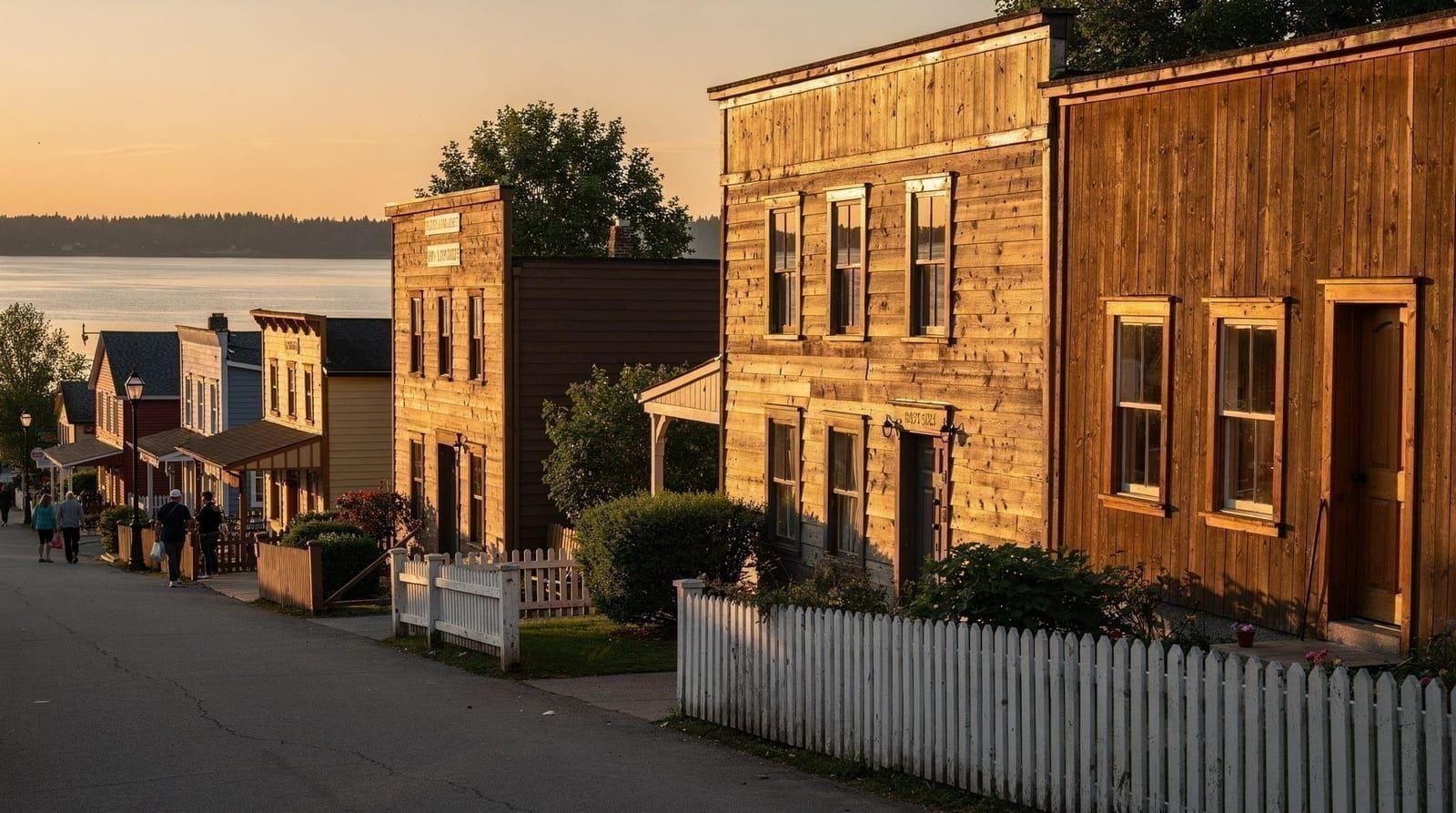
Harrison Hot Springs’ small village core has a modest but pleasant collection of shops, cafes, and restaurants strung along the lakefront, easily covered on foot within an hour or two. It’s a noticeably slower, less commercial atmosphere than Whistler Village or downtown Victoria, which is either a selling point or a limitation depending on what a visitor wants — travelers looking for extensive shopping or nightlife will find the village thin, while those wanting a quiet lakeside stroll will find it exactly right.
Sasquatch lore and local character
Harrison Hot Springs leans into its unofficial status as a centre of Sasquatch (Bigfoot) sightings and folklore in British Columbia, with a small museum exhibit and occasional related events playing up the connection. It’s a lighthearted, tourist-friendly quirk rather than a serious attraction in its own right, but it adds a bit of local colour and a recognizable hook for a town that otherwise trades mainly on quiet scenery rather than headline sights.
What it costs
| Item | Approximate cost (CAD) |
|---|---|
| Fuel round trip from Vancouver | $20–28 |
| Hot springs day pass (where available) | $25–45 |
| Lunch in the village | $18–30 per person |
| Overnight at a lakefront hotel | $150–300+, seasonal |
Best time of year
Summer is the busiest and most complete version of a Harrison Hot Springs visit, with the beach, lake activities, and village all operating at full capacity, alongside the Harrison Festival of the Arts, a long-running summer cultural event that draws visitors from across the region. Shoulder seasons offer a quieter, still-scenic version of the town with cooler lake temperatures that make swimming less appealing but hiking and mountain views just as rewarding. Winter shifts the appeal toward the hot springs themselves — soaking in mineral-warm water with a mountain and lake backdrop has an obvious seasonal logic, though the beach and lake activities are largely dormant.
Should you make it an overnight
Given the drive time relative to what the town itself offers, Harrison Hot Springs arguably rewards an overnight stay more than a rushed day trip — the hot springs experience in particular suits an evening soak followed by a relaxed morning, rather than squeezing it into the middle of a long round-trip drive. Travelers with the flexibility to stay a night get meaningfully more value out of the trip than day-trippers, who spend a larger proportion of their total time simply getting there and back relative to time actually spent enjoying the springs and lake.
Combining with a Fraser Valley route
Harrison Hot Springs sits at the far eastern edge of what’s reasonably considered Fraser Valley day trip territory, and ambitious travelers with an early start sometimes combine a Fort Langley stop with a push further east to Harrison in the same day. It’s a long day by the standards of either destination alone, and most visitors get a better experience treating them as two separate trips — or pairing Harrison specifically with an overnight rather than trying to fold it into an already full Fraser Valley day.
For travelers approaching from the east rather than directly from Vancouver, Harrison also sits within a reasonable detour distance of routes heading toward the Okanagan via the Coquihalla, making it a plausible stopover on a longer BC road trip rather than purely a there-and-back Vancouver day trip. This flexibility is one of the town’s underappreciated advantages — it works equally well as a standalone outing or as a waypoint on a bigger itinerary.
Comparing the cost to Vancouver’s other regional escapes
Harrison Hot Springs sits toward the lower end of the region’s day-trip cost spectrum, similar in that respect to a Fraser Valley day trip or a stop at Bowen Island — no ferry fare and no premium gondola or garden admission on the scale of Whistler or Butchart Gardens. The main variable cost is the hot springs day pass itself, and travelers on a tighter budget can still get a worthwhile visit out of the free lakefront beach and village walk alone, treating any paid pool access as optional rather than essential to a satisfying day.
Who this trip suits
Harrison Hot Springs suits travelers looking for a genuinely quiet, low-key regional escape rather than another activity-packed day — couples wanting a relaxed soak and lake view, travelers who’ve already covered the region’s bigger attractions and want something different, or anyone specifically drawn to hot springs as a category of travel experience. It’s a weaker fit for visitors with only one or two day trips to spare who want to maximize dramatic scenery or headline attractions, since the town’s appeal is more about atmosphere and pace than any single must-see sight.
Whose territory this is
Harrison Lake and the surrounding area sit within the traditional territory of the Sts’ailes Nation, part of the broader Stó:lō collective of Coast Salish peoples in the Fraser Valley region. The Sts’ailes have a long-documented relationship with the lake and surrounding mountains that predates the resort town’s development around the mineral springs, and the Nation continues to be an active presence in the area today. Visitors interested in the region’s Indigenous history beyond the resort-town narrative should look for cultural programming and interpretive material connected to the Sts’ailes community specifically, rather than assuming the town’s history begins with the hot springs resort era.
A resort town with 19th-century roots
Harrison Hot Springs’ development as a tourist destination dates back to the 1880s, when the mineral springs first drew visitors seeking their reputed therapeutic properties, well before the rest of the Fraser Valley developed its current agricultural-tourism identity. The original hotel burned down and was rebuilt multiple times over the following century, and the town’s identity as a wellness-and-relaxation destination has remained fairly consistent even as the surrounding region’s economy and tourism focus shifted considerably. That long history gives the town a slightly different character than newer outdoor-recreation destinations like Squamish — more genteel resort town than adventure-sports hub.
Nearby hiking and nature
Sasquatch Provincial Park, just north of the village, offers several lake-adjacent hiking trails and additional smaller lakes beyond Harrison Lake itself, giving visitors with extra time a reason to explore beyond the village core. Bear Mountain, overlooking the town, has trail access for hikers wanting elevated views over the lake, though it requires more effort and time than most day-trip visitors typically budget for alongside the hot springs and beach. Rangers and provincial park staff can advise on current trail conditions, particularly relevant given the area’s forested, sometimes wet terrain outside the peak summer months.
The Fraser River sturgeon connection
Harrison Hot Springs sits near the confluence of the Harrison and Fraser Rivers, an area known for supporting some of the largest white sturgeon populations in North America — fish that can grow to enormous size and live for decades. Guided sturgeon fishing excursions operate from the area, primarily catch-and-release given conservation concerns around the species, and appeal to a specific niche of visitor rather than the general day-trip crowd. It’s a distinctive local activity worth knowing about even for travelers who won’t personally book a fishing trip, since it’s a meaningful part of the area’s identity beyond the hot springs themselves.
Dining in the village
The village’s dining scene leans toward casual, lakefront-facing restaurants and cafes rather than a serious culinary destination in its own right, reflecting the town’s resort-and-relaxation character over a food-tourism angle. A handful of longer-established restaurants cater specifically to the hotel and day-visitor crowd, and portions and pricing tend toward standard tourist-town rates rather than either a bargain or a splurge. Visitors prioritizing a serious food experience are better served treating meals here as functional rather than a highlight of the day.
Comparing to other regional escapes
Set against Squamish or the broader Sea-to-Sky corridor, Harrison Hot Springs offers a fundamentally calmer, less adrenaline-focused day — no climbing, rafting, or gondola rides, but a genuine lake-and-mountain resort setting with a long history behind it. Travelers who’ve already done an active, adventure-focused day trip earlier in their stay often find Harrison a welcome contrast precisely because it doesn’t ask much of visitors beyond showing up and relaxing.
Sand sculpture and seasonal events
Harrison Hot Springs has built a modest but locally significant reputation around the World Championship Sand Sculpture competition, historically held on the town’s beach in early autumn, drawing sculptors and visitors from well beyond the Fraser Valley for a display that transforms the beach into a temporary open-air gallery. Travelers whose trip dates happen to align with this or the summer Harrison Festival of the Arts get a noticeably livelier version of what’s otherwise a quiet, low-key town, and either event is worth checking the current schedule for before finalizing travel dates if event timing has any flexibility.
Packing and what to expect
Because the trip centres on lake and hot-spring bathing, packing a swimsuit and a towel is worth doing even for a day-trip visit, since last-minute rental options in the village are limited. Layers remain sensible for the drive and any time spent outside the water, particularly in shoulder-season visits when the temperature difference between soaking in mineral-warm water and standing on a cool lakeside evening can be significant. Comfortable sandals or water shoes make the beach and pool areas easier to navigate than regular footwear, which visitors more used to city-based sightseeing sometimes overlook when packing for this particular trip.
Wildlife around the lake
Beyond the sturgeon further down the watershed, Harrison Lake and its surrounding forest support a reasonable range of everyday BC wildlife — black bears are present in the surrounding mountains, though rarely seen directly in the village itself, and birdwatchers can spot eagles and osprey along the lakeshore, particularly in the quieter shoulder seasons when fewer boats and swimmers are active on the water. As with most of the region’s forested areas, standard bear-awareness practices apply on any of the nearby hiking trails, even though close encounters near the town itself are uncommon.
Accommodation beyond the main resort
While the Harrison Hot Springs Resort is the town’s best-known accommodation option and the most direct route to the mineral pools, a range of smaller motels, inns, and vacation rentals around the village offer lower-cost alternatives for visitors specifically wanting an overnight without the resort’s premium pricing. These alternatives generally don’t include direct hot-springs pool access, so day passes or a separate resort visit may still be necessary for travelers staying elsewhere in town but wanting the springs experience specifically.
The honest verdict
Harrison Hot Springs is a legitimate, pleasant day trip, but it’s honestly a better overnight than a rushed there-and-back drive, given how much of the appeal is about slowing down rather than checking off a sight. Visitors specifically chasing hot springs as an experience, or wanting a quiet lakefront alternative to the region’s busier, more famous day trips, will likely find it worthwhile; anyone comparing it directly against Whistler or Victoria on pure scenery or activity density should expect a considerably lower-key day.
Frequently asked questions about Harrison Hot Springs
Do I need to book the hot springs in advance?
It’s worth checking current day-pass availability before you go, especially on summer weekends, since most public access runs through the resort’s pool areas rather than a single large public bathing facility, and space can be limited.
Is Harrison Hot Springs worth visiting without a car?
Not really — there’s no direct public transit route from Vancouver, so a car (your own, rented, or a ride with someone else) is effectively required for this trip.